

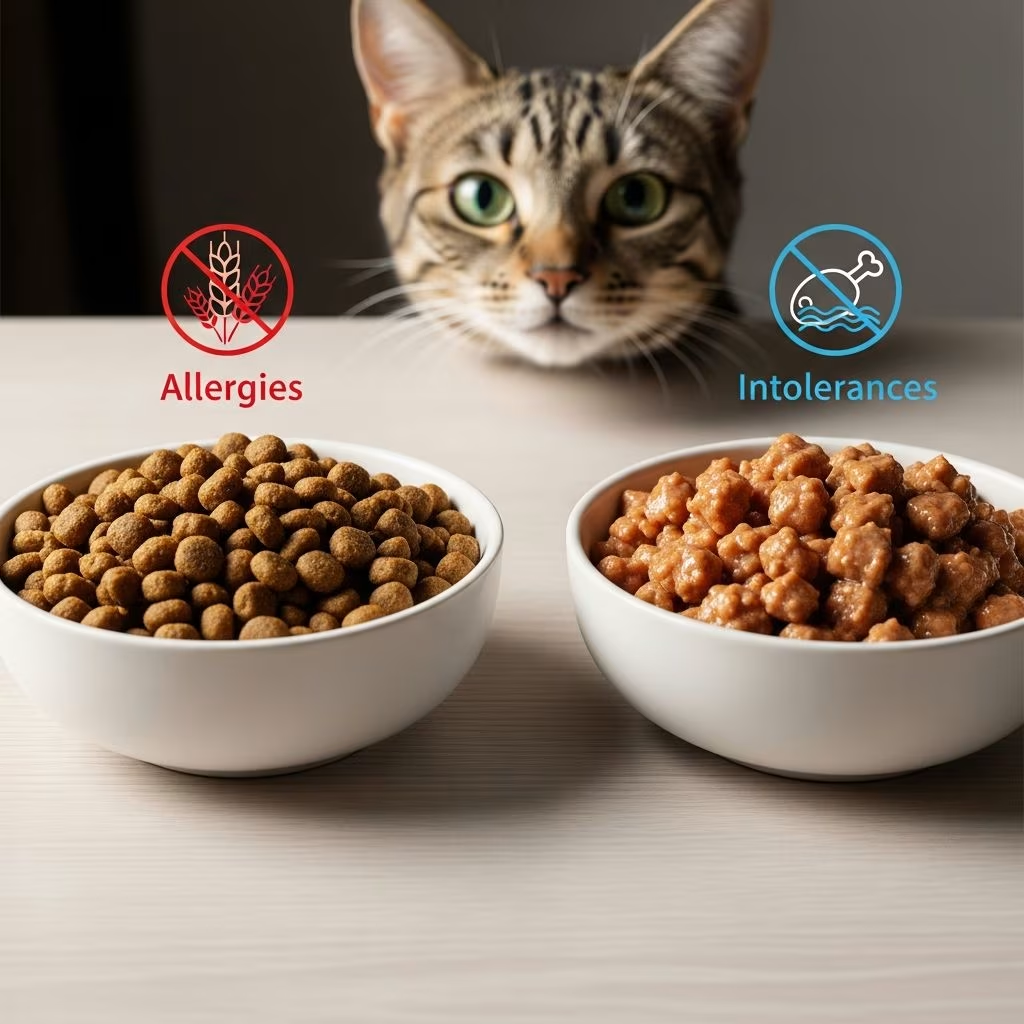
Many cat owners struggle when their feline companions show signs of digestive distress or persistent skin irritation after meals. While the symptoms of food allergies and food intolerances in cats can appear remarkably similar, they represent fundamentally different physiological processes that require distinct approaches to diagnosis and treatment. Understanding these differences is crucial for providing appropriate care and improving your cat’s quality of life.
The Fundamental Distinction: Immune System Involvement
The primary difference between a food allergy and a food intolerance lies in whether the immune system is involved in the reaction. A food allergy is an abnormal immune response to a food ingredient that would otherwise be harmless to most cats. When a cat with a food allergy consumes the offending ingredient, their immune system mistakenly identifies it as a threat and mounts a defensive response, triggering various symptoms throughout the body.
In contrast, a food intolerance occurs without any immune system involvement. Instead, it represents a digestive system issue where the cat’s body simply cannot properly break down or process a particular ingredient. This might happen because the cat lacks a specific enzyme needed for digestion, or because the ingredient irritates the gastrointestinal tract. Food intolerances are sometimes called adverse food reactions because they represent a negative response without immune activation.
Development Timeline and Exposure Requirements
Understanding when and how these conditions develop helps explain why a cat might suddenly show symptoms from food they have eaten for months or even years. Food allergies typically require repeated exposure to the allergen before symptoms manifest. Cats most commonly develop food allergies between the ages of 2 and 6 years, and must be exposed to the offending protein multiple times before their immune system builds antibodies against it. This means a cat eating chicken daily for an extended period might suddenly develop an allergic reaction once their immune system has been sufficiently sensitized.
Food intolerances, however, can occur immediately upon initial exposure to the problematic ingredient. A cat that has never eaten a particular food before might experience digestive upset the first time they consume it, indicating an intolerance rather than an allergy. Additionally, certain intolerances can develop at any age, whereas allergies follow a more specific developmental pattern.
Common Allergens in Feline Nutrition
Cats most frequently develop allergies to proteins they consume regularly. The most common food allergens include:
- Chicken – the leading cause of food allergies in cats
- Fish – another primary protein allergen
- Beef – the third most common allergen
- Dairy products – including milk and milk-based ingredients
- Eggs – less common but still a potential allergen
- Wheat – a grain allergen
- Soy – occasionally problematic for some cats
- Corn and barley – less frequent allergens
The reason protein-based allergies predominate relates to how the immune system recognizes and responds to these larger molecular structures. Animal proteins, being the most nutrient-dense components of feline diet, are frequently the source of immune reactions once sensitization occurs.
Triggers of Food Intolerances
Food intolerances stem from different sources than allergies, typically involving ingredients that challenge the digestive system rather than trigger immune responses:
- Lactose – the most common carbohydrate intolerance, causing digestive upset after dairy consumption
- High-fat foods – can overwhelm the digestive system
- Artificial additives – preservatives and colorants may irritate sensitive digestive systems
- Certain grains – some cats struggle with specific grain products
- Spoiled food – bacterial contamination from old or improperly stored food
- Dietary indiscretion – consumption of inappropriate foods containing bones or excess grease
- Underlying conditions – irritable bowel syndrome, enzyme deficiencies, or stress-related sensitivities
Distinguishing Symptoms: Skin vs. Digestive Manifestations
While both conditions can produce overlapping symptoms, certain indicators tend to suggest one condition over the other. Recognizing these patterns helps inform diagnostic approaches and treatment strategies.
Symptoms Associated with Food Allergies
Food allergies in cats characteristically produce skin-related symptoms because the immune response affects both the integumentary system and the gastrointestinal tract. The most prevalent symptom is chronic itching, or pruritus, which often affects the head, neck, ears, and face. This itching may intensify over time as the cat’s body builds antibodies against the allergen.
Observable skin manifestations include:
- Excessive licking or nibbling of paws
- Frequent scratching or biting at the skin
- Overgrooming that leads to hair loss
- Small crusts on the skin (miliary dermatitis)
- Red or inflamed skin areas
- Papules (small raised bumps)
- Ulcerations or open sores from self-trauma
- Plaques (raised circular nodules)
- Chronic ear problems or recurrent ear infections
Some cats may also experience gastrointestinal symptoms alongside skin issues, including vomiting, diarrhea, loss of appetite, flatulence, and scooting. The key characteristic of allergic reactions is that they can affect multiple body systems simultaneously due to the systemic nature of immune responses.
Symptoms Associated with Food Intolerances
Food intolerances primarily produce digestive symptoms since the reaction is localized to the gastrointestinal system. These symptoms typically appear shortly after consumption of the triggering ingredient and reflect the digestive tract’s inability to process the food properly.
Common intolerance symptoms include:
- Diarrhea or frequent, soft stools
- Vomiting
- Bloating or abdominal discomfort
- Flatulence or gas
- Poor appetite or picky eating
- General digestive upset
Notably, skin symptoms are not typical of food intolerances unless the intolerance condition progresses to develop secondary skin issues. The symptoms appear primarily gastrointestinal in nature because the problem resides in the digestive system’s ability to process specific ingredients.
The Diagnostic Challenge: Why Symptoms Overlap
Cat owners often find it difficult to distinguish between these two conditions because both can produce vomiting and diarrhea, and some cats with allergies may develop gastrointestinal symptoms along with skin issues. This overlap creates diagnostic complexity that requires careful observation and sometimes professional veterinary testing.
The key to differentiation lies in the pattern and predominance of symptoms. If your cat displays primarily skin-related issues with occasional digestive upset, a food allergy becomes more likely. If symptoms are exclusively or predominantly digestive in nature, an intolerance becomes more probable. However, the most reliable diagnostic approach remains a structured elimination diet under veterinary supervision.
Diagnostic Approaches and Food Trials
Diagnosing whether a cat has a food allergy or intolerance requires systematic investigation. The gold standard for diagnosis involves a strict hypoallergenic food trial lasting 8 to 12 weeks. During this period, the cat consumes only a limited ingredient diet while owners carefully document any symptom changes. Critically, cats cannot receive any treats, flavored medications, or other food sources during this trial, as even trace amounts can interfere with results.
The interpretation of results during a food trial can provide clues about the underlying condition. If symptoms resolve completely and relatively quickly (within 2-4 weeks) after switching to the elimination diet, an intolerance becomes more probable. If improvement takes closer to the full 8-12 weeks, or if multiple reintroductions are needed to identify the problematic ingredient, an allergy becomes more likely.
Management Strategies: Long-Term Solutions
Once a diagnosis is established or strongly suspected, management approaches differ between these conditions. For food allergies, the problematic ingredient must be permanently removed from the cat’s diet for life, as allergies typically persist indefinitely. This requires careful attention to ingredient labels and vigilance about treats, medications, and other potential sources of the allergen.
Food intolerances may offer more flexibility, as small trace amounts of the problematic ingredient might not trigger symptoms in some cats. However, reading labels remains important, and most cats respond best to avoidance of known trigger ingredients. Additionally, managing underlying conditions like stress, providing appropriate fiber, or adding digestive enzymes might help some cats with intolerances.
Monitoring and Record-Keeping
Effective management of food-related issues requires consistent observation and detailed record-keeping. Cat owners should monitor and document:
- All foods and treats consumed daily
- Timing and nature of any symptoms (skin changes, digestive issues, behavior changes)
- Severity and frequency of symptoms
- Environmental factors that might influence symptoms
- Response to dietary changes
Over time, patterns emerge that help confirm whether a new diet is working and provide veterinarians with valuable information for diagnosis and treatment planning.
When to Consult Your Veterinarian
Pet owners should seek veterinary guidance if their cat exhibits signs of food-related problems, as some symptoms overlap with serious medical conditions requiring different treatment approaches. Chronic itching, hair loss, recurring skin infections, persistent digestive upset, or significant appetite changes warrant professional evaluation.
A veterinarian can help distinguish between food-related issues and other conditions, recommend appropriate diagnostic testing, design an effective elimination diet, and monitor progress throughout the diagnostic process. This professional guidance proves particularly valuable when managing complex cases or when initial treatment approaches prove unsuccessful.
References
- How to Spot a Food Intolerance vs. a Food Allergy in Cats — Fuzzball. https://fuzzball.club/blogs/news/how-to-spot-a-food-intolerance-vs-a-food-allergy-in-cats
- Most Common Cat Food Allergies — Family Pet Hospital, Clovis. https://www.fphclovis.com/site/blog/2024/04/15/most-common-cat-food-allergies
- Cat Diseases – Allergy and Food Intolerance — Hill’s Pet Nutrition. https://www.hillspet.com/cat-care/healthcare/cat-food-allergies-and-intolerance
- Cat Food Allergies: Symptoms, Causes, and Treatment — PetMD. https://www.petmd.com/cat/conditions/digestive/food-allergies-cats
- Food Allergies, Intolerance & Your Cat’s Sensitive Stomach — Point Grey Veterinary Hospital. https://pointgreyvet.com/food-allergies-intolerance-your-cats-sensitive-stomach/
- Food Intolerance in Cats — VCA Animal Hospitals. https://vcahospitals.com/know-your-pet/adverse-reactions-to-food-in-cats
- Does My Cat Have Food Allergies? — MedVet. https://www.medvet.com/food-allergy-cat/



