

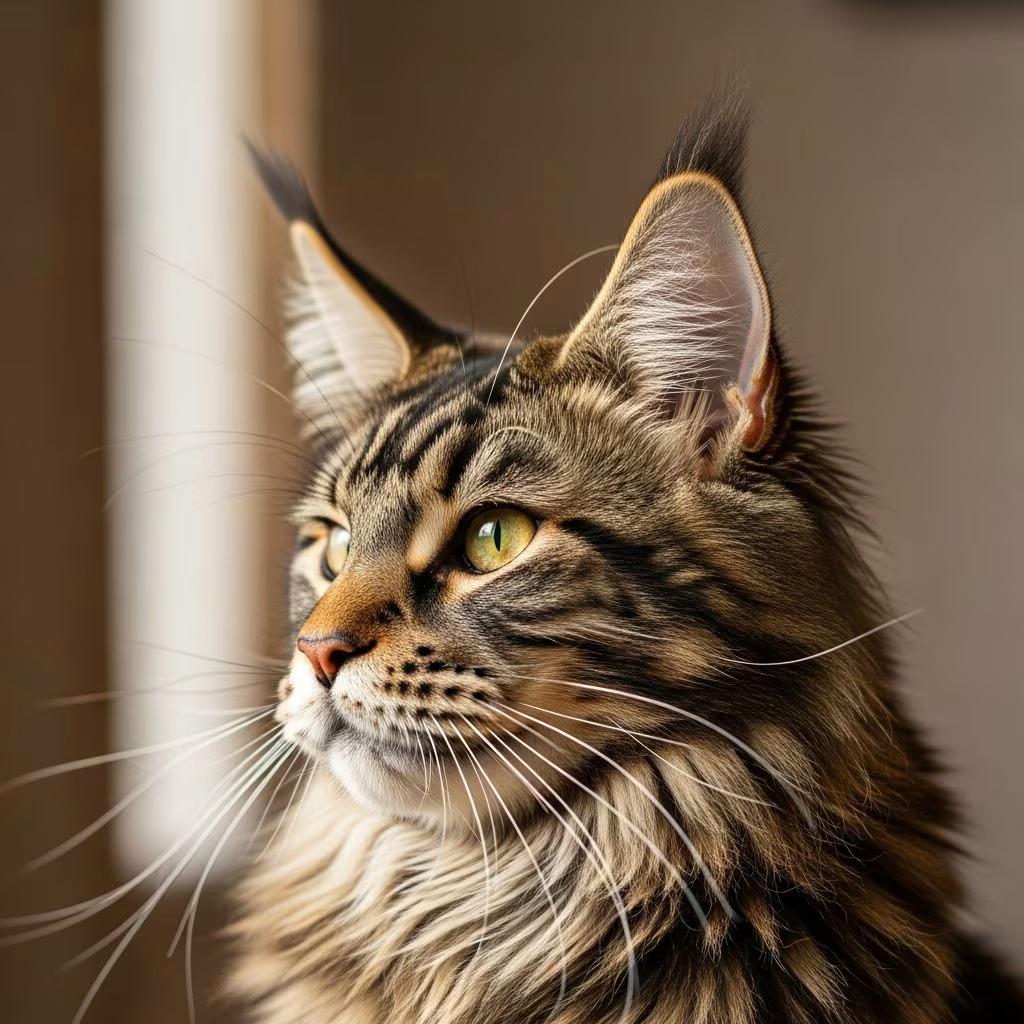
Ear tufts represent one of the most visually striking features found in the feline world, serving as identifying markers for numerous cat breeds. These distinctive fur growths, which extend from the inner and outer edges of a cat’s ears, have become synonymous with certain domestic and hybrid breeds. The presence of these tufts often indicates a cat’s heritage, whether descended from wild ancestors or selectively bred for aesthetic appeal. Understanding which breeds possess this feature provides valuable insight into feline genetics and evolutionary adaptation.
What Are Ear Tufts and Their Significance?
Ear tufts are elongated strands of fur that grow from the pinnae of a cat’s ears, creating a distinctive appearance that ranges from subtle to dramatically pronounced. In wild feline species, these structures serve practical purposes beyond mere aesthetics. The fur acts as a protective barrier against environmental debris, insects, and harsh weather conditions. Additionally, some researchers propose that ear tufts function as sensory enhancers, potentially aiding in sound localization and communication between individuals of the same species.
The terminology surrounding ear features can be confusing, as “ear furnishings” differs from ear tufts. Ear furnishings refer to the longer fur that lines the interior and immediate perimeter of the ear canal, while tufts specifically denote the distinctive growths at the ear’s tip or edges. Many breeds display both characteristics simultaneously, creating the elaborate ear appearance that enthusiasts admire.
Large Domestic Breeds Featuring Prominent Tufts
Maine Coon: The American Giant
The Maine Coon stands as North America’s largest domesticated cat breed, renowned not only for impressive size but also for substantial ear tufts that contribute to their distinctive appearance. These magnificent felines possess thick, luxurious coats that extend to their ears, creating elaborate tuft formations during colder months. Beyond ear adornments, Maine Coons display tufted paws that add to their rugged, outdoorsy aesthetic. Their ability to thrive across diverse climates demonstrates how these physical features evolved to provide functional protection.
Norwegian Forest Cat: Scandinavian Heritage
Originating from the harsh mountainous terrain of Northern Europe, Norwegian Forest Cats developed their magnificent coats and substantial ear tufts as adaptations to severe winter conditions. These cats possess a two-tiered coat system that provides exceptional insulation, with ear tufts serving multiple purposes including temperature regulation and debris protection. Their legendary climbing abilities, immortalized in Norse mythology, complement their physical design perfectly. Like their Maine Coon cousins, these breeds share surprising similarities in structure and temperament despite developing independently on different continents.
Turkish Van: The Distinctive Color Pattern
The Turkish Van presents a unique combination of semi-long fur and striking color patterns that enhance their ear tufts’ visibility. These cats display predominantly white coats with colored patches concentrated around their head and ears, a pattern that naturally highlights their tufted ear structure. The seasonal variation in their ear tufts represents a particularly interesting phenomenon, where these growths become more prominent during winter months and may diminish in warmer seasons, demonstrating the adaptive nature of feline coat development.
Curly-Coated and Specialty Domestic Breeds
LaPerm: Genetic Curl Innovation
The LaPerm breed showcases a unique genetic mutation that causes their entire coat, including ear furnishings, to develop in loose, distinctive curls. This naturally occurring wave pattern originated in the Pacific Northwest and has been selectively preserved through breeding programs. The resulting appearance suggests these cats have recently visited a salon, with their ear tufts displaying the same charming curl pattern as their body fur. Some LaPerms even develop “unicorn horn” formations—singular twisted tufts extending upward from individual ears, adding to their whimsical appearance.
American Curl: Backward Ear Design
American Curl cats possess ears that curve backward in a distinctive formation, a characteristic that naturally showcases their ear furnishings and tufts prominently. This backward curl placement means the thick fur lining their ears becomes immediately visible to observers, making the ear features a defining breed characteristic. Interestingly, litters frequently include both curly-eared and straight-eared kittens, with the straight-eared individuals often displaying equally impressive tufts. These cats appear in both short and longhaired varieties, demonstrating how the ear curl trait expresses independently from coat length genetics.
Spotted and Bobcat-Inspired Breeds
Pixie Bob: Domestic Bobcat Aesthetic
Pixie Bobs were developed through selective breeding to capture the wild appearance of North American bobcats without introducing actual wild genetics into their lineage. These shorthaired cats display spotted coats, abbreviated tails, and notable ear tufts that echo their wild inspiration. Despite their predatory appearance and bold personality, they lack any genuine bobcat ancestry, offering owners the aesthetic appeal of a wild cat with the temperament and trainability of a domestic companion. Their name derives from their distinctive pixie-like facial features and shortened tails rather than any fairy-tale connection.
Hybrid Breeds Incorporating Wild Ancestry
Bengal Cats: Asian Leopard Cat Connection
Bengal cats represent one of the most successful hybrid breeding programs, combining domestic cat genetics with a small percentage of Asian Leopard Cat ancestry. These hybrids frequently inherit dark ear tufts directly from their wild ancestors, creating a striking feature that emphasizes their exotic heritage. The combination of rosette coat patterns, powerful musculature, and prominent ear tufts produces a miniature wild cat aesthetic that appeals to enthusiasts seeking distinctive felines. Their popularity as hybrid cats reflects society’s fascination with accessible exotic appeal.
Savannah: Serval-Inspired Elegance
Savannah cats derive their distinctive features from Serval ancestry, wild African cats renowned for exceptional athleticism and striking appearance. The breeding process, though challenging and costly, produces felines that capture the Serval’s essential characteristics including black-tipped ear tufts and spotted patterns. Many Savannahs also display ocelli—distinctive eye-like markings on their ear backs—creating an illusion of additional eyes that confuse potential predators. The resulting cats represent miniaturized wild felines with the sociability required for domestic living.
Highlander: Multi-Breed Fusion
Highlanders represent an experimental breed combining genetics from Jungle Cats, American Curls, and occasionally Caracals, creating cats with dramatically curled ears adorned with substantial horizontal tufts. These rare felines were intentionally bred to emphasize wild characteristics while maintaining domestic temperament, resulting in stumpy tails and backward-turning ears. An unusual behavioral trait distinguishes Highlanders from most domestic cats: they actively enjoy water interactions, a characteristic inherited from their wild ancestors.
Caracat: The Caracal Hybrid
Caracats represent extremely rare hybrids resulting from crosses between Caracals and domestic cats, created beginning in 2007. These cats inherit unmistakable black ear tufts exceeding one inch in length, directly descended from their wild parent breed. The breeding difficulty and substantial costs associated with producing Caracats have made them controversial within the feline community. To maintain their distinctive wild appearance, breeders typically incorporate Abyssinian bloodlines, ensuring these cats remain visually unmistakable from ordinary domestic varieties.
Wild Feline Species with Exceptional Ear Tufts
Lynx: The Tuft Namesake
Lynx species display such prominent and distinctive ear tufts that the growths themselves became known as “Lynx tips” within feline terminology. These forest-dwelling wild cats inhabit snowy woodlands across the Northern Hemisphere, where their spotted coats and elaborate ear furnishings provide exceptional camouflage. Current scientific understanding suggests their ear tufts function as sensory organs, potentially acting as antennae to enhance their ability to detect distant sounds across their wilderness territories. The tufts also trap debris and help regulate ear temperature in extreme climates.
Serval: African Savanna Predator
Servals occupy African savanna ecosystems, developing exceptionally long legs and distinctive spotted patterns that facilitate their hunting success. While occasionally kept as private pets, these wild cats remain undomesticated despite occasionally forming bonds with individual humans. Their remarkable ear furnishings contribute significantly to their exotic appearance, complementing their extraordinary jumping and digging abilities. Unlike domestic cats, Servals rarely develop multi-human social bonds despite their relatively human-friendly temperament.
Caracal: African and Asian Inhabitant
Caracals, found across African and Asian territories, possess disproportionately large ears featuring massive, densely-packed tufts that curve dramatically, resembling human eyebrows. Beyond maintaining ear cleanliness, researchers hypothesize these tufts serve communicative functions, potentially enabling Caracals to transmit visual messages to conspecifics through deliberate twitching movements. These wild cats represent the extreme end of ear tuft development, with their distinctive ear formations making them immediately recognizable across their native ranges.
Breeds with Ear Furnishings Rather Than Tufts
Ragdoll: The Gentle Giant
Ragdoll cats, distinguished by their colorpoint patterns and striking blue eyes, possess ear furnishings rather than dramatic tufts. These intensely affectionate felines became famous for their tendency to go limp when held, a behavioral trait that inspired their breed name. Beyond ear features, purebred Ragdolls display tufts between their toes, creating a cohesive furry appearance throughout their bodies. Their trainability and playful nature, combined with their beautiful appearance, have made them consistently popular among domestic cat enthusiasts.
Siberian: Russian Winter Adaptation
Siberian cats, originating from Russia’s vast and harsh wilderness regions, represent one of the world’s most ancient cat breeds still actively maintained. These powerful, protective felines developed their luxurious long coats and prominent ear furnishings as essential adaptations for surviving extreme Russian winters. Their combination of strength and gentle temperament makes them excellent companions for those appreciating both their physical prowess and their playful, sweet-natured personalities.
Comparative Feature Table
| Breed Category | Tuft Type | Coat Length | Origin | Temperament |
|---|---|---|---|---|
| Maine Coon | Prominent Tufts | Long | North America | Gentle, Adaptable |
| Norwegian Forest Cat | Prominent Tufts | Long | Scandinavia | Friendly, Agile |
| LaPerm | Curly Tufts | Long (Curly) | Pacific Northwest | Affectionate, Attention-Seeking |
| American Curl | Visible Tufts | Short/Long | United States | Playful, Affectionate |
| Bengal | Dark Tufts | Short | Hybrid (Wild Ancestry) | Active, Intelligent |
| Savannah | Black-Tipped Tufts | Short | Hybrid (Serval Ancestry) | Energetic, Social |
| Ragdoll | Ear Furnishings | Long | United States | Calm, Cuddly |
| Siberian | Ear Furnishings | Long | Russia | Protective, Playful |
Frequently Asked Questions
Do all cats with ear tufts share the same genetic origin?
No, ear tufts evolved independently across various feline lineages. Wild species developed them through natural selection for functional benefits, while domestic breeds either inherited the trait from wild ancestors or developed it through selective breeding for aesthetic purposes.
Are ear tufts purely decorative or do they serve functional purposes?
Ear tufts serve multiple functions including protection against debris, temperature regulation in extreme climates, and potentially enhanced sound localization. In wild species, they likely evolved primarily for functional reasons, while domestic breeds may emphasize their aesthetic qualities.
Can cats without visible ear tufts develop them later in life?
The development of ear tufts is genetically determined, so cats born without them typically will not develop them substantially later. However, some breeds display seasonal variations in tuft prominence, with growth increasing during winter months.
Which breed has the most dramatic ear tufts?
Among domestic breeds, Maine Coons and Norwegian Forest Cats display particularly impressive ear tufts. Among wild species and hybrids, Caracals and Caracats feature the most dramatic formations, with tufts sometimes exceeding one inch in length.
Are hybrid cats with ear tufts legal to own as pets?
Legality varies significantly by jurisdiction. Some regions permit ownership of certain hybrid breeds like Bengals and Savannahs, while others restrict them. Local and state regulations should be consulted before acquiring any hybrid feline.
Conclusion
Ear tufts represent a fascinating aspect of feline diversity, appearing across numerous domestic breeds and wild species worldwide. From the magnificent Maine Coon to the exotic Caracat, these distinctive features serve as visual identifiers while maintaining practical functions evolved over millennia. Understanding the various breeds that display ear tufts provides insight into feline genetics, selective breeding practices, and the remarkable adaptations that distinguish different cat populations. Whether appreciating them for aesthetic appeal or functional significance, ear tufts continue to captivate feline enthusiasts globally.
References
- 10 Cat Breeds With Ear Tufts (With Info & Pictures) — Hepper. 2024. https://articles.hepper.com/cat-breeds-with-ear-tufts/
- 13 Cat Breeds With Ear Tufts (With Info & Pictures) — Catster. 2024. https://www.catster.com/cat-breeds/cat-breeds-with-ear-tufts/



