

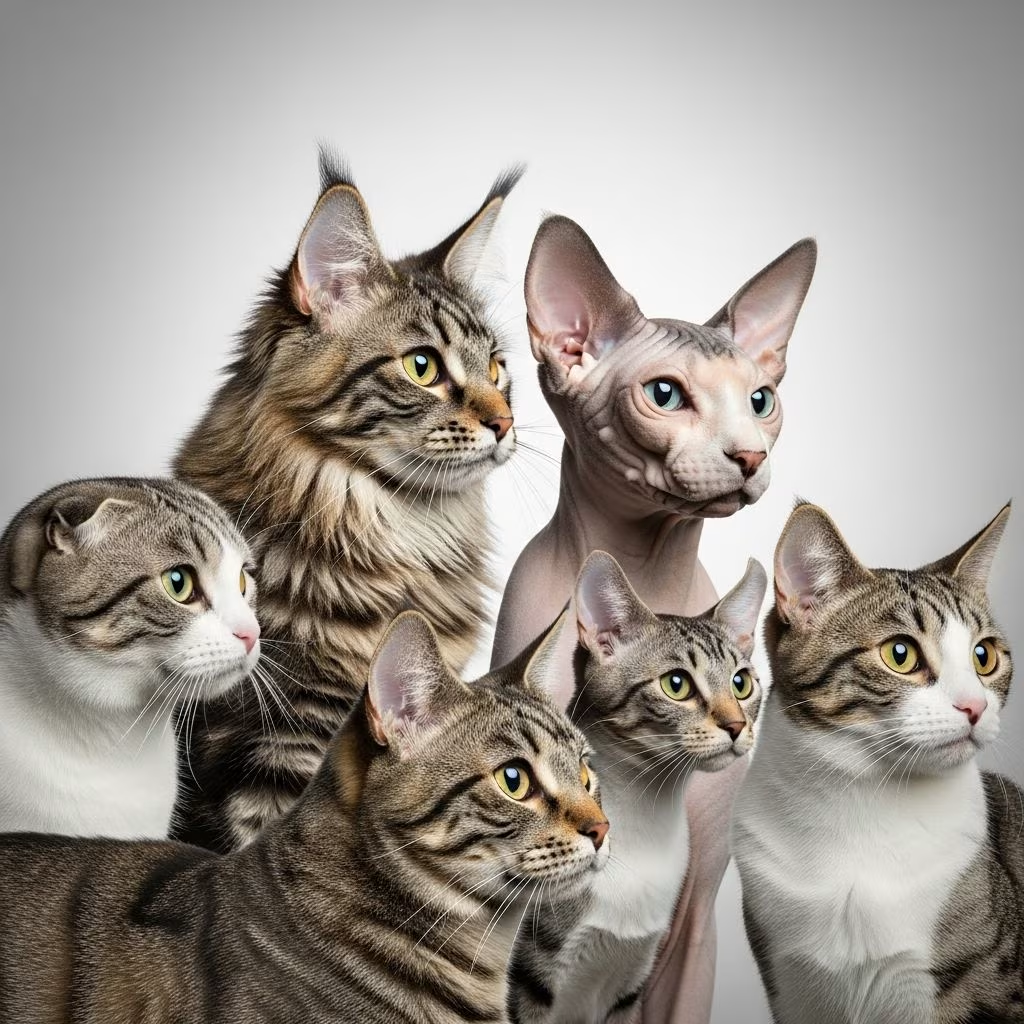
The world of domestic cats encompasses an astonishing variety of physical characteristics, but few features capture the imagination quite like unusual ear shapes. While most cats possess the traditional upright, triangular ears that serve as both aesthetic features and functional hearing instruments, certain breeds have developed remarkable departures from this standard. These distinctive ear formations result from genetic mutations that have been selectively bred by cat enthusiasts and breeders worldwide. Understanding these breeds, their origins, genetic foundations, and special care requirements provides valuable insight into the diversity of the modern cat world.
The Genetics Behind Ear Shape Variations
Cat ear variations stem from dominant genetic mutations that emerged naturally in cat populations before being developed into formal breeds. A dominant gene means that only one copy of the mutation is necessary for a cat to express the trait, allowing the characteristic to appear frequently in litters when bred intentionally. The folding or curling of ears typically begins early in a kitten’s development, with the process unfolding over several weeks or months depending on the breed.
These genetic modifications affect the cartilage structure of the ear, causing it to bend, fold, or curl in ways that deviate significantly from standard feline anatomy. The developmental timeline for these changes is remarkably consistent within each breed, allowing breeders to identify and select kittens with the most desirable ear formations early in their lives.
It is important to note that some folded-ear breeds carry genetic considerations that responsible breeders must address. When a cat inherits two copies of certain dominant ear-folding genes, skeletal complications can occur, including cartilage overgrowth in the paws and tail vertebrae fusion. This is why ethical breeding practices focus on maintaining genetic diversity and limiting the expression of problematic mutations.
Scottish Fold: The Iconic Folded-Ear Breed
Perhaps no cat breed has become more synonymous with folded ears than the Scottish Fold. This breed achieved remarkable popularity due to its distinctive appearance, characterized by ears that fold forward and downward against the skull, creating an owl-like expression that appeals to cat lovers worldwide.
Physical Characteristics and Development
Scottish Folds possess round, broad heads with large, expressive eyes that enhance their characteristic owl-like appearance. Their bodies are compact and muscular, supported by short, dense coats available in virtually every color and pattern imaginable. The ears themselves represent the breed’s most defining feature—they fold forward in a smooth curve, with some individuals developing double or even triple folds that breeders selectively cultivated over generations.
Interestingly, Scottish Fold kittens are born with straight, upright ears identical to any other kitten. The folding process begins around four weeks of age, with the transformation completing fully by approximately three months old. This developmental timeline allows breeders to observe and select kittens showing the most pronounced and aesthetically pleasing fold patterns.
Temperament and Personality
Scottish Folds are renowned for their sweet, affectionate nature. These cats typically exhibit laid-back personalities and genuinely enjoy human companionship, making them excellent lap cats for families seeking interactive pets. They balance their calm demeanor with playful tendencies, remaining engaged with interactive toys and games throughout their lives. Their gentle disposition makes them suitable for households with children and other pets.
Health Considerations
The same genetic mutation responsible for the Scottish Fold’s charming ears can create health challenges. Ear infections and hearing problems occur with increased frequency in this breed due to the folded ear structure trapping moisture and debris. Additionally, the gene can cause skeletal issues when cats inherit two copies, resulting in thickened, swollen joints and stiff movements. Responsible breeders address these concerns by breeding folded-eared individuals exclusively with straight-eared cats to minimize problematic gene combinations in offspring.
| Characteristic | Detail |
|---|---|
| Height | 7–10 inches |
| Weight | 6–13 pounds |
| Lifespan | 11–15 years |
| Coat Type | Short, dense |
| Ear Development | Begins at 4 weeks, complete by 3 months |
American Curl: Ears That Sweep Backward
While Scottish Folds developed in the United Kingdom, the American Curl emerged from California during the 1980s, originating when a couple adopted a stray cat with unusually curled ears and recognized the potential for a new breed. The American Curl represents a distinctly different approach to ear mutation, with ears that curl backward toward the center of the skull rather than folding forward.
Distinctive Ear Architecture
The American Curl’s most striking feature involves ears that curl or sweep backward in a smooth, continuous arc, somewhat resembling a seashell or rolled scroll. These ears feel rigid rather than soft, and their degree of curl varies considerably among individuals, ranging from subtle curves to dramatic spirals. The ears are mobile and expressive, contributing to the breed’s animated appearance and seemingly inquisitive expression.
Development of the curl follows a predictable pattern. American Curl kittens are born with completely straight ears, but between three and five days after birth, the characteristic curling begins. The process continues gradually over several months, with the ear set becoming stable around sixteen weeks of age. By this point, breeders can accurately predict the final curl configuration that will persist throughout the cat’s lifetime.
Physical Structure and Appearance
American Curls possess medium-sized bodies with muscular builds supporting semi-long coats featuring soft, silky texture. Their fur appears in virtually every color and pattern combination, including solids, tabbies, and multicolored combinations. These cats maintain an alert, intelligent expression enhanced by their distinctive ears and responsive nature.
Temperament and Behavioral Traits
American Curls are known for their affectionate, vocal personalities. They form strong bonds with their human families and demonstrate dog-like loyalty, often following their owners throughout the home. These cats actively engage in interactive play and respond well to training, making them adaptable to various household environments. Their friendly nature extends to children and other pets, positioning them as excellent family companions.
Health Advantages Over Other Ear-Mutant Breeds
One significant advantage American Curls enjoy over Scottish Folds involves genetic health outcomes. Unlike the folded-ear gene, the curl mutation does not cause detrimental skeletal side effects, even when cats inherit two copies of the gene. This distinction makes American Curls inherently healthier regarding ear-related genetics, though responsible ear care remains important for maintaining aural health.
| Characteristic | Detail |
|---|---|
| Height | 18–20 inches |
| Weight | 5–12 pounds |
| Lifespan | 12–16 years |
| Coat Type | Semi-long, silky |
| Ear Curl Development | Begins at 3-5 days, complete by 16 weeks |
Devon Rex and LaPerm: Curly-Coated Cousins
Beyond folded and curled ears, some breeds feature entirely different ear characteristics paired with distinctive coat textures. The Devon Rex and LaPerm represent fascinating examples of genetic diversity in feline physical traits.
Devon Rex: Elfin Elegance
The Devon Rex originated in Devonshire, England, during 1959 when a domestic cat named Kirlee gave birth to kittens featuring strikingly unusual curly coats. While their ears are not dramatically folded or curled like Scottish Folds or American Curls, Devon Rex cats possess large, slightly pointed ears that contribute to their distinctive elfin appearance. Their most remarkable feature involves their soft, silky, distinctly curly coat that sets them apart visually and tactually from other breeds.
Devon Rex cats display slender builds with playful, expressive faces. Their coats appear in numerous colors and patterns, all featuring the characteristic curl that makes these cats unmistakably distinctive. Their personalities match their unique appearance—playful, affectionate, and highly social, Devon Rex cats thrive on interaction and often bond intensely with their families.
LaPerm: The Curly Revolution
The LaPerm breed emerged in Oregon during the 1980s from an unexpected source—a stray cat with curly fur. When a woman named Linda Koehl took in the cat and it produced offspring, one kitten displayed the same curly coat characteristic, which Koehl named LaPerm. The breed achieved official recognition from The International Cat Association in 2003, validating decades of selective breeding efforts.
LaPerm cats feature medium-sized, muscular bodies covered with distinctive loose, bouncy curls available in both long and short coat lengths. Their coats appear in virtually every color and pattern, with the curly texture serving as the breed’s defining characteristic. These cats are known for their affectionate, playful nature and their ability to adapt well to various living situations.
Ukrainian Levkoy: Folded Ears Meets Hairlessness
The Ukrainian Levkoy represents a unique combination of traits seldom seen in any other breed. This rare cat combines the folded ears characteristic of Scottish Folds with the hairlessness of the Donskoy breed, creating a striking and unforgettable appearance.
Ukrainian Levkoys possess medium-sized, athletic, muscular bodies with distinctly wrinkled, loose skin that contributes to their exotic appearance. Their folded ears resemble those of Scottish Folds, while their hairlessness creates a completely distinctive silhouette. These cats come in various colors and patterns visible on their skin. They require special care regarding temperature regulation and skin protection, making them suitable primarily for experienced cat owners capable of meeting their unique needs.
Foldex: The Exotic-Scottish Fusion
The Foldex represents a deliberate crossing of Scottish Fold and Exotic Shorthair breeds, originating in Quebec, Canada, during the early 1990s. These rare cats combine the folded ears of Scottish Folds with the round, Persian-like face of Exotics, creating compact, sturdy cats with plush short coats.
Foldex cats possess round heads with large, expressive eyes and friendly, affectionate personalities. They come in various colors and patterns, with their distinctive combination of features making them increasingly sought after by breeders and enthusiasts. Like Scottish Folds, they require careful breeding practices to minimize genetic health concerns associated with double-copy gene inheritance.
Highlander: Wild Appearance with Domestic Heart
Highlanders display a distinctive wild appearance featuring curled ears, bobbed tails, and muscular, athletic builds. These large, robust cats come in various patterns and colors including tabby, tortoiseshell, and solid shades. Despite their striking appearance suggesting outdoor prowess, Highlanders display dog-like loyalty and affectionate personalities, following their owners throughout their homes and forming intense family bonds.
Comprehensive Care Guidelines for Ear-Distinctive Breeds
Ear Maintenance and Health
- Inspect folded or curled ears weekly for debris, moisture, or signs of infection
- Gently clean ears with veterinarian-approved solutions, avoiding insertion into ear canals
- Monitor for excessive scratching, odors, or discharge indicating potential infections
- Schedule regular veterinary examinations specifically addressing aural health
- Keep ears dry after bathing, as moisture can accumulate in folded structures
General Health Monitoring
Owners of breeds with ear mutations should remain vigilant regarding potential skeletal issues, particularly in Scottish Folds. Regular veterinary check-ups help identify developing problems early, while maintaining appropriate weight through balanced nutrition and exercise supports joint health. Most ear-distinctive breeds thrive on high-quality commercial cat foods formulated to support coat and skin health.
Frequently Asked Questions
Are folded or curled ear cats healthier than standard cats?
Folded-ear breeds like Scottish Folds can develop genetic skeletal issues, while curled-ear breeds like American Curls generally avoid these complications. However, both groups require diligent ear care to prevent infections. American Curls typically enjoy health advantages over Scottish Folds regarding ear-related genetics.
Can ear mutations be painful for cats?
The ear mutations themselves are not inherently painful, but folded ear structures can trap moisture and bacteria, increasing infection risk and potential discomfort. Proper ear hygiene helps prevent these secondary issues.
At what age do kittens develop their characteristic ear shapes?
Development timelines vary by breed: Scottish Folds begin folding around four weeks with completion by three months, while American Curl curling begins at three to five days of age and stabilizes by sixteen weeks.
Are these breeds suitable for first-time cat owners?
American Curls and most curled-ear breeds adapt well to various owners. Scottish Folds require more attentive care due to potential health concerns. Breeds combining multiple mutations, like Ukrainian Levkoys, demand experienced owners capable of meeting specialized needs.
Do ear mutations affect hearing ability?
While the mutations themselves don’t directly impair hearing, folded ear structures can contribute to infections that may temporarily affect hearing. Regular ear care helps maintain optimal auditory function.
References
- Unusual Cat Breeds with Folded or Curled Ears — CatWisdom101. https://catwisdom101.com/unusual-cat-breeds-with-folded-or-curled-ears/
- Curled, Curved and Folded Ear Cats — MessyBeast. https://messybeast.com/foldear-cats.html
- 10 Cats With Folded or Curled Ears (With Info & Pictures) — Catster. https://www.catster.com/cat-breeds/cats-with-folded-or-curled-ears/
- Cats with Folded Ears — BetterPet. https://www.betterpet.com/learn/cats-with-folded-ears



