

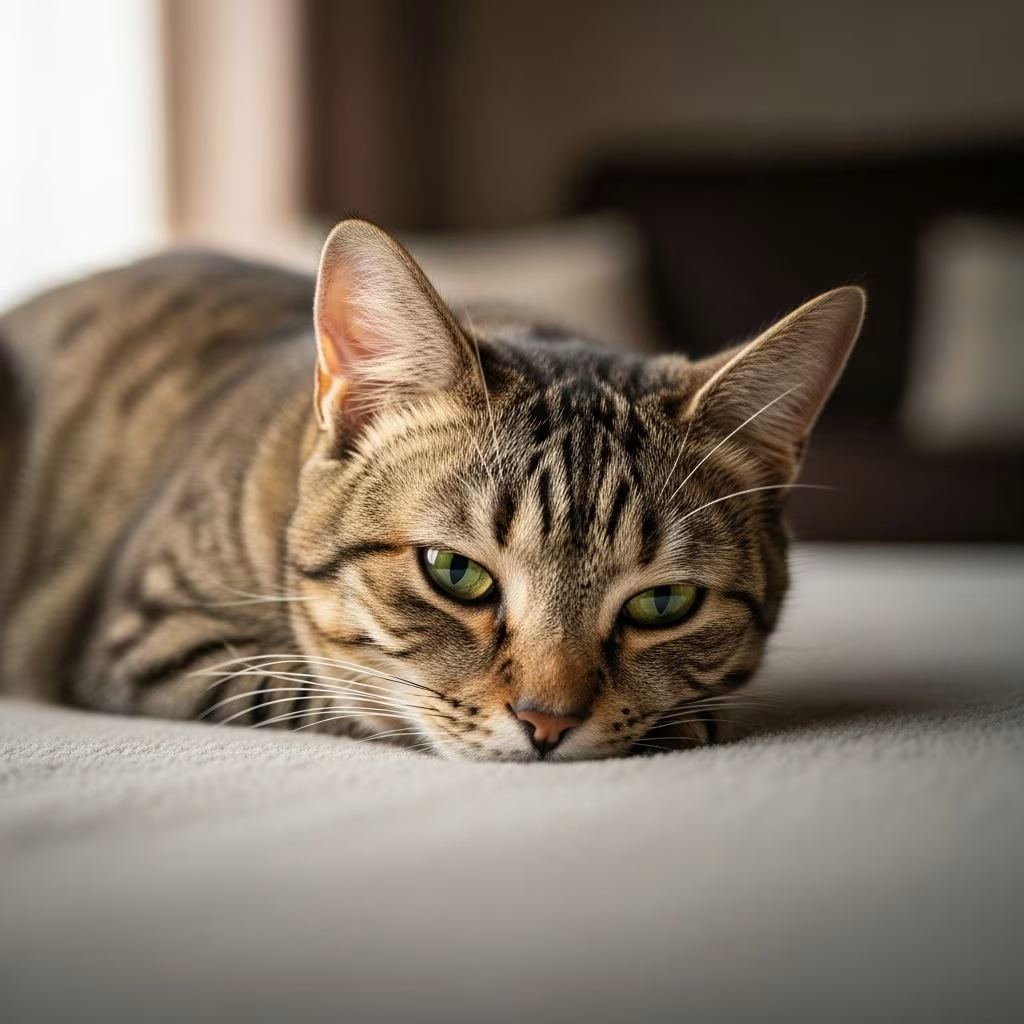
Feline dysautonomia, sometimes known as Key-Gaskell syndrome, represents a serious neurological condition that disrupts the autonomic nervous system in cats. This system oversees involuntary processes like heart rate, digestion, and pupil response, making its failure profoundly debilitating. Cat owners must recognize early indicators to pursue timely veterinary intervention, though outcomes remain challenging.
The Autonomic Nervous System in Cats
The autonomic nervous system (ANS) functions as the body’s silent controller, managing essential operations without conscious input. It divides into sympathetic and parasympathetic branches, which balance activities such as slowing the heart during rest or accelerating it during stress. In cats with dysautonomia, neurons within this network degenerate, leading to widespread malfunction.
This degeneration primarily affects cranial and sacral ganglia, impairing signals to organs. Consequently, cats experience uncoordinated bodily responses, from fixed pupils to stalled gut motility. Understanding this foundation helps owners grasp why symptoms span multiple systems.
Recognizing Early Warning Signs
Initial symptoms often emerge subtly over 3-4 days, starting with lethargy, reduced appetite, or mild gastrointestinal upset. Cats may appear mentally dulled, avoiding interaction or showing disinterest in food. Respiratory issues like nasal discharge or coughing can accompany these, mimicking common infections.
- Mental depression and withdrawal from normal activities
- Loss of appetite leading to rapid weight decline
- Intermittent diarrhea or early vomiting episodes
- Slight elevation in third eyelid visibility
These precursors demand prompt veterinary evaluation, as progression accelerates without intervention.
Advanced Clinical Manifestations
As dysautonomia advances, hallmark ocular signs dominate: pupils dilate permanently and fail to react to light, causing photophobia and third eyelid protrusion. Dry eyes from absent tear production heighten infection risk, while dry mucous membranes affect nose and mouth.
Gastrointestinal and urinary disruptions intensify. Megaesophagus develops, pooling food and triggering regurgitation, while constipation or incontinence arises from poor sphincter control. Bladder distension becomes evident, often requiring manual expression.
| System Affected | Key Symptoms | Potential Complications |
|---|---|---|
| Ocular | Dilated pupils, dry eyes, third eyelid prolapse | Corneal ulcers, blindness risk |
| Digestive | Regurgitation, constipation, megaesophagus | Aspiration pneumonia, malnutrition |
| Urinary | Overflow incontinence, distended bladder | Urinary tract infections |
| Respiratory | Dyspnea, nasal discharge | Pneumonia |
Neurological deficits include bradycardia, muscle wasting, and lost spinal reflexes, compounding weakness. Owners frequently note a gaunt appearance from dehydration and cachexia.
Unraveling the Causes
The precise etiology of feline dysautonomia remains elusive, with no definitive trigger identified. Hypotheses include toxin exposure, notably Clostridium botulinum type C neurotoxin found in affected cats’ feces and food in outbreaks. This bacterial toxin disrupts nerve signals, mirroring ANS failure.
Geographically, cases cluster in the UK and sporadically in the US, hinting at environmental factors like contaminated feed. Viral or genetic links lack robust evidence, though young cats (6 months to 5 years) predominate. Indoor cats face higher risk in some reports, possibly from diet.
Unlike canine forms tied to grass poisoning (e.g., Agrostemma githago), feline cases show no consistent plant toxin. Ongoing research probes microbial roles, but diagnosis relies on clinical presentation and exclusion of differentials like toxoplasmosis.
Diagnostic Approaches
Veterinarians diagnose dysautonomia through history, physical exam, and targeted tests. Ocular pharmacology confirms denervation: unresponsive pupils to pilocarpine or phenylephrine indicate ANS loss. Radiographs reveal megaesophagus and gas-dilated intestines.
Urinalysis checks for infections from retention, while bloodwork assesses dehydration and electrolytes. Endoscopy or contrast studies visualize esophageal hypomotility. Necropsy in fatal cases shows characteristic ganglion degeneration, aiding epidemiological tracking.
Comprehensive Treatment Strategies
No cure exists; management focuses on symptom palliation and supportive care. Primary goals: correct dehydration via IV fluids, ensure nutrition through tubes or total parenteral methods, and prevent secondary issues.
- Fluid Therapy: Bolus IV crystalloids followed by maintenance to stabilize electrolytes.
- Nutrition: Nasogastric or gastrostomy tubes for megaesophagus; upright feeding posture.
- Ocular Care: Artificial tears every 4-6 hours to combat keratoconjunctivitis sicca.
- GI Support: Laxatives for constipation, prokinetics like metoclopramide (0.3 mg/kg SC q8h).
- Bladder Management: Manual expression 3-4 times daily; bethanechol (1-2.5 mg PO q8-12h) for tone.
Antibiotics target pneumonia or UTIs, while warmth, grooming assistance, and humidified air aid comfort. Hospitalization spans weeks for severe cases.
Long-Term Care and Home Management
Survivors require lifelong adaptations. Elevated feeding stations minimize regurgitation; soft diets ease digestion. Regular vet checkups monitor residuals like chronic constipation or dry eyes.
Owners must commit to daily routines: eye lubricants, bladder expresses, and weight tracking. Some cats regain partial function over 6-12 months, but full recovery is rare. Quality-of-life assessments guide euthanasia decisions.
Prognosis and Survival Statistics
Prognosis is guarded to poor. Over 90% of severe cases succumb to complications like aspiration pneumonia or euthanasia due to suffering. Mildly affected cats have 20-50% survival odds, often with permanent deficits.
Recovery timelines extend to a year, demanding intensive care. Factors favoring survival: early detection, mild presentation, owner dedication. US incidence is low, reducing herd immunity concerns.
Prevention Tips for Cat Owners
Preventive measures are limited sans known cause, but vigilance helps. Monitor young or indoor cats for subtle changes; store dry food properly to deter bacterial growth. Annual wellness exams facilitate early spotting.
Educate on toxin risks, avoiding suspect feeds during outbreaks. Promptly address regurgitation or eye changes with vets.
Frequently Asked Questions (FAQs)
What is the first sign of dysautonomia in cats?
Early indicators include appetite loss, lethargy, or upper respiratory symptoms, progressing to ocular changes.
Can cats fully recover from dysautonomia?
A minority recover substantially, but most retain some dysfunction; full restoration is uncommon.
Is dysautonomia contagious?
No evidence supports transmission between cats; environmental toxins may play a role.
How much does treatment cost?
Costs vary ($2,000-$10,000+) based on hospitalization duration and interventions; consult vets for estimates.
Which cats are most at risk?
Young adults (6 months-5 years), especially indoor ones, though any cat can be affected.
Emerging Research and Future Outlook
Recent studies implicate botulinum toxins, spurring food safety probes. Genetic screening lacks viability now, but toxin assays advance diagnostics. Collaborative efforts may yield preventives, improving odds.
Owners play pivotal roles via awareness and rapid action. While daunting, informed care extends lives and eases suffering.
References
- Dysautonomia in Cats – Cat Owners – Merck Veterinary Manual — Merck & Co. 2023. https://www.merckvetmanual.com/cat-owners/brain-spinal-cord-and-nerve-disorders-of-cats/dysautonomia-in-cats
- Dysautonomia in Cats – Cat Owners – MSD Veterinary Manual — MSD. 2023. https://www.msdvetmanual.com/cat-owners/brain-spinal-cord-and-nerve-disorders-of-cats/dysautonomia-in-cats
- Key-Gaskell Syndrome in Cats — PetMD. 2024. https://www.petmd.com/cat/conditions/neurological/c_ct_dysautonomia_key_gaskell_syndrome
- Feline Dysautonomia: Mystery Solved? — Clinician’s Brief. 2018. https://www.cliniciansbrief.com/column/category/column/capsules/feline-dysautonomia-mystery-solved
- Feline Dysautonomia — Merck Veterinary Manual (Professional). 2023. https://www.merckvetmanual.com/nervous-system/dysautonomia/feline-dysautonomia
- Dysautonomia in a cat — PubMed (J Am Vet Med Assoc). 1988. https://pubmed.ncbi.nlm.nih.gov/3391854/
- Feline Dysautonomia in the United States — EveryCat Health Foundation. 2022. https://everycat.org/cat-health/feline-dysautonomia-in-the-united-states/



