

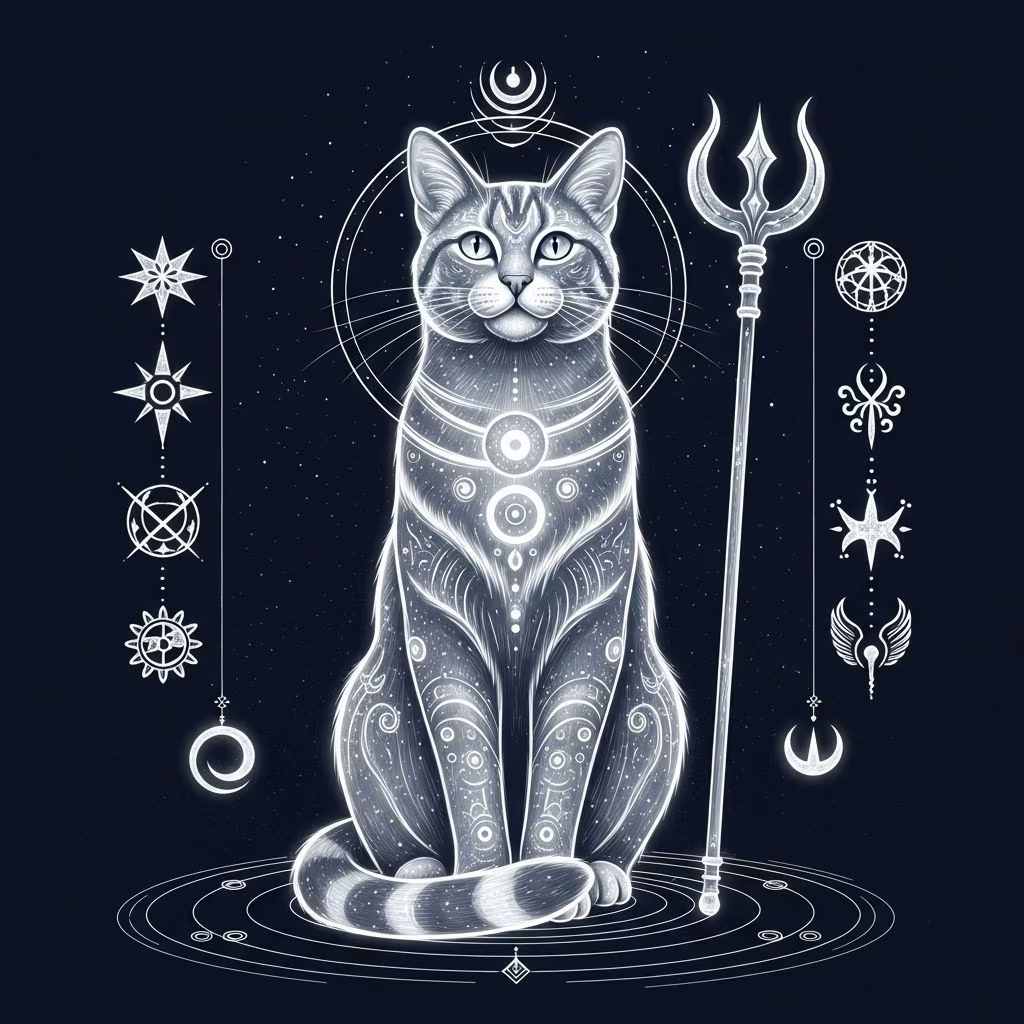
Cats have long transcended their role as household companions, ascending to divine pedestals in numerous ancient cultures. Revered for their grace, independence, and prowess in hunting vermin, these creatures embodied protection, fertility, and supernatural power. From the sun-baked temples of Egypt to the misty realms of Norse sagas, feline deities influenced rituals, art, and daily life, leaving an indelible mark on human spirituality.
The Dawn of Feline Worship: Early Reverence
The veneration of cats traces back thousands of years, coinciding with their domestication around 4000 BCE in regions like ancient Egypt. Farmers and priests alike prized felines for controlling pests that threatened grain stores and health, elevating them from practical allies to sacred beings. This shift marked the beginning of a global phenomenon where cats symbolized vigilance and mystery, often linked to the night sky and lunar cycles due to their nocturnal habits.
In agrarian societies, offerings of milk and food ensured feline favor, mirroring tributes to higher gods. Archaeological finds, including mummified cats by the millions, underscore this devotion, revealing a worldview where the domestic cat mirrored cosmic forces of order against chaos.
Egyptian Pantheon: Guardians of the Nile
Ancient Egypt stands as the epicenter of cat divinity, where felines intertwined with solar worship and royal protection. The Nile Valley’s deities often bore cat-like traits, reflecting the animal’s dual nature of gentle nurture and fierce defense.
Bastet: The Joyful Protector
Bastet, one of the most iconic cat goddesses, evolved from a lioness warrior to a serene feline figure during Egypt’s Middle Kingdom. Daughter of the sun god Ra, she patrolled the skies by day and transformed into a cat at night to battle the serpent Apep, ensuring dawn’s return. Her temples at Bubastis hosted massive festivals with music, dance, and revelry, blending pleasure with piety. Worshippers sought her blessings for fertility, motherhood, and health, often depicting her with kittens to symbolize abundance.
Sekhmet: Fury of the Battlefield
Contrasting Bastet’s warmth, Sekhmet channeled raw warlike energy as a lion-headed goddess. She unleashed solar fire upon Ra’s foes, leading pharaohs into combat while doubling as a healer. Egyptians invoked her against plagues and ailments, offering blood-dyed beer to appease her rage—a ritual born from myths where she nearly eradicated humanity before being tricked into drunken stupor.
Mafdet: Swift Executioner
Predating Bastet, Mafdet embodied justice as ‘the runner,’ a cheetah-headed avenger who shredded evildoers’ hearts for pharaohs and shielded Ra from serpents and scorpions. Her cult emphasized speed and precision, with claws symbolizing inevitable retribution. Farmers revered her for venom protection, integrating her into household shrines.
- Bastet: Protection, joy, fertility; cat or woman with cat head.
- Sekhmet: War, healing; lioness form.
- Mafdet: Justice, anti-venom; cheetah attributes.
Beyond the Nile: Cats in Asian and Mesoamerican Lore
Egypt’s influence rippled outward, but indigenous traditions worldwide crafted their own feline gods, adapting cats to local needs like agriculture and cosmic balance.
Li Shou: China’s Crop Savior
In ancient China, Li Shou emerged from the Book of Rites as a prominent cat deity guarding fields from rats and mice. Farmers honored him with rituals to secure harvests, viewing his presence as essential for prosperity. This agricultural focus highlighted cats’ practical divinity in rice-dependent societies.
Ai-Apaec: The Feared Decapitator
Mochica culture of pre-Inca Peru worshipped Ai-Apaec, a cat-faced god of creation and destruction. Adorned with feline fangs and claws, he demanded human sacrifices, embodying the cycle of life through violent renewal. His imagery dominated ceramics, instilling awe and terror.
Dawon and Tezcatlipoca: Tigers of Power
Hinduism gifted goddess Parvati the tiger Dawon as her battle mount, its ferocity amplifying her dominion over destruction and rebirth. In Mesoamerica, Aztec god Tezcatlipoca, ‘Smoking Mirror,’ shapeshifted into jaguar form, ruling night and sorcery with obsidian mirrors foretelling fate.
| Deity | Culture | Attributes | Symbol |
|---|---|---|---|
| Li Shou | Chinese | Crop protection | Cat |
| Ai-Apaec | Mochica | Creation/destruction | Cat head |
| Dawon | Hindu | Warrior steed | Tiger |
European Echoes: Norse, Greek, and Celtic Felines
Northern Europe’s chillier climes birthed cat gods tied to magic, harvest, and the underworld, blending domestic utility with otherworldly allure.
Freyja: Chariot Queen of the Cats
Norse goddess Freyja, patron of love, war, and seidr magic, rode a chariot pulled by two immense cats gifted by thunder god Thor. These beasts brought fortune to farms, prompting offerings for bountiful yields. Freyja’s felines underscored themes of fertility and prosperity in Viking lore.
Hecate: Shapeshifter of the Crossroads
Greek Hecate, triple-formed witch queen, escaped monster Typhon by morphing into a cat, thereafter treating all felines as kin. Guardian of magic and ghosts, she prowled nights with spectral cats, illuminating witchcraft’s feline ties.
Ovinnik and Ceridwen: Slavic and Welsh Watchers
Polish Ovinnik, a cat-shaped spirit, safeguarded livestock from fairies and phantoms, earning farmers’ respect. Welsh Ceridwen, wisdom’s crone, employed cats as aides in potion-brewing, their cunning aiding transformative magic.
Near Eastern Shadows: Babylonian Ferocity
In Mesopotamia, Babylonian gods adopted big cat ferocity for war and plague.
Nergal: The Raging Lion
Nergal, underworld lord of destruction, manifested as a lion, scorching foes with summer sun wrath. Invoked for protection, his rampages mirrored feline unpredictability.
Modern Echoes and Cultural Legacy
Though ancient cults faded, feline divinity persists in art, tarot (Isis-linked cats on High Priestess), and pet culture. Today’s cat enthusiasts unknowingly channel millennia-old reverence, with breeds like Abyssinian evoking Sekhmet or Serengeti mirroring Bastet. Museums house cat statues, reminding us of their eternal mystique.
Comparative Table of Major Feline Deities
| Deity | Origin | Primary Role | Animal Form |
|---|---|---|---|
| Bastet | Egypt | Protection/Fertility | Cat |
| Sekhmet | Egypt | War/Healing | Lioness |
| Freyja’s Cats | Norse | Fortune/Love | Large Cats |
| Li Shou | China | Pest Control | Cat |
| Hecate | Greek | Magic | Cat Shapeshift |
Frequently Asked Questions
Why were cats worshipped in ancient Egypt?
Cats protected grain from pests and symbolized protection against evil, linking them to gods like Ra.
Did other cultures besides Egypt have cat gods?
Yes, Norse Freyja, Chinese Li Shou, and Mochica Ai-Apaec exemplify global feline reverence.
What happened to cat worship over time?
Christianity suppressed it in Europe, but Egyptian traditions endured via artifacts and folklore.
Are there modern cat deities?
No formal worship, but cats retain symbolic power in media and spirituality.
How did cats influence mythology?
Their independence and hunting skills made them emblems of power, mystery, and guardianship worldwide.
References
- Cat Mythology 101: The Power of Cats in Myth, Religion and Legend — PrettyLitter Blog. 2023. https://www.prettylitter.com/blog/cat-mythology-101-the-power-of-cats-in-myth-religion-and-legend
- Cat Gods and Goddesses from Ancient Myth — PetCareRx. 2022-10-15. https://www.petcarerx.com/article/cat-gods-and-goddesses-from-ancient-myth/3600
- Cat Gods: 7 Feline Deities from Ancient Cultures — History Cooperative. 2024. https://historycooperative.org/cat-gods-feline-deities/
- Top 20 Cat Gods & Myths — Lyriahnam. 2023. https://www.lyriahnam.com/myths/top-20-cat-gods-and-myths
- Category:Cat deities — Wikipedia. 2025-01-01. https://en.wikipedia.org/wiki/Category:Cat_deities



