

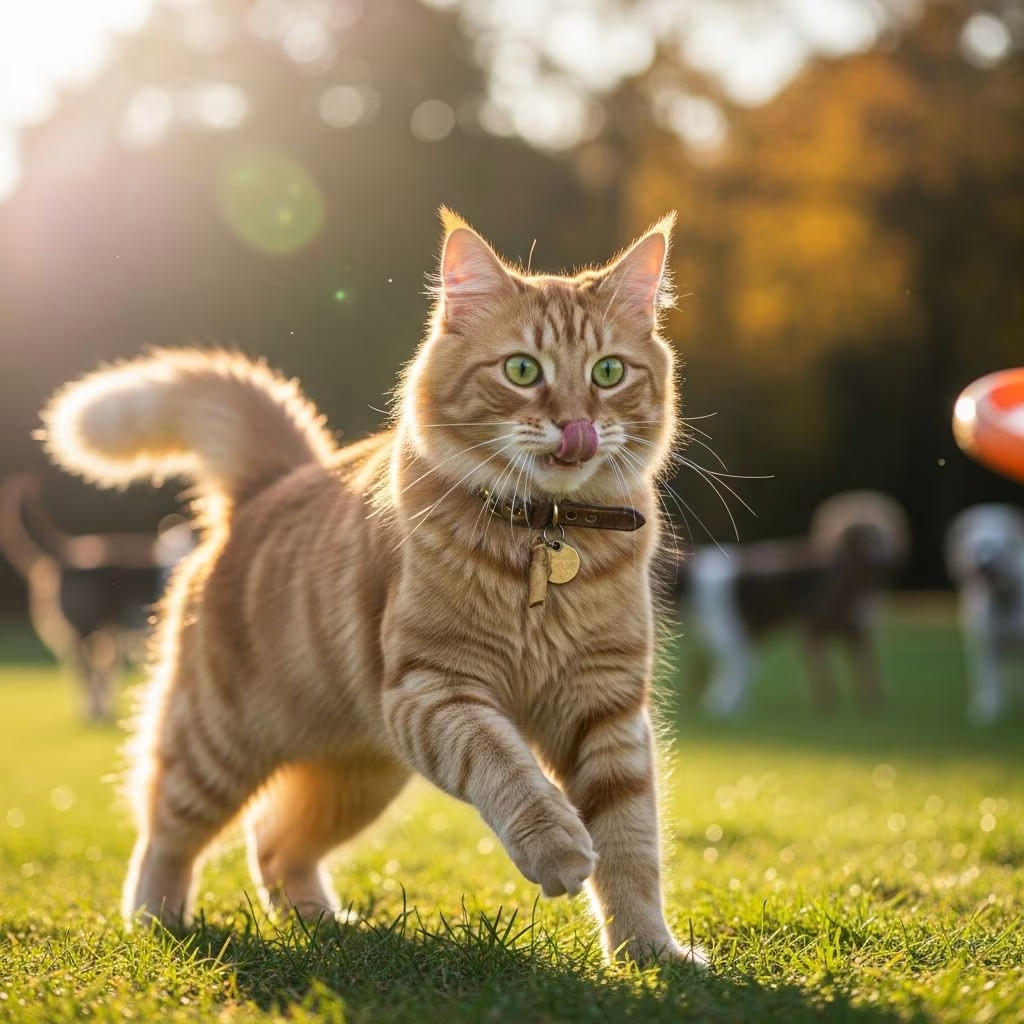
The notion that cats and dogs represent fundamentally different personality types is increasingly challenged by feline breeds that demonstrate distinctly canine behaviors. Many cat owners discover their pets display unexpected loyalty, trainability, and social engagement traditionally associated with dogs. These exceptional felines bridge the gap between the independent cat stereotype and the devoted companionship dogs are known for, offering pet owners the best of both worlds.
What Makes a Cat “Dog-Like”?
Understanding the characteristics that define dog-like feline behavior helps potential owners identify breeds that match their lifestyle and expectations. These behaviors manifest across multiple dimensions of personality and activity.
Primary Behavioral Indicators
- Active Following: These cats maintain proximity to their owners throughout daily activities, moving from room to room and seeking engagement rather than solitude.
- Responsive Training: Like their canine counterparts, these breeds demonstrate intelligence and food motivation that enables them to learn commands, respond to their names, and participate in interactive games.
- Social Orientation: They actively seek human interaction, greet visitors with enthusiasm, and integrate into household routines rather than avoiding social situations.
- Physical Affection Seeking: These cats crave lap time, enjoy being held, and initiate contact with their owners rather than tolerating touch on their terms alone.
- Adventurous Disposition: They adapt well to harness training, enjoy supervised outdoor exploration, and demonstrate confidence in new environments.
Secondary Behavioral Traits
Beyond the primary indicators, dog-like cats often exhibit supplementary behaviors that strengthen their canine comparisons. These include greeting owners at doors upon arrival, displaying protective instincts by alerting to unusual household sounds, anticipating meal times by waiting near food bowls, and preferring to sleep in close physical proximity to their humans. Some breeds develop the capacity to learn household routines, adapting their behavior to family schedules and demonstrating understanding of daily patterns.
Top Breeds Exhibiting Canine Characteristics
The Gentle Giants: Maine Coons
Maine Coon cats represent some of the largest domestic feline breeds while maintaining surprising gentleness and affection. These cats establish deep family connections and demonstrate consistent loyalty comparable to devoted dogs. Their size and substantial presence, combined with their desire to participate in family activities, make them immediately recognizable as dog-like companions. Maine Coons respond positively to leash training, enjoy interactive play sessions, and pick up basic commands with relative ease. Their adaptability extends to various living situations, and they maintain their friendly disposition even in busy households with multiple inhabitants.
The Active Leopards: Bengals
Bengal cats bring intense energy and athleticism to the feline world. Their intelligence surpasses many standard domestic breeds, enabling them to engage in complex training protocols. These cats thrive on mental and physical stimulation, often enjoying fetch games and harness walks that mirror canine recreation. Their boldness and curiosity create a distinctly dog-like presence as they confidently explore their environments and interact with their owners. Bengals bond intensely with their chosen humans and demonstrate enthusiasm during playtime that rivals any playful dog.
The Elegant Athletes: Savannahs
Savannah cats combine athleticism with a confident, outgoing demeanor. Their active nature drives them toward climbing, exploring, and learning new skills. Many Savannahs take enthusiastically to leash training and benefit from structured play sessions that challenge their physical capabilities. These cats seek adventure-style enrichment and demonstrate the kind of adventurous spirit typically associated with sporting dogs. Their confidence in unfamiliar situations and ability to navigate complex environments showcase their dog-like adaptability and bravery.
The Vocal Companions: Siamese
Siamese cats have earned a reputation for being exceptionally social and communicative. They form close bonds with their human families and actively participate in household activities through constant vocalization and presence. These cats literally “talk” to their owners, maintaining ongoing conversations throughout the day. Their need for companionship mirrors canine loyalty, as Siamese cats often become anxious when separated from their preferred humans. Their outgoing personality and attention-seeking behavior create the impression of a small, elegant dog wrapped in feline form.
The Perpetual Enthusiasts: Abyssinians
Abyssinian cats exemplify high-energy, interactive companions that seem to operate on permanent play mode. Their muscular builds and agile movements enable impressive physical feats, and they consistently seek engagement with their owners and environment. Abyssinians respond exceptionally well to leash training and enjoy accompanying their owners on walks and outdoor adventures. Their quick learning ability and responsiveness to training protocols make them ideal for owners seeking an interactive companion. These cats demonstrate the kind of enthusiasm and eagerness to please that defines dog-like behavior.
The Loyal Shadows: Burmese
Burmese cats showcase remarkable loyalty and a strong desire to remain close to their chosen humans. Their intelligence combined with their tendency to follow their owners’ movements creates an almost shadow-like companionship. These outgoing, smart cats enjoy cuddle sessions while maintaining engagement with household activities. Their willingness to greet both family members and visitors joyously at the door demonstrates social confidence and people-oriented personality traits. Burmese cats bond intensely with their families and display the protective instincts more commonly associated with dogs.
The Playful Acrobats: Cornish Rex
Cornish Rex cats possess distinctive curled coats and equally distinctive playful personalities. These cats transform virtually every interaction into a game and actively solicit human participation in their entertainment. Their long toes enable them to manipulate objects with surprising dexterity, facilitating fetch games and interactive play. They demonstrate the kind of fun-loving enthusiasm and need for human engagement that characterizes dog-like behavior. Their intelligence enables them to create elaborate games and invent new ways to involve their owners in their activities.
The Devoted Followers: Havana Browns
Havana Brown cats display puppy-like devotion to their families, following members throughout the home and seeking constant companionship. These people-oriented cats readily learn to fetch and demonstrate the kind of enthusiasm for play that mirrors young dogs. Their sociable, intelligent nature makes them highly trainable and responsive to their owners’ direction. Havana Browns can experience loneliness without regular human interaction and benefit from multi-pet households where they receive consistent companionship and engagement.
Training and Behavioral Development
Harnessing Intelligence Through Training
Dog-like cat breeds respond well to structured training protocols, particularly when food motivation and clicker training methods are employed. These intelligent felines can learn commands including “come,” “sit,” and other interactive cues comparable to standard dog training. The key to successful training lies in consistent reinforcement, appropriate timing, and reward systems that motivate the individual cat. Many of these breeds demonstrate such high intelligence that they can learn to open doors and manipulate household objects, occasionally creating unintended behavioral challenges.
Leash Training and Outdoor Adventures
Unlike most cat breeds, dog-like felines adapt well to harness and leash training when introduced gradually and positively. These cats demonstrate the confidence and curiosity necessary to explore outdoor environments safely under human supervision. The process requires patience, proper equipment sizing, and indoor practice before outdoor adventures commence. Once acclimated, many of these breeds actively enjoy walks alongside their owners and benefit from the physical exercise and mental stimulation outdoor exploration provides.
Social Integration and Family Dynamics
Multi-Pet Household Compatibility
Dog-like cat breeds typically integrate more successfully into multi-pet households than their more independent counterparts. Their social orientation and lack of defensive aggression enable positive interactions with other cats and dogs. These breeds often demonstrate curiosity toward other animals rather than territorial concern, facilitating harmonious cohabitation. However, individual personality variations exist, and proper introduction protocols remain essential regardless of breed predisposition.
Children and Family Settings
The affectionate, interactive nature of dog-like cat breeds makes them particularly suitable for families with children. Their tolerance for handling, desire for engagement, and playful demeanor align well with children’s interactive play styles. These cats actively participate in family activities rather than retreating to solitude, creating the inclusive family dynamic many households seek. Their responsiveness to direction and ability to learn appropriate boundaries supports safer interactions between felines and young children.
Potential Challenges and Considerations
Vulnerability Concerns
The very traits that make these cats endearing—their trust, friendliness, and social confidence—create potential vulnerabilities. Cats that lack natural wariness toward unfamiliar situations and individuals may be at increased risk if exposed to aggressive animals or malicious people. These trusting felines require protected environments and vigilant owners who understand their cats’ heightened vulnerability to outdoor dangers. Microchipping and identification devices become particularly important for managing escape risks and ensuring recovery if these friendly cats wander away.
Exercise and Enrichment Requirements
The high energy levels characteristic of many dog-like breeds necessitate consistent physical activity and mental stimulation. Without adequate engagement, these cats may develop behavioral problems or destructive tendencies. Owners should prepare for regular interactive play sessions, climbing structures, puzzle toys, and environmental enrichment that prevents boredom and channelizes their natural enthusiasm productively.
Socialization Needs
Many dog-like cat breeds require regular social interaction and can experience anxiety or depression when isolated or neglected. These cats thrive in environments where consistent human companionship is available. Potential owners should honestly assess their availability before choosing a breed with such high social requirements, as inadequate attention may compromise the cat’s psychological well-being.
Comparative Traits Across Dog-Like Breeds
| Breed | Energy Level | Trainability | Social Nature | Exercise Needs |
|---|---|---|---|---|
| Maine Coon | Moderate to High | Very High | Highly Social | Moderate |
| Bengal | Very High | Very High | Social | High |
| Savannah | Very High | High | Confident | Very High |
| Siamese | Moderate to High | High | Very Social | Moderate |
| Abyssinian | Very High | Very High | Social | Very High |
| Burmese | Moderate | High | Very Social | Moderate |
| Cornish Rex | Very High | High | Playful | High |
| Havana Brown | High | Very High | Very Social | High |
Frequently Asked Questions
Can any cat breed display dog-like behaviors?
While these particular breeds are predisposed toward dog-like characteristics, individual variation occurs across all breeds. Environmental factors, early socialization, and individual personality significantly influence behavioral expression. Some cats from less typically dog-like breeds may display surprising loyalty and engagement, while some individuals from highly social breeds may be more reserved.
Are dog-like cats suitable for apartment living?
Yes, many dog-like cat breeds adapt well to apartment environments, particularly if provided with adequate vertical space, enrichment opportunities, and human interaction. While some breeds require significant physical space and outdoor access, others thrive in compact living situations so long as their social and mental enrichment needs are met.
Do dog-like cats require more grooming than standard breeds?
Grooming requirements depend on coat type rather than behavioral characteristics. Some dog-like breeds like Maine Coons have longer coats requiring regular grooming, while others like Burmese have shorter, lower-maintenance coats. Breed-specific grooming needs should be researched independent of behavioral traits.
How much training time is necessary for dog-like cats?
Training sessions of 5-10 minutes, several times weekly, typically satisfy these cats’ learning capacity and maintain engagement. Unlike dogs, cats generally respond better to shorter, more frequent sessions that respect their attention span. Consistency and positive reinforcement prove more important than duration.
What is the average lifespan of dog-like cat breeds?
Most dog-like cat breeds live 12-18 years with proper care, matching standard domestic cat lifespans. Larger breeds like Maine Coons may have slightly shorter lifespans, while smaller breeds often achieve longevity at the upper range. Individual health, genetics, and care quality significantly influence longevity regardless of breed.
Making the Right Choice
Selecting a dog-like cat breed requires honest assessment of lifestyle, living space, time availability, and desired pet characteristics. These cats reward engaged, interactive owners with remarkable companionship and loyalty but demand consistent attention and appropriate environmental conditions. Prospective owners should research individual breed characteristics thoroughly, connect with breeders or rescue organizations, and observe individual cats before making adoption commitments. The rewards of living with a feline companion exhibiting canine devotion and engagement create unique bonds that justify the elevated time and attention investment these exceptional cats require.
References
- Dog-like Cat Breeds — Wisdom Panel. 2024. https://www.wisdompanel.com/en-us/blog/dog-like-cat-breeds
- Top 10 Cat Breeds that Act like Dogs — Prudent Pet Insurance. 2024. https://www.prudentpet.com/cat-breeds-like-dogs/
- Cats That Act Like Dogs: 15+ Breeds — Litter-Robot. 2024. https://www.litter-robot.com/blog/cats-that-act-like-dogs/
- 10 Most Dog-Like Cat Breeds — Chewy Education. 2024. https://www.chewy.com/education/cat/general/behavior-breeds-10-most-dog-like-cat-breeds
- Dog-like Cat — Wikipedia. 2024. https://en.wikipedia.org/wiki/Dog-like_cat



