

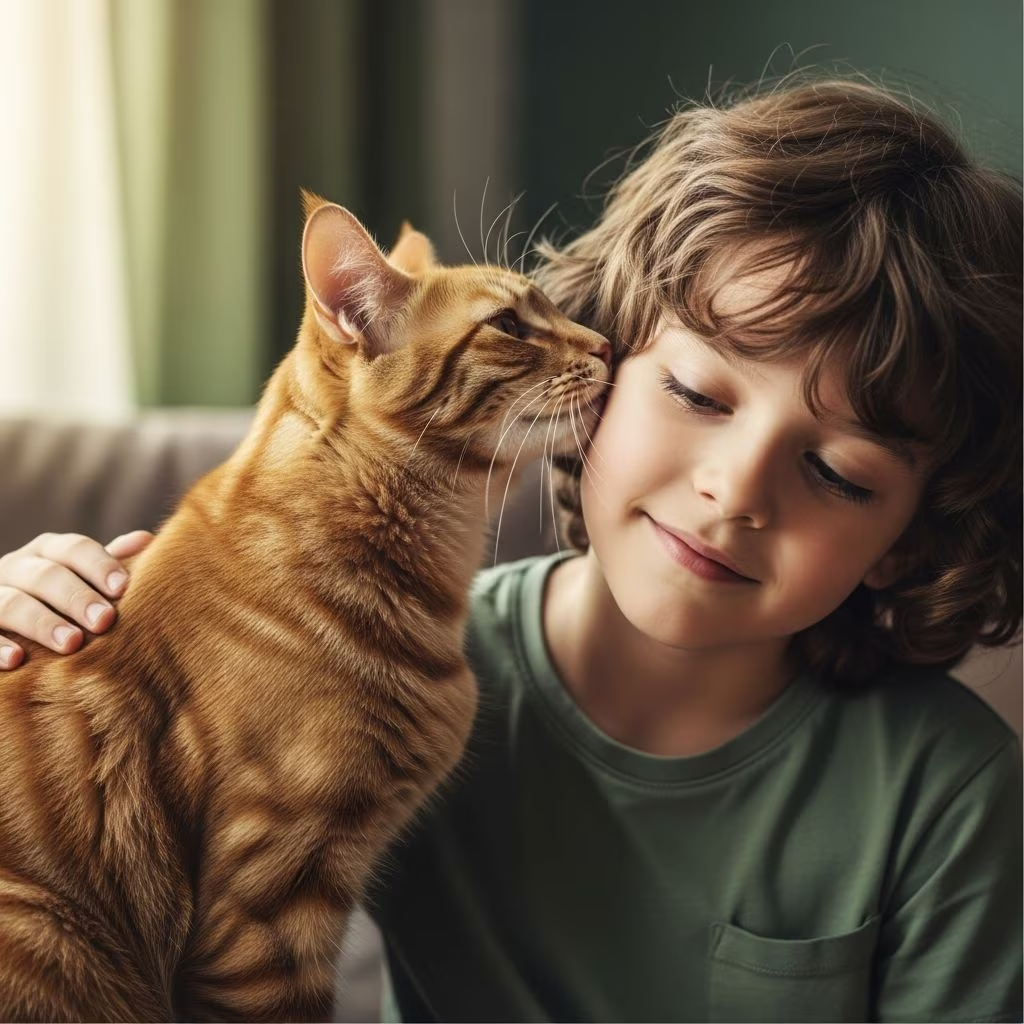
Cats offer unique therapeutic benefits for children with autism spectrum disorder (ASD), particularly through enhanced empathy, reduced anxiety, and fewer behavioral challenges, as demonstrated in randomized studies involving shelter adoptions.
Understanding the Unique Challenges of Autism in Children
Children diagnosed with autism spectrum disorder often navigate a world filled with sensory sensitivities, social interaction difficulties, and emotional regulation hurdles. These individuals may struggle with maintaining eye contact, interpreting nonverbal cues, or managing overwhelming environments, leading to heightened anxiety and isolation. Traditional interventions like behavioral therapy provide structure, but complementary approaches such as animal-assisted interactions are gaining traction for their non-judgmental, intuitive support.
Autism manifests differently across individuals, with common traits including repetitive behaviors, communication delays, and aversion to loud noises or crowded spaces. Families report that these challenges extend to daily routines, school performance, and peer relationships, creating a need for gentle, consistent companions that bridge emotional gaps without demanding verbal reciprocity.
Why Cats Stand Out in Animal-Assisted Interventions
Unlike larger service animals, cats provide compact, low-maintenance companionship ideal for home environments. Their quiet nature suits children sensitive to noise, while their independent yet affectionate demeanor allows for interactions on the child’s terms. Research highlights cats’ ability to deliver sensory comfort through purring vibrations and soft fur, which can soothe overstimulated nervous systems.
- Sensory Regulation: The rhythmic purring (20-140 Hz) mimics calming frequencies used in vibration therapy, helping reduce cortisol levels and promote relaxation.
- Non-Demanding Interaction: Cats do not require constant engagement, reducing performance pressure that dogs might inadvertently impose.
- Portability and Adaptability: Easier to integrate into apartments or travel compared to bigger pets.
Key Research Findings on Cats and ASD
A landmark randomized controlled trial by the University of Missouri’s Research Center for Human Animal Interaction examined 11 families with children aged 7-13 on the autism spectrum. Families were split: one group adopted temperament-screened shelter cats immediately, followed for 18 weeks; the control group waited 18 weeks before adopting. Cats passed the Feline Temperament Profile, ensuring calm dispositions (score ≥20).
Results showed significant gains: increased empathy scores, decreased separation anxiety, and reductions in problem behaviors like bullying, hyperactivity, and externalizing actions. Parent-child bonds with cats strengthened over time, with no reported care burdens.
| Metric | Pre-Adoption | Post-Adoption (18 Weeks) | Change |
|---|---|---|---|
| Empathy | Baseline | Increased | Significant improvement |
| Separation Anxiety | Baseline | Decreased | Notable reduction |
| Problem Behaviors (e.g., Bullying) | Baseline | Decreased | Lower incidence |
| Hyperactivity/Inattention | Baseline | Decreased | Improved focus |
These outcomes persisted, suggesting long-term viability. The Human Animal Bond Research Institute (HABRI), which funded the study, emphasized its role in informing pet selection for ASD families.
Mechanisms Behind the Cat-Autism Bond
The science involves neurochemical responses. Petting cats triggers oxytocin release—the ‘bonding hormone’—fostering trust and empathy, often deficient in ASD. Simultaneously, cortisol (stress hormone) drops, easing anxiety.
Cats also teach responsibility through feeding, grooming, and play, mirroring social reciprocity without judgment. This builds confidence, as children experience unconditional acceptance, countering peer rejection fears.
- Oxytocin Surge: Tactile interactions elevate levels, enhancing emotional attunement.
- Cortisol Decline: Daily cat contact correlates with 20-30% stress reduction in neurodiverse youth.
- Empathy Development: Observing cat needs cultivates perspective-taking skills transferable to humans.
Practical Steps for Adopting a Cat for an ASD Child
Selecting the right cat is crucial. Prioritize shelters using temperament assessments like the Feline Temperament Profile to match calm, patient felines.
- Assess Family Readiness: Evaluate allergies, home space, and commitment to vet care/litter duties.
- Visit Shelters: Supervise child-cat interactions; look for mutual interest without overstimulation.
- Temperament Screening: Choose cats scoring high on friendliness and low on aggression.
- Preparation: Create safe zones, use pheromone diffusers for adjustment.
- Monitor Progress: Track social/behavioral changes via journals or apps.
Families in studies bonded quickly, with bonds enduring despite routines. Start with short sessions to build comfort.
Real-World Stories and Family Testimonials
Anonymous accounts from research echo transformations: one child, previously withdrawn, initiated conversations post-adoption, crediting cat play for social modeling. Parents note calmer evenings, less meltdowns, and sibling harmony improvements.
Another family reported a drop in school bullying after home confidence grew via cat caregiving. These anecdotes align with data, underscoring holistic family benefits.
Comparing Cats to Other Therapy Animals
| Animal | Pros for ASD | Cons for ASD | Best For |
|---|---|---|---|
| Cats | Quiet, low-maintenance, sensory soothe | May scratch if overstimulated | Home-based, noise-sensitive kids |
| Dogs | High energy, trainability | Barking, size, exercise needs | Active families |
| Robot Cats | Consistent, hygienic | Lacks live warmth | Introductory therapy |
Cats excel for their subtlety, ideal when dogs overwhelm.
Addressing Potential Concerns and Myths
Some worry about allergies or care demands, but hypoallergenic breeds (e.g., Sphynx) and litter robots mitigate issues. Studies found no added parental stress; bonds offset efforts.
Myth: Cats are aloof—reality: screened ones are affectionate. Myth: All pets suit ASD—no, matching is key.
Future Directions in Feline-Assisted Therapy
Ongoing research explores larger trials, breed specifics, and integrations with telehealth. Robot cats show promise for initial engagement, paving for live adoptions. HABRI calls for expanded studies to solidify guidelines.
Frequently Asked Questions
Are cats suitable for all children with autism?
Not universally; temperament matching and family assessment are essential. Consult professionals for allergies or phobias.
How soon do benefits appear?
Studies note improvements within 6-18 weeks, with bonds forming rapidly.
What breeds work best?
Calm breeds like Ragdolls or screened mixed shelter cats.
Can cats replace therapy?
No, they complement behavioral interventions.
How to fund adoptions?
Grants from HABRI or shelters; low-cost options abound.
Integrating cats into ASD support networks offers accessible, joyful paths to growth, backed by emerging evidence.
References
- New Research Shows Cats Help Children with Autism — Human Animal Bond Research Institute (HABRI). 2020-12-09. https://habri.org/pressroom/20201209/
- Exploratory study of cat adoption in families of children with autism — PubMed (Journal of Pediatric Nursing). 2020-12. https://pubmed.ncbi.nlm.nih.gov/33290937/
- Cats and Autism: Improving Social Skills in Children — Autism Parenting Magazine. N/A. https://www.autismparentingmagazine.com/cats-help-children-with-autism/
- Cats and autistic people: scoping out the purrfect pair? — National Elf Service. N/A. https://www.nationalelfservice.net/learning-disabilities/autistic-spectrum-disorder/cats-and-autistic-people/
- How Cats are Helping Children with Autism — Animal Medical Center New York (AMC). 2021-06-16. https://www.amcny.org/blog/2021/06/16/how-cats-are-helping-children-with-autism/
- Affectionate Interactions of Cats with Children Having Autism — Frontiers in Veterinary Science. 2018-03-14. https://www.frontiersin.org/journals/veterinary-science/articles/10.3389/fvets.2018.00039/full



