

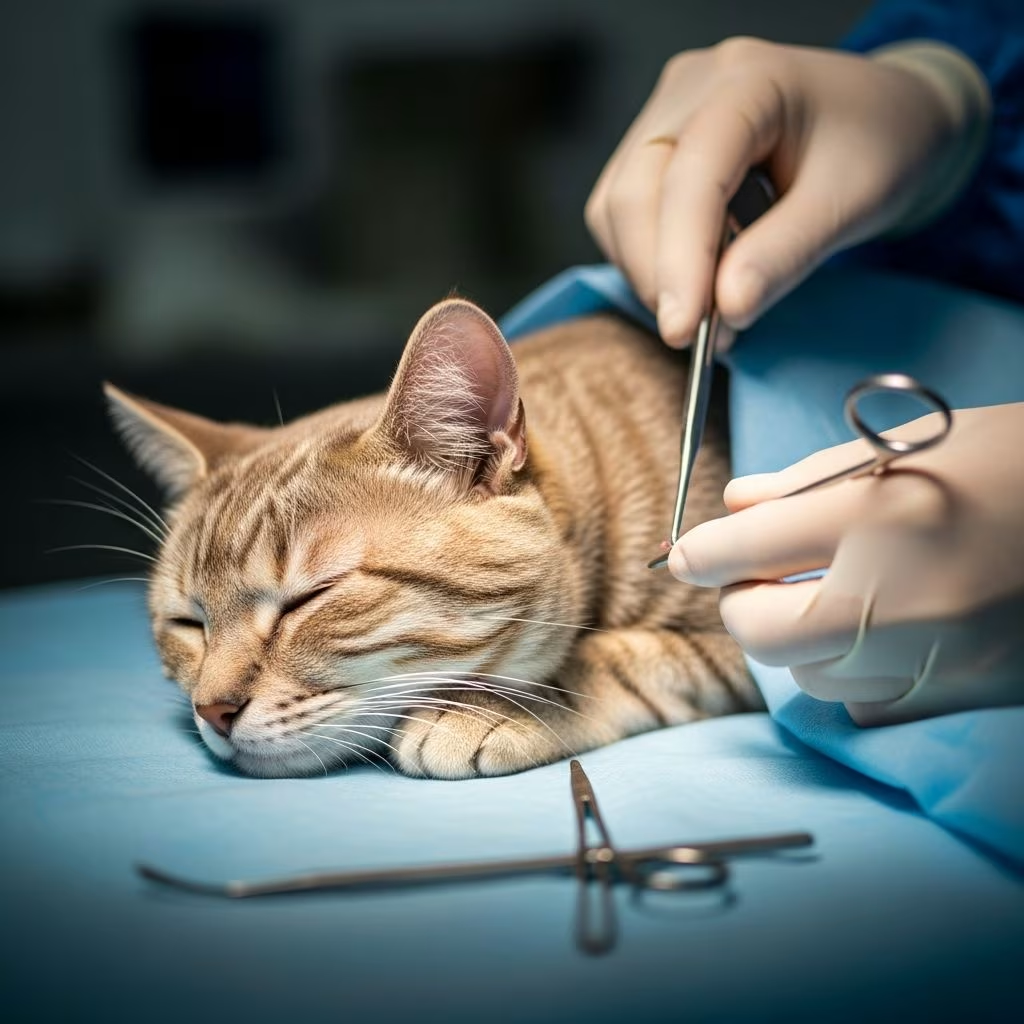
Neutering is one of the most commonly performed surgical procedures in veterinary medicine, with millions of male cats undergoing castration each year. While the procedure is generally considered safe and routine, understanding the potential complications that can arise during and after surgery is essential for responsible pet ownership. This comprehensive guide examines the various risks associated with feline castration and provides insights into how veterinarians work to minimize these dangers.
The Nature of Anesthetic Complications in Feline Surgery
Among all the potential complications associated with castration, anesthetic-related issues represent perhaps the most concerning category. When a cat is administered anesthesia for any surgical procedure, the body experiences significant physiological changes that require careful monitoring and management. Any feline patient, regardless of age or apparent health status, carries some inherent risk of adverse reactions to anesthetic drugs.
Recent research indicates that anesthetic complications are surprisingly common during routine neutering procedures. A comprehensive study of healthy cats undergoing castration found that complications related to anesthesia occurred in more than half of the surgical cases examined. The most frequently observed complications included low blood pressure (occurring in approximately 22.6% of cases), abnormally slow heart rate (16.7%), and reduced body temperature (13.8%). While these conditions sound alarming, modern monitoring equipment and veterinary expertise allow clinicians to detect and address these issues quickly.
More serious anesthetic complications, though considerably rarer, can include severe reactions that require immediate intervention. Cases of temporary or permanent blindness have been documented following anesthetic administration, though permanent vision loss remains exceptionally uncommon. Perhaps most seriously, anesthetic-related deaths can occur, though current research suggests this happens in approximately 1 out of every 1,000 surgical cases. The advancement of anesthetic protocols and monitoring technology has significantly reduced these risks compared to earlier decades.
Preventing Aspiration and Related Respiratory Complications
One of the most dangerous complications that can develop during anesthesia is aspiration pneumonia, a condition that occurs when stomach contents enter the lungs. Because anesthetized cats lose their normal ability to swallow and protect their airway, any food or liquid remaining in the stomach poses a serious risk. This is why veterinarians universally recommend fasting cats for approximately 10 hours prior to surgical procedures.
The danger lies in the fact that anesthetized patients cannot activate the protective mechanisms that normally prevent food from entering the respiratory tract. If vomiting occurs during surgery while a cat is under anesthesia, the contents can be inhaled directly into the lungs, causing aspiration pneumonia—a potentially life-threatening condition requiring aggressive treatment. Cat owners must take pre-operative fasting instructions seriously and inform their veterinarian immediately if their cat somehow consumes food or water on the morning of surgery, even if this means rescheduling the procedure.
Hemorrhage and Blood Loss During Recovery
While cats bleed considerably less during surgical procedures compared to dogs, hemorrhage still represents a potential complication that veterinarians must monitor for carefully. The amount of blood loss during castration varies depending on surgical technique, individual variation in blood vessel anatomy, and the presence of any underlying bleeding disorders.
In most cases, cats experience only minor bleeding that poses no significant threat. However, both internal and external hemorrhage can occur. Male cats undergoing castration may develop scrotal hematoma, a condition where blood pools in the scrotal tissues, causing swelling and discoloration. Additionally, some cats may experience minor internal bleeding that manifests as weakness and lethargy during the recovery period. In rare cases, particularly when pre-existing coagulation disorders are present, more significant blood loss can occur, though fatal hemorrhage remains exceptionally uncommon in otherwise healthy cats.
Incision Site Complications and Wound Management
The surgical wound created during castration is a potential source of several different complications during the healing phase. The most commonly reported post-operative issue is swelling around the incision site, which can develop for multiple reasons. Bleeding under the skin, excessive physical activity, and licking or grooming of the wound all contribute to post-operative swelling. In most cases, this swelling resolves without requiring additional treatment, though careful monitoring ensures that more serious complications do not develop.
More serious wound complications can include infection and breakdown of the incision. Surgical wound infections may result from various sources, including contamination from the litter box environment, excessive licking or grooming behavior, or occasionally from pathogens acquired in the veterinary hospital. When infection develops, veterinarians typically culture the wound to identify the causative organism and determine appropriate antibiotic therapy. Drug-resistant bacteria occasionally complicate treatment, necessitating sensitivity testing to guide antimicrobial selection.
Wound breakdown occurs when the sutures fail to hold the tissues together, resulting in an open incision that exposes deeper layers. This can happen due to inadequate suturing technique, excessive activity, intense licking, or infection compromising tissue integrity. Treatment depends on the size and severity of the wound breakdown, ranging from simple skin adhesives or staples to reopening and thorough debridement under anesthesia followed by careful re-closure.
Long-Term Metabolic and Health Consequences
Beyond the immediate post-operative period, castration can trigger long-term changes in feline metabolism and health that warrant consideration. The removal of testicles eliminates the primary source of testosterone production, which affects not only reproductive behavior but also metabolic rate and body composition regulation.
Weight gain and obesity represent significant long-term risks following neutering. Neutered cats experience reduced metabolic activity and often show increased appetite, creating conditions favorable for excessive weight accumulation. Obesity in cats carries serious health consequences, potentially contributing to orthopedic disease, diabetes, and various other conditions. Pet owners should work closely with their veterinarians to establish appropriate feeding protocols and maintain regular monitoring of body condition following castration.
Orthopedic complications can develop, particularly when young cats are neutered before growth plates fully close. The delay in skeletal maturation may increase susceptibility to growth plate fractures, though additional research is needed to fully characterize this risk. Additionally, obesity frequently accompanies neutering and can independently contribute to joint problems and orthopedic disease.
Urinary tract disease represents another potential long-term consequence of neutering in male cats. The procedure can result in narrowing of the urethra, the tube through which urine exits the bladder. This anatomical change may increase vulnerability to feline lower urinary tract disease (FLUTD), an umbrella term encompassing various bladder and urethral conditions. Like orthopedic complications, obesity may also play a contributing role in urinary disease development.
Rare and Unexpected Complications
While uncommon, several additional complications can develop following castration. Abscess formation may occur at the surgical site, representing a localized collection of pus and inflammatory material. These generally respond to drainage and appropriate antibiotic therapy, though they occasionally require additional intervention.
In female cats undergoing spaying (the analogous procedure to male castration), an unexpected complication involves the possibility of undetected pregnancy at the time of surgery. While outdoor female cats may be pregnant without owner awareness, early pregnancy typically does not pose significant surgical challenges beyond slightly extended anesthesia and operative time. Advanced pregnancies can require modified surgical approaches and additional veterinary expertise.
Minimizing Surgical Risk Through Proper Preparation
While some surgical risk is inherent to any procedure, veterinarians employ multiple strategies to minimize complications. Pre-operative blood work screening can identify underlying health conditions that might increase anesthetic risk, allowing veterinarians to modify their approach accordingly. Cats showing any signs of illness—including sneezing, eye discharge, vomiting, or diarrhea—should have surgery postponed until full recovery occurs.
Strict adherence to pre-operative instructions significantly reduces complications. This includes appropriate fasting periods, continuation or modification of any necessary medications, and open communication with the veterinary team regarding any concerns or observations. Choosing an experienced veterinarian and facility with appropriate monitoring equipment provides additional assurance that complications, should they arise, will be promptly detected and managed.
Post-Operative Monitoring and Care Expectations
Most cats recover from castration without significant complications, returning to normal behavior and activity within a few days. However, the recovery period requires vigilant observation and specific care protocols. Owners should monitor the surgical site daily for signs of excessive swelling, discharge, or separation of the incision. Activity should be restricted during the healing phase, as excessive running or jumping can compromise wound integrity or cause bleeding.
Preventing licking and grooming of the incision site may require an Elizabethan collar or similar protective device. Litter box access should be carefully managed, as contamination from litter can introduce bacteria into the healing wound. Most veterinarians schedule post-operative rechecks approximately 10-14 days after surgery to assess healing progress and confirm that complications have not developed.
Frequently Asked Questions
How serious is anesthetic risk in cats undergoing neutering?
While anesthetic complications occur in a substantial percentage of cats undergoing castration, serious or fatal complications remain rare. Current anesthetic protocols and monitoring technology have made neutering a relatively safe procedure for healthy cats. Pre-operative screening helps identify cats at higher risk.
Can neutering cause urinary problems in male cats?
Neutering can increase the risk of feline lower urinary tract disease in male cats by narrowing the urethra. However, the relationship is complex and influenced by multiple factors including obesity and diet. Maintaining appropriate weight and dietary management help minimize this risk.
How long does recovery take after cat castration?
Most cats return to normal behavior within 3-7 days after surgery. However, complete wound healing requires approximately 10-14 days, and owners should continue monitoring the incision site during this entire period.
What should I do if my cat’s incision becomes infected?
Contact your veterinarian immediately if you notice signs of infection such as excessive swelling, discharge, heat around the incision, or signs of systemic illness. Prompt treatment with antibiotics can prevent serious complications.
Does neutering always lead to weight gain?
While neutering increases obesity risk by reducing metabolic rate and increasing appetite, weight gain is not inevitable. Working with your veterinarian to establish appropriate feeding and exercise protocols can prevent unwanted weight accumulation.
References
- Cat Neuter Surgery: What It Is, Preparation, and Recovery — PetMD. https://www.petmd.com/cat/procedure/cat-neuter-surgery
- Neutering in Cats — VCA Animal Hospitals. https://vcahospitals.com/know-your-pet/neutering-in-cats
- Spaying a Cat: Everything You Need to Know — Small Door Veterinary. https://www.smalldoorvet.com/learning-center/medical/spaying-cats-everything-you-need-to-know
- 8 Common Cat Spay or Neuter Surgery Complications — Catster. https://www.catster.com/ask-the-vet/common-cat-spay-neuter-complications/
- Perioperative Anaesthetic Complications in Healthy Cats Undergoing Anaesthesia for Neutering in First Time General Anaesthesia Cases — PubMed/National Center for Biotechnology Information. 2024. https://pubmed.ncbi.nlm.nih.gov/39475085/
- Cat Neutering: A Guide to Castration and Spaying — People’s Dispensary for Sick Animals (PDSA). https://www.pdsa.org.uk/pet-help-and-advice/pet-health-hub/other-veterinary-advice/cat-neutering-a-guide-to-castration-and-spaying



