

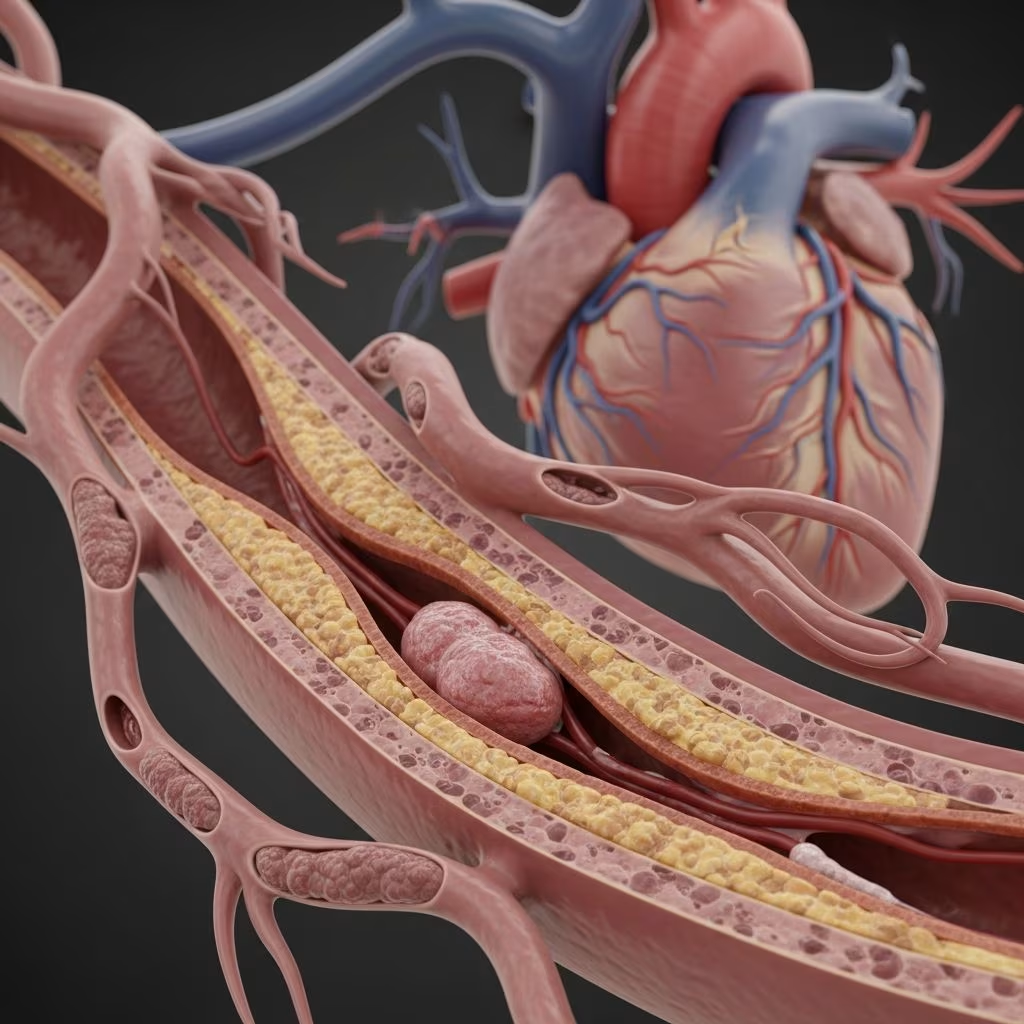
Cardiovascular complications represent some of the most serious health challenges facing domestic felines today. Among these conditions, abnormal blood clot formation and structural weakening of blood vessels rank as particularly concerning due to their sudden onset and potentially life-threatening consequences. These vascular complications often develop silently, making awareness and early recognition critical for cat owners seeking to protect their pets’ wellbeing.
Distinguishing Between Clots and Vessel Weakening
Two distinct yet sometimes related conditions affect feline cardiovascular health. The first involves the formation of solid masses within the circulatory system, while the second involves structural deterioration of the vessels themselves. Understanding the differences between these conditions helps pet owners recognize when immediate veterinary intervention becomes necessary.
A thrombus refers to a blood clot that develops within a blood vessel or the heart chamber itself. These clots occur when blood solidifies in response to various triggers, restricting or completely blocking blood flow. Conversely, an aneurysm describes an abnormal bulging or weakening of a blood vessel wall, typically caused by deterioration of the vessel’s middle muscular layer. While aneurysms remain relatively uncommon in cats, they create dangerous conditions that may eventually lead to clot formation or vessel rupture.
How Clots Form and Travel Through the Feline Body
In cats, blood clots frequently originate within the heart chambers, particularly when the left atrium becomes enlarged. This enlargement disrupts normal blood flow patterns, creating conditions favorable for clotting. Once formed, these clots can remain stationary or break apart into smaller fragments called emboli that travel through the bloodstream.
The journey of a traveling clot often proves particularly dangerous. An embolus lodges at points where blood vessels narrow, effectively blocking circulation to tissues beyond the obstruction. Foreign materials such as bacteria, air particles, or fatty deposits can similarly obstruct blood vessels. The resulting blockage starves tissues of oxygen-rich blood, leading to tissue death and severe pain for the affected cat.
Certain clots become infected, harboring bacteria that can spread infection throughout the body while simultaneously blocking circulation. These infected clots present compounded medical emergencies requiring aggressive treatment approaches.
Primary Causes of Clot Formation in Felines
Understanding what triggers clot development allows pet owners to recognize at-risk cats and seek preventive care. The most significant risk factor involves pre-existing heart disease.
- Hypertrophic cardiomyopathy (HCM): This condition involves thickening of the heart muscle, reducing the ventricles’ size and contractile ability. The compromised blood flow through affected hearts creates ideal conditions for clot formation.
- Cardiogenic embolism: This medical term describes clots originating from the heart chambers themselves, typically complicating cardiomyopathy, hyperthyroidism, or other cardiac diseases.
- Systemic diseases: Heartworm disease, protein-losing kidney and intestinal diseases, cancer, and immune-mediated hemolytic anemia all associate with increased clot formation risk.
- Infectious conditions: Endocarditis, an inflammation of the heart’s inner membranes, promotes infective clot development.
- Sepsis and malignancy: Generalized body-wide infections and cancer create systemic conditions favoring clot formation.
The Aortic Saddle Thrombus: A Particularly Dangerous Condition
Among all feline clot formations, the saddle thrombus represents one of the most immediately life-threatening presentations. This specific type of clot lodges at the point where the aorta—the body’s largest artery—branches into multiple vessels near the hip region. The clot essentially sits astride this branching point like a saddle, blocking blood flow to the rear limbs and potentially other vital organs.
Research reveals that approximately 89% of cats experiencing saddle thrombosis have underlying heart disease. The turbulent blood flow created by cardiac dysfunction provides the perfect environment for these dangerous clots to develop and dislodge.
The consequences of aortic blockage prove devastating. When blood cannot reach the rear legs, tissues become oxygen-deprived within minutes. The affected limbs become cold, painful, and functionally useless. Depending on whether the blockage completely or partially restricts blood flow, cats may experience complete paralysis of both hind legs or weakness in just one limb.
Clinical Presentation and Emergency Warning Signs
Recognizing the symptoms of vascular complications can mean the difference between life and death for affected felines. Pet owners should remain vigilant for the following acute presentations:
- Sudden paralysis or weakness in rear limbs: This represents the most characteristic sign, occurring because clots prevent blood from reaching leg muscles and nerves.
- Severe pain and vocalization: Affected cats typically cry out loudly, meow excessively, or demonstrate obvious signs of distress.
- Cold limbs and pale tissues: The affected limbs feel noticeably colder than the body’s core temperature. Paw pads and nail beds may appear pale or bluish due to oxygen deprivation.
- Respiratory distress: Rapid or labored breathing may occur if clots affect pulmonary circulation or if the cat experiences anxiety from severe pain.
- Respiratory symptoms indicating lung involvement: A sudden onset of breathing difficulty, coughing up blood or bloody mucus, or sudden death can signal clots in pulmonary arteries.
- Abdominal pain or blood in urine: These signs may indicate blockage of blood vessels supplying the kidneys or abdominal organs.
- Abnormal heart sounds: A veterinarian may detect murmurs or irregular heartbeats during physical examination.
- Lowered body temperature: Compromised circulation can result in hypothermia.
- Vomiting or behavioral changes: Some affected cats may vomit or display altered mentation.
These symptoms demand immediate emergency veterinary attention. Any cat displaying sudden rear limb paralysis, severe pain, or respiratory distress should be transported to an emergency veterinary facility without delay.
Diagnostic Approaches for Vascular Emergencies
When a cat arrives at a veterinary clinic with suspected clotting or aneurysm complications, veterinarians employ multiple diagnostic methods to confirm the condition and identify underlying causes.
Physical examination forms the foundation of assessment. Veterinarians evaluate limb temperature, check for pulses in affected limbs, assess pain responses, and listen carefully to heart sounds for irregularities.
Imaging studies provide critical diagnostic information. Chest radiographs may reveal an enlarged main pulmonary artery, enlarged right heart chamber, fluid accumulation in the chest cavity, or evidence of lung tissue damage in cats with pulmonary artery involvement. Ultrasonography and angiography help confirm specific diagnoses by visualizing clots within blood vessels or the heart chambers.
Additional laboratory testing becomes essential for identifying underlying diseases that predisposed the cat to clot formation. Blood work, urinalysis, and cardiac-specific tests help determine whether heart disease, systemic infection, cancer, or other conditions triggered the vascular emergency.
How Aneurysms Develop and Present in Felines
While blood clots represent the more common cardiovascular emergency in cats, aneurysms—though rare—warrant attention due to their potential for serious complications. An aneurysm develops when the muscular middle layer of a blood vessel weakens, causing the vessel wall to bulge or enlarge abnormally.
Interestingly, aneurysms themselves often produce no observable symptoms unless bleeding occurs or unless a clot develops within the weakened vessel. This silent nature makes aneurysms particularly insidious; a cat may carry an undetected aneurysm for an extended period until a complication develops.
Disruption of the inner lining of an aneurysm-affected vessel can trigger clot formation, effectively converting a asymptomatic aneurysm into an acute vascular emergency identical to other clotting episodes. Spontaneous bleeding from aneurysms occurs rarely, but when it happens, the consequences become immediately life-threatening.
Frequently Asked Questions
What is the survival rate for cats with blood clots?
Survival rates vary significantly depending on the clot’s location, the underlying heart disease severity, the cat’s age, and how quickly treatment begins. Cats with saddle thrombosis have particularly guarded prognoses, though some cats survive with aggressive treatment and rehabilitation.
Can blood clots in cats be prevented?
While not all clots can be prevented, managing underlying heart disease through regular veterinary care, administering medications as prescribed, and monitoring for early warning signs can reduce risk. Cats with diagnosed heart disease may benefit from anticoagulant medications prescribed by their veterinarian.
How quickly do clot symptoms develop in cats?
Symptoms of arterial thromboembolism develop suddenly—often within minutes to hours. A cat may be walking normally and then suddenly become unable to use its rear legs. This acute presentation is what makes the condition so alarming and why immediate emergency care is critical.
Are certain cat breeds more prone to blood clots?
Yes, certain breeds with higher incidences of hypertrophic cardiomyopathy, such as Maine Coons, Ragdolls, and Persians, face increased clot risk. However, any cat can develop clots, regardless of breed.
What does treatment involve for a cat with a blood clot?
Treatment is multimodal and may include medications to prevent clot enlargement, pain management, treatment of underlying heart disease, anticoagulation therapy, and in some cases, thrombolytic agents to dissolve existing clots. Supportive care and rehabilitation become crucial for recovery.
The Critical Importance of Rapid Intervention
The most essential lesson regarding feline vascular emergencies concerns the absolute necessity of immediate veterinary care. Unlike many medical conditions where a few hours delay might prove acceptable, clotting events progress rapidly. Oxygen deprivation to tissues begins within minutes, and irreversible tissue damage occurs within hours.
Any cat displaying sudden paralysis, severe pain, difficulty breathing, or any combination of the symptoms described above requires emergency transportation to a veterinary facility. Waiting for symptoms to resolve or hoping the condition improves with rest guarantees a poor outcome.
Pet owners should also recognize that cats with diagnosed heart disease benefit from regular veterinary monitoring, appropriate cardiac medications, and potentially anticoagulant therapy. Working closely with a veterinary cardiologist when possible provides the best opportunity to manage underlying conditions and reduce emergency risk.
Understanding these serious vascular conditions empowers cat owners to recognize danger signs early and respond with the urgency these medical emergencies demand. While vascular complications in cats present formidable challenges, knowledgeable, vigilant pet care combined with rapid professional intervention offers the best hope for positive outcomes.
References
- Blood Clots and Aneurysms in Cats — Merck Veterinary Manual. Accessed 2026. https://www.merckvetmanual.com/cat-owners/heart-and-blood-vessel-disorders-of-cats/blood-clots-and-aneurysms-in-cats
- Aortic Thromboembolism in Cats — VCA Animal Hospitals. Accessed 2026. https://vcahospitals.com/know-your-pet/aortic-thromboembolism-in-cats
- Blood Clots in Cats: Causes, Symptoms, and Survival Chances — The Webinar Vet. Accessed 2026. https://thewebinarvet.com/blog/blood-clots-in-cats-understanding-the-risks-and-survival-chances
- Feline Arterial Thromboembolism — Cardiovascular Veterinary Care Associates. Accessed 2026. https://www.cvcavets.com/patient-resources/cardiac-conditions/feline-arterial-thromboembolism
- Feline Aortic Thromboembolism (FATE) — Mar Vista Animal Medical Center. Accessed 2026. https://www.marvistavet.com/feline-aortic-thromboembolism-fate.pml
- Saddle Thrombus in Pets: Time-Sensitive Signs & Urgent Steps — Garden State Veterinary Specialists. Accessed 2026. https://gsvs.org/blog/signs-of-saddle-thrombus-time-sensitive-pet-emergency/



