

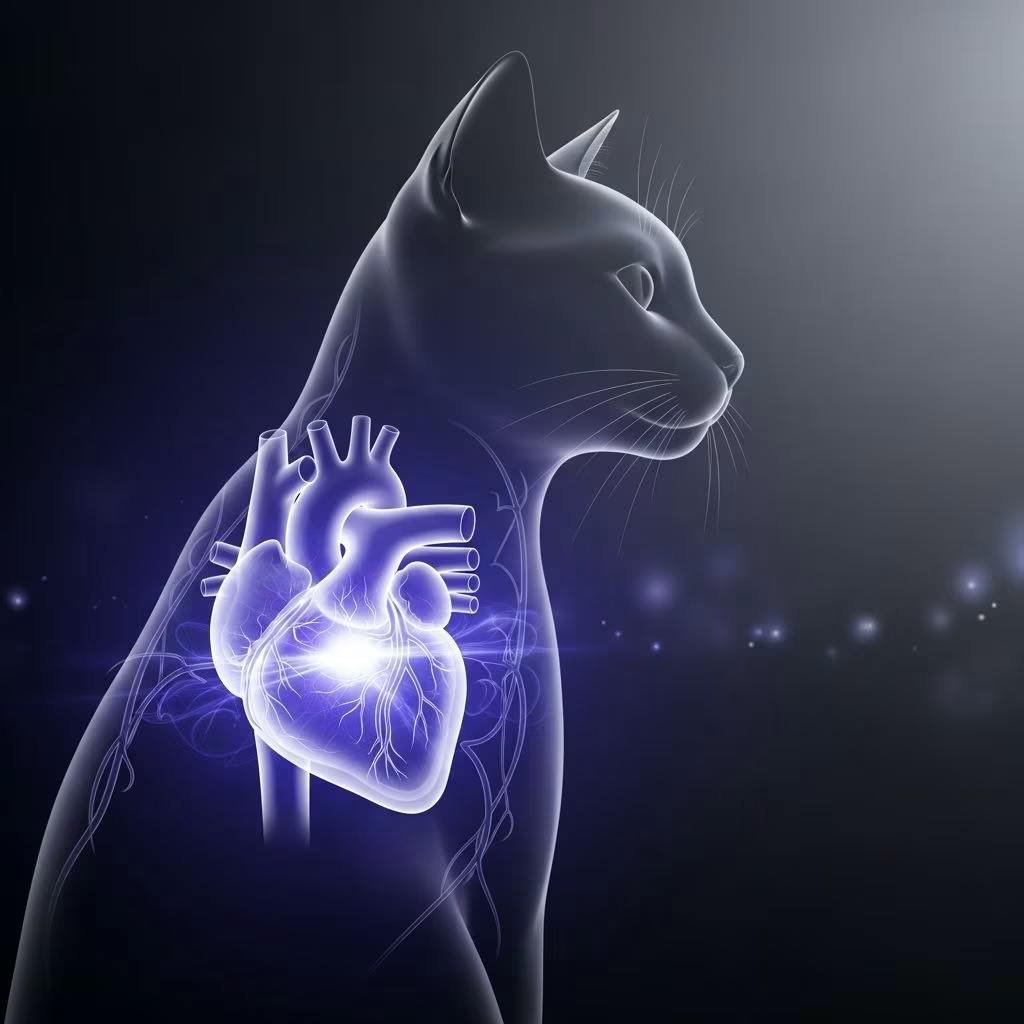
The heart of a cat is a marvel of biological engineering, tirelessly pumping life-sustaining blood through a compact yet powerful system. Positioned snugly within the chest cavity, this organ ensures every tissue receives oxygen and nutrients, enabling the agile movements and playful energy that define feline companionship.
The Precise Placement of the Cat’s Heart
In the feline body, the heart occupies a strategic position between the lungs, encased in a delicate pericardial sac that provides protection without restricting movement. This organ spans from roughly the third to the fourth rib, nestled in the mid-thorax region known as the mediastinum. Such positioning allows for efficient space utilization in the slender thoracic cavity, which differs from canine anatomy by appearing more horizontal on radiographs, especially as cats age.
This location influences diagnostic imaging; veterinarians often rely on lateral thoracic views to assess heart size and shape, noting its slender profile. The pericardium, a thin membranous sac, lubricates the heart’s constant motion and shields it from surrounding pressures during respiration and physical activity.
Inside the Four-Chambered Powerhouse
A cat’s heart features four distinct chambers: two upper atria and two lower ventricles, separated by a robust muscular wall called the septum. The right atrium receives deoxygenated blood from the body via large veins like the posterior and anterior vena cavae, passing it to the right ventricle. This ventricle then propels blood into the pulmonary artery toward the lungs for oxygenation.
On the left side, oxygenated blood returns from the lungs to the left atrium, flows through the mitral valve into the left ventricle—the heart’s primary pumping chamber—and exits via the aorta to nourish the entire body. The left ventricle’s thick muscular walls reflect its demanding role, contrasting with the thinner right ventricle suited for lower-pressure pulmonary circulation. Valves such as the tricuspid, pulmonary, mitral, and aortic ensure unidirectional blood flow, preventing backflow during contractions.
| Chamber | Function | Key Features |
|---|---|---|
| Right Atrium | Collects deoxygenated blood | Receives from vena cavae; site of sinoatrial node |
| Right Ventricle | Pumps to lungs | Thinner walls; pulmonary valve |
| Left Atrium | Collects oxygenated blood | From pulmonary veins; mitral valve entry |
| Left Ventricle | Pumps to body | Thick myocardium; aortic valve |
The Electrical Symphony Driving Heartbeats
Every feline heartbeat originates from the sinoatrial (SA) node, a specialized cluster of cells in the right atrium acting as the natural pacemaker. This node generates rhythmic electrical impulses that propagate through the atria via Purkinje fibers, causing contraction. The impulse then travels to the atrioventricular (AV) node and bundle of His, delaying slightly before stimulating the ventricles for coordinated squeezing.
A single heartbeat cycle includes diastole, when chambers relax and fill with blood (marked by mitral and tricuspid valve closures), and systole, when they contract to eject blood (aortic and pulmonary valve sounds). In resting cats, this pacemaker fires over 120 times per minute, far exceeding human rates, to meet high metabolic demands during bursts of activity.
- SA Node Initiation: Sparks electrical activity for atrial contraction.
- AV Node Delay: Ensures atria empty before ventricles contract (about 0.22 seconds total cycle).
- Ventricular Depolarization: Ion exchanges (sodium, potassium, calcium) create the contraction spark.
Heartbeat Dynamics in Cats
Resting heart rates in cats typically range from 140 to 220 beats per minute, influenced by age, fitness, stress, and health status. Kittens exhibit even higher rates, gradually slowing with maturity. During exercise or excitement, rates can surge dramatically, showcasing the heart’s adaptability.
The myocardium, the heart’s contractile muscle, demands its own constant oxygen supply via coronary arteries branching from the aorta. This self-nourishing network prevents fatigue despite nonstop operation. Smooth endocardial linings in ventricles minimize friction, protecting blood cells from damage as they rush through at high speeds.
Structural Supports: Valves and Chordae Tendineae
Critical to efficient pumping are the heart valves and supporting chordae tendineae—string-like structures anchoring valve leaflets. In the left heart, mitral valve leaflets, tethered by chordae to papillary muscles, snap shut during systole to block regurgitation into the atrium. Degenerative changes like endocardiosis can thicken these, leading to murmurs—a common age-related issue.
Similarly, tricuspid, pulmonary, and aortic valves maintain flow direction. The septum’s integrity prevents oxygen-rich and poor blood mixing, a vital barrier for circulatory efficiency.
Vascular Network Fueling Feline Vitality
Beyond the heart, arteries, veins, and capillaries form an extensive conduit system. The aorta distributes oxygenated blood, with branches like intercostal arteries supplying thoracic muscles. Venous return via vena cavae ensures recirculation. This closed loop sustains everything from whisker twitches to predatory leaps.
Age-Related Changes in Feline Hearts
As cats age, thoracic conformation shifts, making the heart appear more elongated on imaging. Myocardial thickening or valve stiffening may occur, potentially impacting function. Routine veterinary exams, including auscultation and echocardiography, detect these early.
Monitoring Your Cat’s Heart Health
Owners can observe signs like lethargy, coughing, or rapid breathing, prompting professional checks. Palpating the chest or using stethoscopes reveals rate irregularities. Advanced diagnostics visualize chambers and flows precisely.
- Normal resting rate: 140-220 bpm.
- Exercise increase: Up to 200+ bpm spikes.
- Warning signs: Blue gums, collapse, fluid accumulation.
Unique Feline Cardiac Adaptations
Cats’ hearts support vertical posture and explosive athletics, with efficient oxygen delivery suiting ambush hunting. The horizontal thoracic orientation optimizes lung expansion alongside cardiac output. Pericardial sac flexibility accommodates diaphragmatic breathing shifts.
Common Heart Conditions to Watch
Hypertrophic cardiomyopathy thickens ventricle walls, impairing filling. Congenital defects or infections also arise. Early intervention via medications or diet improves outcomes significantly.
| Condition | Symptoms | Management |
|---|---|---|
| Hypertrophic Cardiomyopathy | Exercise intolerance, murmurs | Beta-blockers, monitoring |
| Valve Disease | Coughing, weakness | Diuretics, low-sodium diet |
| Arrhythmias | Fainting, irregular pulse | Anti-arrhythmic drugs |
FAQs on Cat Heart Health
What is a normal cat heart rate?
At rest, 140-220 beats per minute; higher in kittens and during activity.
How can I check my cat’s heartbeat?
Place hand on left chest behind elbow; count for 15 seconds and multiply by 4.
Do cats get heart disease?
Yes, especially older cats; regular vet visits aid prevention.
Can diet affect cat heart health?
Taurine deficiency links to dilated cardiomyopathy; balanced commercial foods mitigate risks.
When should I worry about my cat’s heart?
If breathing labors, appetite drops, or gums pale—seek immediate care.
Nutritional and Lifestyle Tips for Cardiac Wellness
Provide taurine-rich diets, maintain ideal weight, and minimize stress. Regular play enhances circulation without overexertion. Annual cardiac screenings for seniors catch issues proactively.
Understanding these cardiac intricacies empowers owners to nurture thriving felines. The heart’s relentless rhythm underscores cats’ resilience and grace.
References
- Structure and Function of the Cardiovascular System in Cats — PetPlace. Accessed 2026. https://www.petplace.com/article/cats/pet-health/structure-and-function-of-the-cardiovascular-system-in-cats
- Introduction to Heart and Blood Vessel Disorders in Cats — Merck Veterinary Manual. Accessed 2026. https://www.merckvetmanual.com/cat-owners/heart-and-blood-vessel-disorders-of-cats/introduction-to-heart-and-blood-vessel-disorders-in-cats
- Dog and Cat Heart Anatomy and Physiology — Long Beach Animal Hospital. Accessed 2026. https://lbah.com/heart-anatomy-physiology/
- Surgical Anatomy of the Feline Heart — PMC (PubMed Central, NIH). 2020-04-01. https://pmc.ncbi.nlm.nih.gov/articles/PMC7149910/
- Cat Heart and Upper Circulatory Anatomy — YouTube (Veterinary Demonstration). Accessed 2026. https://www.youtube.com/watch?v=WkDajizUYfk



