

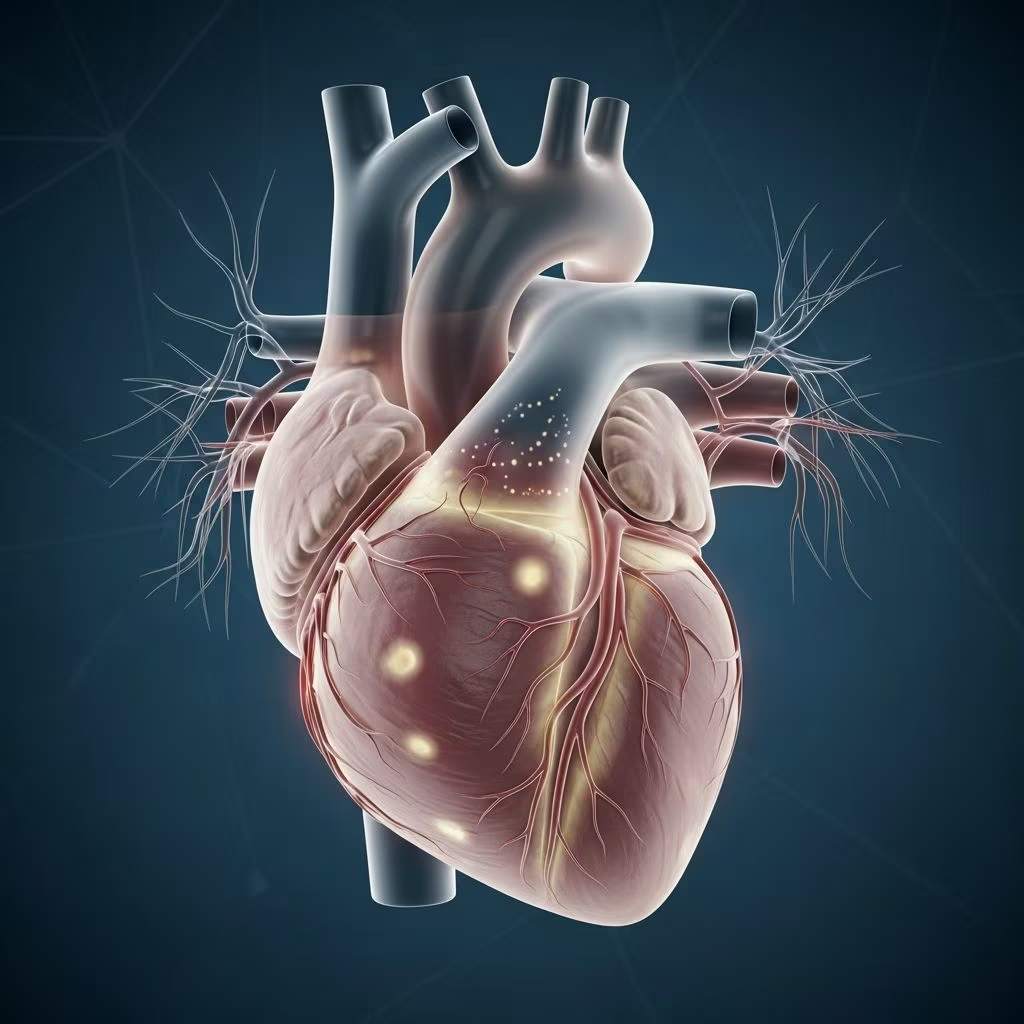
Heart conditions in cats represent a significant health concern, often progressing silently until advanced stages. Understanding these issues empowers cat owners to spot early warning signs and seek timely veterinary intervention, potentially extending their pet’s quality of life.
Recognizing Early Indicators of Heart Trouble
Cats excel at concealing illness, making cardiac problems challenging to detect initially. Common signals include rapid or labored breathing, where a cat may exhibit fast, shallow respirations or open-mouth panting, especially after minimal activity. Lethargy manifests as reduced energy, reluctance to play, or prolonged sleeping periods beyond normal routines.
- **Exercise Intolerance**: Cats that tire quickly during play or avoid jumping show diminished stamina.
- **Appetite and Weight Changes**: Poor eating habits lead to unintended weight loss, a frequent marker of underlying cardiac stress.
- **Respiratory Distress**: Noisy breathing, coughing, or fluid-induced crackles in the lungs signal congestion.
- **Behavioral Shifts**: Isolation, reduced interaction, or hiding more often indicate discomfort.
More severe signs like fainting, collapse, or abdominal bloating from fluid buildup (ascites) demand immediate attention, as they point to advanced disease or complications such as thromboembolism. Pale, blue, or gray gums and cold extremities in the hind legs further underscore circulatory compromise.
Primary Types of Feline Heart Diseases
Cardiomyopathies dominate feline cardiac pathology, with hypertrophic cardiomyopathy (HCM) being the most prevalent, affecting up to one in seven cats at some point. HCM involves thickening of the heart walls, particularly the left ventricle, impairing efficient pumping.
Dilated cardiomyopathy (DCM), less common today due to improved commercial diets fortified with taurine, features thinned, enlarged heart chambers that weaken contractions. Restrictive cardiomyopathy (RCM) stiffens the heart muscle, often with scar tissue, hindering filling between beats.
| Type | Key Features | Common Complications |
|---|---|---|
| **Hypertrophic (HCM)** | Wall thickening, small left ventricle | Arrhythmias, clots, heart failure |
| **Dilated (DCM)** | Enlarged chambers, poor contractility | Congestive failure, thromboembolism |
| **Restrictive (RCM)** | Stiff ventricles, scar tissue | Fluid accumulation, clots |
Secondary conditions like hyperthyroidism can exacerbate or mimic heart disease, causing rapid heart rates and weight loss despite good appetite. Congenital defects or hypertension also contribute.
Diagnostic Approaches for Accurate Assessment
Veterinarians begin with a thorough physical exam, auscultating for murmurs—turbulent blood flow sounds audible via stethoscope—and irregular rhythms. Lung sounds are checked for crackles indicating pulmonary edema.
Electrocardiograms (ECG) detect arrhythmias, while chest radiographs evaluate heart size, lung fluid, and rule out pneumonia or asthma. Blood panels assess thyroid levels, kidney function, electrolytes, and taurine in DCM suspects.
The gold standard remains the echocardiogram, an ultrasound visualizing wall thickness, chamber sizes, blood flow, and clots in real-time. This non-invasive test precisely differentiates cardiomyopathy types and gauges severity.
Managing Congestive Heart Failure
Congestive heart failure (CHF) arises when the heart fails to pump adequately, causing fluid backup in lungs or abdomen. Primary signs are accelerated breathing rates (over 30-40 breaths per minute at rest) and increased effort. Emergency care involves oxygen therapy, diuretics like furosemide to reduce fluid, and hospitalization for stabilization.
Critical Complication: Arterial Thromboembolism (ATE)
Saddle thrombus or ATE occurs when clots dislodge, typically blocking hind limb arteries, affecting 10-20% of cats with significant heart disease. Acute symptoms include dragging hind legs, intense pain (vocalizing, hiding), cool limbs, blue paw pads, and absent pulses. Though often the first overt sign, prognosis is guarded; immediate pain relief, anticoagulants like heparin, and supportive care are essential.
Treatment Strategies and Long-Term Care
Tailored therapies aim to alleviate symptoms, prevent clots, and slow progression. Diuretics manage fluid overload, beta-blockers or calcium channel blockers like atenolol control heart rates in HCM, and ACE inhibitors such as enalapril support vessel dilation.
Anticoagulants (clopidogrel) and antiplatelets reduce clot risk, especially post-ATE. Dietary sodium restriction, omega-3 supplements, and taurine for DCM cases aid management. Hyperthyroidism treatment via medication, surgery, or radioiodine resolves secondary cardiac strain.
Regular monitoring with echoes and check-ups adjusts protocols, as many cats live years with proper care despite incurable structural diseases.
Prevention and Routine Screening
Early detection via annual vet visits, particularly for breeds like Maine Coon, Ragdoll, or Sphinx prone to HCM, is crucial. Home monitoring of breathing rates (normal: 15-30/min), gum color, and activity levels alerts owners to changes. Maintaining ideal weight, balanced nutrition, and controlling hypertension or hyperthyroidism mitigate risks.
Frequently Asked Questions (FAQs)
Can heart disease in cats be cured?
Most cardiomyopathies are managed lifelong rather than cured, focusing on symptom control and complication prevention.
Is HCM hereditary in cats?
Genetic mutations contribute in certain breeds; screening via echo is recommended for breeding cats.
What should I do if my cat collapses suddenly?
Rush to an emergency vet; this could indicate ATE or arrhythmia requiring urgent intervention.
How often should cats with heart disease see the vet?
Every 3-6 months or as advised, with echoes annually or biannually based on severity.
Can diet help feline heart conditions?
Low-sodium cardiac diets and taurine-rich foods support heart health, especially in DCM.
Prognosis and Owner Support
Outcomes vary: asymptomatic HCM cats may live normally, while CHF or ATE cases face shorter lifespans (months to years) with treatment. Owners play a vital role through medication adherence, stress reduction, and vigilant observation.
References
- Heart disease and cardiomyopathy in cats — PDSA. 2023. https://www.pdsa.org.uk/pet-help-and-advice/pet-health-hub/conditions/heart-problems-in-cats
- Top 5 Signs of Heart Disease in Cats — Morris Animal Foundation. 2023. https://www.morrisanimalfoundation.org/article/top-5-signs-heart-disease-cats
- Feline Hypertrophic Cardiomyopathy (HCM) in Cats — PetMD. 2024-01-15. https://www.petmd.com/cat/conditions/cardiovascular/feline-hypertrophic-cardiomyopathy-hcm-cats
- Heart Disease – Cats — Cummings School of Veterinary Medicine at Tufts University. 2023. https://vet.tufts.edu/foster-hospital-small-animals/specialty-services/cardiology/heartsmart/heart-disease-cats
- Congestive Heart Failure in Cats — VCA Animal Hospitals. 2023. https://vcahospitals.com/know-your-pet/congestive-heart-failure-in-cats
- Diagnosis: Heart Disease — Cornell University College of Veterinary Medicine. 2023. https://www.vet.cornell.edu/departments-centers-and-institutes/cornell-feline-health-center/health-information/feline-health-topics/diagnosis-heart-disease



