

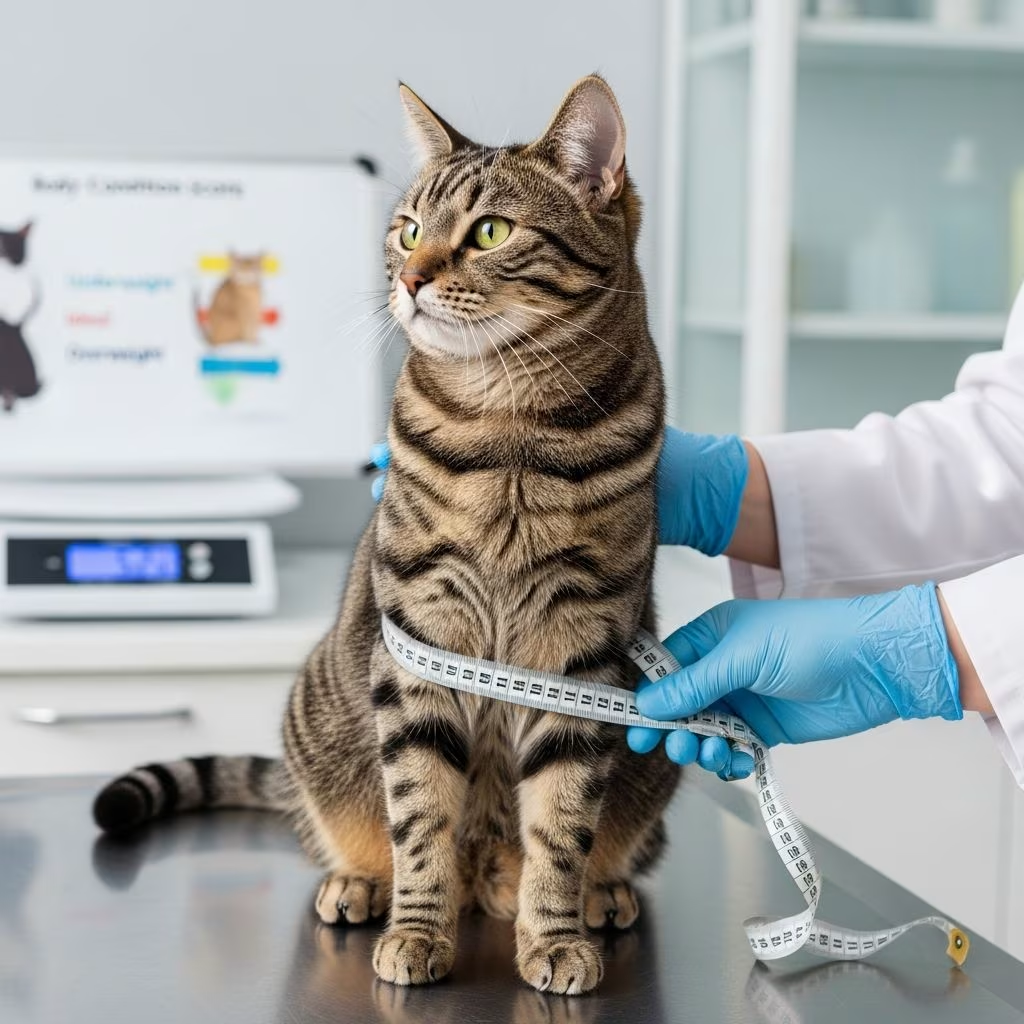
Obesity affects 25-40% of pet cats, leading to health risks like diabetes and joint issues. The Feline Body Mass Index (FBMI) offers a precise way to estimate body fat percentage using two simple measurements, outperforming traditional body condition scores (BCS) for overweight cats.
Why Cat Obesity is a Growing Concern
Excess weight in cats contributes to numerous health problems, including type 2 diabetes, arthritis, and reduced lifespan. Studies show that visual and palpation-based assessments often underestimate fat in obese felines, making accurate tools essential. Regular monitoring helps pet owners intervene early, promoting longevity and vitality.
Unlike humans, where BMI adjusts for height, cats require specialized metrics due to their unique body shapes. FBMI addresses this by focusing on zoometric measurements—ribcage circumference and lower hind limb length—to predict fat content reliably.
Understanding Traditional Body Condition Scoring
Body Condition Score (BCS) is the standard for pet weight assessment, using 5-point or 9-point scales. In the 9-point system, scores of 4-5 indicate ideal weight, 6-7 overweight, and 8-9 obese.
- Ideal BCS (4-5/9): Visible waist from above, abdominal tuck from side, ribs palpable with minimal fat cover.
- Overweight (6-7/9): No waist visible, slight abdominal rounding, ribs felt with pressure.
- Obese (8-9/9): No waist or tuck, ribs buried under thick fat, fat deposits on chest and tail base.
While useful, BCS relies on subjective feel and sight, proving less accurate for obese cats where fat masks landmarks. Research confirms BCS predicts body fat within 10% of gold-standard DEXA scans in only 13% of cases, versus higher accuracy with advanced indices.
Introducing the Feline Body Mass Index (FBMI)
Developed through prospective studies on overweight cats, FBMI uses morphometric data validated against DEXA scans—the reference for body composition. It estimates fat as a percentage of total body weight, aiding precise obesity grading.
FBMI outperforms BCS in obese populations, matching DEXA within 10% for 56% of cats tested. This makes it invaluable for weight management programs.
How to Measure for FBMI Calculation
Accurate measurements require a flexible tape and calm cat in standing position with legs perpendicular and head upright.
- Ribcage Circumference: Measure around the 9th rib (or 5th from rear) in centimeters. Ensure even tension without compressing.
- Leg Index Measurement (LIM): From patella (knee midpoint) to calcaneal tuber (hock point) on left hind leg, in centimeters.
Table below illustrates typical values:
| Category | Ribcage (cm) | LIM (cm) | Est. Body Fat (%) |
|---|---|---|---|
| Ideal | 30-40 | 10-12 | 15-25 |
| Overweight | 40-50 | 9-11 | 30-40 |
| Obese | >50 | <9 | >40 |
Use these alongside the formula for precision.
FBMI Calculation Formula and Lookup
The core equation derives from regression analysis on feline data:
\[% Body Fat = ((Ribcage^{0.7067}) – LIM^{0.9156}) – LIM\]
For ease, consult lookup tables based on ribcage and LIM. Example: Ribcage 45cm, LIM 10cm yields ~35% body fat, indicating overweight status.
Online calculators simplify this, inputting measurements for instant results. Validation studies confirm FBMI’s reliability across breeds, though long-haired cats may need extra palpation.
Comparing FBMI to Other Assessment Methods
| Method | Accuracy vs. DEXA | Accessibility | Best For |
|---|---|---|---|
| BCS (5/9-point) | Low (13% within 10%) | High (no tools) | General screening |
| FBMI | High (56% within 10%) | Medium (tape measure) | Obese cats, tracking |
| DEXA Scan | Gold standard | Low (vet clinic) | Clinical research |
| Bioelectrical Impedance | Moderate | Low (equipment) | Specialized clinics |
FBMI bridges home use and clinical precision, ideal for owners managing weight loss.
Health Risks of Feline Obesity and FBMI’s Role
Obese cats face heightened risks: 50% develop diabetes, joint strain accelerates arthritis. FBMI quantifies these risks by fat percentage, guiding interventions.
- 20-25% fat: Healthy range.
- 30-40%: Overweight, diet adjustment needed.
- >40%: Obese, veterinary consultation urgent.
Practical Tips for Using FBMI at Home
Perform monthly assessments:
- Weigh cat weekly for trends.
- Combine FBMI with BCS for comprehensive view.
- Track in a journal: date, measurements, score.
For multi-cat homes, label collars for individual tracking. Breeds like Persians need firmer palpation due to coat density.
Weight Management Strategies Post-FBMI Assessment
High FBMI? Implement gradual changes:
- Diet: Switch to measured portions of high-protein, low-calorie food. Reduce by 10-20% calories initially.
- Exercise: Interactive toys, laser pointers for 15-min daily sessions.
- Monitoring: Recheck FBMI biweekly; aim 1-2% body weight loss monthly.
- Vet Input: Rule out thyroid issues or medications causing gain.
Sustained 1-2% monthly loss prevents yo-yo effects.
Common Challenges and Solutions
Challenge: Squirmy Cats – Measure during calm post-meal times or with treats.
Challenge: Breed Variations – Adjust expectations for larger frames like Maine Coons.
Challenge: Plateaus – Vary routines, consult nutritionist.
Frequently Asked Questions (FAQs)
What is a healthy FBMI for cats?
15-25% body fat is ideal for most adults; kittens and seniors may vary slightly.
Can I use FBMI on kittens?
Best for cats over 1 year; growing bodies alter proportions.
How often should I calculate FBMI?
Monthly for maintenance, weekly during weight loss.
Is FBMI better than BCS?
Yes for obese cats, providing quantitative fat estimates where BCS is subjective.
What if my cat’s FBMI is high?
Consult a vet for tailored plan; avoid crash diets.
Conclusion: Empower Your Cat’s Health with FBMI
Integrating FBMI into routine care transforms vague concerns into actionable insights, fostering lean, active cats. Start measuring today for a healthier tomorrow.
References
- Use of a morphometric method and body fat index system for estimation of body composition in overweight and obese cats — Witzel AL, Kirk CA, et al. Journal of the American Veterinary Medical Association. 2014-06-01. https://everycat.org/cat-health/body-fat-index-system-for-overweight-and-obese-cats/
- How Fat is That Cat? — PMC – NIH. 2024. https://pmc.ncbi.nlm.nih.gov/articles/PMC10829146/
- Is Your Cat Overweight, Underweight, or Just Right? — IAMS. Accessed 2026. https://www.iams.com/articles/your-cat-overweight-underweight-or-just-right
- Cat Body Condition Scoring — Association for Pet Obesity Prevention. Accessed 2026. https://www.petobesityprevention.org/catbcs
- Correlation of a feline muscle mass score with body composition determined by dual-energy X-ray absorptiometry — Michel KE, Anderson W, et al. British Journal of Nutrition. 2011-10. https://everycat.org/cat-health/body-fat-index-system-for-overweight-and-obese-cats/



