

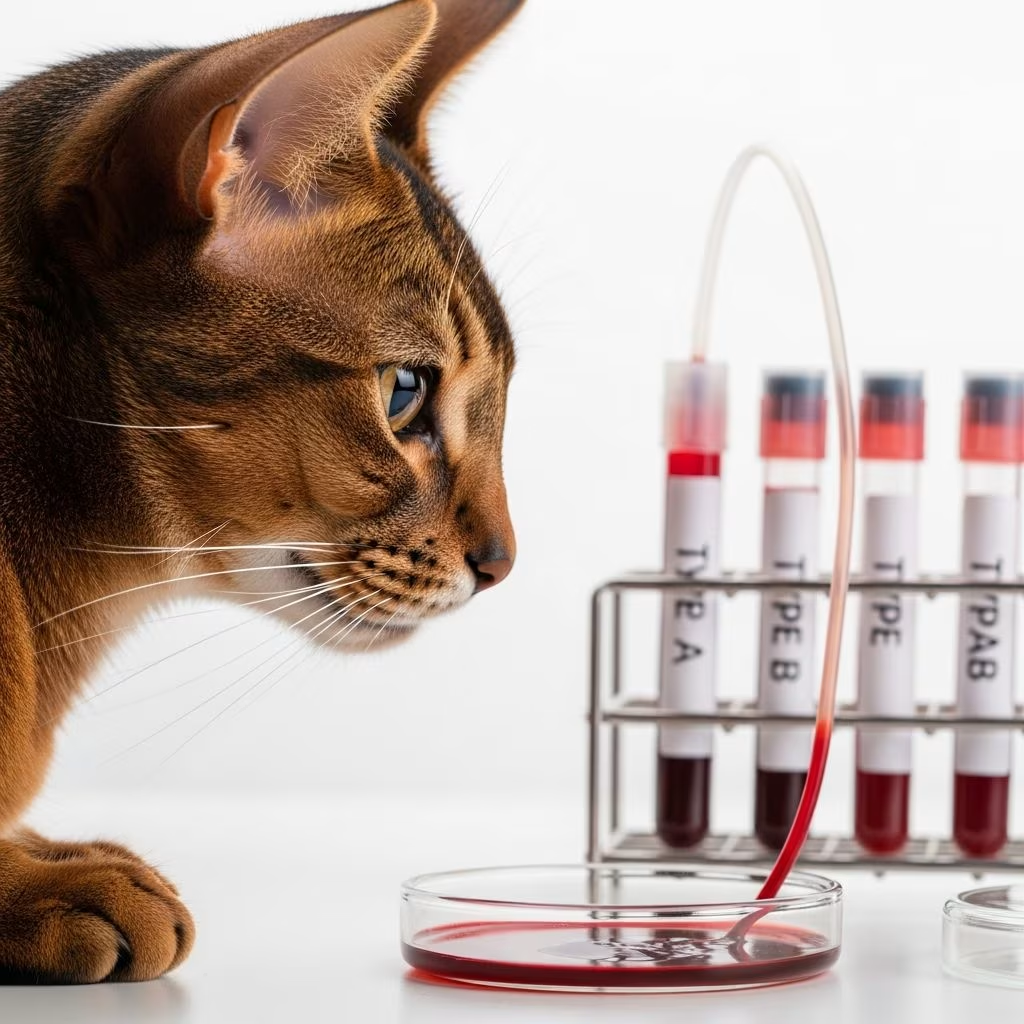
Cats possess three primary blood groups—A, B, and the uncommon AB—each defined by specific antigens on red blood cells, influencing transfusion safety and kitten health. These groups arise from genetic variations, with type A dominating in most populations, while B appears more frequently in select breeds. Understanding these distinctions helps prevent life-threatening reactions during medical procedures and breeding.
The Science Behind Cat Blood Groups
The AB system governs feline blood classification, where antigens determine type: A features the A antigen, B the B antigen, and AB both. Naturally occurring antibodies complicate matters—type A cats carry low levels of anti-B, but type B cats harbor strong anti-A antibodies, risking rapid hemolysis if mismatched blood is transfused. Type AB cats, lacking these antibodies, serve as universal recipients but remain rare.
Genetics play a pivotal role, with alleles denoted as N (for A), b# (variants b1-b3 for B), and c (for AB), following dominance A > c > b. Homozygous b#/b# yields type B, c/c or c/b# produces AB, while N combinations typically result in A, though rare undetected variants exist. This inheritance pattern allows predictive testing for breeding risks.
Breed-Specific Blood Type Patterns
Blood type distribution varies widely by breed and region, guiding veterinary precautions. In the US, about 99% of cats are type A, but certain pedigrees elevate B risks.
- British Shorthair, Birman, Devon Rex: High B prevalence, often over 20-50% in some lines.
- American Curl, Cornish Rex: Notable B frequency, exceeding 25% in Australian populations.
- Siamese: Predominantly A, with minimal B.
- RagaMuffin, Scottish Fold, European Shorthair: Occasional AB sightings in genetic surveys.
- Random-bred cats: Mostly A, rare AB carriers possible.
These patterns underscore the need for breed-specific typing before interventions.
Transfusion Protocols for Cats
Unlike dogs, cats lack universal donors due to innate antibodies forming early in life, necessitating typing for every transfusion—even the first. Mismatches trigger acute reactions: type B recipients of A blood face severe hemolysis from potent anti-A.
| Donor Type | Compatible Recipients | Risk Notes |
|---|---|---|
| A | A, AB | Safe for AB; low anti-B minimal risk |
| B | B, AB | High anti-A in B cats demands precise match |
| AB | AB only (rare) | Universal recipient, not donor |
Veterinarians use card agglutination or lab tests for rapid typing, cross-matching for added safety. Recent updates emphasize repeat typing, as neonatal changes can occur.
Neonatal Isoerythrolysis: A Hidden Breeding Danger
Type B queens pose grave risks to litters sired by A or AB toms, as colostrum anti-A antibodies destroy A-positive kittens’ red cells. Affected kittens suffer jaundice, anemia, and high mortality within hours of nursing.
Prevention strategies include:
- Genetic testing queens and toms pre-breeding to avoid B queen/A tom pairings.
- Milking out colostrum from at-risk B queens, feeding A milk substitutes.
- Early kitten typing and supportive care if signs appear.
Breeds like British Shorthair demand routine screening, as B carriers (N/b#) propagate risks undetected by phenotype alone.
Diagnostic Tools and Genetic Testing
Blood typing relies on serological cards detecting agglutination or PCR panels identifying b# and c alleles. Labs like UC Davis offer comprehensive genotyping, reporting probabilities for rare variants.
- N/N: Likely A (rare exceptions).
- N/b#: A carrier for B.
- N/c: A carrier for AB.
- b#/b#: B phenotype.
- c/c or c/b#: AB.
These tools empower breeders to select safe matings, reducing isoerythrolysis incidence.
Clinical Signs of Transfusion Reactions
Mismatched transfusions manifest swiftly: fever, vomiting, hypotension, and hemoglobinuria signal hemolysis. Type B recipients suffer worst due to antibody strength. Treatment involves stopping infusion, fluids, and immunosuppressants. Prevention via typing averts these crises.
FAQs on Feline Blood Management
What is the most common cat blood type?
Type A prevails in 99% of US cats, though B rises in purebreds.
Can AB cats donate to any type?
No, AB cats donate only to AB; they receive from all but require caution.
How do I test my cat’s blood type?
Vets use quick cards or send samples to labs like UC Davis for genetic analysis.
Is blood typing necessary for all transfusions?
Yes, due to natural antibodies, every transfusion demands matching.
What breeds need blood typing before breeding?
High-B breeds like Birman, Devon Rex, and British Shorthair.
Advances in Feline Blood Research
Recent genomics map multiple b alleles (b1-b3) and AB variants, enhancing test accuracy. Studies confirm geographic shifts, like 25%+ B in Australian cats. Future crossmatch-independent typing promises safer care.
Owners should discuss typing with vets, especially for breeds or emergencies. Informed management safeguards feline lives across transfusions and litters.
References
- AB Blood Group in Domestic Cat Breeds — Veterinary Genetics Laboratory, UC Davis. 2023. https://vgl.ucdavis.edu/test/bloodgroup-cat
- Understanding Feline Blood Types — Wisdom Panel. 2023. https://www.wisdompanel.com/en-us/blog/understanding-feline-blood-types
- Genetic Blood Group — Labogen. 2024. https://labogen.com/en/genetic-diseases-cat/genetic-blood-group/
- Blood Groups and Incompatibility in Cats — International Cat Care. 2025-03-14. https://icatcare.org/articles/blood-groups-and-blood-incompatibility-in-cats
- Blood Groups and Blood Transfusions in Cats — Merck Veterinary Manual. 2023. https://www.merckvetmanual.com/cat-owners/blood-disorders-of-cats/blood-groups-and-blood-transfusions-in-cats
- Feline Blood Typing — Pet Blood Bank UK. 2023. https://www.petbloodbankuk.org/vet-professionals/i-need-advice/blood-typing/feline-blood-typing/
- Blood Groups in Dogs and Cats — MSD Veterinary Manual. 2025. https://www.msdvetmanual.com/circulatory-system/blood-groups-and-blood-transfusions-in-dogs-and-cats/blood-groups-in-dogs-and-cats



