

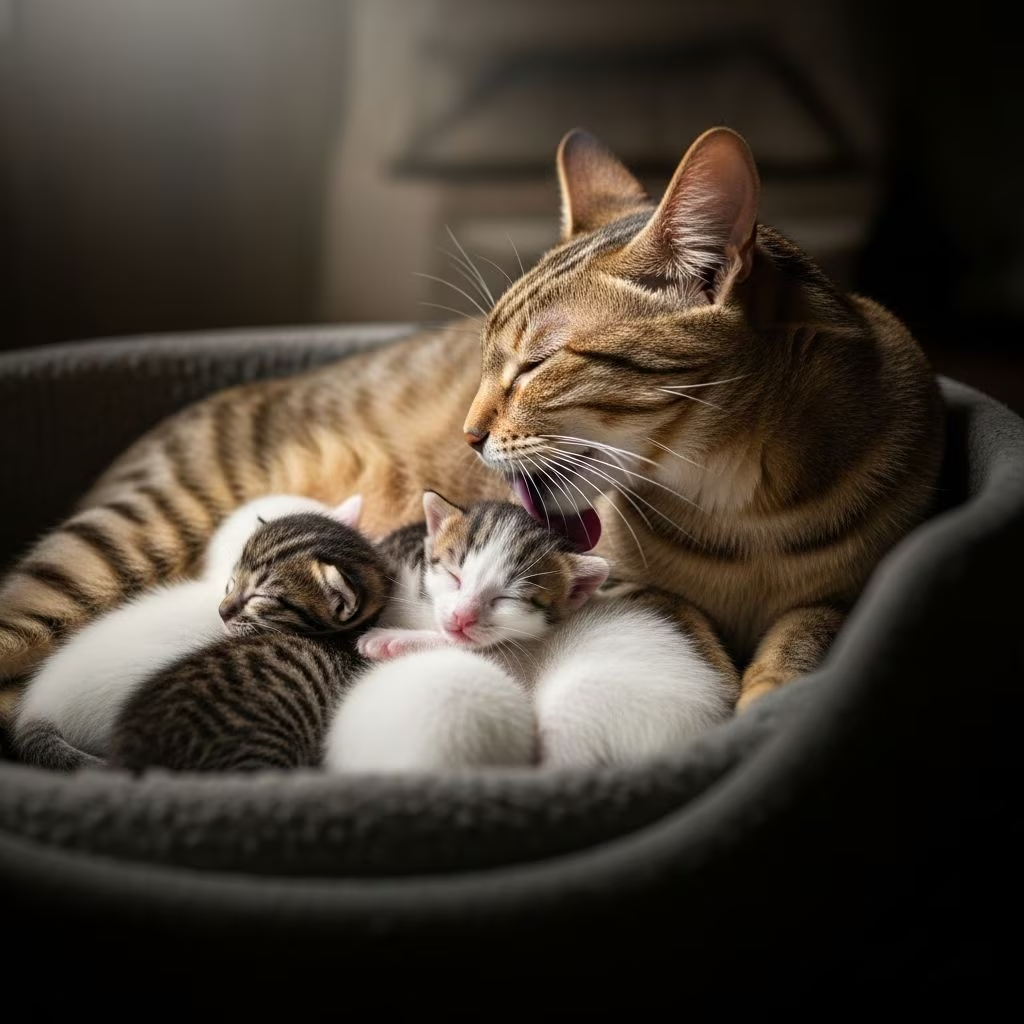
Witnessing your cat’s pregnancy journey culminates in the exciting moment of labor and delivery. However, many cat owners find themselves uncertain about when the birthing process has truly concluded. Recognizing the end of labor is crucial for ensuring both the mother cat and her newborn kittens receive appropriate care and attention. Understanding the timeline and physical indicators that signal the completion of feline labor helps you provide better support during this critical period.
Understanding the Three Stages of Feline Labor
Feline labor consists of three distinct stages, each with unique characteristics and durations. The entire labor process typically spans between 6 and 24 hours, though individual variations occur depending on the cat’s age, parity, and overall health. Recognizing each stage helps you understand when labor is progressing normally and when intervention may be necessary.
Stage One: Preparation and Cervical Relaxation
The initial phase of labor involves the cat’s body preparing for delivery. During this preparatory stage, the cervix relaxes and widens while the birth canal expands to accommodate the kittens. Uterine contractions begin, though they remain subtle and may not be visually apparent as straining. This stage typically lasts between 6 and 12 hours, though first-time mothers may experience a prolonged version lasting up to 36 hours.
Observable behavioral changes mark this phase. Your cat may display restlessness, repeatedly visiting the designated kittening area. She might engage in excessive grooming, particularly around the genital region. Many cats vocalize more frequently, pant, and seek reassurance from their owners during this time. Some cats refuse food or eat significantly less than usual. A small amount of red or brown mucus may appear at the vulva.
Stage Two: Active Delivery of Kittens
Once visible straining begins, your cat has entered the second stage of labor. The uterine contractions intensify and become more frequent. The first kitten typically arrives within one hour of vigorous contractions commencing. Each individual kitten requires between 5 to 30 minutes for complete delivery. The amniotic sac, often called the “water bag,” appears at the vulva as the first kitten enters the birth canal.
When properly positioned, kittens are born headfirst, enclosed in protective membranes. The mother cat instinctively breaks open these membranes, licks the kitten intensively, and severs the umbilical cord with her teeth. Between kitten deliveries, rest periods occur, sometimes lasting 2 to 4 hours. Multiple kittens typically arrive with 5-minute to 2-hour intervals between births. The entire second stage usually spans 3 to 12 hours.
Stage Three: Placental Delivery
Following each kitten’s birth, the placenta and remaining fetal membranes must be expelled. This third stage occurs either immediately after kitten delivery or between kitten births. Placentas typically appear dark greenish-black in color, which is completely normal. One placenta should be delivered for each kitten born. This passive stage is significantly less intense than the second stage, though mild contractions may continue as the body expels the remaining tissue.
Physical Signs Indicating Labor Completion
Several key physical indicators suggest that your cat has finished the birthing process. Understanding these signs prevents unnecessary anxiety and helps you determine whether veterinary attention is needed.
Cessation of Visible Contractions
Strong, visible straining and abdominal contractions should stop once labor concludes. If your cat continues straining vigorously for more than 20 minutes without producing a kitten, this warrants veterinary evaluation. A cat at rest between kitten deliveries differs from one experiencing continuous labor difficulty—the intervals between kittens represent normal behavior, whereas constant straining suggests potential complications.
Return to Normal Behavior
Following successful labor completion, your cat typically demonstrates significant behavioral shifts. She becomes calmer and more focused on nursing and grooming her kittens. The excessive restlessness, pacing, and vocalization that characterized early labor subside. The mother cat settles into her nesting area, spending most time attending to her newborns. She may become protective of her kittens, showing increased territorial behavior around her birthing space.
Stabilization of Vital Signs
During labor, a cat’s rectal temperature drops to approximately 37 degrees Celsius (98.6 degrees Fahrenheit). After labor concludes, body temperature gradually normalizes. The cat’s respiratory rate and heart rate, which may have been elevated during active labor, return to baseline levels. Her mucous membranes appear normal pink coloration rather than pale.
Timeline Expectations for Complete Birth
Understanding typical labor duration helps differentiate between normal variation and potential complications. The complete birthing process, from onset of visible contractions to final placental delivery, usually concludes within 6 to 24 hours. However, several factors influence this timeline:
- Litter Size: Larger litters naturally require more time for complete delivery of all kittens and placentas
- Maternal Experience: First-time mothers often experience prolonged first-stage labor, sometimes up to 36 hours
- Individual Variation: Some cats progress rapidly through labor while others proceed more slowly
- Kitten Position: Improperly positioned kittens may require additional time for delivery
- Maternal Health: Overall fitness and health status affect labor efficiency
Most deliveries complete within 6 to 12 hours from the start of visible straining. If labor continues beyond 12 hours after the first kitten arrives, veterinary consultation becomes important.
Critical Warning Signs Requiring Immediate Veterinary Attention
Certain complications demand prompt professional intervention. Contact your veterinarian immediately if you observe any of the following:
- No labor onset within 24 hours following the temperature drop below 37 degrees Celsius
- Strong contractions continuing more than 4 hours without producing a kitten
- Continuous straining lasting more than 20 minutes without kitten delivery
- Green or black vaginal discharge indicating placental separation
- Heavy vaginal bleeding exceeding light spotting
- Pregnancy extending beyond 71 days
- Signs of severe pain, weakness, or distress in the mother cat
- Fever or infection symptoms in the postpartum period
- A kitten remaining partially delivered for extended periods
Post-Labor Care Essentials
Once labor concludes and all kittens have arrived, specific care measures ensure optimal outcomes for mother and babies. The mother cat requires immediate access to fresh water and high-quality food. Ensure the nesting area remains quiet, private, and at a comfortable temperature, ideally between 85-90 degrees Fahrenheit for the kittens during their first few weeks.
Monitor nursing behavior to confirm all kittens receive adequate milk. Newborn kittens should nurse regularly and gain weight steadily. The mother should appear comfortable while nursing and show no signs of mastitis, such as swollen, hot, or painful mammary glands. Some queens naturally consume the placentas as they’re delivered, which provides additional nutrients and is normal behavior.
Frequently Asked Questions About Labor Completion
How long after the first kitten arrives should labor be complete?
While individual variation exists, labor typically concludes within 3 to 12 hours after the first kitten’s arrival. If your cat has delivered at least one kitten and shows no signs of distress or continued straining, she is likely to complete labor naturally. However, if straining continues without progress for more than 4 hours, veterinary consultation is warranted.
Is it normal for cats to rest between kitten deliveries?
Yes, rest periods between kittens are entirely normal. Cats may rest for 2 to 4 hours between delivering litter mates. During these intervals, the mother cat may sleep, groom herself or her kittens, eat, or drink. These rest periods should not be confused with complications—they represent the body’s natural pacing mechanism for successful delivery.
What does a placenta look like, and how many should be delivered?
Each placenta appears as a dark greenish-black fleshy mass approximately the size of a grape to small marble. One placenta should be delivered for each kitten born. Keep a mental count of kittens born versus placentas delivered. If you cannot confirm that all placentas have been expelled, contact your veterinarian, as retained placentas can cause serious complications.
Can labor resume after initially appearing complete?
Labor may resume if additional kittens remain in the uterus. If your cat shows renewed straining after a rest period, an additional kitten may be on the way. However, if contractions begin again after several hours of rest and no additional kittens appear, this suggests a potential problem requiring veterinary evaluation.
When can I safely assume labor is truly finished?
Labor is reasonably considered complete when: the mother cat shows no straining or contractions for at least 4 hours, all visible kittens are accounted for with matching placentas, the mother appears calm and comfortable, and normal nursing behavior has begun. Having your veterinarian examine the mother within 24 hours of delivery confirms all kittens and placentas have been delivered and identifies any postpartum complications.
Veterinary Consultation for Postpartum Assessment
Scheduling a veterinary examination within 24 to 48 hours after labor concludes provides valuable reassurance. Your veterinarian can confirm that all kittens and placentas have been properly delivered, assess the mother cat’s physical recovery, and identify any postpartum complications early. This examination becomes especially important for first-time mothers or cats with any labor complications.
Recognizing when your cat’s labor has truly concluded empowers you to provide appropriate care during this transformative period. By understanding normal labor progression, observing key physical signs, and knowing when to seek professional help, you ensure the best possible outcomes for your pregnant cat and her newborn litter.
References
- 5 Signs Your Cat is in Labor — Veterinary Emergency Group. 2024. https://www.veg.com/post/5-signs-your-cat-is-in-labor
- Cat Pregnancy: Signs, Stages and Care — PetMD. 2024. https://www.petmd.com/cat/conditions/reproductive/cat-pregnancy-and-kittens-complete-guide
- How Long Are Cats Pregnant? — Chewy. 2024. https://www.chewy.com/education/cat/health-and-wellness/how-long-are-cats-pregnant
- Pregnancy and Parturition in Cats — VCA Animal Hospitals. 2024. https://vcahospitals.com/know-your-pet/pregnancy-and-parturition-in-cats
- Cat labour – a guide to your cat giving birth — PDSA. 2024. https://www.pdsa.org.uk/pet-help-and-advice/pet-health-hub/other-veterinary-advice/cat-labour-a-guide-to-your-cat-giving-birth
- Cat giving birth — Joii Pet Care. 2024. https://www.joiipetcare.com/blogs/advice/cat-giving-birth
- Birth and kittening — Cats Protection. 2024. https://www.cats.org.uk/help-and-advice/pregnancy-and-kitten-care/birth-and-kittening
- Cat birth — International Cat Care. 2024. https://icatcare.org/articles/cat-birth



