

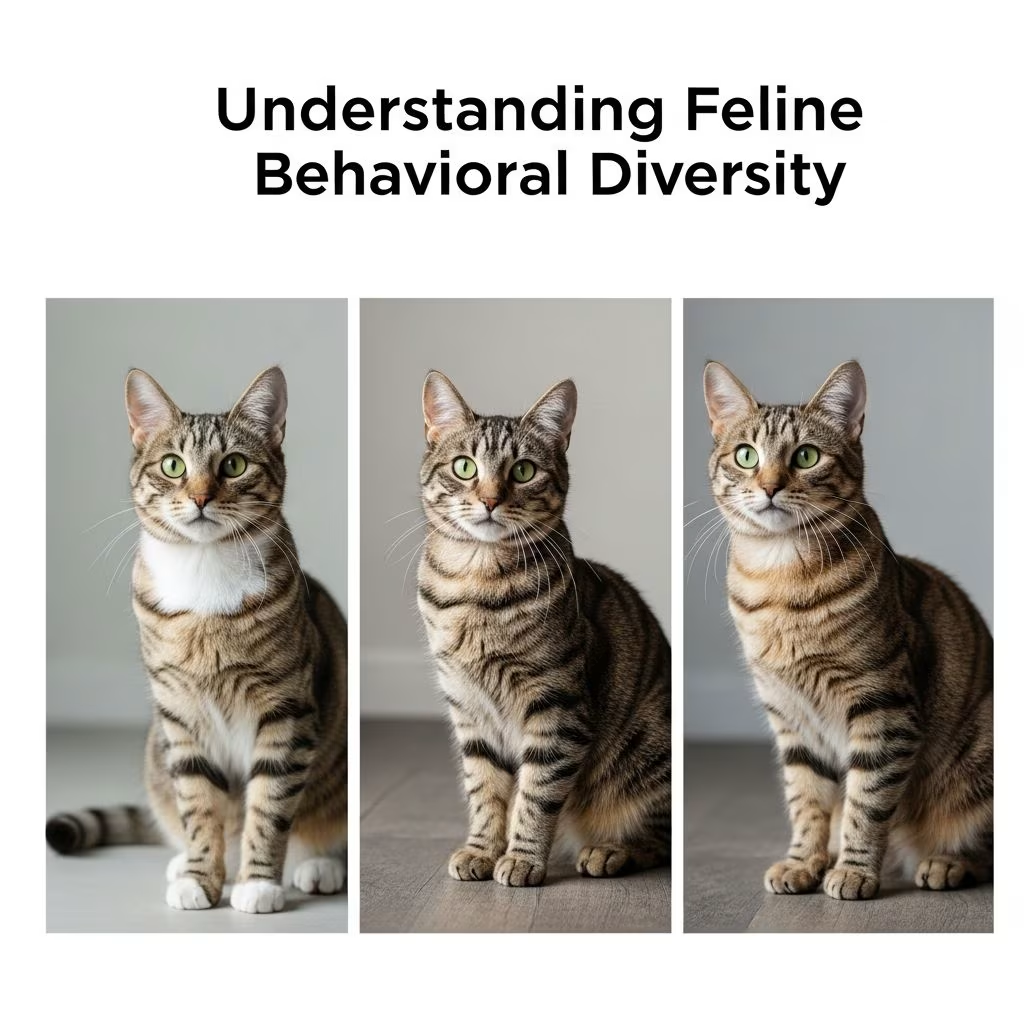
Every cat owner knows that their feline companion possesses a distinct personality that sets them apart from other cats. What might seem like quirky individual behavior, however, is actually rooted in measurable personality traits that scientists have now systematically identified and categorized. Recent comprehensive research has revolutionized our understanding of feline behavior by demonstrating that all cats can be evaluated across a consistent framework of traits that account for their behavioral differences.
The Foundation of Feline Personality Research
For many years, behavioral science devoted significantly more attention to dogs than to cats, despite cats being our most common household pets. This research gap existed partly because cats’ independent nature makes them challenging subjects for traditional laboratory observation. Cats behave fundamentally differently in artificial settings compared to their home environment, which made it difficult for researchers to gather accurate behavioral data. To overcome this limitation, scientists at the University of Helsinki developed an innovative approach: rather than observing cats in controlled laboratory conditions, they created a comprehensive questionnaire that cat owners completed about their pets’ behavior in natural home settings.
This methodology proved far more effective. Researchers distributed a 138-question survey through animal welfare platforms, ultimately collecting responses about more than 4,300 cats representing 26 different breed groups. The owners provided detailed information about their cats’ sex, age, breed, coat color, and primary activity levels. To ensure accuracy, many owners completed the questionnaire twice at different intervals, allowing researchers to verify the consistency and reliability of their reports.
The Seven Dimensions of Feline Character
Through rigorous statistical analysis of this unprecedented dataset, scientists identified seven distinct personality and behavioral traits that together encompass the complete spectrum of feline character. Understanding these dimensions provides cat owners with valuable insight into why their pets behave the way they do:
Activity and Playfulness Levels
The first significant dimension measures a cat’s propensity for activity and engagement in play. Cats scoring high on this trait demonstrate constant movement, frequent play behavior, and a general inclination toward physical activity throughout the day. These cats rarely remain still and often seek out opportunities for interactive play. At the opposite end of this spectrum are more sedentary cats that prefer rest and require minimal stimulation. Activity levels significantly influence how a cat engages with its environment and how much enrichment it may require to maintain contentment.
Fear and Anxiety Responses
Fearfulness represents another fundamental personality dimension that varies considerably among cats. Some cats exhibit minimal anxiety in response to unfamiliar situations, loud noises, or new people, while others demonstrate substantial fear responses to these same stimuli. Fearful cats tend to display behaviors such as hiding, avoidance, and heightened alertness. Research has shown that certain breeds, such as Russian Blues, consistently demonstrate higher fearfulness scores, while Abyssinian cats rank among the least fearful breeds. Understanding your cat’s fear threshold helps owners create appropriately secure environments.
Aggressive Tendencies Toward Humans
Some cats display more aggressive behavior toward their human companions than others, representing an important personality dimension. This trait encompasses behaviors ranging from scratching and biting to swatting at hands. The expression of this trait varies significantly across breeds, with Turkish Van cats showing notably elevated aggression toward humans compared to other breeds. Importantly, aggression toward humans differs from play aggression and can reflect both personality predisposition and environmental factors.
Sociability With Human Companions
Distinct from fearfulness, sociability toward humans reflects a cat’s genuine interest in and desire for human companionship. Highly social cats actively seek out human contact, enjoy being petted, and prefer their owner’s presence. These are the cats that greet owners at doors and demand attention throughout the day. Less social cats tolerate human presence but don’t actively pursue interaction. This trait appears to have genetic components, particularly involving the oxytocin receptor gene that governs attachment behaviors in both cats and humans.
Sociability With Other Cats
The dimension of sociability toward cats measures a cat’s inclination to interact positively with feline peers. Some cats enjoy the company of other cats and engage in friendly play and grooming, while others remain aloof or even antagonistic toward other felines. Research indicates that socialization during kittenhood significantly influences this trait, though hormone levels also play a role. A 2022 study from Azabu University in Japan found that cats with lower testosterone and stress hormone levels demonstrated greater inclination toward seeking companionship with other cats.
Litterbox Behavior and Cleanliness
Behavioral scientists classify inappropriate elimination and litterbox-related issues as the sixth key trait. This dimension encompasses a cat’s consistency in using the litterbox properly, substrate preferences, and tendency to eliminate outside designated areas. While not strictly a personality trait like the others, litterbox behavior reflects a cat’s stress sensitivity and adaptation to its environment. Inappropriate elimination often signals underlying stress, medical issues, or environmental dissatisfaction rather than deliberate misbehavior.
Excessive Grooming Behavior
The seventh trait measured is excessive grooming, which includes over-grooming behaviors that exceed normal feline hygiene needs. Some cats engage in destructive levels of self-grooming, potentially causing hair loss and skin irritation. Like litterbox issues, excessive grooming typically indicates stress sensitivity or environmental stress rather than representing a basic personality characteristic. Siamese and Balinese breeds show notably elevated tendencies toward excessive grooming.
How Personality Manifests in Stress Response
Researchers have discovered that personality traits directly influence how individual cats respond to stressful or unfamiliar situations. Through behavioral observation studies, scientists identified two primary personality clusters they termed “proactive” and “reactive.”
Cats classified as proactive display activity, independence, curiosity, and social engagement. When placed in novel or confining environments, these cats maintain relatively relaxed states and rest naturally. Their stress response involves adaptation rather than withdrawal. Reactive cats, conversely, present as calmer and shyer in normal situations. When faced with stress or confinement, however, they display extensive freezing behavior, heightened alertness, and prolonged hiding. This suggests that personality type fundamentally shapes how cats physiologically and behaviorally process challenging circumstances.
Breed Variations in Personality Expression
Research has revealed consistent personality differences across various cat breeds, suggesting that selective breeding has influenced not only physical characteristics but also behavioral predispositions:
- Bengal cats consistently demonstrate the highest activity levels and playfulness
- Persian and Exotic breeds tend toward lower activity and greater passivity
- Russian Blue cats score highest on fearfulness measures
- Abyssinian cats display the lowest fearfulness levels
- Turkish Van breed shows considerably higher aggression toward humans combined with lower sociability toward other cats
- Siamese and Balinese breeds exhibit the most excessive grooming behavior
The Interplay of Nature and Nurture
While genetic factors clearly influence personality, environmental factors and early experiences shape how personality traits ultimately express themselves. Early socialization during kittenhood significantly impacts how fearful, social, and aggressive a cat becomes in adulthood. Environmental stress, quality of socialization experiences, and relationships with humans and other animals all modify how inherent personality traits manifest behaviorally.
Additionally, research reveals that certain personality combinations correlate with specific behavioral patterns. For instance, highly intelligent and independent cats demonstrate stronger hunting drives and less interest in human affection, while cats that actively seek human companionship tend to hunt less frequently. Grumpy or cantankerous cats sometimes result from breeding practices that have reduced cats’ ability to express themselves through normal facial cues to other cats, creating frustration and irritability.
Practical Applications for Cat Owners
Understanding these personality dimensions allows cat owners to better meet their individual cat’s needs and prevent behavioral problems. A highly active Bengal cat requires extensive environmental enrichment and play opportunities that a passive Persian cat would find overwhelming. A fearful Russian Blue needs a secure environment with hiding spaces and minimal exposure to stressful stimuli, while a confident Abyssinian thrives on exploration and novelty. Cats displaying litterbox issues may need environmental modifications to reduce stress rather than behavioral corrections.
Recognizing that sociability exists on a spectrum helps owners accept that not all cats want constant lap time, and that a cat’s preference for independence reflects personality rather than lack of affection. Similarly, understanding that cats have innate activity levels helps owners select enrichment appropriate to their cat’s natural inclinations rather than trying to force a sedentary cat into high-activity play.
Future Directions in Feline Behavioral Science
Researchers emphasize that current personality trait identification represents a foundational framework for future investigation. Scientists plan to employ increasingly sophisticated statistical models to examine how breed, age, gender, health status, and environmental factors interact to shape personality and predict problematic behaviors. This research will enable development of better assessment tools and intervention strategies to improve feline welfare and reduce behavior-related problems in household cats.
References
- Scientists Studied Thousands of Cats And Identified 7 Distinct Personality Traits — ScienceAlert. 2021. https://www.sciencealert.com/scientists-have-narrowed-down-cat-personalities-to-seven-traits
- Seven personality and behavior traits identified in cats — ScienceDaily, University of Helsinki. 2021-09-07. https://www.sciencedaily.com/releases/2021/09/210907110629.htm
- Differences In Cats’ Personalities Are Reflected In Their Coping Styles — Faunalytics. https://faunalytics.org/differences-in-cats-personalities-are-reflected-in-their-coping-styles/
- Research Says There Are 5 Distinct Cat Personality Types — YourTango. https://www.yourtango.com/self/cat-personality-types
- 8 Factors That Contribute to a Cat’s Personality — Psychology Today. 2020. https://www.psychologytoday.com/us/blog/the-modern-heart/202011/8-factors-contribute-cat-s-personality



