

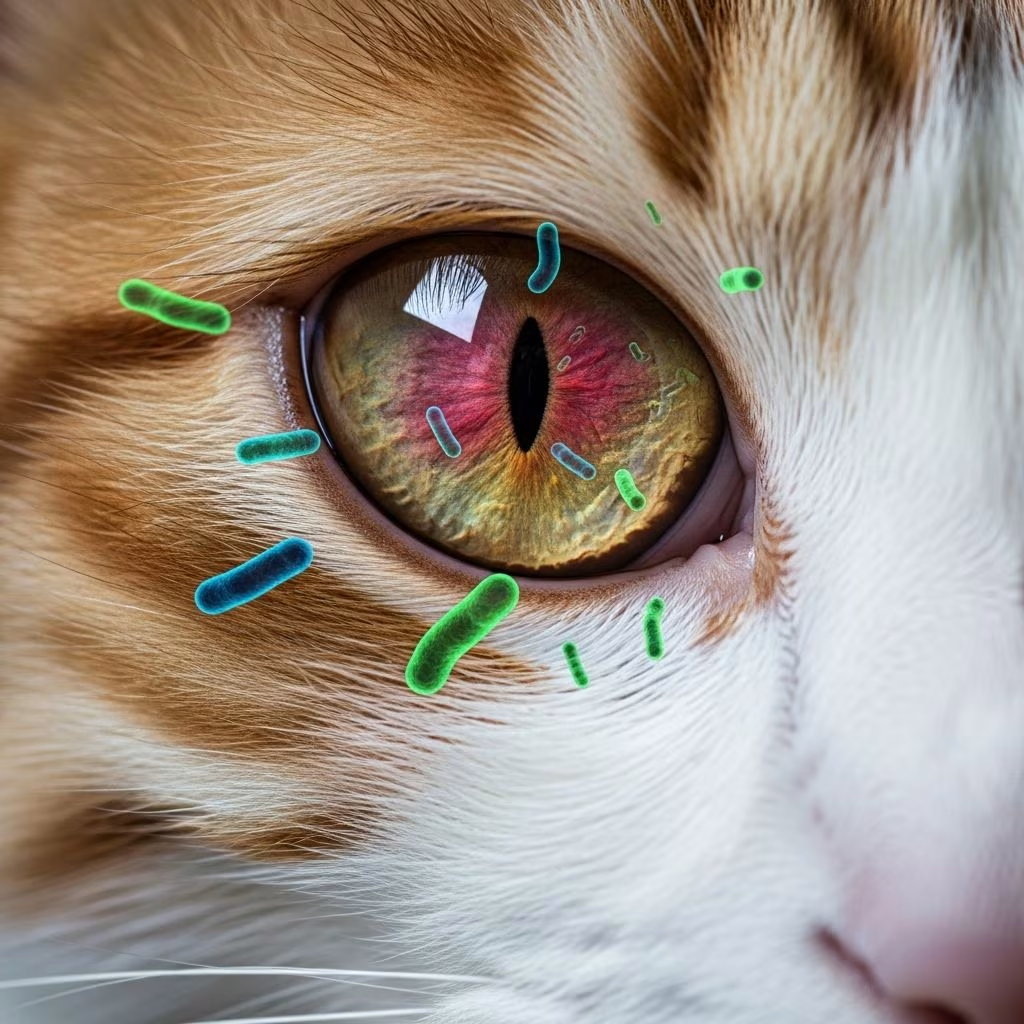
Bartonella henselae stands as the primary bacterial culprit behind infections in cats, often dubbed feline bartonellosis. Cats typically serve as asymptomatic reservoirs, harboring the bacteria without overt illness, yet they can transmit it to humans via scratches, sparking cat scratch disease (CSD).
The Nature of Bartonella Bacteria in Felines
Bartonella species represent gram-negative, intracellular bacteria adept at surviving within mammalian hosts, particularly cats for B. henselae. These pathogens thrive inside red blood cells and endothelial cells, evading immune detection through genetic adaptability and protein alterations on their surface. This persistence enables months-long bacteremia, where bacteria circulate in the bloodstream undetected.
While B. henselae dominates in cats, other species like B. vinsonii subsp. berkhoffii occasionally infect felines as accidental hosts, potentially leading to graver outcomes. Cats maintain this bacteria through natural cycles involving fleas, which act as vectors, amplifying the risk in flea-infested environments.
How Bartonella Spreads Among Cats and Beyond
Fleas drive the primary transmission route: infected cats groom, ingesting bacteria-laden flea feces under their claws, which then transfer during scratches. Fleas ingest Bartonella from infected blood meals, surviving in the flea’s gut to contaminate feces.
Direct cat-to-cat spread occurs via fights or scratches carrying contaminated material. Kittens and young adults face higher exposure in multi-cat settings or stray populations. Zoonotically, scratches or bites from bacteremic cats introduce bacteria into human skin breaks, causing CSD—marked by lymph node swelling 1-3 weeks post-exposure.
- Flea feces under claws: Main vector for scratches.
- Blood transmission: Via flea bites or contaminated wounds.
- Human risk: Primarily from kittens or flea-heavy homes.
Clinical Manifestations in Infected Cats
Most cats remain subclinical carriers, showing no signs despite persistent infection. When symptoms emerge, they often stem from stress, surgery, or co-infections, manifesting as short fevers (48-72 hours), lethargy, anorexia, vomiting, conjunctivitis, or lymphadenopathy.
Rare severe cases include endocarditis with valve lesions visible on echocardiography, myocarditis, uveitis, or pyogranulomatous inflammation in organs like heart, lungs, liver, spleen, and kidneys. Other Bartonella strains may provoke osteomyelitis, polyarthritis, hypercalcemia, or neurologic issues.
| Symptom Category | Common Signs | Rarity |
|---|---|---|
| Mild/Transient | Fever, lethargy, reduced appetite, red eyes | Occasional |
| Severe Cardiac | Endocarditis, murmurs, valve thickening | Rare |
| Systemic | Lymphadenopathy, anemia, reproductive issues | Experimental/Stress-induced |
Recognizing Bartonella in Human Companions
Humans contracting B. henselae develop CSD: initial papule at scratch site, followed by regional lymphadenopathy, fever, fatigue, headache. Immunocompromised individuals risk escalated forms like bacillary angiomatosis (skin/liver lesions), Parinaud’s oculoglandular syndrome (eye inflammation), encephalitis, or endocarditis.
Symptoms arise 3-14 days post-exposure, resolving in weeks for healthy people but persisting in vulnerable groups. Veterinarians note higher risks from needle sticks or handling bacteremic cats.
Diagnostic Approaches for Feline Cases
Diagnosis proves tricky due to frequent asymptomatic carriage; blood culture enriches for Bartonella over weeks, confirming active infection. PCR assays detect DNA in blood, offering speed but potential false positives from past exposure.
Serology measures antibodies, yet positive results indicate exposure, not active disease. Imaging like echocardiography reveals cardiac changes: valve vegetations, myocardial thickening, effusions. Full blood panels may show anemia, thrombocytopenia, or hyperglobulinemia in severe instances.
Rule out differentials: FCoV, Toxoplasma, or other pathogens mimicking signs. Post-treatment cultures verify clearance, especially for endocarditis.
Treatment Protocols for Affected Cats
Antibiotics target intracellular persistence: azithromycin (first-line, 5-day course for mild cases), rifampin, or doxycycline for prolonged therapy in severe infections. Endocarditis demands 4-6 weeks of combination therapy, monitoring via echo for resolution.
Supportive care includes fluids, anti-inflammatories, and flea eradication. Re-infection risks persist with new strains, necessitating ongoing vigilance. Experimental data show fever resolution and sign abatement, though natural cases vary.
- Azithromycin: Effective for bacteremia clearance.
- Rifampin/Doxycycline: For endocarditis, osteomyelitis.
- Monitoring: Repeat cultures, cardiac imaging.
Prevention Strategies for Cat Owners
Flea control forms the cornerstone: monthly topicals (fipronil, imidacloprid), environmental cleaning, and prompt kitten de-fleaing. Minimize scratches via gentle handling, trimming claws, and avoiding rough play, especially with young cats.
High-risk households (immunocompromised owners) should test cats for bacteremia pre-adoption and consider prophylactic antibiotics if positive. Indoor living slashes flea exposure; regular vet checks catch subclinical carriers early.
FAQs on Feline Bartonella
Can all cats carry Bartonella?
Many do asymptomatically, especially flea-exposed ones; prevalence peaks in warm, humid regions.
Is Bartonella fatal in cats?
Rarely; most self-limit, but untreated endocarditis can progress.
How do I protect my family from cat scratches?
Supervise kids, declaw gently, maintain flea-free cats.
Does vaccination exist for Bartonella?
No; focus on vector control.
Should I test my healthy cat?
Only if high-risk household or symptoms appear.
Long-Term Management and Research Outlook
Chronic carriage implies lifelong monitoring for stressed cats, with biennial flea checks and cardiac screens for at-risk breeds. Emerging studies link Bartonella to CNS disorders, rhinitis, or stomatitis, though causality remains unproven.
Recent case reports affirm endocarditis treatability, with echo normalization post-therapy. Global surveillance tracks strain diversity, urging integrated flea-Bartonella control in veterinary practice.
References
- Veterinary Guidance for Bartonella — CDC. 2023. https://www.cdc.gov/bartonella/hcp/veterinarians/index.html
- GUIDELINE for Feline bartonellosis — ABCD cats & vets. 2024. https://www.abcdcatsvets.org/guideline-for-feline-bartonellosis/
- Cat Scratch Disease (CSD) — VCA Animal Hospitals. 2023. https://vcahospitals.com/know-your-pet/cat-scratch-disease
- Chronic Bartonellosis in Cats: What are the potential implications? — PMC/NCBI. 2024-01-15. https://pmc.ncbi.nlm.nih.gov/articles/PMC10822232/
- About Cat Scratch Disease (Bartonella) — MN Dept. of Health. 2023. https://www.health.state.mn.us/diseases/bartonella/basics.html
- Bartonellosis: Causes, Symptoms, Treatment & Prevention — Cleveland Clinic. 2024. https://my.clevelandclinic.org/health/diseases/bartonellosis
- Cat Scratch Fever in Cats: What Is It and How Is It Treated? — PetMD. 2024. https://www.petmd.com/cat/conditions/infectious-parasitic/cat-scratch-fever-cats-what-it-and-how-it-treated
- About Bartonella henselae — CDC. 2023. https://www.cdc.gov/bartonella/about/about-bartonella-henselae.html



