

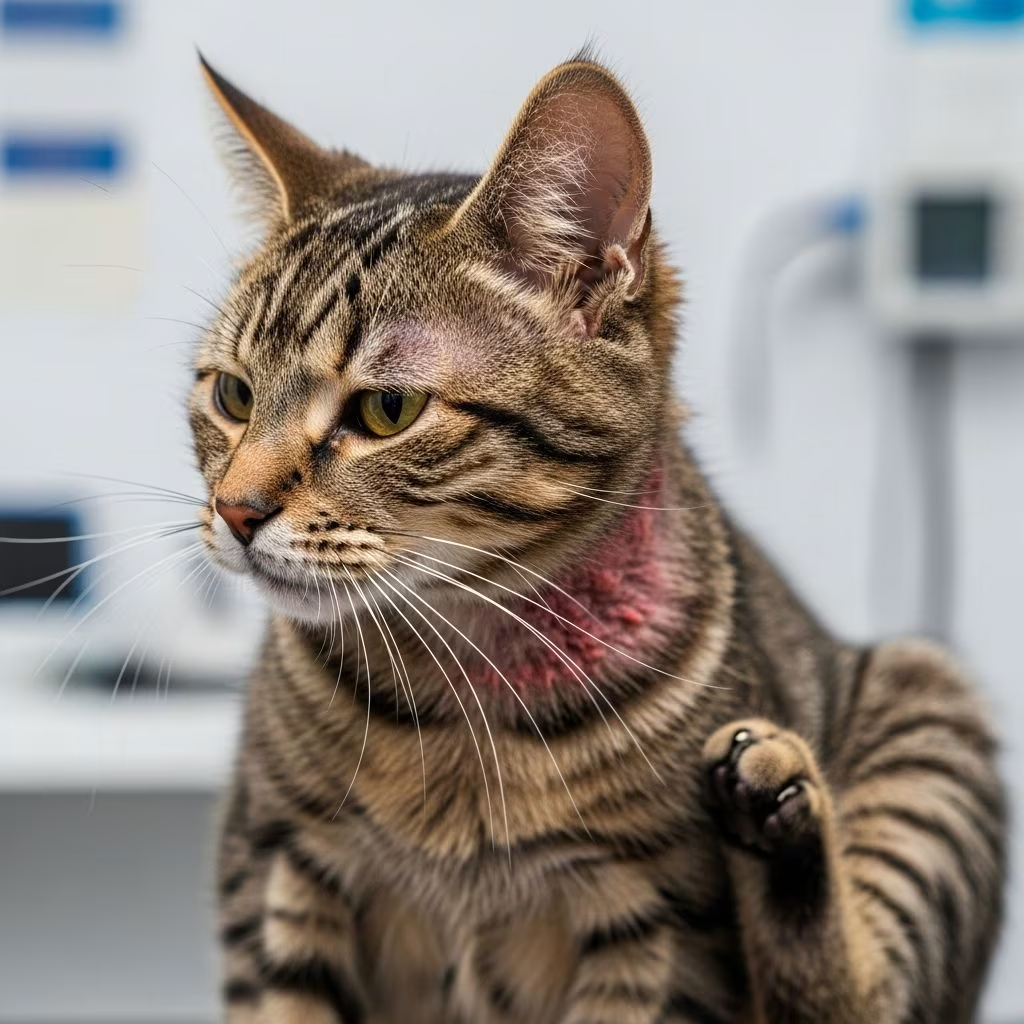
Feline atopic dermatitis represents a prevalent allergic condition in cats, characterized by an immune-mediated response to environmental triggers, leading to persistent skin discomfort and inflammation. This guide delves into its underlying mechanisms, observable manifestations, diagnostic pathways, and practical management techniques, drawing from established veterinary insights to empower cat owners and professionals alike.
Understanding the Nature of Feline Atopy
At its core, feline atopic dermatitis stems from a type 1 hypersensitivity reaction where the cat’s immune system overreacts to harmless environmental substances, producing immunoglobulin E (IgE) antibodies that bind to skin cells and provoke inflammation. Unlike flea allergies, which dominate as the primary cause of pruritus in cats, atopy ranks as the second most frequent allergic disorder, affecting approximately 12.5% of cases in long-term studies spanning over a decade.
This condition mirrors aspects of human and canine atopic dermatitis, involving exaggerated IgE and IgG responses, though serum tests for allergen-specific IgE often fail to reliably distinguish affected cats from healthy ones. Genetic predisposition plays a pivotal role, with symptoms typically emerging in young cats, often within the first three years of life, and persisting lifelong with potential worsening over time.
Common Environmental Triggers
A diverse array of allergens can ignite or exacerbate feline atopy, varying by geography, season, and lifestyle. Outdoor culprits frequently include pollen from trees, grasses, and weeds; mold spores; and insect proteins from house dust mites or cockroaches. Indoor environments contribute through dust mites, cigarette smoke, perfumes, cleaning agents, and even certain cat litters or flea preventatives.
- Seasonal allergens: Pollen and mold, peaking in spring, summer, or fall depending on region.
- Perennial allergens: Dust mites and indoor molds, causing year-round symptoms.
- Unexpected triggers: Insect bites, such as from mosquitoes, or chemical irritants in household products.
Geographic and cultural factors influence allergen profiles; for instance, urban cats may react more to indoor pollutants, while rural ones face higher pollen exposure. Concurrent sensitivities to food allergens complicate matters, as clinical presentations overlap significantly.
Recognizing Clinical Manifestations
The hallmark of feline atopic dermatitis is intense pruritus, manifesting as excessive licking, scratching, chewing, head shaking, or paw biting—behaviors that may occur discreetly as “silent grooming,” evading owner notice until lesions appear. Affected areas commonly include the head (especially ears and muzzle), neck, paws, axillae, groin, and ventral abdomen.
Self-trauma from these actions leads to observable changes:
- Symmetrical alopecia from over-grooming or hair pulling.
- Erythema, excoriations, crusts, and scabs, sometimes with salivary staining (rust-colored fur).
- Secondary complications like recurrent otitis externa/media, pyoderma, or Malassezia overgrowth, imparting a yeasty odor.
Symptoms may fluctuate seasonally or persist perennially, with some cats developing eosinophilic granuloma complex featuring ulcerative plaques. Unlike dogs, early-stage feline cases rarely show marked crusting or scaling, which instead signal parasites or autoimmune issues.
Differential Diagnosis Challenges
Distinguishing atopic dermatitis from mimics requires systematic exclusion, as presentations overlap. Key differentials fall into primary (allergic/parasitic) and secondary (infectious) categories.
| Primary Allergies/Conditions | Secondary Infections/Complications |
|---|---|
| Flea hypersensitivity | Otitis externa/media |
| Food hypersensitivity | Superficial/deep pyoderma |
| Mosquito bite allergy | Malassezia dermatitis |
| Demodicosis (Demodex gatoi) | Bacterial folliculitis |
| Dermatophytosis | Eosinophilic plaques |
| Otodectic/Cheyletiella mange | |
| Psychogenic alopecia | |
| Pemphigus foliaceus |
Flea allergy often predominates but can coexist; food trials via novel protein diets help rule it out. Parasitic causes demand thorough ectoparasite checks, including skin scrapings for Demodex.
Diagnostic Approaches
Diagnosis hinges on history, clinical signs, and exclusion of differentials rather than a single confirmatory test. Essential steps include:
- History and exam: Note pruritus pattern, lesion distribution, and seasonality.
- Flea control trial: Strict 6-8 week prevention to eliminate flea hypersensitivity.
- Skin cytology/culture: Detects bacteria (Staphylococcus), yeast (Malassezia), or eosinophils; rare in uncomplicated atopy.
- Skin scrapings/biopsy: Rules out mites, fungi, or neoplasia; histopathology shows spongiosis, eosinophilic inflammation.
- Intradermal/allergen testing: Identifies suspects for immunotherapy, though not diagnostic alone.
- Dietary elimination: 8-12 weeks on hydrolyzed or novel protein to exclude food allergy.
Intravenous fluorescein testing or trial therapies aid ambiguous cases. Notably, microbiome dysbiosis—altered skin/gut bacteria—correlates with severity, potentially fueling inflammation cycles.
Treatment and Management Strategies
Atopy demands multimodal, lifelong management focused on itch relief, infection control, allergen avoidance, and immune modulation. No cure exists, but symptoms can be mitigated effectively.
Environmental Control
- Use HEPA air filters and frequent vacuuming to reduce dust mites.
- Wash bedding weekly in hot water; consider allergen-proof covers.
- Minimize exposure to smoke, perfumes, and harsh cleaners.
Pharmacological Interventions
Anti-pruritics: Oral glucocorticoids (e.g., prednisolone) provide rapid relief but risk side effects with chronic use. Newer options like oclacitinib (Apoquel) or lokivetmab (Cytopoint) injections target itch pathways safely long-term.
Antimicrobials: Topical/systemic antibiotics for pyoderma; antifungal shampoos for Malassezia.
Immunotherapy: Allergen-specific sublingual or injectable vaccines, effective in 60-70% of cases after 6-12 months.
Supportive Therapies
Essential fatty acid supplements (omega-3/6) reduce inflammation. Laser therapy shows promise for pain relief and healing. Probiotics address gut dysbiosis, potentially curbing systemic inflammation.
Prognosis and Long-Term Care
With diligent management, most cats achieve good quality of life, though flares necessitate ongoing vigilance. Owners should monitor for worsening (e.g., systemic signs) and adhere to flea prevention religiously. Regular veterinary follow-ups optimize protocols, adapting to age-related changes or new allergens.
Frequently Asked Questions (FAQs)
Can feline atopic dermatitis be cured?
No, it is a chronic genetic condition, but symptoms are controllable with consistent care.
Is over-grooming always a sign of atopy?
Not necessarily; rule out fleas, food allergies, parasites, and stress first.
How do I prevent secondary infections?
Promptly treat pruritus, use medicated shampoos, and maintain hygiene.
Are hypoallergenic diets effective for atopy?
Only if food allergy coexists; true atopy responds to environmental management.
What breeds are most prone?
No strict breed link, but purebreds like Siamese, Devons, and Sphynx show higher incidence.
Emerging Research Insights
Recent studies highlight skin and gut microbiome imbalances as contributors, with dysbiosis preceding flares. Early microbiome modulation via probiotics may prevent progression, akin to pediatric human atopy. Genetic markers and advanced biologics promise refined future therapies.
References
- Atopic dermatitis in cats – PMC – NIH — National Library of Medicine. 2018-02-23. https://pmc.ncbi.nlm.nih.gov/articles/PMC5819051/
- Managing Atopic Dermatitis in Pets – AnimalBiome — AnimalBiome. Accessed 2026. https://www.animalbiome.com/blogs/cat/managing-atopic-dermatitis-in-pets
- Atopic Dermatitis in Cats: Causes, Symptoms & Treatment — Animal Friends Dermatology. 2024-02-29. https://www.animalfriendsdermatology.com/site/blog/2024/02/29/atopic-dermatitis-cats
- A clinical approach to feline atopic dermatitis — dvm360. Accessed 2026. https://www.dvm360.com/view/a-clinical-approach-to-feline-atopic-dermatitis
- Feline atopic dermatitis – DoctorVet – Laser Therapy — DoctorVet. Accessed 2026. https://www.doctorvetlaser.com/en/applications/feline-atopic-dermatitis/
- Life’s an Itch: A Clinical Approach to Feline Atopic Dermatitis — BluePearl Vet. Accessed 2026. https://bluepearlvet.com/medical-library-for-dvms/lifes-an-itch-a-clinical-approach-to-feline-atopic-dermatitis/
- Inhalant Allergies (Atopy) in Cats — VCA Animal Hospitals. Accessed 2026. https://vcahospitals.com/know-your-pet/inhalant-allergies-atopy-in-cats



