

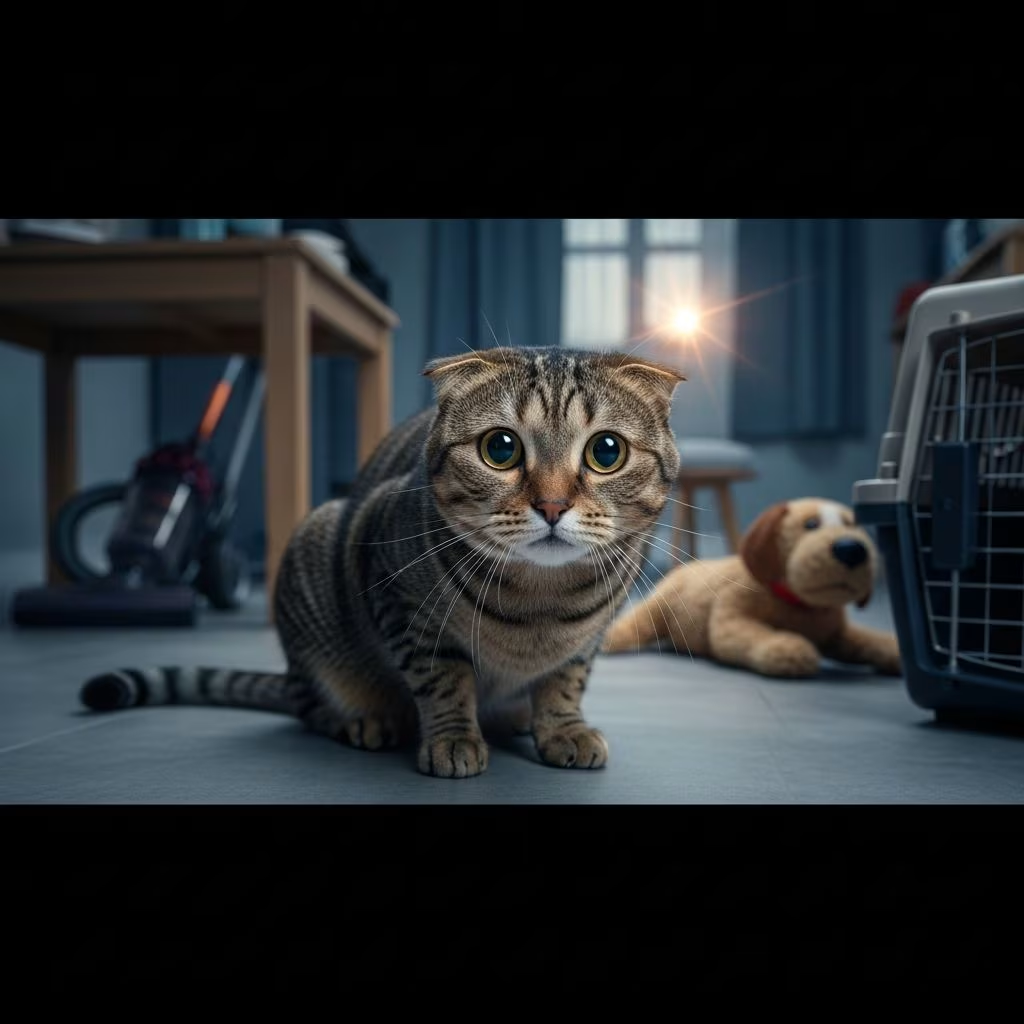
Cats are often perceived as independent and fearless creatures, yet many feline companions experience genuine anxiety when confronted with specific situations or stimuli. Understanding what causes fear in cats is essential for pet owners who want to create a secure, supportive home environment. Unlike dogs, which may openly display distress through vocalization and physical excitement, cats tend to internalize their anxiety, often retreating to hiding spots or demonstrating subtle behavioral changes. This article explores the most significant sources of feline fear, the biological reasons behind these reactions, and practical strategies to help your cat navigate an often-unpredictable world.
The Acoustic Sensitivity Factor: Why Loud Sounds Disturb Cats
One of the most prevalent triggers of feline anxiety involves acoustic disturbances. Cats possess exceptionally sensitive hearing capabilities, with multiple folds in their ear structures that amplify their ability to detect high-frequency sounds. This heightened auditory perception, which serves cats well during hunting situations, becomes a liability when exposed to unexpected or intense noises in domestic settings.
Common household sounds that frequently provoke fearful responses include:
- Vacuum cleaners and lawn maintenance equipment
- Fireworks and thunderstorms
- Hair dryers and electrical appliances
- Washing machines and dishwashers
- Printer activation and similar mechanical sounds
The challenge for cats is not merely the volume of these noises, but their unfamiliarity and unpredictability. Kittens who are gradually exposed to household appliances during their early developmental months typically show reduced fear responses as adults. Conversely, cats introduced to such sounds later in life may struggle with anxiety when these devices are activated.
Fireworks present a particularly complex trigger because they combine multiple stressors simultaneously—unusual smells, extreme noise levels, and disruption to the cat’s normal evening routine. Since fireworks typically occur only annually, cats never develop habituation to these sensations, making each occurrence a novel and frightening experience.
Olfactory Overwhelm: The Role of Scent in Feline Distress
While humans rely primarily on vision, cats depend heavily on their sense of smell to navigate and understand their environment. Cats use olfactory information to identify familiar people, territories, and objects. When exposed to unfamiliar or overwhelming scents, cats may experience genuine distress.
Specific odors that commonly trigger feline anxiety include:
- Strong citrus fragrances and citrus-based cleaning products
- Chemical-based air fresheners and synthetic perfumes
- Floral candles and aromatic diffusers
- Valerian plants, which contain compounds mimicking feline sex hormones and can cause overstimulation in adult cats
- Unfamiliar human perfumes and colognes introduced by visitors
The intensity of reaction to certain scents stems from the feline predatory nature and their evolutionary adaptation to rely on smell for survival. Cats exposed to strong chemical odors may interpret these sensations as environmental threats, leading to avoidance behaviors and heightened anxiety levels.
Environmental Instability and the Cat’s Need for Consistency
Cats are fundamentally creatures of habit, and their psychological well-being depends significantly on environmental predictability. Even seemingly minor modifications to a cat’s living space can trigger considerable anxiety.
Major environmental shifts that provoke feline stress responses include:
- Relocation to a new residence
- Furniture rearrangement or replacement
- Changes in litter box location or type
- Modifications to feeding schedules or food bowl placement
- Introduction of new family members, including infants or new pets
- Travel and transportation to unfamiliar locations
These changes fundamentally disrupt the cat’s mental map of their territory. Cats invest considerable cognitive effort in memorizing their environment, including the location of escape routes, safe hideaways, and resource availability. When these spatial relationships change unexpectedly, cats experience genuine disorientation and anxiety.
The arrival of a new family member or pet represents a particularly significant stressor because it simultaneously introduces unfamiliar smells, sounds, and behavioral patterns. A cat may require weeks or even months to adjust to such changes, during which time behavioral issues like inappropriate elimination or aggression may emerge.
Social Encounters and Stranger Anxiety
Many cats exhibit pronounced anxiety when encountering unfamiliar people. This response operates on multiple levels: the stranger’s unfamiliar appearance triggers wariness, while their unknown scent creates uncertainty about whether they pose a threat.
Contributing factors to stranger-related anxiety include:
- Olfactory unfamiliarity – Cats rely on scent recognition to determine whether a person is trustworthy
- Prior negative experiences with humans, including abuse, neglect, or rough handling
- Lack of early socialization with diverse people during the critical kitten development period
- Unpredictable guest behavior that violates the cat’s preferred interaction style
A cat raised in a multi-person household typically exhibits less anxiety around strangers than a cat raised with limited human contact. The developmental period from birth to approximately 12 weeks represents a critical window for positive human exposure, after which introducing new people becomes more challenging.
Aquatic Aversion: Understanding the Water-Related Fear Response
The widespread observation that cats fear water stems from multiple physiological and evolutionary factors. The feline coat is not naturally water-resistant in the way that a dog’s double coat is structured. Instead, the cat’s undercoat creates an air cushion that provides insulation and thermoregulation benefits. When water penetrates this coat, it compromises both temperature regulation and the protective properties of the fur.
Additional reasons cats resist aquatic experiences include:
- Loss of sensory control and ability to quickly escape when submerged in water
- Temperature shock from sudden submersion
- Disruption of the cat’s grooming routines and self-maintained hygiene practices
- Auditory disturbance from water sounds and splashing
It is worth noting that not all cats exhibit equal water anxiety. Some breeds, such as Turkish Vans and Bengal cats, demonstrate greater water tolerance. Individual cats raised with early positive water exposure may show reduced fear responses compared to cats first encountering bathing situations later in life.
The Unexpected Object Phenomenon and Novelty Anxiety
A internet phenomenon from several years ago featured videos of cats reacting with exaggerated fear responses when encountering cucumbers placed near their food bowls. While many theories emerged suggesting the cucumber resembled a snake (a natural predator), the more plausible explanation involves the principle of novelty itself.
Cats experience heightened alert responses when novel objects suddenly appear in their familiar environment, particularly when the object appears near a cat engaged in an essential activity like eating. The disruption operates on multiple levels:
- The sudden appearance violates the cat’s expectation of environmental stability
- An unfamiliar object near the cat’s food source triggers protective vigilance
- The cat’s predatory instincts respond to unexpected movement or sudden presence
This principle extends beyond vegetables to include new furniture, different brands of litter boxes, unfamiliar garden tools, or any object introduced without gradual acclimation. A cat may view a new couch or rearranged room with genuine suspicion until multiple sensory exposures convince the cat that the object poses no threat.
Recognizing Feline Fear: Physical and Behavioral Indicators
Understanding how cats communicate fear enables pet owners to identify anxious responses before they escalate into problematic behaviors. Cats employ multiple physical signals to convey distress:
- Postural changes – Crouching low to the ground, flattening the body, or adopting rigid postures
- Ear positioning – Flattening ears against the head or rapidly rotating ears as the cat attempts to monitor threats
- Pupil dilation – Eyes widening noticeably with pupils expanding to maximum capacity
- Tail behavior – Tucking the tail under the body or moving it rapidly side-to-side in agitated patterns
- Vocalization – Hissing, spitting, or producing distressed meowing sounds
- Grooming disruption – Rapid nose licking or excessive grooming as stress-relief behaviors
More serious fear responses may involve defensive aggression (scratching or biting), loss of litter box control, or complete withdrawal and hiding for extended periods. These behavioral manifestations indicate that the cat’s anxiety has reached a level requiring intervention.
Strategic Approaches to Reducing Feline Anxiety
Creating a supportive environment for anxious cats requires patience, consistency, and evidence-based strategies. Gradual desensitization represents one of the most effective approaches, particularly for noise-related fears.
Desensitization Process: Introduce feared sounds at very low volumes, allowing the cat to remain in the space voluntarily without pressure. Gradually increase volume over weeks or months, always respecting the cat’s ability to withdraw from the situation. Never force a cat to endure a frightening stimulus, as this intensifies anxiety rather than reducing it.
Environmental Management: When changes become necessary, introduce modifications gradually. Allow cats extended time to investigate new objects before they become permanent fixtures. When introducing new people, brief initial encounters with rewards create positive associations more effectively than prolonged, forced interactions.
Scent-Based Comfort: Feline pheromone products designed to mimic natural calming scents can reduce anxiety in stressed cats. Creating predictable, enriched environments with multiple hiding spaces, elevated perches, and interactive play opportunities supports psychological resilience.
Conclusion
Understanding feline fear requires recognizing that cats experience genuine anxiety rooted in their biology, evolutionary history, and individual experiences. The heightened sensory capabilities that make cats exceptional hunters simultaneously create vulnerability to environmental overstimulation. Pet owners who acknowledge these inherent traits and provide consistent, supportive environments enable their feline companions to develop greater confidence and security. Through patient desensitization, environmental management, and respect for the individual cat’s pace and preferences, most fear-related behaviors can be significantly improved, resulting in a more content and emotionally stable companion.
References
- What Are Cats Afraid Of? 10 Common Cat Fears and Anxieties in Cats — PetMD. Accessed January 2026. https://www.petmd.com/cat/general-health/what-are-cats-afraid-of
- Scaredy Cats: 5 Things That Scare Cats — Diamond Pet Foods. Accessed January 2026. https://www.diamondpet.com/blog/behavior/psychology/scaredy-cats-five-things-that-scare-cats/
- Common Things That Scare Cats — PetCareRx. Accessed January 2026. https://www.petcarerx.com/article/common-things-that-scare-cats/4066
- What are cats scared of? – Petplan — Petplan. Accessed January 2026. https://www.petplan.co.uk/cat-insurance/cat-care-and-advice/why-are-cats-scared-of-cucumbers-reflections-and-water.html
- 6 Things that Scare and Stress Cats — Vetri Science. June 2021. https://blog.vetriscience.com/2021/06/6-things-that-scare-and-stress-cats
- Cat fear: how to help a nervous cat — PDSA. Accessed January 2026. https://www.pdsa.org.uk/pet-help-and-advice/looking-after-your-pet/kittens-cats/how-to-help-a-nervous-cat



