

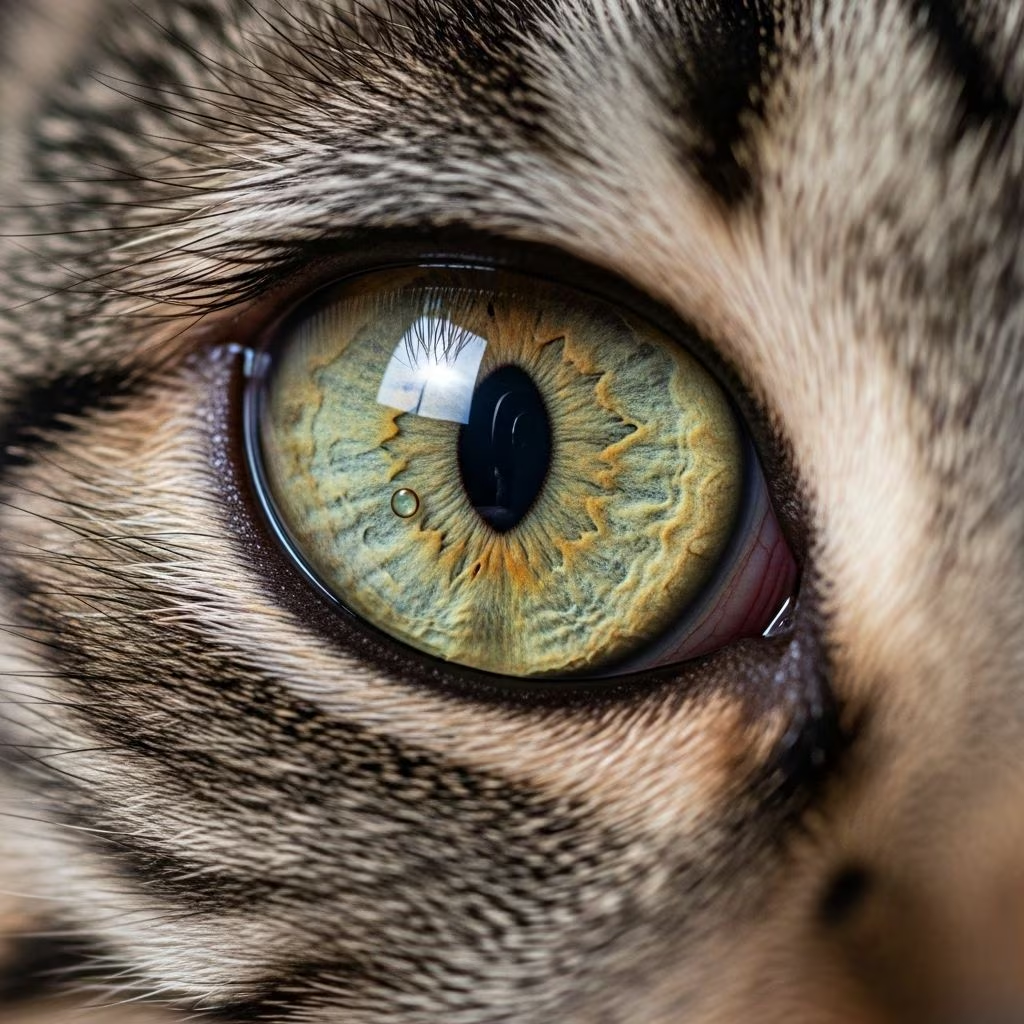
The anterior uvea, encompassing the iris and ciliary body, is vital for regulating light entry, producing nourishing fluids, and maintaining eye pressure in cats. Disorders affecting this region, primarily inflammation known as anterior uveitis, can lead to pain, vision loss, and secondary issues if not addressed promptly.
Anatomy of the Cat’s Anterior Uvea
The uvea forms the eye’s middle vascular layer, with the anterior portion including the iris and ciliary body. The iris, a pigmented diaphragm, controls pupil size via constrictor and dilator muscles, appearing as a vertical slit in bright light for optimal retinal protection. Its pupillary zone surrounds the pupil, while the ciliary zone connects to the thicker collarette area.
The ciliary body encircles the lens, secreting aqueous humor—a clear fluid providing nutrients to avascular structures like the cornea and lens while regulating intraocular pressure (IOP). It features pars plicata (ridged, secretory) and pars plana (smooth) regions, with muscles adjusting lens focus. This setup maintains the blood-aqueous barrier, preventing proteins and cells from clouding the eye’s interior.
- Iris layers: Anterior border layer, stroma with vessels and melanocytes, posterior pigment epithelium.
- Ciliary processes: Double-layered epithelium actively pumps fluid against pressure gradients.
- Muscle functions: Sphincter for miosis, dilator for mydriasis, responding to light and neural signals.
Primary Conditions Impacting the Anterior Uvea
Anterior uveitis is the most prevalent disorder, characterized by inflammation disrupting normal functions. It may present acutely with sudden pain or chronically with subtle changes. Other issues include iris cysts, neoplasms, and synechiae—adhesions altering drainage.
| Condition | Key Features | Common in Cats? |
|---|---|---|
| Anterior Uveitis | Inflammation of iris/ciliary body; flare, cells, hypopyon | Yes, often idiopathic or infectious |
| Iris Cysts | Fluid-filled sacs on iris surface; usually benign | Occasional, may prolapse |
| Synechiae | Iris adhesions to cornea or drainage angle | Secondary to uveitis |
| Uveal Melanoma | Pigmented tumors; potential for spread | Rare but aggressive |
Causes and Risk Factors
Anterior uveitis in cats arises from infectious agents like feline leukemia virus (FeLV), feline infectious peritonitis (FIP), toxoplasmosis, or bacterial infections. Immune-mediated responses, trauma, and neoplasms also contribute. Unlike dogs, cats often lack lens-induced uveitis but face higher risks from systemic diseases.
Breakdown of the blood-aqueous barrier allows proteins and leukocytes into the aqueous humor, causing flare via the Tyndall effect—light scattering visible on slit-lamp exam. Persistent inflammation risks peripheral anterior synechiae, sealing the iridocorneal angle and elevating IOP toward glaucoma.
- Infectious: FIP, FeLV, herpesvirus, Bartonella.
- Non-infectious: Trauma, cancer, idiopathic (lens-independent in cats).
- Predispositions: Breeds like Siamese may show corneal involvement; outdoor cats higher infection risk.
Recognizing Symptoms in Your Cat
Cats mask pain, but anterior uveal issues manifest as squinting (epiphora), third eyelid protrusion, pupil irregularities (miosis or mydriasis), and color changes in the iris. Cloudiness from corneal edema, anterior chamber fibrin, or hypopyon (pus settling ventrally) signals severity.
Advanced signs include iris bombé—posterior iris bulging from pupillary block—and hypotony or secondary glaucoma. Posterior involvement risks retinal detachment, causing blindness. Owners may notice lethargy or appetite loss from discomfort.
Common Clinical Signs
- Aqueous flare: Beam-like haze in anterior chamber.
- Hyphema: Blood layering in chamber.
- Keratic precipitates: Cells on corneal endothelium.
- Conjunctival hyperemia: Redness around eye.
Veterinary Diagnosis Approaches
Diagnosis starts with a thorough ophthalmic exam using focal illumination, indirect ophthalmoscopy, and tonometry for IOP. Slit-lamp biomicroscopy detects flare grading (0-4+), cell counts, and synechiae. Fluorescein staining rules out ulcers.
Systemic workup includes blood tests for FeLV/FIV, toxoplasma serology, and imaging like ultrasound for ciliary body masses. Gonioscopy assesses drainage angle patency. Early detection prevents vision-threatening complications.
- History and Observation: Onset, trauma, systemic illness.
- Schirmer Tear Test: Rules out dry eye.
- Aqueous Paracentesis: Rarely, for cytology in severe cases.
Treatment Strategies and Management
Therapy targets inflammation, pain, infection, and IOP. Topical corticosteroids (e.g., prednisolone acetate) or NSAIDs reduce flare; cycloplegics like atropine prevent synechiae and ease ciliary spasm. Antibiotics address underlying infections.
For glaucoma risk, prostaglandin analogs or beta-blockers lower IOP. Systemic immunosuppressants manage immune-mediated cases. Frequent rechecks monitor progress, tapering meds to avoid rebound.
| Treatment Type | Examples | Purpose |
|---|---|---|
| Anti-inflammatory | Dexamethasone ointment | Suppress uveitis |
| Mydriatic/Cycloplegic | Atropine drops | Relieve pain, break synechiae |
| Antimicrobial | Doxycycline oral | Treat infections like Mycoplasma |
| Antiglaucoma | Latanoprost | Control IOP |
Potential Complications and Prognosis
Untreated uveitis leads to phthisis bulbi (shrunken globe), cataracts, or blindness from detachment. Cats with FIP-linked uveitis face guarded prognosis due to systemic disease, while idiopathic cases often respond well.
Chronic management involves lifelong monitoring; surgical options like iridectomy address persistent synechiae. Vision preservation hinges on rapid intervention.
Prevention Tips for Cat Owners
- Vaccinate against core diseases (FeLV, FIV).
- Keep cats indoors to minimize trauma/infections.
- Regular vet eye exams, especially for seniors.
- Monitor for early signs like blinking or redness.
Frequently Asked Questions (FAQs)
What is the most common cause of uveitis in cats?
Infectious diseases like FIP or toxoplasmosis top the list, alongside idiopathic cases.
Can my cat go blind from anterior uveitis?
Yes, if retinal detachment or glaucoma develops untreated, but early treatment often saves vision.
How long does treatment last?
Acute cases: 4-6 weeks; chronic may require months with tapering.
Is surgery ever needed?
For severe synechiae or tumors, yes—options include cyclophotocoagulation.
Should I breed a cat with uveitis history?
Consult a vet; heritable traits rare, but systemic causes may pass on.
Understanding anterior uveal disorders empowers owners to act swiftly, safeguarding their cat’s precious sight through vigilant care and professional guidance.
References
- Uvea — Veterian Key. Accessed 2026. https://veteriankey.com/uvea-2/
- Canine and Feline Uveitis — PMC (Townsend WM, 2008). 2008-01-01. https://pmc.ncbi.nlm.nih.gov/articles/PMC7124245/
- Uveitis in Cats — VCA Animal Hospitals. Accessed 2026. https://vcahospitals.com/know-your-pet/uveitis-in-cats
- The uvea — PMC (Dubielzig RR, 2010). 2010-01-01. https://pmc.ncbi.nlm.nih.gov/articles/PMC7148639/
- Examination of the feline eye – functional anatomy — BVNA. Accessed 2026. https://bvna.org.uk/blog/examination-of-the-feline-eye-functional-anatomy-by-natasha-mitchell/



