

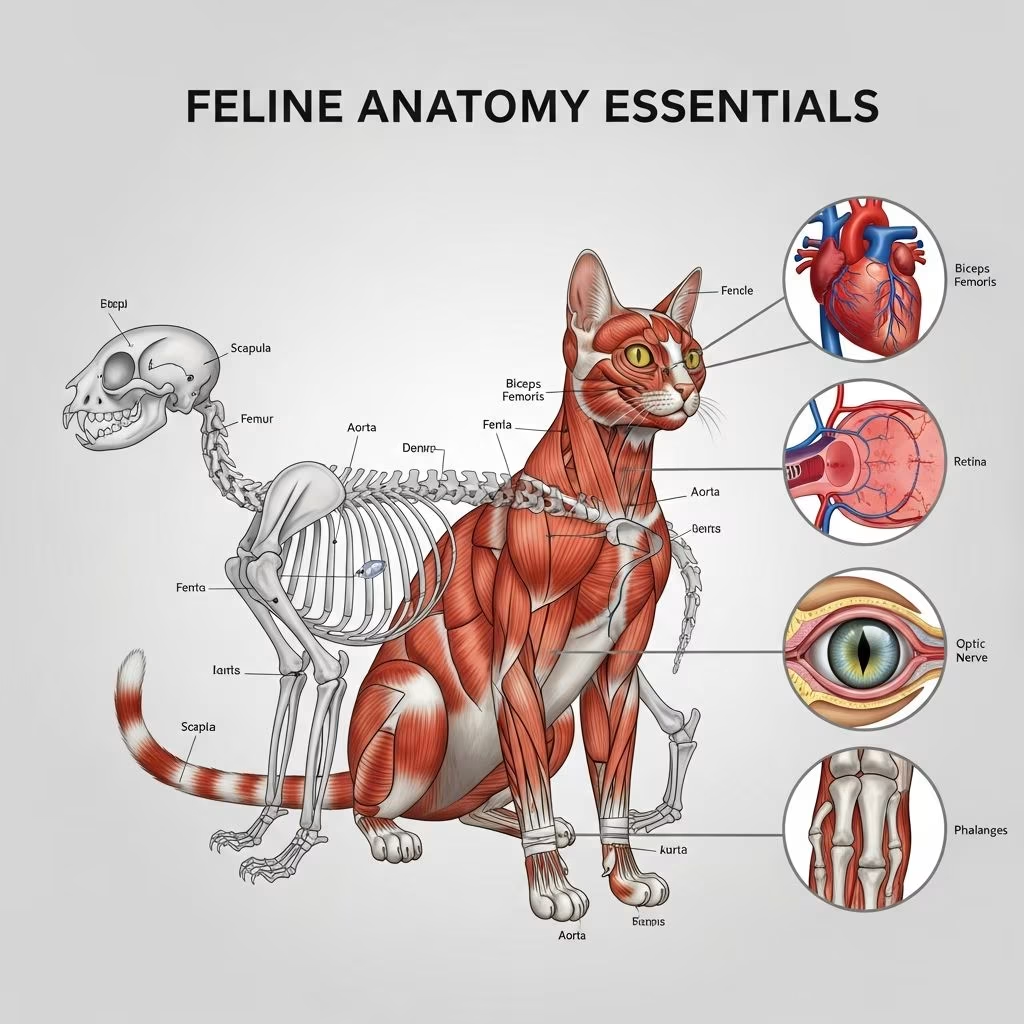
Cats possess a remarkably agile and efficient body structure adapted for hunting, climbing, and survival. Understanding their anatomy helps pet owners recognize normal functions, spot potential health issues early, and provide optimal care. This guide delves into the key systems of the feline body, highlighting unique adaptations that set cats apart from other mammals.
The Skeletal Framework: Mobility and Strength
The cat’s skeleton forms the foundation for its graceful movements, comprising 230 bones compared to the human’s 206. This extra count stems from additional bones in the tail and limbs, enhancing flexibility. The axial skeleton includes the skull, vertebral column, ribs, and sternum, while the appendicular skeleton covers the limbs and girdles.
- Skull: Composed of fused bones protecting the brain, with a complete bony orbit unlike some species, connected by a short orbital ligament for eye security.
- Vertebral Column: Features heightened flexibility due to absent nuchal and supraspinous ligaments, allowing extreme spinal bends during jumps and pounces.
- Ribs and Sternum: Protect thoracic organs; cats have 13 pairs of ribs, more flexible than in dogs.
In the forelimbs, the shoulder joint links the scapula and humerus loosely, permitting a wide range of motion without a clavicle for unrestricted shoulder movement. The pelvis appears nearly rectangular, with the femoral head fitting securely into the hip joint. Hindlimbs feature a pear-shaped patella and a stifle joint akin to a backward-facing knee, optimized for powerful leaps.
| Region | Key Bones | Function |
|---|---|---|
| Forelimb | Scapula, Humerus | Agility in climbing and scratching |
| Hindlimb | Femur, Patella, Tibia | Explosive jumping power |
| Spine | 7 Cervical, 13 Thoracic, 7 Lumbar | Twisting and flexibility |
Muscular System: Power Behind Grace
Feline muscles are finely tuned for speed and precision. Superficial muscles cover deeper layers, with many paralleling human anatomy but adapted for quadrupedal life. Cats boast three distinct deltoid muscles—clavodeltoid, acromiodeltoid, and spinodeltoid—versus one in humans, aiding precise forelimb control.
Trunk muscles like the serratus dorsalis extend more extensively, supporting powerful torso twists. In the neck and head, muscles such as the platysma enable expressive movements. Abdominal muscles, including rectus abdominis and external oblique, provide core stability for landing after jumps.
- Forelimb Muscles: Triceps brachii with four heads (long, lateral, medial, accessory) for elbow extension; brachioradialis well-developed for forearm flexion.
- Hindlimb Muscles: Gastrocnemius connects via the calcaneal (Achilles) tendon to the calcaneus, propelling high jumps.
- Back Muscles: Clavotrapezius, acromiotrapezius, and spinotrapezius for shoulder retraction and climbing.
Dissection reveals how these muscles originate and insert, often with tendons blending for efficiency, as seen in the brachialis and brachiocephalicus sharing a common insertion on the ulna.
Digestive Tract: Efficient Nutrient Processing
Cats are obligate carnivores, reflected in their short, specialized digestive system. Food enters through the mouth with 30 adult teeth: incisors for nibbling, canines for tearing, premolars and molars for shearing meat. Deciduous teeth shed around 5-7 months.
The esophagus delivers food to the stomach, where gastric juices break down proteins. The small intestine—duodenum, jejunum, ileum—handles primary nutrient absorption. The pancreas, near the stomach, secretes digestive enzymes and insulin for blood sugar regulation.

The large intestine absorbs water, forming compact feces suited to a meat-based diet lacking fiber.
Circulatory and Respiratory Systems: Oxygen and Nutrient Delivery
The heart, a four-chambered pump, drives blood through arteries, veins, and capillaries. Cats’ high metabolism demands efficient circulation. Lungs expand within the thoracic cavity, separated by the diaphragm from abdominal organs. During dissection, cutting costal cartilages exposes these cavities, revealing the diaphragm’s role in breathing.
Unique vascular features include the femoral artery and vein in the thigh, accompanying nerves from plexuses like brachial and lumbosacral, mirroring human patterns but scaled for feline size.
Nervous System and Sensory Organs: Hunters’ Edge
The brain sits in the protected skull, with spinal nerves forming plexuses for limb innervation. Cats lack certain canals like the alar canal, streamlining cranial structure. Sensory adaptations shine: whiskers (vibrissae) detect air currents, slit pupils adjust for low light, and ear pinnae swivel independently.
The tongue’s papillae aid grooming and rasping meat. Eyes feature a tapetum lucidum for night vision.
Reproductive and Urinary Systems: Species Survival
Females typically have four pairs of mammary glands: two thoracic, one abdominal, one inguinal. Males possess a scrotum for testes. The urinary system includes bean-shaped kidneys filtering blood, ureters to the bladder, and urethra exiting near genitals—shorter in males, prone to blockages.
Pelvic structure supports reproduction; the box-like pelvis accommodates passage of kittens.
Skin, Coat, and Integumentary Features
Cats’ skin anchors fur, with sebaceous glands producing oils for waterproofing. Claws retract into sheaths via elastic ligaments, staying sharp. Paw pads cushion impacts and contain scent glands.
Understanding Anatomical Variations and Health Implications
Knowledge of anatomy aids in spotting issues like limps from stifle injuries or dental disease from worn teeth. Regular checks of mammary glands detect tumors early. Flexibility aids evasion but risks spinal injuries from falls.
| System | Common Issue | Anatomy Link |
|---|---|---|
| Skeletal | Fractures | Flexible spine vulnerable in falls |
| Digestive | Hairballs | Barbed tongue grooms excessively |
| Urinary | Blockages | Narrow male urethra |
FAQs on Feline Anatomy
Why do cats have more bones than humans?
Cats have 230 bones, with extras in the tail and limbs for enhanced flexibility and balance.
How many teeth does an adult cat have?
Adult cats have 30 teeth, specialized for a carnivorous diet.
What makes a cat’s jump so powerful?
Strong hindlimb muscles like gastrocnemius and a flexible spine enable leaps up to six times their body length.
Do cats have a collarbone?
No, the absence of a clavicle allows free shoulder movement for climbing and squeezing through tight spaces.
How does cat anatomy differ from dogs?
Cats have a more rectangular pelvis, pear-shaped patella, and lack nuchal ligaments for greater spinal flexibility.
This exploration of feline anatomy underscores the elegance of evolution in domestic cats. By grasping these structures, owners can foster healthier, happier companions through informed care.
References
- 2024 Ultimate Guide to Cat Anatomy — VetCheck. 2024. https://vetcheck.it/cat_anatomy/
- Cat Dissection: A Laboratory Guide — Bennington College. N/D. https://www.bennington.edu/sites/default/files/sources/docs/Cat_Dissection_Guide.pdf
- Dissection Lab Guide for Dog and Cat Anatomy – Appendix — University of Minnesota Pressbooks. N/D. https://pressbooks.umn.edu/dogcatanatomylabguide/back-matter/appendix/



