

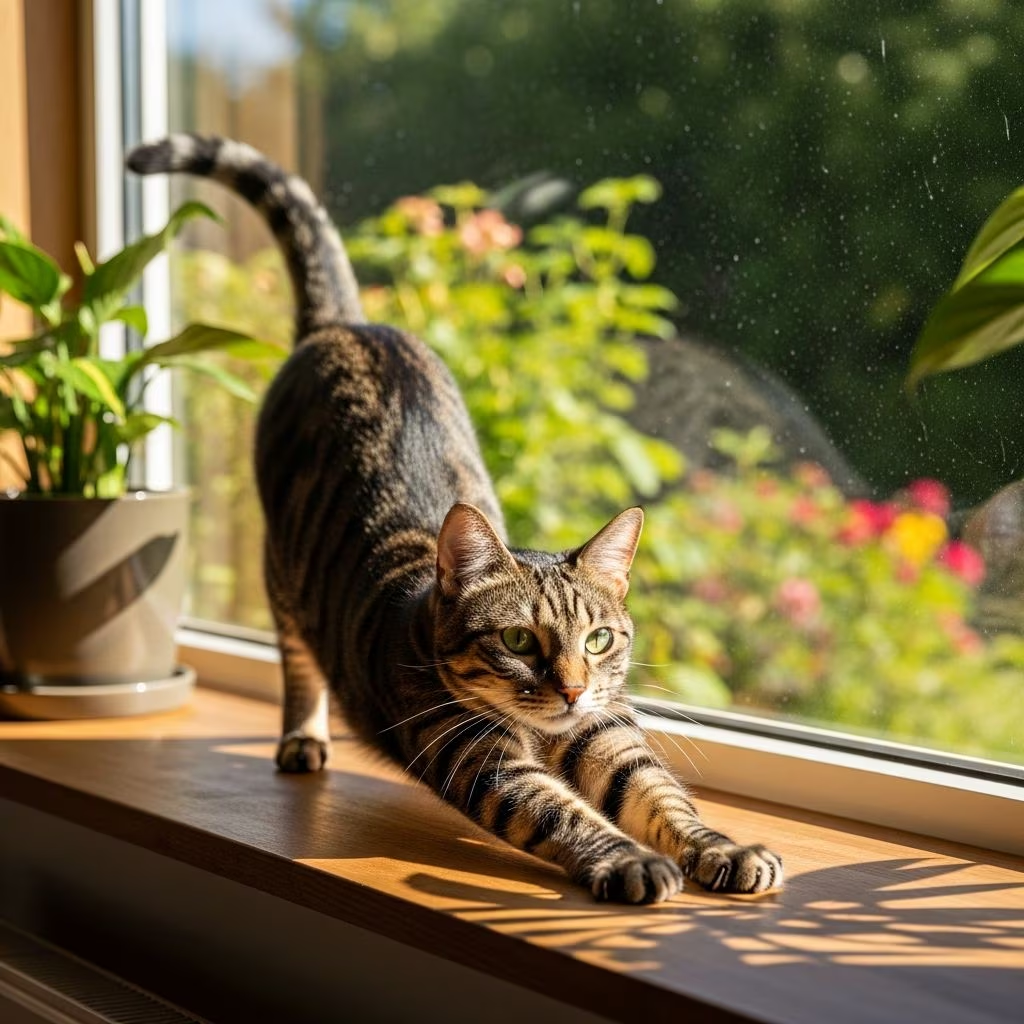
The Common Misconception About Your Feline Friend
Many cat owners assume their pets are nocturnal creatures, spending their nights prowling through the darkness while their humans struggle to sleep. However, this popular belief doesn’t accurately reflect how domestic cats actually function. The reality is more nuanced and rooted in evolutionary biology rather than a preference for darkness. Understanding this distinction can transform how you approach nighttime challenges with your feline companion.
The confusion often arises because cats tend to be most active during times when their owners are trying to wind down for the evening. When your cat launches into what many describe as the “night crazies”—sudden bursts of frenzied play and movement—it can feel like they’ve transformed into a nocturnal creature. But the timing of these episodes and the underlying reasons behind them tell a different story entirely.
What Does Crepuscular Actually Mean?
Rather than being nocturnal, cats are **crepuscular** animals. This technical term describes creatures that are most active during twilight hours—specifically at dawn and dusk. This distinction is critical because it explains much of what you observe in your cat’s behavior patterns without resorting to the nocturnal label.
The crepuscular lifestyle developed over millions of years of feline evolution. In their natural wild environments, small prey animals like rodents and birds are themselves most active during these low-light periods. From an evolutionary standpoint, it made perfect sense for predators to align their hunting schedules with their prey’s activity patterns. Natural selection favored cats whose internal biological clocks matched these twilight windows, giving them a hunting advantage.
This behavioral adaptation is deeply encoded in your domestic cat’s genetic makeup. Even though your pet may never need to hunt for survival, the instinct remains powerful and influences their activity levels throughout the day and night.
How Your Cat’s Sleep Architecture Differs From Yours
One of the most striking differences between cats and humans is how much time cats spend sleeping. While humans typically need seven to nine hours of consolidated sleep per night, adult cats require significantly more rest. The average adult cat sleeps between 12 to 18 hours per day. Some cats, particularly as they age, may sleep even more—up to 20 hours daily.
However, the way cats sleep differs fundamentally from human sleep. Cats don’t experience the long, continuous sleep blocks that humans require. Instead, they engage in what researchers call polyphasic sleep—multiple short sleep periods distributed throughout the day and night. This fragmented approach to rest reflects their ancestral hunting lifestyle, where vigilance during sleep was a survival necessity.
Your cat’s sleep pattern is also highly adaptable. When given nothing else to do, cats will sleep through extended periods because they lack mental stimulation and enrichment. This is actually a response to environmental boredom rather than a natural sleep requirement. A cat living in the wild would be constantly engaged in hunting, exploring, and territorial patrols—activities that structure their day quite differently from an indoor cat resting on your furniture.
Why Your Domestic Cat Stays Active at Night
The Daytime Isolation Factor
If you work outside the home or spend significant hours away, your cat likely spends much of the day in a relatively inactive state. When you leave for work or school, your cat may have nothing to occupy their time, leading to extended rest periods. Then, when you return home in the evening, your cat’s internal clock synchronizes with your arrival. What follows is often a surge of pent-up energy that translates into vigorous play sessions precisely when you’re preparing for bed.
This creates a reinforcing cycle. Your cat learns that your presence signals the beginning of their active period. The more predictable this pattern becomes, the more strongly your cat’s behavior aligns with it. Some cats successfully override their natural crepuscular tendencies and adopt their owner’s schedule, becoming more active during daylight hours when their humans are present and engaged.
Boredom and the Need for Mental Engagement
Cats are not solitary creatures despite popular stereotypes. They are social animals with genuine needs for interaction and environmental stimulation. A cat spending the entire day alone, surrounded by the same static environment, accumulates unused mental and physical energy. Without appropriate outlets for play, exploration, or problem-solving, your cat may redirect this energy toward nighttime activities that disturb your sleep.
The need for engagement becomes even more pronounced in younger cats. Kittens and young adults have particularly high energy levels and strong drives to hunt, explore, and interact. When these needs go unmet during the day, nighttime becomes their opportunity to express these instincts, often through sudden bursts of intense play or exploration.
Feeding Schedules and Hunger Cues
Cats’ natural feeding patterns also contribute to nighttime activity. In the wild, cats typically hunt and eat during dawn and dusk—those same twilight hours when their crepuscular nature makes them most active. Your domestic cat retains this biological programming. If you feed your cat primarily during morning and midday hours, you’re working against these natural rhythms. Some cats will wake during the night, driven by hunger signals that align with their ancestral feeding times.
Additionally, if you’ve ever given your cat attention, food, or play during nighttime disruptions, you may have inadvertently reinforced the behavior. Cats learn that waking you up produces results—they’re fed, they get interaction, or they receive play engagement. From your cat’s perspective, the nighttime wake-up strategy works.
Health Conditions That Increase Nighttime Activity
While normal crepuscular behavior is the most common explanation for evening and early morning activity, sudden changes in your cat’s sleep patterns warrant veterinary attention. Several health issues can cause increased nighttime wakefulness and activity.
- Hyperthyroidism increases metabolism and can cause hyperactivity, particularly noticeable during nighttime hours
- Chronic pain from arthritis, dental disease, or other conditions can prevent comfortable sleep and prompt increased movement
- Anxiety disorders may manifest as restlessness and vocalization during night hours
- Cognitive dysfunction in aging cats disrupts normal sleep-wake cycles and can cause nocturnal confusion or distress
- Urinary tract infections or other infections may cause discomfort that keeps cats awake and active
If your cat’s nocturnal activity represents a significant change from their normal patterns, scheduling a veterinary examination is crucial. Your vet can rule out underlying medical issues and provide targeted treatment if needed.
Age-Related Changes in Cat Activity Patterns
Your cat’s nighttime behavior may also shift as they age. Young cats typically have the highest energy levels and the most dramatic activity bursts. As cats mature into middle age and beyond, they generally become less active overall. However, senior cats sometimes develop different nighttime disturbances.
Aging cats may experience hearing loss, which can make the night environment seem less predictable and more anxiety-inducing. Cognitive changes associated with aging can disrupt normal sleep architecture. Some senior cats become more vocal at night, crying or yowling for reasons ranging from disorientation to pain. These changes warrant compassionate management and professional guidance rather than the same strategies you might use for a younger cat’s midnight zoomies.
Distinguishing Normal Crepuscular Activity From Problematic Behavior
Typical Nighttime Cat Behaviors
- Brief bursts of rapid play and running, particularly at dusk and dawn
- Exploring the house during quiet nighttime hours
- Short periods of vocalization or meowing
- Pouncing on toys or household objects
- Quick wake periods before returning to sleep
Signs of Excessive or Problematic Activity
- Sudden, intense changes in behavior patterns
- Sustained vocalization or crying throughout the night
- Aggressive behavior toward sleeping humans
- Repeated awakening of owners multiple times per night
- Destructive behavior during night hours
- Signs of distress or disorientation
Practical Strategies for Managing Nighttime Activity
Adjusting Daily Feeding and Play Schedules
Aligning your cat’s feeding times more closely with their natural crepuscular rhythms can help reset their activity patterns. Provide your cat’s main meal in the early evening rather than midday. This timing satisfies the hunting and eating instinct during the crepuscular window when your cat’s physiology is primed for activity. After a substantial meal, cats often naturally transition into rest periods.
Equally important is scheduling intensive play sessions during your cat’s peak activity times—typically late afternoon and early evening. Engage your cat in vigorous play using toys that mimic prey movements. A 15-30 minute play session during these hours can significantly reduce nighttime disruptions by channeling energy appropriately.
Environmental Enrichment and Mental Stimulation
Combat daytime boredom by creating an enriched indoor environment. Provide vertical spaces like cat trees, window perches, and shelves that allow your cat to survey their territory and observe outdoor activity. Interactive toys, puzzle feeders, and rotating toy selection keep your cat mentally engaged throughout the day.
Consider environmental modifications like window access, bird feeders outside windows, or even cat TV—videos designed to engage feline hunting instincts. These passive forms of stimulation during daytime hours reduce the accumulated energy deficit that manifests as nighttime activity.
Establishing Consistent Routines
Cats thrive with predictability. Establish consistent daily routines for feeding, play, and interaction. When your cat knows that active engagement happens at specific times, their internal clock adjusts accordingly. This consistency is more powerful than any single intervention.
Managing Your Own Sleep Environment
If your cat insists on nighttime activity, practical accommodations can help you maintain your sleep. Close your bedroom door to prevent your cat from accessing you during sleep. Provide alternative nighttime activities in other areas of the house—perhaps a quiet room with access to windows or an enriched space with toys and climbing structures.
Feeding Strategies and Timing
Offer a substantial meal in the early evening, positioning it to coincide with your cat’s natural feeding instincts. Some cats respond well to a second, smaller meal closer to your own bedtime, which can induce sleepiness. Avoid middle-of-the-night feeding, as this teaches your cat that waking you produces food rewards.
Frequently Asked Questions
Q: Is my cat truly nocturnal if they’re only active at night?
A: Most likely not. If your cat is only active at night but actually rests during day hours, they may have adapted to your schedule rather than expressing true nocturnal behavior. True nocturnal animals are primarily active during night hours, which most domestic cats are not. However, if your cat refuses to sleep at night and shows no early morning or dusk activity peaks, this warrants investigation for health issues or environmental factors.
Q: How much sleep does my cat actually need?
A: Adult cats typically need 12-18 hours of sleep daily, with some sleeping up to 20 hours per day as they age. However, indoor cats with insufficient stimulation may sleep excessively due to boredom rather than biological need.
Q: Should I let my cat outside at night to burn energy?
A: Outdoor access at night carries significant safety risks, including traffic accidents, predation, and theft. Instead, enhance indoor enrichment and adjust your activity schedules to manage nighttime energy safely.
Q: When should I worry about my cat’s nighttime activity?
A: Consult your veterinarian if your cat’s nighttime behavior represents a significant change from their normal patterns, if they seem distressed, or if excessive vocalization or aggression accompanies the activity.
Conclusion
Your cat isn’t nocturnal—they’re crepuscular, fundamentally different creatures with activity patterns shaped by millions of years of evolution. This understanding opens the door to more effective management strategies. By adjusting feeding times, increasing daytime enrichment, scheduling appropriate play sessions, and establishing consistent routines, you can work with your cat’s natural tendencies rather than against them. The result is a more harmonious household where both you and your feline companion can achieve the quality sleep you need.
References
- Nighttime Activity in Cats — WebMD Pets. https://www.webmd.com/pets/cats/nighttime-activity-cats
- Nocturnal Behavior (Cats) — San Francisco SPCA. https://www.sfspca.org/resource/nocturnal-behavior/
- Are Cats Nocturnal? — Zoetis Petcare. https://www.zoetispetcare.com/blog/article/are-cats-nocturnal
- Cat Behavior Problems: Nocturnal Activity — VCA Animal Hospitals. https://vcahospitals.com/know-your-pet/cat-behavior-problems—nocturnal-activity



