

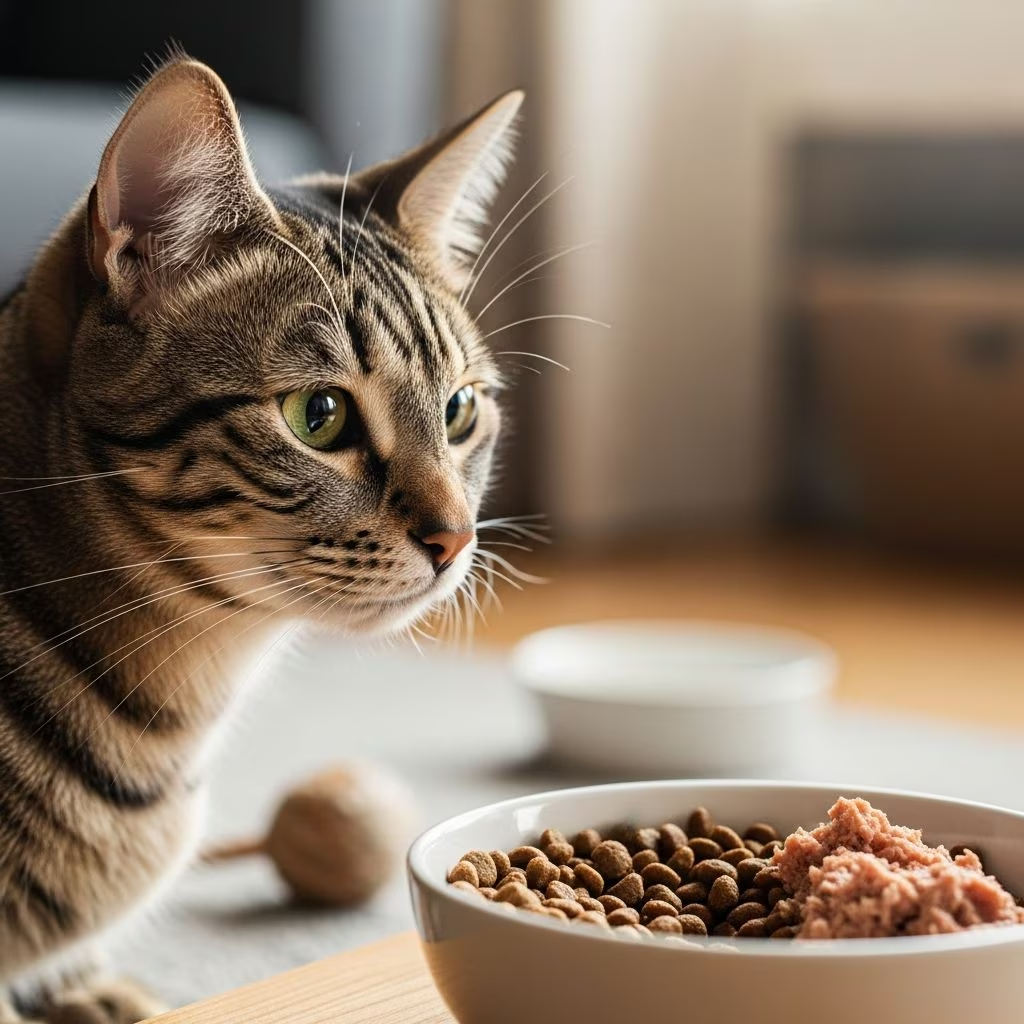
Feeding Times and Frequency for Your Cat
Establishing a proper feeding schedule is one of the most important aspects of responsible cat ownership. While many cat owners might assume that leaving food out all day is convenient, the reality is that creating a structured feeding routine offers significant benefits for your cat’s physical health, emotional well-being, and behavior. Understanding your cat’s natural eating patterns and nutritional needs will help you develop a feeding plan that keeps your feline companion healthy and content.
Why Regular Feeding Schedules Matter
Cats are inherently creatures of habit, and this behavioral characteristic can be leveraged to create positive outcomes in your home. When you establish a consistent feeding schedule, you provide your cat with a sense of security and predictability that extends far beyond mealtimes. Regular feeding times become anchor events around which your cat organizes their daily activities, creating a structured environment that helps reduce stress and anxiety.
This predictability becomes especially valuable during times of household change. Whether a family member leaves for college, a new baby arrives, or a pet sitter visits while you’re away on vacation, a well-established feeding routine serves as a stabilizing force in your cat’s life. The familiar ritual of mealtimes at consistent hours helps your cat cope with these transitions more effectively than they would in an unstructured feeding environment.
Beyond behavioral benefits, regular feeding schedules provide practical advantages for monitoring your cat’s health. When you feed at specific times rather than leaving food available continuously, you gain the ability to observe your cat’s appetite patterns closely. Changes in eating habits, whether increased or decreased appetite, can signal underlying health issues that warrant veterinary attention. This early detection capability makes portion-controlled feeding a valuable health management tool.
The Most Common Recommendation: Two Meals Per Day
Veterinary professionals most commonly recommend feeding adult cats at least two meals per day. This recommendation balances nutritional requirements with practical household considerations and aligns with what we know about feline biology and behavior. Two meals daily provides adequate nutrition distribution while remaining manageable for most pet owners.
The reasoning behind this recommendation rests on several interconnected factors. First, spacing meals throughout the day better mimics the natural eating patterns of wild cats, who consume multiple small meals through active hunting and foraging. Second, two daily meals help prevent the dramatic blood sugar fluctuations and hunger-driven behavioral issues that can occur with single daily feeding. Third, this schedule allows for better monitoring and portion control compared to free-feeding approaches.
How Many Meals Should Your Cat Eat Each Day?
While two meals per day serves as the baseline recommendation, the optimal feeding frequency for your individual cat depends on several factors including their age, activity level, metabolism, appetite drive, and your family’s schedule.
Single Meal Per Day
Some less food-motivated cats do adequately on a single meal per day. These cats typically display lower interest in food and maintain stable weight on this schedule. However, single daily feeding is generally not ideal for most cats and should only be considered after consultation with your veterinarian and after confirming your cat thrives on this schedule.
Two Meals Per Day
Two meals daily remains the most practical and widely recommended approach for adult cats. This frequency distributes nutrition effectively, provides adequate monitoring opportunities, and fits well with most household routines. Many cats thrive on a morning and evening feeding schedule that aligns with their owners’ daily patterns.
Three to Four Meals Per Day
Some cats benefit from increased feeding frequency. Cats that frequently beg between meals, those that eat only small volumes at each sitting, or cats with specific medical conditions may do better with three to four meals daily. This higher frequency prevents the extended periods without food that can trigger aggressive food-seeking behavior and helps distribute intake more naturally throughout the day.
Creating a Regular Feeding Routine
The key to a successful feeding schedule lies not just in the frequency but in the consistency of timing. When you establish regular mealtimes, your cat learns to anticipate feeding at specific hours, which organizes their entire daily rhythm. This consistency provides psychological benefits beyond nutrition.
To create an effective routine, choose times that align with your household schedule. If you’re typically awake at 7 AM and home by 6 PM, establishing feeding times at 7 AM and 6 PM creates a natural rhythm that’s easy to maintain. Your cat will soon anticipate meals at these times, arriving at the feeding area without prompting as the scheduled time approaches.
For households with multiple cats, consistent feeding times also facilitate monitoring individual intake and prevent food competition issues. You can observe which cat eats what amount and identify any changes in appetite patterns more readily than with free-feeding arrangements.
Free-Feeding: When and How It Might Work
Free-feeding, the practice of leaving food available continuously, does work well for certain situations and cats. Cats left to their own devices naturally prefer to graze, consuming small meals frequently throughout the day and night. Depending on the individual cat and food type, some cats eat anywhere from 12 to 20 small meals daily when food is continuously available.
Free-feeding can work reasonably well with dry food, as kibble remains palatable and safe for extended periods. However, moist food spoils quickly and becomes unsafe if left out for more than a few hours, making free-feeding problematic with canned or wet diets.
If you choose to use a grazing approach with one cat and no plans to add more cats, you can measure out your cat’s entire daily portion in the morning, place it in the bowl, and simply record what remains at day’s end. If circumstances change and you need to transition a grazing cat to meal feeding, you can measure out the daily portion and offer the bowl multiple times throughout the day at regular intervals, eventually consolidating into fewer, larger meals.
Matching Your Feeding Schedule to Your Lifestyle
The ideal feeding schedule should work within your household routine rather than against it. While veterinary guidelines provide recommendations, practical implementation matters more than theoretical perfection. A reliable two-meal schedule you maintain consistently beats an ideal three-meal plan you can’t sustain.
Consider your work schedule, household activities, and your cat’s individual temperament when planning. If you work traditional hours, morning and evening feedings align naturally with your routine. If your schedule varies, choose times that represent your average routine and stick to them as closely as possible. Even modest consistency provides benefits over completely irregular feeding.
For cats that seem constantly hungry or display begging behaviors, gradually increasing meal frequency from two to three meals may address the issue without changing total daily calorie intake. The smaller, more frequent portions may better satisfy your cat’s psychological and physiological needs.
Important Considerations for Portion Control
Establishing feeding times and frequency works hand-in-hand with portion control. Once you determine how often to feed your cat, work with your veterinarian to determine appropriate portion sizes for each meal. Individual cats require different calorie amounts based on their size, age, activity level, and metabolism.
Using a measuring cup or kitchen scale ensures consistency and prevents gradual portion creep that can lead to weight gain. Most commercially prepared cat foods include feeding guidelines, but these often overestimate requirements. Your veterinarian can provide a more accurate recommendation tailored to your specific cat’s needs, taking their body condition score and weight into account.
Monitoring Your Cat’s Response
Once you establish a feeding schedule, monitor how your cat responds over several weeks. A healthy cat should maintain stable weight, display consistent appetite, and show normal energy and behavior patterns. Your cat should arrive at mealtimes eager but not frantic, and should eat their portion without significant leftovers.
Check your cat’s body condition regularly. You should be able to feel their ribs easily but not see them prominently, and they should have a visible waist when viewed from above. If your cat gains or loses weight, consult your veterinarian about adjusting portions or feeding frequency.
Pay attention to behavioral cues as well. Excessive begging, nocturnal activity disruptions, or aggressive food-seeking behavior might indicate that your cat needs more frequent meals or larger portions. Conversely, consistent leftover food suggests portions might be too generous.
Life Stage Considerations
Feeding frequency may need adjustment as your cat moves through different life stages. Kittens require more frequent feeding than adults. Senior cats may benefit from smaller, more frequent meals to manage age-related digestive changes. Nursing mother cats need continuous access to food to meet exceptional energy demands. Work with your veterinarian to adjust feeding frequency and portions appropriate to your cat’s current life stage.
Frequently Asked Questions
Q: How do I transition my cat from free-feeding to meal feeding?
A: Start by measuring out your cat’s total daily portion. Offer this measured amount in the bowl multiple times throughout the day at regular intervals. Gradually consolidate the offerings into fewer, larger meals over several weeks as your cat adjusts. Maintaining consistent times helps ease the transition.
Q: What if my work schedule is irregular?
A: Even with an irregular schedule, aim for consistency around an average routine. If you’re usually home in the evening, establish that as a feeding time. For morning feeding, choose a time that represents your typical wake-up pattern. Some flexibility is better than no routine at all, and your cat will adapt to the general pattern even with minor variations.
Q: Can I use scheduled feeding to help with cat behavior problems?
A: Yes. Establishing a routine provides structure that can reduce stress-related behaviors. For cats that beg excessively or display destructive behavior between meals, increasing meal frequency while maintaining total daily calories often helps. The predictability of regular feeding times also aids cats dealing with household changes or stress.
Q: How do I know if my cat is eating enough?
A: Monitor weight regularly, assess body condition by feeling ribs and observing waist definition, and observe appetite and energy levels. Your cat should arrive at mealtimes with interest but not desperation. Regular veterinary wellness exams provide professional assessment of whether your cat’s nutrition is appropriate.
Q: What’s the best time to feed my cat?
A: The best time is whenever you can maintain consistency. Morning and evening feeding times align well with human schedules, but what matters most is that you feed at the same times daily. Choose times that fit your routine and that you can sustain long-term.
Q: Should I feed multiple cats on the same schedule?
A: Yes, using the same feeding times for multiple cats facilitates monitoring and prevents food competition issues. Separate feeding stations help ensure each cat eats their own portion and allow you to observe individual intake patterns.
Q: Can I mix meal feeding and free-feeding?
A: This approach is challenging to manage effectively and makes portion control difficult. It’s generally better to choose one method and commit to it, as mixing approaches can lead to overfeeding and obesity.
References
- Feeding Times and Frequency for Your Cat — VCA Animal Hospitals. 2024. https://vcahospitals.com/know-your-pet/feeding-times-and-frequency-for-cats
- Nutrition – General Feeding Guidelines for Cats — VCA Animal Hospitals. 2024. https://vcahospitals.com/know-your-pet/nutrition-feeding-guidelines-for-cats
- Feeding Your Young Adult Cat — VCA Animal Hospitals. 2024. https://vcahospitals.com/know-your-pet/feeding-your-young-adult-cat
- Feeding Inactive Adult Cats — VCA Animal Hospitals. 2024. https://vcahospitals.com/know-your-pet/feeding-inactive-adult-cats
- Feeding Mature, Senior, and Geriatric Cats — VCA Animal Hospitals. 2024. https://vcahospitals.com/know-your-pet/feeding-mature-senior-and-geriatric-cats



