

Feeding Orphaned Puppies: A Comprehensive Care Guide
Caring for orphaned puppies requires dedication, knowledge, and attention to detail. When puppies lose access to their mother’s milk, they depend entirely on caregivers to provide proper nutrition and care. This comprehensive guide covers everything you need to know about feeding orphaned puppies, from selecting the right formula to transitioning them to solid food.
What Should I Feed My Orphaned Puppy?
Proper nutrition is the foundation of raising healthy orphaned puppies. The choice of what to feed your orphaned puppy is crucial for their development, growth, and long-term health.
Commercial Puppy Milk Replacer
The gold standard for feeding orphaned puppies is commercial canine milk replacer (such as Esbilac®). Your veterinarian will recommend readily available products that meet industry standards. Commercial milk replacer is specifically formulated to match the nutritional composition of mother’s milk and contains all essential nutrients puppies need until approximately three to four weeks of age. Look for milk replacers that contain optimal levels of DHA (docosahexaenoic acid), an omega-3 fatty acid that is critical for the development of the puppies’ brains and eyes. The formulation provides the precise balance of proteins, fats, carbohydrates, and essential vitamins and minerals that growing puppies require.
Why Avoid Cow’s and Goat’s Milk
Many people mistakenly believe that regular cow’s milk or goat’s milk can substitute for mother’s milk. However, both are inadequate sources of nutrition for puppies and should be avoided. These milk sources are particularly deficient in protein and fat, which are essential for proper growth and development. Additionally, cow’s milk can cause diarrhea and subsequent dehydration in puppies. The lactose content in regular dairy milk can also trigger gastrointestinal distress in young puppies whose digestive systems are not equipped to process it efficiently.
Emergency Formula for Short-Term Use
In situations where commercial milk replacer is temporarily unavailable, an emergency formula can be prepared as a short-term solution. However, it is important to understand that this formula is deficient in essential nutrients and is harmful when used long-term. This emergency diet should only be used until proper commercial formula can be obtained. To prepare emergency formula, combine and blend these ingredients uniformly:
- 1 cup of milk
- 1 tablespoon corn or canola oil
- A pinch of salt
- Pasteurized egg yolks (no whites)
How Do I Feed My Puppy?
Selecting the appropriate feeding method is essential for successful orphaned puppy care. Several techniques are available, each with distinct advantages and considerations.
Spoon Feeding
Spoon feeding is one method for providing nourishment to orphaned puppies, though it requires great patience and careful technique. Each spoonful must be slowly and carefully poured into the puppy’s mouth to prevent any liquid from entering the lungs. A critical safety consideration is that the puppy’s head must not be elevated, as this can cause fluids to fill the lungs. Newborn puppies usually do not have a well-developed gag reflex to signal that they are choking or aspirating fluids into the lungs, making proper technique essential. Spoon feeding is slow and labor-intensive, making it less practical for regular feeding schedules, though it may be necessary for puppies with special needs.
Dropper Feeding
Dropper feeding accomplishes similar results to spoon feeding but is somewhat cleaner, generally faster, and more accurate. This method involves using a dropper or syringe to place small amounts of formula into the puppy’s mouth. Like spoon feeding, the same safety precautions regarding head position and aspiration prevention must be observed. Dropper feeding can be particularly useful for very small or weak puppies that struggle with bottle feeding.
Nursing Bottles (Recommended Method)
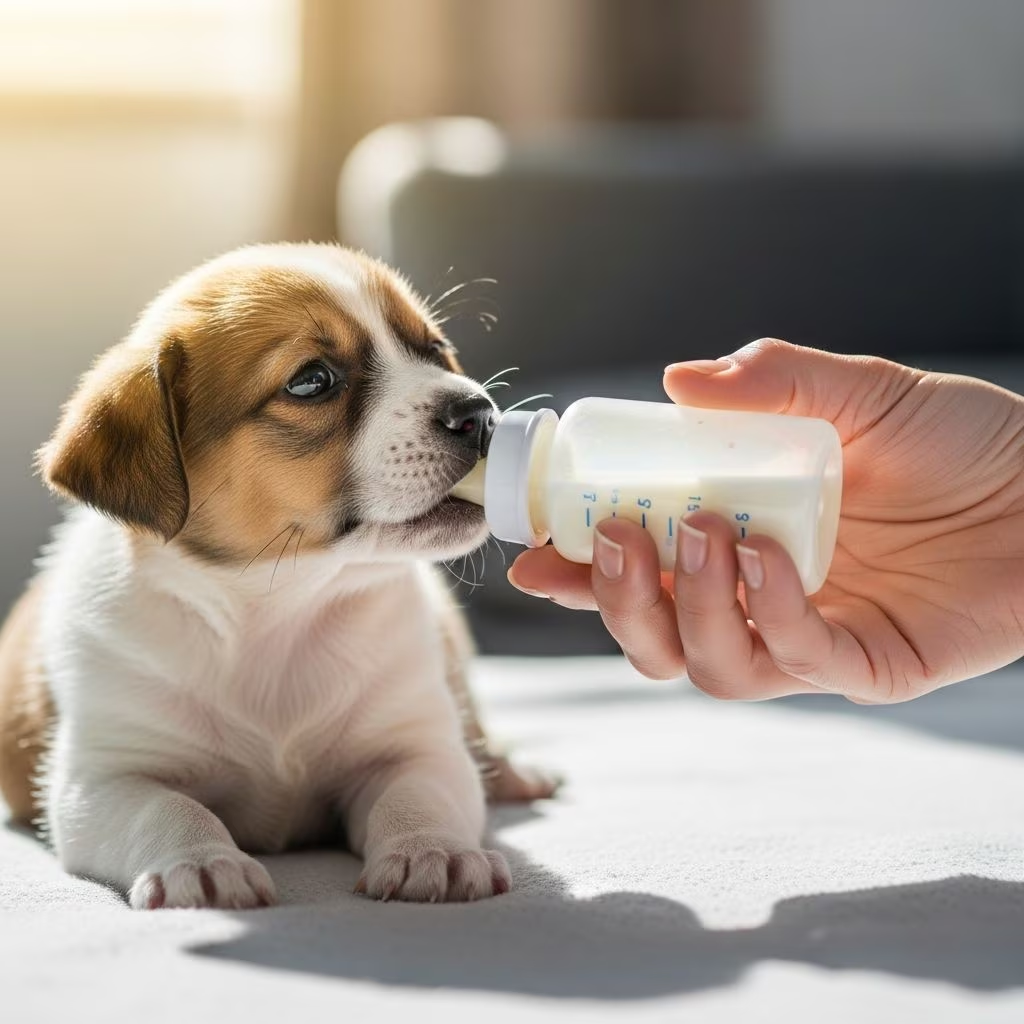
Nursing bottles made specifically for puppies are the best choice and can be used successfully in most situations. Bottle feeding is generally the easiest and most successful form of feeding. The size of the hole in the nipple is critical for success. The hole is the proper size when the bottle is turned upside down and milk replacer drips from the nipple with minimal squeezing. If the hole is too small, the puppy will struggle to extract milk and may become frustrated. If the hole is too large, milk may flow too rapidly, increasing aspiration risk.
To enlarge the hole if necessary, heat a needle with a match and push it through the same hole in the nipple several times. The formula should be warmed to approximately body temperature (around 100° F) using warm water, never a microwave. Before feeding, drop some of the warmed fluid on your arm; it should feel about the same as your normal body temperature. The puppy should be fed while resting on its stomach with the bottle placed at an angle similar to that of a nursing mother, or positioned on a rolled-up towel simulating the mother. This method creates a natural nursing posture for the puppy and keeps air at the top of the nursing bottle. Excessive ingestion of air will cause bloat and colic.
Tube Feeding
Tube feeding is a fast and accurate method that can be safely used in sick or healthy puppies. However, this technique requires skill to ensure the milk is placed in the stomach and not the esophagus or lungs. Tube feeding should only be performed by individuals trained in the technique or under veterinary supervision. The tube size selection should be based on the orphan’s body weight, with smaller puppies requiring smaller tubes.
Bottle Handling and Sanitation
Proper bottle care is essential for preventing bacterial contamination and ensuring the health of your orphaned puppies. Bottles need to be clearly marked with gradations to ensure the puppies are getting the correct amount of milk at each feed. They also need to be sterilized between feeds by placing them in boiling water for five to ten minutes and allowing them to air dry. This ensures bacteria are removed, which is especially important for any puppies that missed out on colostrum—the first milk feed from the mother, which is rich in antibodies.
When and How Much Do I Feed?
Establishing a proper feeding schedule and amount is crucial for healthy puppy development. Commercial milk replacers come with instructions on how to prepare them and should include a scale indicating how much formula to give per gram of body weight. You will need a good set of scales to measure the puppies’ progress and calculate the amount to increase the feed by as they grow.
Feeding Frequency and Amounts by Week
The feeding schedule and volume requirements change as puppies grow. Here is a general guideline for daily formula volumes:
| Week | Formula per Pound of Body Weight | Number of Feedings |
|---|---|---|
| Week 1 | 60 mls | 5 equal feedings |
| Week 2 | 70 mls | 3-4 feedings |
| Week 3 | 85 mls | 3-4 feedings |
| Week 4 | 100 mls | 3-4 feedings |
The general rule is to feed puppies every two to three hours. Premature puppies, weak puppies, immature puppies, and most toy breeds will require more frequent feedings. Six or more feedings may be necessary if the puppy is small or weak (approximately every four hours). Hand feeding can generally be ended by the third week and almost always by the fourth week.
When Does the Puppy Start to Eat from a Bowl?
As puppies mature, they gradually transition from bottle feeding to consuming food from a dish. By three weeks of age, puppies can start to eat food from a dish, along with the milk replacer. You can make a gruel by thoroughly mixing puppy food (canned or dry) with milk replacer to reach the consistency of a thick milkshake. The mixture should not be too thick, or the puppy will not eat very much.
You may carefully place the puppy’s nose in the gruel to create interest in the food. Most puppies will gladly take to the mixture. You should warm the food slightly for best results and to enhance palatability. As the consumption of food increases, the amount of milk replacer can be gradually decreased.
Transitioning to Solid Food
By four to four and a half weeks, the orphaned puppy can consume enough moistened solid food to meet its nutritional needs. By six weeks, at least 50% of their nutrition should come from unmixed food. Puppies should be completely weaned to dry or canned food by seven to eight weeks of age. Hand feeding can start to be phased out from the third and fourth week as moistened solid food is introduced. By four to five weeks, the orphaned puppy should be able to consume enough moistened solid food to meet its needs.
It is best to avoid starting a puppy on a human baby food regimen. This creates extra work and can also create a finicky eater. Baby food will not meet the nutritional needs of a growing puppy, which are different from a growing human baby.
Health Considerations and Preventative Care
Beyond nutrition, orphaned puppies require attention to other health concerns to ensure their survival and proper development.
Worming Protocol
Puppies are routinely treated for worms from two to three weeks of age. Weekly or fortnightly worming should be carried out until the first vaccinations at six to eight weeks. After the initial vaccination series, it is worth consulting your veterinarian regarding future worming schedules. The recommended policy for most puppies involves fortnightly worming until the puppies are twelve weeks of age, then monthly until six months of age.
Monitoring for Health Issues
Orphaned puppies are susceptible to several health challenges. Caregivers must watch for hypothermia, dehydration, and low blood sugar, as these conditions can quickly become life-threatening in young puppies. Additionally, aspiration pneumonia is a serious and often fatal consequence of improper feeding techniques, making careful attention to feeding position and technique essential. Any signs of illness, distress, or feeding difficulties should prompt immediate veterinary consultation.
Common Challenges and Solutions
Raising orphaned puppies can present several challenges. If you are having difficulty with bottle feeding, speak to your veterinarian or veterinary nurse about alternative feeding techniques. Your veterinary team can provide guidance tailored to your specific puppies’ needs and circumstances.
Frequently Asked Questions (FAQs)
Q: What is the best milk replacer for orphaned puppies?
A: Commercial canine milk replacer (such as Esbilac®) is the ideal choice, as it is specifically formulated to meet all nutritional requirements of orphaned puppies. Your veterinarian can recommend readily available products and will consider factors like DHA content for brain and eye development.
Q: Can I use regular cow’s milk to feed orphaned puppies?
A: No. Cow’s milk is not suitable as it can result in diarrhea and dehydration. It is also deficient in protein and fat, which are essential for proper puppy growth and development.
Q: How often should I feed an orphaned puppy?
A: Orphaned puppies should be fed every two to three hours as a general rule. Premature, weak, or toy breed puppies may require feeding as frequently as every four hours or more often in the first week.
Q: What is the best feeding method for orphaned puppies?
A: Nursing bottles made specifically for puppies are the best choice and can be used successfully in most situations. Bottle feeding is generally the easiest and most successful form of feeding, though dropper feeding and spoon feeding are alternatives if bottle feeding proves difficult.
Q: When can I start feeding orphaned puppies solid food?
A: By three weeks of age, puppies can start eating food from a dish along with milk replacer. By four to four and a half weeks, they can consume enough moistened solid food to meet nutritional needs. Complete weaning to dry or canned food typically occurs by seven to eight weeks.
Q: How do I sterilize puppy feeding bottles?
A: Bottles should be sterilized between feeds by placing them in boiling water for five to ten minutes and allowing them to air dry. This removes bacteria and is especially important for puppies that missed colostrum.
Q: When should I start worming orphaned puppies?
A: Puppies are routinely treated for worms from two to three weeks of age. Weekly or fortnightly worming should continue until the first vaccinations at six to eight weeks, with ongoing treatment as recommended by your veterinarian.
References
- Orphaned puppies – caring, feeding, healthcare — VetWest Veterinary Centres. 2024. https://www.vetwest.com.au/pet-library/orphaned-puppies-caring-feeding-healthcare/
- Caring for Orphaned Puppies — VCA Animal Hospitals. 2024. https://vcahospitals.com/know-your-pet/puppy-orphaned
- Raising Puppies — VCA Animal Hospitals. 2024. https://vcahospitals.com/know-your-pet/puppy-raising
- The care and feeding of orphaned puppies and kittens — DVM360. 2024. https://www.dvm360.com/view/care-and-feeding-orphaned-puppies-and-kittens-proceedings
- Breeding for Dog Owners – Caring for Newborn Puppies — VCA Animal Hospitals. 2024. https://vcahospitals.com/know-your-pet/breeding-for-dog-owners-caring-for-newborn-puppies
- Breeding for Dog Owners – Caring from Birth to Weaning — VCA Animal Hospitals. 2024. https://vcahospitals.com/know-your-pet/breeding-for-dog-owners-caring-from-birth-to-weaning



