

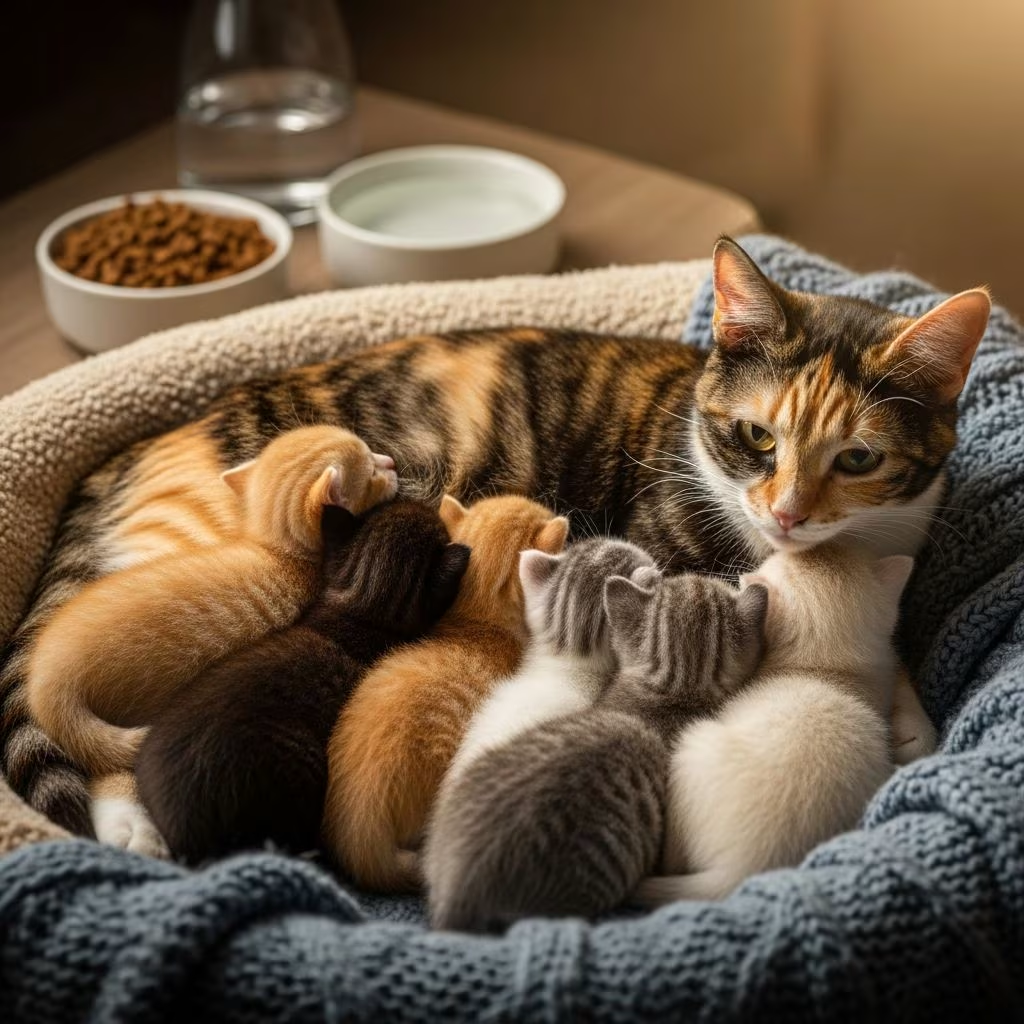
Feeding the Nursing Cat: A Comprehensive Nutrition Guide
Nursing represents one of the most nutritionally demanding stages in a cat’s life. During this period, your mother cat must consume enough food to maintain her own health while simultaneously producing milk to nourish her growing kittens. Understanding the unique nutritional requirements of a nursing cat is essential for ensuring both the mother’s well-being and the optimal development of her litter.
The energy demands placed on a nursing cat are significantly higher than during any other life stage. The increase in caloric requirements depends on two primary factors: the stage of lactation and the number of kittens being nursed. With more kittens to feed, the mother’s energy requirements increase proportionally. Peak milk production typically occurs around weeks three to four of lactation, though the mother cat’s overall energy requirement actually peaks at six weeks post-partum, when she is likely nursing larger, more active kittens.
Understanding Your Nursing Cat’s Energy Requirements
The caloric demands of nursing can create a significant challenge for cat owners. The volume of food required to meet these heightened energy needs might exceed what a cat can realistically consume in a single day. A nursing mother cat may need to eat substantially more than her pre-pregnancy portions to maintain adequate milk production and her own body condition.
During the third or fourth week of nursing, a cat’s food intake may need to be approximately 2 to 2.5 times her average pre-pregnancy consumption. This dramatic increase means that standard adult cat food portions are often insufficient. To address this challenge, veterinarians recommend selecting foods with very high energy density. High-energy density foods allow your nursing cat to consume more calories while eating a smaller volume of food, making it more realistic for her to meet her increased caloric needs.
Premium-quality kitten food is often recommended during the nursing period because it is specifically formulated to provide the concentrated nutrition necessary to support both the mother cat and her litter. These foods typically contain higher levels of protein and fat, which are essential for maintaining milk production and supporting rapid growth in nursing kittens.
Optimal Feeding Methods for Nursing Cats
Free-Choice Feeding Strategy
One of the most effective feeding approaches for nursing mothers is free-choice feeding, also known as ad libitum feeding. This method involves leaving food continuously available throughout the day and night, allowing your cat to eat whenever she experiences hunger. Free-choice feeding offers multiple advantages for nursing cats that make it the preferred method for many veterinarians.
Free-choice feeding allows the mother cat to eat on her own schedule, consuming smaller meals throughout the day rather than attempting to consume large portions at set times. This grazing pattern aligns naturally with feline eating behaviors and makes it easier for your cat to meet her elevated caloric requirements. Additionally, this feeding method provides a significant secondary benefit: it allows kittens to begin sampling solid food as soon as they are developmentally ready, typically around three weeks of age.
When implementing free-choice feeding, portion control remains important for monitoring your cat’s actual food consumption. Measure the amount of food offered at the beginning of each day using a measuring cup or kitchen scale. Throughout the day, record any additional food you add to the bowl. At the end of the day, measure the remaining food to calculate exactly how much your nursing cat consumed. This tracking system provides valuable information about whether your cat is eating adequate amounts and helps you adjust portions if needed.
Meal-Based Feeding Approach
Some cat owners prefer providing meals at specific times rather than continuous access to food. If you choose meal-based feeding for your nursing cat, offer small meals frequently throughout the day. This approach requires providing food multiple times daily to allow your cat to consume sufficient calories. The key is ensuring that your cat has adequate opportunities to eat without going extended periods without food access.
Whether using free-choice or meal-based feeding, always ensure that your nursing cat has constant access to clean, fresh water. Adequate hydration is crucial for maintaining milk production and supporting overall health during this nutritionally demanding stage.
Post-Operative Feeding After Cesarean Section
Cats that deliver via cesarean section require special feeding considerations during their recovery period. Immediately following surgery, the mother cat’s digestive system may be sensitive, and she may experience nausea or vomiting if she consumes food or water too quickly.
During the first 24 hours after cesarean section surgery, offer small amounts of food and water frequently at intervals of 15 to 30 minutes. Begin this feeding protocol within a few hours after surgery. Smaller, more frequent offerings reduce the risk of vomiting and allow the mother cat’s digestive system to adjust gradually to eating after surgery.
Her food intake during this immediate post-operative period should be approximately 1.5 times her food intake before she became pregnant. By the third or fourth week of nursing, her food intake may increase to 2 to 2.5 times her pre-pregnancy average. Continue feeding a premium brand of high-quality kitten food throughout the nursing period to ensure appropriate nutrition for both the mother and her litter.
Kitten Supplementation and Early Weaning Introduction
When Mother’s Milk Requires Supplementation
In some cases, a mother cat may not produce sufficient milk immediately following birth, particularly after a cesarean section delivery. If you observe that kittens are not nursing adequately during the first day or two, veterinary-approved supplementation may be necessary. A homemade kitten supplement formula can be prepared using specific ingredients combined in precise proportions.
The recommended supplementation formula combines one cup of milk, one tablespoon of corn oil, one pinch of salt, and three egg yolks (excluding the whites). Blend these ingredients until the mixture achieves a uniform consistency. This formula should be fed at a rate of 1 ounce (30 milliliters) per 1/4 pound (1/8 kilogram) of kitten body weight per 24 hours. Divide this total daily amount into three to five separate feedings. The average newborn kitten weighs approximately 1/4 pound at birth, which helps calculate appropriate supplementation amounts.
Introducing Solid Food at Three Weeks
Around three weeks of age, kittens naturally become interested in solid food. Free-choice feeding during this period is particularly advantageous because it allows kittens to explore and sample the mother’s food whenever they show interest. This early exposure to solid food supports the gradual transition from complete dependence on mother’s milk to a diet that includes supplementary foods.
Managing the Weaning Transition
Understanding Weaning-Related Changes
As your kittens begin the weaning process, your nursing cat’s nutritional requirements will begin to decline. The reduced nursing demand means she requires fewer calories to support her own needs. Managing this transition appropriately prevents nutritional imbalances and helps regulate milk production as it naturally decreases.
Feeding During Weaning
While your cat continues nursing during the weaning phase, your cat can continue eating food formulated for gestation and lactation, or alternatively, an all-life-stages diet. These foods are nutritionally complete for the demands of nursing and support continued milk production for kittens who are still nursing regularly.
Post-Weaning Dietary Transition
Once weaning is completely finished and your cat has returned to her pre-breeding calorie intake, you can begin transitioning her back to an adult maintenance food. Alternatively, some owners prefer keeping their cat on an all-life-stages diet. The transition should occur gradually to allow your cat’s digestive system to adjust to the dietary change without causing gastrointestinal upset.
Strategic Weaning Techniques
To effectively manage the weaning process and help your cat’s milk production taper off naturally, employ these strategies: Remove kittens from the mother for gradually increasing periods of time. This separation naturally reduces nursing stimulation, which signals the body to decrease milk production. Simultaneously reduce your cat’s calorie intake gradually over several days. This combination of reduced nursing demand and lower caloric intake facilitates a smooth transition from lactation to maintenance nutrition.
On the second day of formal weaning, separate the kittens from the mother cat and reduce her food to approximately 25 percent of her pre-breeding adult food portion. Over the next 4 to 5 days, gradually increase her daily food amount back to her full pre-breeding portions. During this weaning period, kittens should not be allowed to nurse, as continued nursing delays the “drying up” process and prevents milk production from stopping naturally.
Frequently Asked Questions About Nursing Cat Nutrition
Q: How much should a nursing cat eat compared to her normal diet?
A: During peak lactation (weeks 3-4), a nursing cat may need to eat 2 to 2.5 times her pre-pregnancy portions. During early lactation, food intake should be about 1.5 times her pre-pregnancy consumption. High-energy density foods help her meet these increased caloric needs with manageable food volumes.
Q: Is free-choice feeding recommended for nursing cats?
A: Yes, free-choice feeding is highly recommended during nursing. It allows the mother to eat according to her hunger signals and enables kittens to sample solid food around three weeks of age. Always measure portions to track actual consumption accurately.
Q: What type of food should I feed a nursing cat?
A: Feed a premium-quality kitten food or a formula designed for gestation and lactation. These foods contain higher protein and fat levels necessary for milk production. Continue this diet until weaning is complete.
Q: How long should I feed the nursing diet before transitioning back to regular adult food?
A: Continue the nursing diet until weaning is completely finished and your cat returns to her pre-breeding calorie intake. This typically occurs several weeks after weaning begins, depending on how gradually you reduce her food intake.
Q: What should I feed my cat immediately after a cesarean section?
A: Offer small amounts of food and water every 15 to 30 minutes for the first 24 hours. Start within a few hours after surgery. Her food intake should be about 1.5 times her pre-pregnancy amount. Increase gradually to 2 to 2.5 times her normal intake by weeks 3-4 of nursing.
Q: What formula should I use if I need to supplement nursing kittens?
A: Mix one cup milk, one tablespoon corn oil, one pinch of salt, and three egg yolks (no whites) until uniform. Feed 1 ounce per 1/4 pound of kitten weight per 24 hours, divided into 3-5 feedings. This is typically only needed for the first day or two if the mother produces insufficient milk.
Q: How do I know if my nursing cat is eating enough?
A: Track her food consumption daily by measuring portions offered and remaining. Monitor her body condition—she should maintain healthy weight without becoming too thin. If concerned about her nutrition or milk production, consult your veterinarian.
References
- Feeding the Nursing Cat — VCA Animal Hospitals. 2025. https://vcahospitals.com/know-your-pet/feeding-the-nursing-cat
- Feeding the Pregnant Cat — VCA Animal Hospitals. 2025. https://vcahospitals.com/know-your-pet/feeding-the-pregnant-cat
- Cesarean Sections in Cats – Post-Operative Instructions — VCA Animal Hospitals. 2025. https://vcahospitals.com/know-your-pet/caesarean-sections-in-cats-post-operative-instructions
- Nutrition – General Feeding Guidelines for Cats — VCA Animal Hospitals. 2025. https://vcahospitals.com/know-your-pet/nutrition-feeding-guidelines-for-cats
- Feeding Orphaned Kittens — VCA Animal Hospitals. 2025. https://vcahospitals.com/know-your-pet/feeding-orphaned-kittens
- Feeding Times and Frequency for Your Cat — VCA Animal Hospitals. 2025. https://vcahospitals.com/know-your-pet/feeding-times-and-frequency-for-cats



