

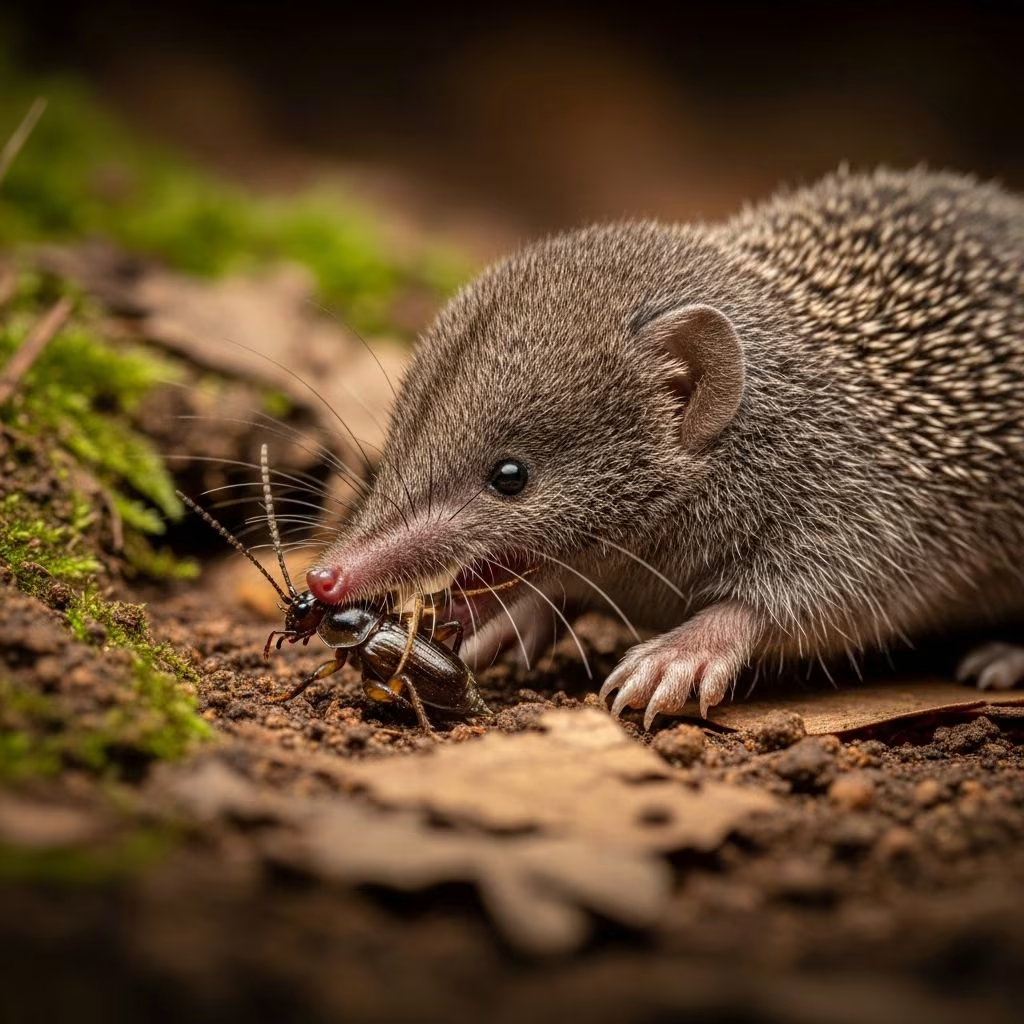
The care of obligate insectivorous mammals in captive environments presents unique nutritional challenges that differ significantly from caring for omnivorous or carnivorous species. These animals have evolved over millennia to consume a diet consisting primarily of insects and invertebrates, which has shaped their digestive systems, nutritional requirements, and feeding behaviors in ways that demand careful consideration when creating appropriate diets in captivity. Understanding the specific needs of these specialized feeders is essential for maintaining their health and promoting natural behaviors.
Understanding Obligate Insectivores and Their Dietary Needs
Obligate insectivores are mammals that have adapted to subsist almost exclusively on invertebrate prey in their natural habitats. This group includes species such as hedgehogs, shrews, tenrecs, moles, and various other small mammals. The challenge in captive management lies in the fact that comprehensive nutritional data for these species remains limited, making it difficult to establish precise nutrient requirements. However, clinical observations and research have identified common nutritional imbalances that occur when these animals are fed inappropriate diets, including obesity, gastrointestinal disorders, and various deficiency-related health conditions.
The fundamental principle in managing captive obligate insectivores involves recognizing that feeding live invertebrates should remain the cornerstone of their dietary program. Live prey not only provides essential nutrients but also serves a critical behavioral function by stimulating species-specific hunting and feeding actions that are necessary for psychological well-being.
Foundational Dietary Components for Common Species
Shrews, Tenrecs, and Moles
Small insectivorous species such as shrews, tenrecs, and moles demonstrate considerable dietary flexibility and can be maintained on several alternative food sources. These species adapt well to cat food formulations or specialized insectivore pellets as a base diet, which should be supplemented with various live invertebrates to ensure nutritional completeness and behavioral enrichment.
Appropriate supplementary feeding items include:
- Mealworms and earthworms as primary invertebrate sources
- Crickets for variety and enrichment
- Neonatal mice or mouse pups as occasional protein sources
- Cooked eggs prepared without additives
- Ground meat fortified with essential minerals and vitamins
- Small quantities of vegetables for dietary diversity
- Canned dog food as a convenient protein alternative
The combination of these items creates a more complete nutritional profile than any single food source alone, reducing the risk of deficiency disorders while maintaining feeding variety.
Hedgehogs: Species-Specific Requirements
Hedgehogs present particular nutritional considerations that differ from other insectivorous mammals, particularly regarding their hibernation patterns and seasonal dietary adjustments. Commercial formulations designed for hedgehogs should be carefully evaluated to ensure they meet established nutritional standards.
The optimal commercial diet for hedgehogs should contain the following nutritional profile:
| Nutrient Component | Percentage/Amount |
|---|---|
| Crude Protein | 22% |
| Acid Detergent Fiber or Chitin | 15% |
| Fat Content | 5% (standard); up to 30% pre-hibernation |
| Vitamin and Mineral Supplement | Balanced and complete |
Hedgehogs exhibit higher daily food consumption relative to body size compared to many other mammals, consuming approximately 6 percent of their body weight daily. To accommodate this intake while mimicking natural feeding patterns, food should be distributed across at least two feeding sessions, with one preferably occurring during nighttime hours when hedgehogs are naturally active.
For species that enter hibernation seasonally, dietary fat content should be increased substantially in the period preceding hibernation. This elevated fat intake provides the caloric reserves necessary to sustain the animal through the extended period of reduced metabolic activity. The transition from standard maintenance diet to pre-hibernation diet should be managed carefully to avoid digestive upset.
Armadillos: Adaptable Feeders with Specific Mineral Needs
Armadillos demonstrate remarkable dietary flexibility and can be successfully maintained on various food sources that would not be appropriate for more specialized insectivores. This adaptability reflects their evolutionary history as omnivorous feeders with access to diverse invertebrate and small vertebrate prey.
Acceptable dietary options for armadillos include:
- Frozen feline diet products
- Moistened dry cat food formulations
- Canned dog food
- Specialized insectivore pellets
- Ground meat fortified with mineral and vitamin supplements
A distinctive consideration for armadillo nutrition involves the prevention of hemorrhagic disorders through adequate vitamin K supplementation. Research has established that supplementation with menadione sodium bisulfite at approximately 5 milligrams per kilogram of dry diet provides adequate protection against bleeding complications. This supplementation may prove particularly important when animals are fed commercial diets that may not contain optimal vitamin K levels.
Advanced Dietary Options for Edentates and Aardvarks
Giant anteaters, tamanduas, and aardvarks represent a specialized category of insectivorous mammals with unique feeding behaviors and anatomical adaptations. Unlike many smaller insectivores, these species have benefited from recent advances in commercial nutrition that have made completely formulated diets available for their maintenance in captive settings.
The availability of complete formulated diets for these species offers significant practical advantages. When animals are provided complete, nutritionally balanced diets in pelleted or paste form, they consume food more efficiently and spend less time foraging compared to regimens that require supplementation with whole prey items. Paradoxically, this may actually more closely mimic the natural feeding efficiency of these animals in wild habitats, where they use highly specialized feeding apparatus to access termites and ants with minimal expenditure of energy.
Complete diets eliminate the need to maintain breeding colonies of live insects and reduce the labor associated with live prey handling and feeding, while maintaining appropriate nutritional balance and reducing the risk of dietary deficiency.
Food Safety Considerations in Insectivore Feeding
Bacterial Contamination and Raw Meat Diets
A critical concern in insectivore nutrition involves the bacterial hazards associated with feeding raw, meat-based diets. Research has documented associations between raw meat feeding and serious bacterial infections, particularly septicemia and mortality in carnivorous and insectivorous small mammals. These animals appear particularly susceptible to pathogenic contamination, possibly due to their specialized digestive physiology or metabolic characteristics.
To minimize this risk while maintaining nutritional adequacy, canned or processed meat-based products represent a safer alternative to raw meat. The thermal processing used in commercial canning substantially reduces bacterial load while preserving nutritional value and digestibility. This approach allows caregivers to provide the protein-rich diet these animals require while significantly reducing infectious disease risk.
Live Prey Handling and Health
When live invertebrates form part of the diet, the health status and nutritional composition of the prey animals becomes a critical consideration. Poorly nourished feeder insects offer less complete nutrition than healthy, well-developed specimens. Whenever possible, feeder insects should be obtained from reputable suppliers and, if maintained in captive facilities, should themselves be provided with nutritionally complete diets to ensure maximum nutritional transfer to the consuming animal.
Addressing Nutritional Deficiencies and Health Problems
Despite best efforts to provide appropriate nutrition, insectivorous mammals in captive settings frequently develop health complications related to dietary imbalances. These problems manifest in multiple ways and require both dietary correction and veterinary management.
Common nutritional health issues include:
- Obesity resulting from excessive fat intake or reduced activity levels
- Gastrointestinal disorders including constipation, diarrhea, and impaction
- Vitamin and mineral deficiencies causing metabolic bone disease and other complications
- Behavioral abnormalities secondary to inadequate environmental stimulation
- Suboptimal immune function and increased susceptibility to infection
Identification of these problems typically requires veterinary examination and, in some cases, blood analysis to assess nutritional status and identify specific deficiencies. Once identified, dietary modification combined with appropriate medical management can resolve many nutrition-related health issues, though some conditions such as advanced metabolic bone disease may result in permanent disability.
Practical Feeding Protocols and Management
Dietary Variety and Behavioral Enrichment
Successful long-term management of captive insectivores requires providing dietary variety that goes beyond meeting minimum nutritional requirements. The introduction of varied food items, different presentation methods, and the maintenance of live prey as a dietary component all contribute to psychological well-being and encourage expression of natural feeding behaviors.
Rotating between different insect types, varying the presentation of commercial diets, and occasionally including novel food items all help maintain feeding interest and prevent the development of behavioral problems secondary to monotonous diets.
Monitoring and Adjustment
Caregivers should regularly assess body condition, activity levels, and overall health to determine whether current feeding protocols are appropriate. Weight gain or loss, changes in stool characteristics, alterations in activity patterns, or development of behavioral abnormalities may all indicate that dietary adjustments are necessary.
Seasonal adjustments, particularly for species that undergo hibernation, require advance planning and careful dietary modification to ensure animals enter the inactive period in appropriate nutritional condition while avoiding digestive disturbances during the dietary transition phase.
Species-Specific Feeding Considerations
While general principles of insectivore nutrition apply across multiple species, individual animals may demonstrate preferences for specific food items or require dietary modifications based on individual health status. Additionally, different species within the broader category of insectivores may have distinct nutritional requirements that are not yet fully characterized by research.
Caregivers should consult species-specific resources and work closely with veterinarians experienced in exotic animal nutrition to ensure that feeding protocols are optimized for the particular species and individual animal under care. This collaborative approach combines current scientific knowledge with practical experience to provide the best possible outcomes.
Future Directions in Insectivore Nutrition
The field of insectivore nutrition continues to evolve as more research documents the nutritional composition of various invertebrate prey species and establishes more precise nutrient requirements for different insectivorous mammals. The development of increasingly sophisticated commercial diets formulated based on nutritional analysis of natural prey items represents significant progress in this field.
As knowledge expands, the ability to maintain insectivorous mammals in captive settings with optimal health outcomes and natural behavioral expression will continue to improve. Current research into insect nutrition and the refinement of complete commercial diets offer promising opportunities for enhanced welfare in captive populations while reducing the labor and complexity associated with live prey management.
References
- Nutrition in Insectivores, Edentates, and Aardvarks — Merck Veterinary Manual. 2024. https://www.merckvetmanual.com/management-and-nutrition/nutrition-exotic-and-zoo-animals/nutrition-in-insectivores-edentates-and-aardvarks
- Insectivore Nutrition – A Review of Current Knowledge — PubMed. 2023. https://pubmed.ncbi.nlm.nih.gov/37625941/
- Feeding Captive Insectivorous Animals: Nutritional Aspects of Insects as Food — North American Zoos and Aquariums. 2002. https://nagonline.net/feeding-captive-insectivorous-animals-nutritional-aspects-insects-food/
- Insectivorous Reptile Nutrition and Disease — DVM360. https://www.dvm360.com/view/insectivorous-reptile-nutrition-and-disease-proceedings
- Mazuri Insectivore Diet: A Diet Actually Made for Insectivores — Mazuri Petdiet. 2024. https://mazuri.com/blogs/education-and-nutrition/mazuri%C2%AE-insectivore-diet-a-diet-actually-made-for-insectivores



