
Feeding Gallinaceous Birds: Quail, Pheasants, Turkeys
Comprehensive guide to optimal nutrition for quail, pheasants, turkeys, and related gallinaceous species in captivity and farming.
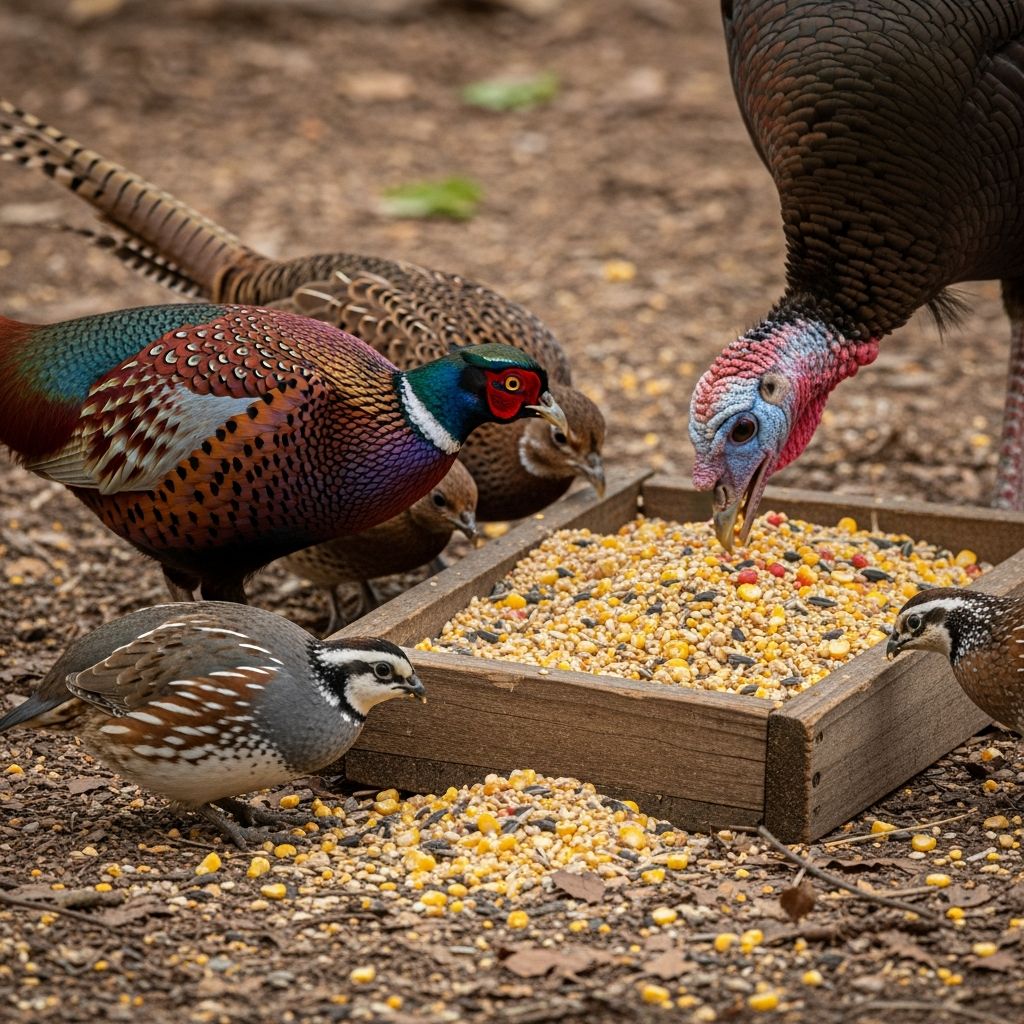
Gallinaceous birds, encompassing species such as quail, pheasants, turkeys, partridges, and grouse, thrive when provided with diets that mimic their natural foraging behaviors while meeting precise nutritional demands. These ground-dwelling fowl require balanced intake of proteins, fibers, vitamins, and minerals to support digestion, reproduction, and overall vitality. Understanding their unique digestive systems and life-stage needs is key to preventing common issues like obesity, nutrient deficiencies, and poor fertility.
Understanding the Digestive Anatomy of Gallinaceous Birds
The gastrointestinal tract of gallinaceous birds is adapted for processing tough plant materials and seeds. They lack extensive chewing mechanisms, instead relying on a muscular gizzard to grind food aided by ingested grit. The tongue features stiff papillae for manipulating feed, while the proventriculus secretes enzymes for initial breakdown. A key feature is the paired ceca, which host bacterial fermentation of fibrous cellulose, particularly vital in species like grouse that consume high-fiber diets.
This system demands insoluble grit, especially when birds eat whole grains or seeds. Grit containers should be refreshed regularly to avoid contamination. In cases of dietary imbalance, gizzards may distend with litter, signaling discomfort or disorder.
Core Nutritional Principles for Healthy Flocks
Optimal diets prioritize complete formulated feeds over seeds alone, which often lack vitamin A, D3, B vitamins, calcium, and essential amino acids like methionine and lysine. High-fat seed mixes can lead to obesity, while human foods dilute protein and mineral intake. Studies show birds consuming less than 50% formulated products risk deficiencies in calcium (affecting 95.6% of surveyed pet birds) and protein (80% shortfall).
- Protein Levels: Breeding seasons call for 20-25% crude protein; maintenance diets suit under 20%.
- Energy Balance: Avoid excess to prevent fat accumulation, especially in vegetable-heavy feeders.
- Calcium and Phosphorus: Critical for eggshell formation; imbalances common in seed-based regimens.
- Fiber Digestion: Cecal bacteria handle cellulose, enhanced by greens and grit.
Life-Stage Feeding Strategies
Nutritional needs evolve from hatch to adulthood. Chicks demand high-protein starters immediately post-hatch, with water access 1-2 hours prior to feed introduction.
| Life Stage | Recommended Diet | Duration | Key Additions |
|---|---|---|---|
| Newly Hatched Chicks | High-protein starter (28-30% CP) | 0-5 weeks | Clean water first, chick grit |
| Grower Phase | Starter/grower complete feed | 6-8 weeks | Gradual greens at 8 weeks |
| Finisher/Adults (Non-Breeding) | Maintenance pellets (<20% CP) | Until breeding | Limited grains, fresh produce |
| Breeding Adults | Breeder ration (20-25% CP) | Breeding period | Insects, fruits, calcium boost |
Transition slowly to new feeds over days to maintain gut flora stability. Young game birds exceed chicken protein needs, emphasizing starter exclusivity early on.
Commercial Feeds vs. Custom Mixtures
Turkey or pheasant pellets serve many species without special needs, outperforming chicken feeds due to balanced calcium, protein, and energy. However, caution with medicated poultry rations containing antibiotics. For New World quail, seed-based pellets suffice, supplemented by greens. Forest quail may require insect boosts for elevated protein.
Provide feed in small, frequent portions outside breeding, ad libitum during. Grass silage or corn offers variety without excess.
Species-Specific Dietary Recommendations
Easy-to-Feed Omnivores
Common pheasants, golden pheasants, peafowl, guinea fowl, and domestic turkeys adapt well to commercial game bird diets. Enhance with 10-20% fresh greens. Japanese quail thrive on dedicated pellets. Chukar partridges and Hungarian partridges follow similar protocols, with limited data underscoring reliance on poultry analogs.
High-Protein Specialists
Peacock pheasants, argus pheasants, and roulrouls (crested wood partridges) need turkey/pheasant bases plus mealworms, chopped meat, eggs, and fruits. Minimal grains; calcium supplements essential. Roulrouls benefit from insectivorous soft feeds mixed with live prey.
Vegetarian Herbivores or High-Fiber Browsers
Challenging species like koklass, blood pheasants, snowcocks, tragopans, and grouse reject pellets, risking obesity on grains. Prioritize fresh vegetables: ferns, mosses, buds, berries, lucerne, bamboo, cucumbers, apples. No or minimal pellets; chicks graze aviary plants post-hatch.
- Koklass: Soft greens, fruits, berries exclusively.
- Tragopans: Grasses, oak nuts, insects sparingly.
- Grouse: High-fiber natives with developed ceca.
Cracids and Megapodes
Cracids (curassows, guans) favor 21% protein pellets with fruits, sans grains; breeding adds soy paste, eggs, meat. Megapodes accept standard poultry diets.
Supplements and Foraging Enhancements
Grit is non-negotiable for non-pellet diets, sized appropriately (chick vs. adult). Vitamins address seed deficiencies, especially A, D3, and calcium. Breeding boosts include live insects for protein spikes. Insoluble grit aids hard feed grinding. Over-supplementation risks toxicity; base on formulated feeds.
Common Pitfalls and Health Impacts
Seed-dominant diets cause 92.6% phosphorus shortfalls and amino acid gaps, impairing growth. Vegetable exclusives on pellet-fed browsers lead to infertility and microflora disruption. Excessive grains post-10 weeks unbalance nutrients. Monitor for gizzard impaction from litter ingestion.
Breeding and Fertility Optimization
Switch to high-quality breeder rations pre-season for hatchability. Protein surges to 25%, with diverse insects and greens. Fertility drops on low-fiber captivity diets for browsers; natural forage access year-round ideal.
FAQs
What is the best starter feed for quail chicks?
High-protein (28-30%) game bird starter, exclusively for 5-10 weeks, with chick grit and water first.
Can I feed chicken feed to pheasants?
Limited use; turkey/pheasant pellets better match needs, avoiding calcium/protein mismatches.
Why do some gallinaceous birds need grit?
To grind seeds/grains in the gizzard, boosting digestibility; refresh containers regularly.
How much formulated feed should pet gallinaceous birds get?
At least 50-75% to meet vitamin/mineral needs; under 50% risks deficiencies.
What supplements for breeding turkeys?
Calcium, live insects, 20-25% protein boost; ad libitum feeding.
Practical Implementation Tips
House feeds separately from water to prevent spoilage. Introduce greens gradually at 8 weeks to avoid waste. Aviary planting supports natural browsing. Track body condition; adjust for species and season.
References
- Management of Galliformes — Harrison’s Bird Foods. 2024-02. https://www.harrisonsbirdfoods.com/wp-content/uploads/2024/02/38_galliformes.pdf
- The Nutritional Content of Pet Bird Diets — LafeberVet. Accessed 2026. https://lafeber.com/vet/the-nutritional-content-of-pet-bird-diets/
- Feeding Exotic and Other Game Birds — United Peafowl Association. Accessed 2026. https://unitedpeafowlassociation.org/articles/feeding-exotic-and-other-game-birds/
- Feeding Game Birds: Pheasant, Quail, and Partridge — North American Gamebird. Accessed 2026. https://northamericangamebird.com/blog/feeding-game-birds-pheasant-quail-and-partridge
- Avian Digestive System — Robert Porter, Pheasant.com. 2024-06. http://www.pheasant.com/wp-content/uploads/2024/06/avian-digestive-system-robert-porter.pdf
Similar Articles








Read full bio of medha deb


