
Fatty Liver Hemorrhagic Syndrome in Laying Hens
Understanding the causes, signs, and prevention of this deadly metabolic disorder affecting egg-laying hens in intensive production systems.
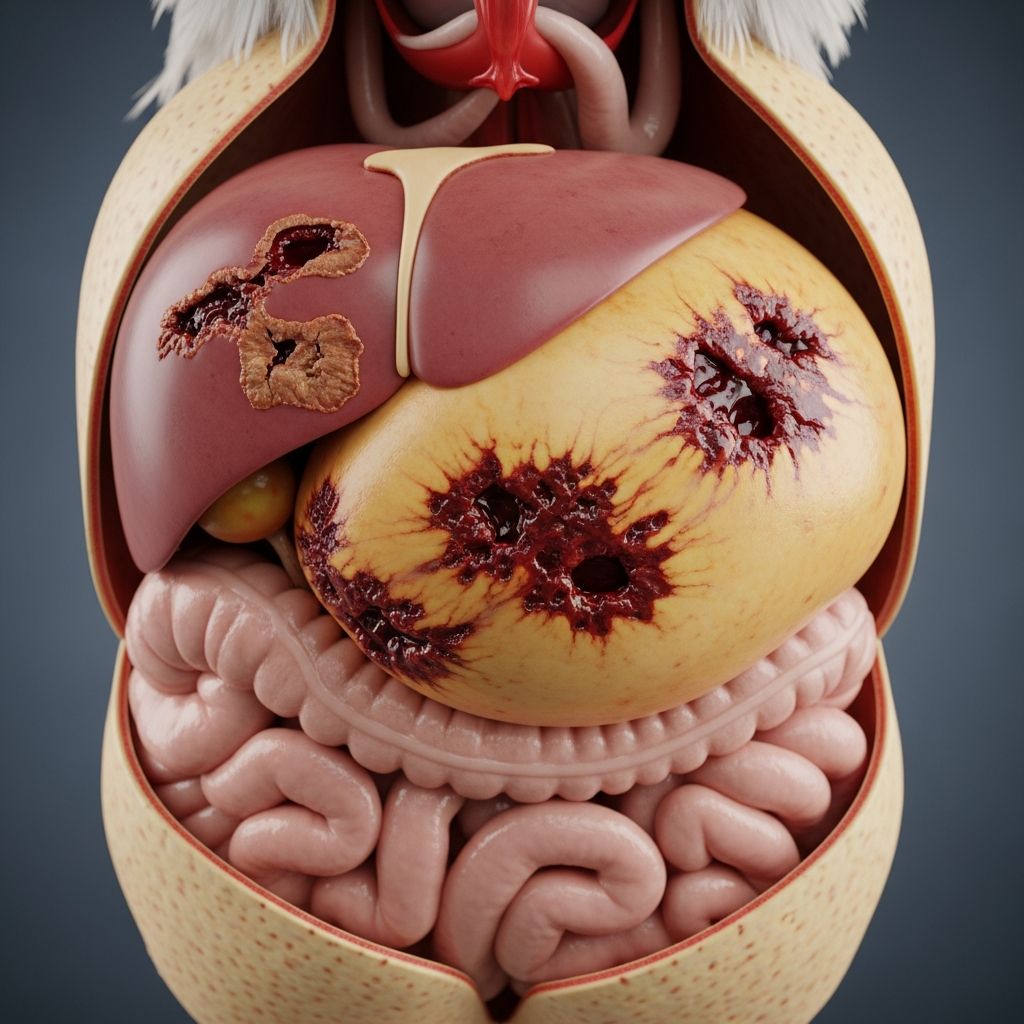
Fatty Liver Hemorrhagic Syndrome (FLHS) represents a significant metabolic challenge in commercial poultry operations, particularly among high-producing laying hens. This noninfectious condition arises from excessive fat accumulation in the liver, often culminating in rupture, internal bleeding, and unexpected mortality. Primarily observed in cage-confined birds, FLHS leads to substantial economic repercussions through elevated death rates and diminished egg output.
Understanding the Metabolic Roots of FLHS
The core mechanism of FLHS involves a disruption in lipid metabolism, where laying hens experience an energy surplus that promotes hepatic lipid overload. High-energy feeds, coupled with restricted movement in housing systems, exacerbate fat deposition not only in the liver but also in the abdominal region. Estrogen surges during peak egg-laying phases further amplify this process by stimulating yolk precursor synthesis, which demands intensified liver activity.
Research indicates that hens exceeding 20% above optimal body weight are prime candidates for FLHS development. This obesity correlates with altered hormone profiles, including elevated estrogen, osteocalcin, and leptin-like proteins, signaling a state of metabolic stress ill-suited for sustained oviposition.
Key Risk Factors Driving FLHS Incidence
Several interconnected elements heighten FLHS susceptibility in flocks:
- Nutritional Imbalance: Diets rich in carbohydrates or excessive calories, especially from grains like corn, encourage fat storage over utilization. Low-protein, high-energy rations are particularly problematic during early lay.
- Housing Constraints: Caged environments limit exercise, fostering weight gain. Surveys reveal up to 40% of cage-hen mortality links to FLHS, versus lower rates in free-range setups.
- Hormonal Influences: Peak production elevates estrogen, enlarging the liver and predisposing it to fragility. Even males can be induced experimentally, underscoring estrogen’s role.
- Environmental Stressors: Heat reduces activity, compounding obesity risks in already stressed birds.
- Genetic Selection: High-performance strains with rapid growth and prolific laying are more vulnerable.
Typically, mortality stays below 5% per flock, yet in severe outbreaks, it triggers sharp production declines.
Recognizing Clinical Manifestations
FLHS strikes stealthily, with most hens discovered deceased sans prior warnings. Subtle flock-level cues include obesity, waning egg yields, and pale combs or wattles from anemia induced by hemorrhage.
| Sign | Description | Implication |
|---|---|---|
| Sudden Death | Hens found dead overnight | Primary outcome from liver rupture |
| Pale Head Features | Comb, wattles, skin blanching | Hypovolemic shock from blood loss |
| Reduced Eggs | Drop in production | Metabolic strain on laying capacity |
| Obesity | 20%+ over ideal weight | Predisposing energy imbalance |
Individual birds rarely show distress before collapse, complicating timely intervention.
Pathological Hallmarks at Necropsy
Post-mortem exams reveal hallmark lesions confirming FLHS. The liver appears enlarged, pale yellow, and crumbly, with fat content surpassing 40% of dry matter. Hemorrhagic zones vary, often spilling into the abdomen alongside oily fat deposits. Active ovaries signal ongoing lay, with oviposition stress potentially triggering the fatal bleed.
Differentiating FLHS from mimics is crucial: yellow livers from carotenoid-rich feeds lack fat excess or bleeding, while rancid fats or toxins cause hemorrhage sans steatosis. Abdominal fat pads underscore systemic lipid dysregulation.
Diagnostic Approaches and Emerging Biomarkers
Diagnosis relies on necropsy, but flock monitoring aids early detection. Track body weights, feed intake, and production metrics. Plasma assays for triglycerides, cholesterol, and novel markers like FABP4 (fatty acid-binding protein 4) and LPL (lipoprotein lipase) correlate with liver fat severity, offering predictive potential.
Studies in aged Hy-Line Brown hens link rising FABP4 levels to worsening steatosis, positioning it as a viable blood-based indicator for at-risk flocks.
Strategic Prevention and Management Protocols
Proactive nutrition and husbandry curb FLHS effectively. Core tactics include:
- Energy Calibration: Match intake to production needs, avoiding surpluses especially pre-peak lay. Substitute veggies oils for carbs at equal calories to ease liver burden.
- Body Condition Surveillance: Weekly weigh-ins ensure hens stay lean; adjust feeds promptly.
- Housing Optimization: Enhance movement where feasible; cooler environments mitigate heat stress.
- Diet Composition: Boost protein, balance vitamins (e.g., active D for shell integrity, often disrupted in FLHS).
- Supplements: Ethoxyquin or tocopherols may stabilize liver lipids, though evidence varies.
No curative treatments exist post-onset; focus remains preventive. Flock mortality rarely tops 5%, but vigilance sustains productivity.
Economic and Production Impacts
FLHS erodes profitability via deaths and egg shortfalls. In cage systems, it accounts for substantial losses; cage-free mitigates somewhat. Poor shell quality ties to impaired vitamin D activation, compounding quality issues. High-performers suffer most, highlighting balanced breeding needs.
Research Frontiers and Future Directions
Ongoing studies probe genetic markers, precise biomarkers, and feed additives. Understanding VLDL export failures and fatty acid oxidation holds promise for resilient strains. Integrated management blending nutrition, genetics, and monitoring will define control.
Frequently Asked Questions (FAQs)
What causes FLHS in laying hens?
Primarily high-energy diets, inactivity, and estrogen-driven fat mobilization in peak layers.
How do I spot FLHS in my flock?
Watch for sudden deaths, pale features, obesity, and production dips; confirm via necropsy.
Can FLHS be treated once hens show signs?
No specific cure; prevention via diet and monitoring is key.
Is FLHS more common in certain housing?
Yes, caged systems heighten risk due to limited exercise.
Are there vaccines or drugs for FLHS?
None, as it’s metabolic, not infectious; manage nutrition instead.
References
- Fatty liver haemorrhagic syndrome — The Poultry Site. Accessed 2026. https://www.thepoultrysite.com/articles/fatty-liver-haemorrhagic-syndrome
- Fatty Liver Hemorrhagic Syndrome in Poultry — Merck Veterinary Manual. Accessed 2026. https://www.merckvetmanual.com/poultry/fatty-liver-hemorrhagic-syndrome/fatty-liver-hemorrhagic-syndrome-in-poultry
- Potential Biomarker for Fatty Liver Hemorrhagic Syndrome in Laying Hens — Journal of World’s Poultry Research. 2020-12-20. https://jwpr.science-line.com/attachments/article/54/JWPR%2010(4)%20545-555,%202020.pdf
- Fatty Liver Hemorrhagic Syndrome — Hendrix Genetics Laying Hens. 2022-02-17. https://layinghens.hendrix-genetics.com/en/articles/fatty-liver-hemorrhagic-syndrome/
- Fatty liver hemorrhagic syndrome in the backyard chicken — PubMed. Accessed 2026. https://pubmed.ncbi.nlm.nih.gov/24091813/
- An insight into Fatty Liver Hemorrhagic Syndrome in Chickens — The Webinar Vet. Accessed 2026. https://thewebinarvet.com/blog/an-insight-into-fatty-liver-hemorrhagic-syndrome-in-chickens
Similar Articles








Read full bio of medha deb


