

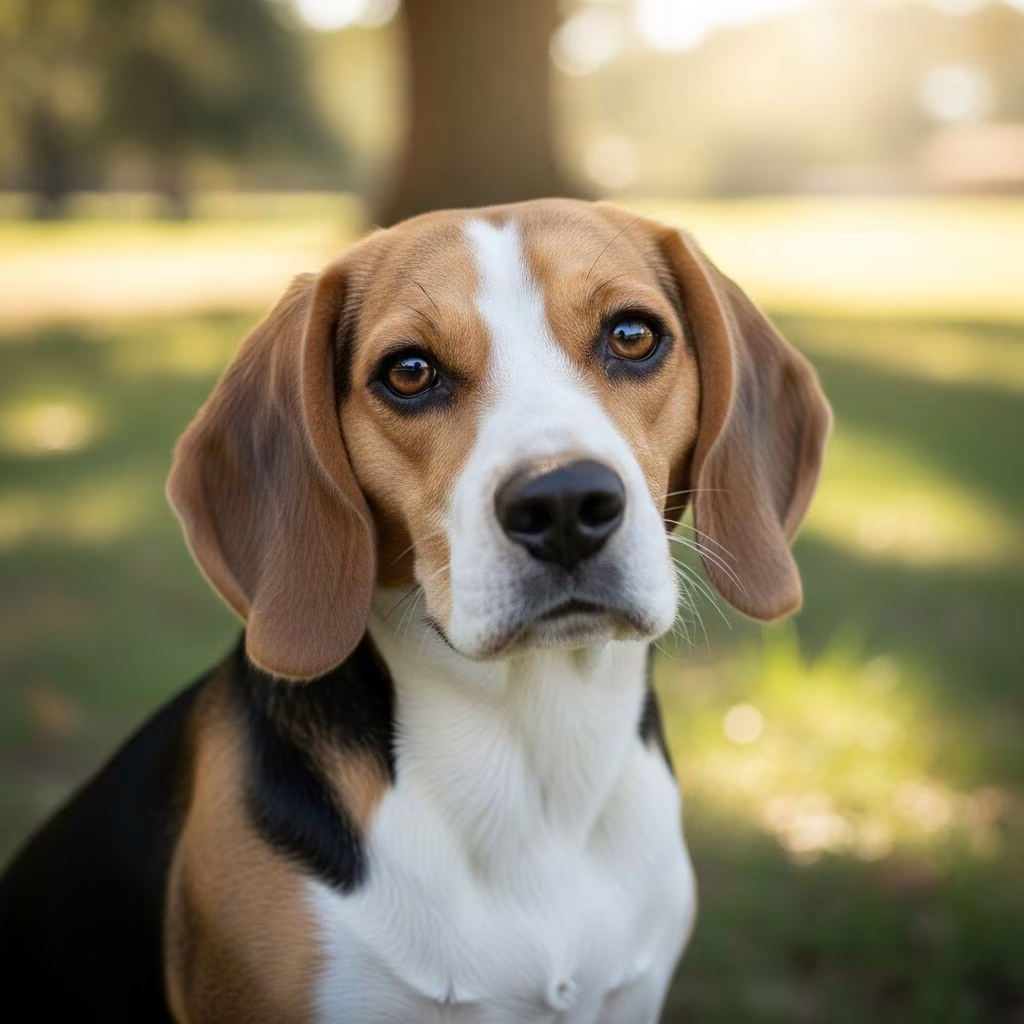
Beagles stand out as one of the most beloved hound breeds, renowned for their merry disposition, unwavering loyalty, and extraordinary scent-tracking skills. Originating as tireless hunters, these compact dogs have evolved into cherished family pets while retaining their adventurous spirit. This article delves into their captivating background, distinctive physical and behavioral traits, and practical ownership guidance, drawing from credible breed histories and standards.
Ancient Roots and Evolution as Premier Scent Hounds
The Beagle’s lineage traces back centuries, with evidence of small pack-hounds used for pursuing rabbits and hares in England well before the Roman era in 55 B.C. Known as the “foothound of our country,” these early dogs were indigenous to British soil and prized by hunters on foot. By the 15th century, Beagles had gained immense popularity across France, Greece, Italy, and England, their name possibly deriving from Celtic words like *beg* or *beag*, meaning “small,” reflecting their size suited for navigating dense terrain.
The breed’s development accelerated in the 11th century when William the Conqueror introduced the Talbot Hound—a slow but powerfully nosed scenthound—to Britain. Crossed with Greyhounds for speed and agility, this produced a hound ideal for enduring chases through underbrush. British nobility, including Queen Elizabeth I, adored tiny “pocket Beagles” under 10 inches tall, bred for amusement and their melodious voices; these glove-sized dogs could even fit in hunting pockets for horseback pursuits.
Despite a dip in favor during the 1700s rise of fox hunting with larger Foxhounds, farmers in England, Wales, and Ireland preserved the breed. Reverend Phillip Honeywood played a pivotal role in the mid-1800s, establishing a pack in Essex focused on hunting prowess rather than looks, creating tough, agile trackers that form the modern Beagle’s foundation. Thomas Johnson later refined this by standardizing appearance alongside function, producing smooth-coated dogs.
Crossing the Atlantic: Beagles in America
Beagles arrived in America post-Civil War, quickly becoming essential for rabbit hunters due to their fast tracking and companionship. General Richard Row of Illinois imported superior British stock in the 1870s, elevating the breed’s uniformity and reliability for small game. The American Kennel Club recognized them in 1885, spurring popularity. The National Beagle Club, formed in the late 1880s, adopted standards dividing them into classes under 13 inches and under 15 inches for fair field trials, as smaller dogs couldn’t compete with larger ones.
Early U.S. Beagles were “dual-purpose,” excelling in both field work and shows, resembling miniature Foxhounds. Urbanization later separated field packs from show dogs, but traditions persist at places like Institute Farm in Virginia. Today, while many serve as pets, southern states still use them for hunting.
Physical Characteristics and Breed Standards
Beagles are medium-sized hounds, sturdy and “big for their inches,” with a square-proportioned body built for endurance. The AKC standard emphasizes a smooth, dense coat in tricolor (black, tan, white), blue-tick, or lemon patterns, and large, hound-like ears that protect their scent canals. Their most striking feature is the nose: one of the best among 300+ breeds, with 225 million olfactory receptors compared to humans’ 5 million, enabling trail detection over vast distances.
| Height | Weight | Coat Colors | Lifespan |
|---|---|---|---|
| 13-15 inches (standard) | 20-30 lbs | Tricolor, bicolor, lemon | 12-15 years |
| Under 13 inches | Under 20 lbs | Same | Same |
This table summarizes key specs; standards prioritize field-ready physique over mere aesthetics.
Signature Traits: The “Scent-Sational” Sniffer
Beagles rank #1 in scenting ability, their noses so acute they can differentiate scents layered over time—crucial for pack hunting where one dog’s trail must not confuse others. This superpower stems from a large brain compartment dedicated to smell analysis, allowing them to “see” the world via odors. In modern roles, they’ve detected contraband at borders and aided medical research by sniffing diseases like cancer.
- Superior Olfaction: 40 times more sensitive than humans; used in detection work worldwide.
- Pack Dynamics: Bred to vocalize findings, preventing trail mix-ups in groups.
- Endurance: Compact size belies stamina for hours-long pursuits.
The Melodious Bay: Voices of the Hunt
Beagles’ vocalizations are legendary—a deep, resonant bay or howl signaling quarry, distinct from barks. This “roo-roo” echoes across fields, a holdover from pack communication. Queen Elizabeth I cherished their singing; modern owners note it during excitement or solitude. While charming, it requires management in homes—training and exercise curb excessive noise.

Size Variations: From Pocket to Field Champions
Historically, Beagles ranged from 9-inch pocket pups to larger hunters. Today, AKC recognizes two varieties: 13 inches and under (about 20 lbs), and 13-15 inches (20-30 lbs), ensuring size-matched competitions. Pocket Beagles, once carried in saddlebags, influenced the breed’s portability. This diversity suits various lifestyles, from apartments to farms.
Temperament: Merry, Mischievous Companions
Beagles embody hound merrymaking—affectionate, curious, and sociable, thriving in packs or families. Their friendly nature suits kids and other pets, but high energy demands 1-2 hours daily walks or play. Food-motivated and scent-driven, they can be stubborn escape artists, earning the nickname “merry marauders.” Early socialization and firm training yield obedient pals.
Health Considerations for Longevity
Averaging 12-15 years, Beagles face breed-specific issues like hip dysplasia, epilepsy, and eye conditions (e.g., glaucoma). Their love of food predisposes them to obesity, so portion control is vital. Regular vet checks, dental care, and joint supplements support their active lives. Reputable breeders screen for genetic issues per OFA standards.
- Ears: Clean weekly to prevent infections from floppy design.
- Diet: High-protein kibble; avoid overfeeding.
- Exercise: Mental puzzles channel sniffing instincts.
Grooming and Daily Care Essentials
Low-maintenance coats shed moderately; weekly brushing and baths suffice. Nail trims biweekly prevent slips. Their soulful eyes and velvety ears demand gentle care—avoid water in ears during baths.
Training Strategies for Scent-Driven Hounds
Positive reinforcement shines with treat-loving Beagles. Scent games like hide-and-seek harness natural talents. Consistency counters independence; puppy classes build recall, crucial for wanderers.
Beagles in Pop Culture and Beyond
From Snoopy to detective sidekicks, Beagles symbolize pluckiness. They’ve starred in films, ads, and even NASA programs sniffing space shuttle parts.
Frequently Asked Questions (FAQs)
Are Beagles good for first-time owners?
Yes, with commitment to exercise and training; their forgiving nature helps novices.
How do I stop my Beagle from howling?
Provide stimulation, crate train, and use white noise; consult trainers for separation anxiety.
What’s the best food for Beagles?
Balanced adult formulas with 25-30% protein; monitor weight closely.
Do Beagles get along with cats?
Often, with proper intros; their prey drive requires supervision.
How much exercise do Beagles need?
At least 60 minutes daily, plus mental challenges.
References
- Beagle | Temperament, Lifespan & History — Pooch and Mutt. 2023. https://www.poochandmutt.co.uk/blogs/by-breed/beagle
- Beagle – Full History — YouTube (Video Transcript). 2023. https://www.youtube.com/watch?v=PneAb0FtL1w
- Beagle Dog Breed | Personality, Lifespan — Sundays for Dogs. 2024. https://sundaysfordogs.com/blog/beagle-breed-overview
- Everything About Beagles: History, Care, and Health — DCC Pets. 2023. https://dccpets.in/pet-care-blog/everything-you-need-to-know-about-the-beagle
- The Beagle: A Beloved Hound with a Storied History — Zealadia Pets. 2024. https://www.zealandiapets.com/pages/the-beagle-a-beloved-hound-with-a-storied-history
- History — National Beagle Club of America. 2023. https://www.nationalbeagleclub.org/History
- Beagle History: From Ancient Small Pack-Hounds to Snoopy — American Kennel Club. 2024-01-15. https://www.akc.org/expert-advice/dog-breeds/beagle-history/



