

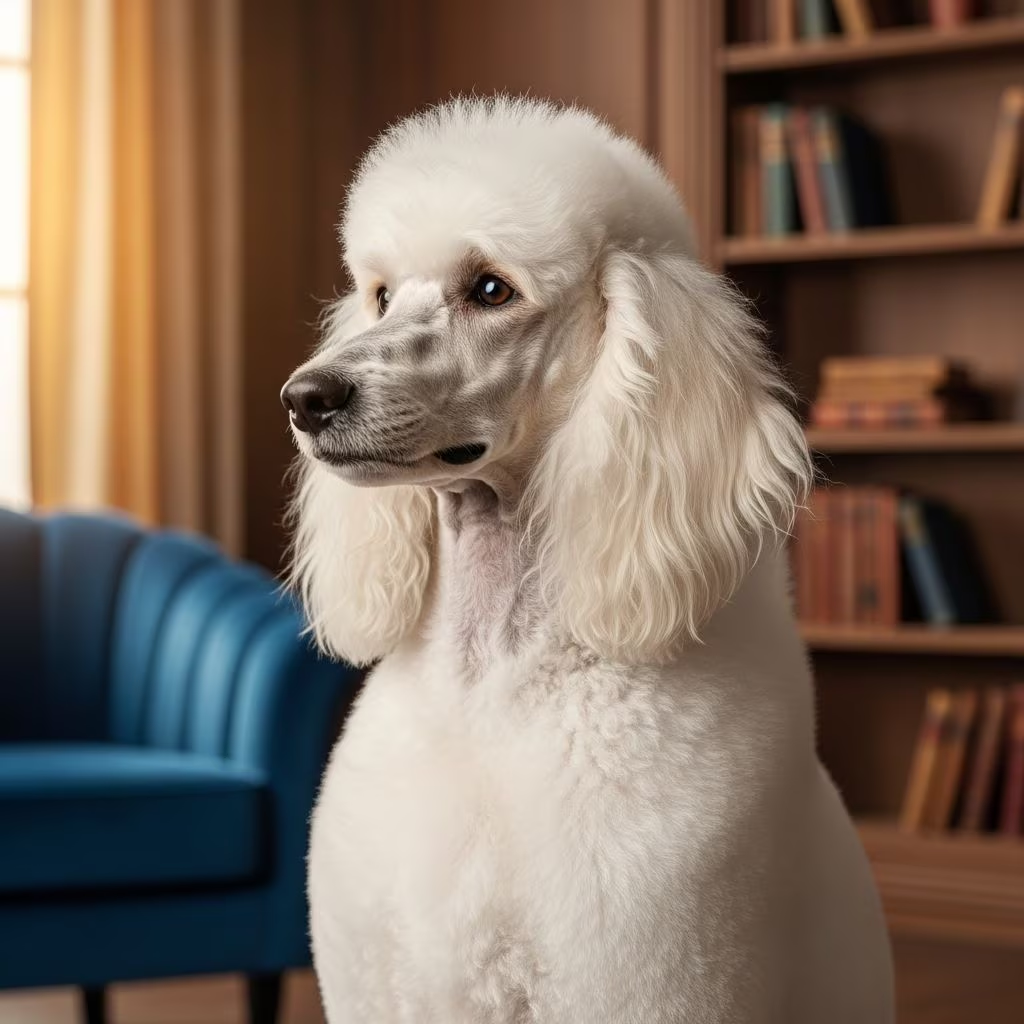
Poodles stand out as one of the most versatile and intelligent dog breeds, originating as robust water retrievers and evolving into elegant companions, performers, and even influences on modern hybrid dogs. Their curly coats, athletic builds, and sharp minds have captivated owners for centuries.
Ancient Roots in Water Retrieval
The Poodle’s story begins in Germany over 400 years ago, where breeders developed the breed from the Barbet and Hungarian Water Hound specifically for duck hunting. Known as ‘Pudel’—meaning to splash in water—these dogs excelled at retrieving waterfowl, their dense, curly coats providing insulation against cold waters.
Early depictions of curly-coated dogs with clipped hindquarters appear in Roman tombs and Greek coins from as early as 30 A.D., hinting at even deeper ancient influences. By the 14th and 15th centuries, German artworks, including those by Rembrandt, showcased Poodles as prized pets of the upper class, blending utility with prestige.
France’s Transformation of the Breed
Although rooted in Germany, Poodles gained iconic status in France, where they were dubbed ‘Caniche’ (from ‘chien canard,’ or duck dog). French nobility embraced their grace and trainability, refining them into smaller varieties for urban living and companionship.
In the 18th and 19th centuries, breeders in Paris systematically standardized three sizes: the large Standard for hunting, the mid-sized Miniature for truffle hunting, and the tiny Toy as lap dogs for aristocracy. This adaptation preserved the breed’s core traits—intelligence and low-shedding fur—while broadening their appeal.
The Signature Poodle Grooming Evolution
Poodle hairstyles are not mere fashion statements but practical innovations from their hunting days. Hunters clipped the hindquarters, legs, and tail to reduce drag in water, while leaving puffs on joints and chest for warmth and protection.
As French trends influenced grooming, rosettes, pompoms, and leg puffs emerged, mirroring powdered wigs and ruffles of the elite. Today, these flamboyant styles honor that heritage, with variations like the ‘continental clip’ still dominating dog shows.
From Hunters to Circus Stars
Beyond fields and nobility, Poodles shone in entertainment. Their eager-to-please nature and quick learning made them circus favorites in 18th-century Europe, performing tricks, obedience feats, and even agility-like stunts before modern events existed.
Traveling troupes highlighted their versatility, turning what was once a working dog into a showbiz sensation. This legacy continues in dog shows, where Poodles consistently rank high for conformation and performance.
Unmatched Intelligence and Trainability
Ranked second only to Border Collies in intelligence by canine psychologist Stanley Coren, Poodles grasp new commands in under five repetitions and obey first commands 95% of the time. This smarts stems from selective breeding for complex retrieval tasks.
- Hunting Precision: Instinctive swimmers who mark and fetch game without hesitation.
- Obedience Excellence: Thrive in agility, rally, and therapy roles due to focus and adaptability.
- Family Fit: Attentive to humans, though reserved with strangers, making them loyal guardians.
Miniatures and Toys retain this acuity, often excelling in competitive obedience despite their size.
Three Distinct Sizes: A Breed Spectrum
Poodles’ size variety sets them apart, all sharing the same standards for temperament and coat.
| Size | Height | Weight | Primary Historical Role |
|---|---|---|---|
| Standard | 15+ inches | 45-70 lbs | Waterfowl retrieval, truffle hunting |
| Miniature | 10-15 inches | 10-20 lbs | Truffle hunting, urban companion |
| Toy | Under 10 inches | 4-6 lbs | Lap dog for nobility |
Standards trace furthest back, with smaller pups naturally occurring in litters and selectively bred down.
Colors range widely: black, white, apricot, blue, silver, and more, with no impact on personality.
Care Essentials for Modern Poodles
Despite hypoallergenic fame, Poodles need regular grooming every 4-6 weeks to prevent matting. Daily brushing maintains their dense, curly single coat.
Exercise varies by size: Standards demand 30-60 minutes of swims or runs; Toys suffice with indoor play. All benefit from mental puzzles to channel their intellect.
Health watchpoints include hip dysplasia in Standards, dental issues in Toys, and eye conditions across sizes. Lifespans: 12-15 years for Standards, up to 18 for Toys.
The Doodle Revolution: Poodle Hybrids
Late 20th-century breeders crossed Poodles with breeds like Labradors (Labradoodles) and Schnauzers (Schnoodles) to blend intelligence, low-shedding coats, and friendliness. This ‘designer dog’ trend, pioneered in the 1960s-70s, exploded in popularity.
Purebred enthusiasts critique it for diluting lines, but doodles thrive as service and family dogs, inheriting Poodle athleticism without heavy shedding.
Poodles in Culture and Legacy
From Rembrandt’s portraits to royal courts, Poodles symbolize sophistication yet rugged capability. Their decline in France contrasts booming U.S. popularity, with AKC recognition since 1887.
Today, they dominate shows, therapies, and homes, proving a water dog’s timeless allure.
Frequently Asked Questions
Are Poodles good family pets?
Yes, their loyalty, playfulness, and low-shedding coats make them ideal, though they need engagement to avoid boredom.
Do Poodles need frequent haircuts?
Every 4-6 weeks for grooming; daily brushing prevents tangles.
What’s the smartest dog breed?
Poodles rank #2, excelling in obedience and problem-solving.
Are all Poodles from France?
No, German origins; France refined sizes and fame.
Why the fancy Poodle clips?
Historical for swimming efficiency, now stylistic homage.
References
- Poodle Dog Breed Guide: Characteristics, History & Care — Pawlicy Advisor. 2023. https://www.pawlicy.com/blog/poodle-dog-breed/
- Poodle History: From Water Retriever to Versatile Companion — American Kennel Club (AKC). 2024-01-15. https://www.akc.org/expert-advice/dog-breeds/poodle-history/
- Poodle Dog Breed | Origin, History, Personality & Care Needs — Nylabone. 2023. https://www.nylabone.com/dog101/poodle
- Poodle | Size, Lifespan & Grooming — Encyclopædia Britannica. 2025. https://www.britannica.com/animal/poodle
- The Origins of the French Poodles — Poodles World. 2024. https://poodlesworld.com/blogs/poodle/french-poodles
- What Were Poodles Bred For? History & FAQ — Dogster. 2024-06-10. https://www.dogster.com/lifestyle/what-were-poodles-bred-for



