

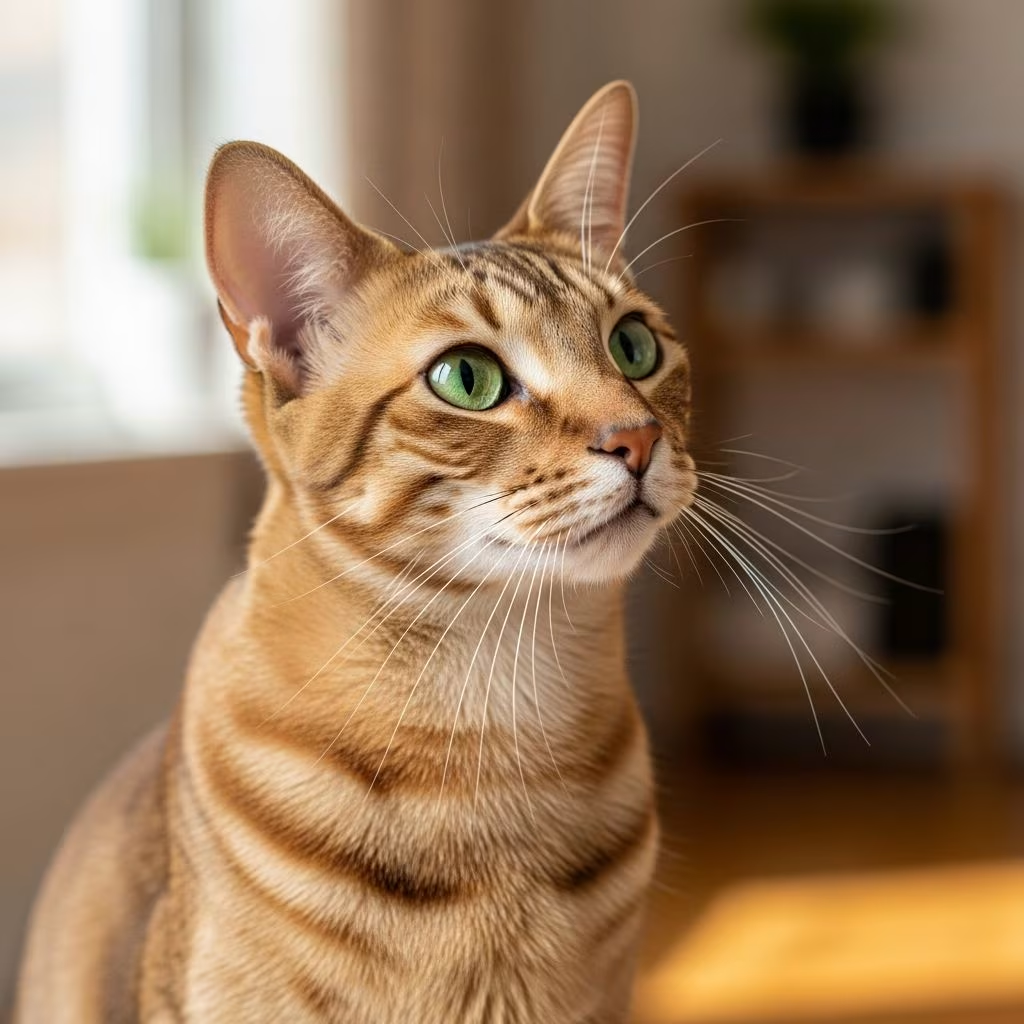
Cats captivate millions as beloved companions, blending independence with affection in ways that often puzzle their owners. Rooted in their evolutionary past as solitary hunters, many feline quirks serve survival purposes adapted to domestic life. This article delves into key behaviors—from energy-conserving naps to vocal night calls—drawing on scientific insights to explain why cats act as they do. Understanding these traits fosters stronger bonds and enhances cat welfare.
The Science of Feline Sleep Patterns
Cats dedicate much of their day to rest, reflecting their crepuscular nature—most active at dawn and dusk. They sleep about 40% of the day, rest another 22%, and groom for 15%, leaving limited time for other pursuits. This pattern stems from ancestral needs to conserve energy between hunts, even though domestic cats receive regular meals.
Domestic cats maintain a slightly elevated body temperature compared to humans, drawing them to warm spots like sunlit windows or heated blankets. This thermoregulation aids efficient energy use during slumber. Indoor cats may nap more due to abundant safety, while outdoor ones adjust naps around environmental demands.
- Sleep Cycle Breakdown: Cats experience short REM bursts, leading to twitching paws or murmurs during dreams, often replaying hunts.
- Optimal Napping Spots: Seek warmth and elevation for security, mimicking wild perches.
- Age Variations: Kittens and seniors nap longest, up to 20 hours daily, for growth and recovery.
Hunting Instincts in Modern Cats
Despite full bowls, cats retain predatory drives, manifesting in play that simulates stalking prey. They paw at objects to test reactions; movement triggers chase responses, honing reflexes without real risk. This explains batting toys or household items—perceived as fleeing quarry.
Outdoor cats prefer rodents over birds, ambushing near burrows rather than chasing fliers. Dietary analyses confirm mammals appear three times more often than birds in their meals, with insects also common. Cats scavenge readily, prioritizing easy calories.
| Prey Preference | Frequency in Diet | Hunting Style |
|---|---|---|
| Rodents | High (3x birds) | Ambush/wait |
| Birds | Low | Stalk/pounce (less efficient) |
| Insects/Small Game | Moderate | Opportunistic |
Bringing ‘gifts’ like dead critters honors humans as fellow hunters or teaches survival skills, especially from mother cats to kittens.
Vocalizations: From Purring to Night Calls
Purring transcends happiness; cats purr during distress, injury, or nursing to self-soothe and solicit care. This vibration, around 25-150 Hz, promotes healing via bone growth stimulation.
Night squalling often signals estrus in unspayed females, calling mates with persistent yowls. Learned behavior amplifies it—cats discover vocalizing yields attention or treats. Males may roam and vocalize similarly during mating season.
Queens are induced ovulators, cycling every three weeks seasonally if unbred. Receptive females exhibit lordosis and vocalize; toms respond with sniffing, gaping, and neck-biting. Spaying/neutering curbs these urges, reducing noise and roaming.
Affection and Scent-Marking Rituals
Rubbing cheeks against legs or objects deposits pheromones from facial glands, claiming territory and kin. Weaving between legs signals trust and inclusion in their social circle. Proximity-seeking varies; some crave pets, others prefer gaze contact.
Cats recognize owners’ names and emotions, responding more to familiar voices or moods. They match facial expressions with sounds cross-modally, suggesting emotional representations of partners. Studies show cats alleviate owners’ negative moods via rubbing or vocalizing, akin to human comfort.
Kneading: A Kittenhood Echo
Pressing paws rhythmically into soft surfaces recalls nursing, stimulating milk flow. Adults knead blankets or laps as comfort, signaling deep bonds. Drooling often accompanies, another nursing remnant. This self-soothing persists lifelong, strongest with trusted humans.
Chirping and Pre-Pounce Twitches
Staring at birds through windows elicits ‘chittering’—excited trills reflecting frustration at uncatchable prey. Tail-wagging or butt-wiggles before pounces balance the body, enhancing jump accuracy and depth perception. These prepare muscles for explosive action.
Keyboard and Lap Dominance
Cats claim laptops or laps for warmth from electronics or body heat, plus scent-rich owner items. This bonds socially, mimicking behaviors and demanding interaction. They mark belongings, integrating owners into their territory.
Social Dynamics: Solitary Yet Flexible
Feral cats form matriarchal groups of related females and kittens, with transient males. Domestic cats mirror this, using rubbing, grooming, or hissing for regulation. Better bonds mean closer proximity.
Early socialization shapes human interactions; well-socialized kittens tolerate strangers better. Oxytocin rises during petting, mirroring human-animal bonds, though fewer cat studies exist. Personality, sex, and age influence interaction patterns.
Curiosity and Exploration
Pawing unknowns satisfies inquisitiveness, triggering predatory play. Indoor cats explore vigorously at home, comparable to outdoor ventures. Unpredictable cats may show owner aggression.
FAQs: Common Cat Behavior Questions
Why does my cat sleep so much?
Cats sleep 12-16 hours daily to conserve energy from hunting heritage, seeking warm, safe spots.
Is purring always contentment?
No, it also signals pain or care-seeking, aiding healing.
Why bring dead animals indoors?
Instinctual sharing or teaching, viewing owners as family.
Do cats understand human emotions?
Moderately, especially owners’; they respond to cues and moods.
How to curb night yowling?
Spay/neuter, ignore attention bids, provide daytime stimulation.
Enhancing Cat-Human Bonds
Recognizing behaviors as adaptive traits improves welfare. Enrich environments with toys mimicking prey, respect boundaries, and schedule play at crepuscular peaks. Research underscores cats’ emotional depth, capable of secure attachments. Consistent routines build trust, reducing stress signals like excessive grooming or hiding.
Factors like neuter status, early handling, and owner personality shape dynamics. Females show brain activation from stroking, boosting mood especially in neurotics. Temporal interaction patterns depend on both partners’ traits.
References
- Decoding Common Cat Behavior – MedVet Blog — MedVet. 2023-approx. https://www.medvet.com/cat-behaviors/
- Why your cat does these 6 things, according to science — Phys.org. 2021-04-21. https://phys.org/news/2021-04-cat-science.html
- Unanswered Questions and Hypotheses about Domestic Cat (Felis silvestris catus) – Human Relationships — PMC/NCBI. 2021-10-20. https://pmc.ncbi.nlm.nih.gov/articles/PMC8532687/
- Biology & Behavior of Cats — Alley Cat Allies. Recent update. https://www.alleycat.org/resources/biology-and-behavior-of-the-cat/
- Social Behavior of Cats — Merck Veterinary Manual. Recent. https://www.merckvetmanual.com/behavior/behavior-of-cats/social-behavior-of-cats
- Demystifying feline behavior — Penn Today, University of Pennsylvania. Recent. https://penntoday.upenn.edu/news/demystifying-feline-behavior
- What’s going on inside your cat’s head? — American Psychological Association. Recent. https://www.apa.org/news/podcasts/speaking-of-psychology/cat-human-bond



