

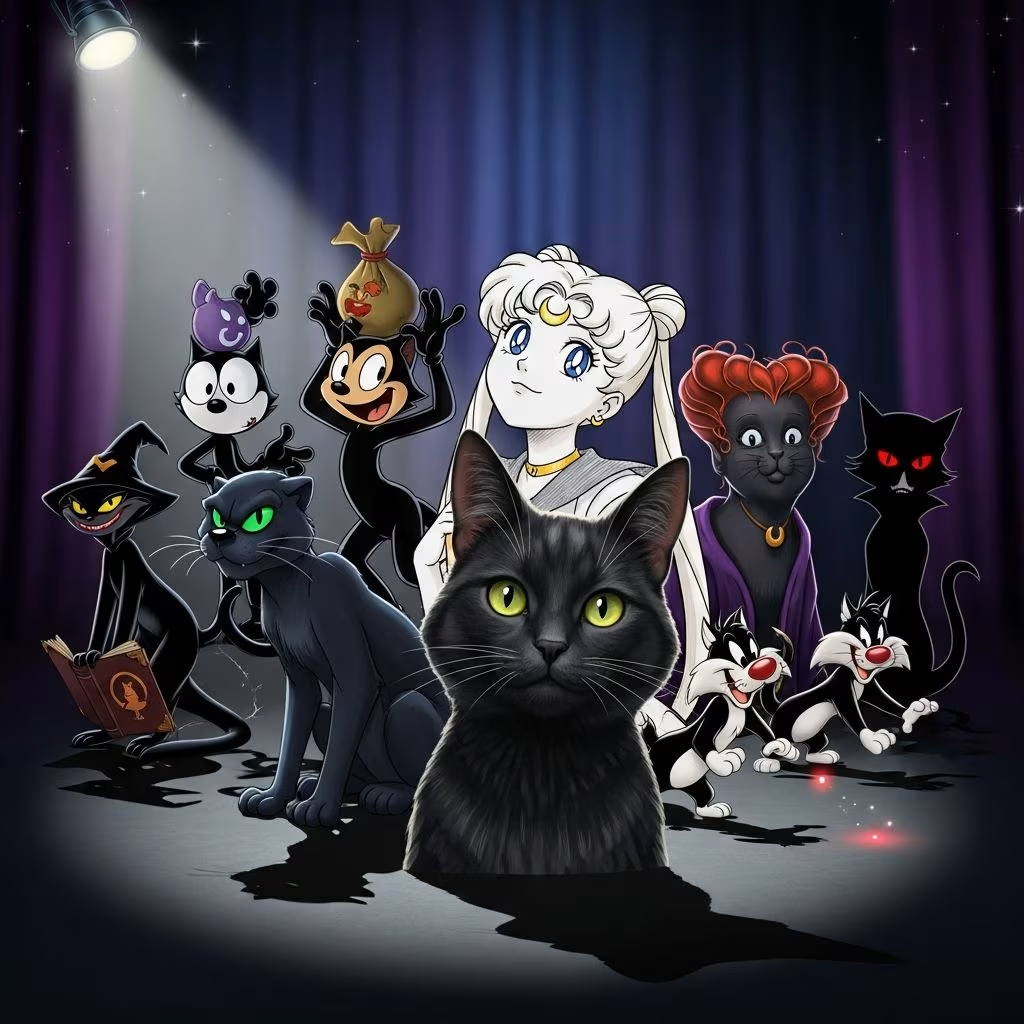
Famous Black Cats Who Stole the Spotlight in Pop Culture
Black cats have long held a special place in human imagination and culture. While they are often unfairly associated with superstitions and bad luck, the reality tells a very different story. Throughout the history of entertainment, black cats have emerged as some of the most beloved, memorable, and iconic characters in film, television, and animation. These felines have transcended their real-world stereotypes to become cultural ambassadors, breaking negative stereotypes through their charm, humor, and undeniable screen presence. From the silent film era to contemporary productions, black cats have consistently captured audiences’ hearts and left indelible marks on popular culture.
The Golden Age of Animation: Felix the Cat and Early Cinema
When discussing iconic black cats in entertainment, one cannot overlook Felix the Cat, a pioneering figure in animation history. Felix first appeared in the silent film “Feline Follies” in 1919, making him one of the earliest successful animated characters in film history. With his distinctive white mouth and expressive eyes, Felix became a sensation, starring in over 150 animated shorts throughout his career. What makes Felix particularly remarkable is his role as an industry pioneer—he didn’t just entertain audiences; he helped establish the very foundations of animated filmmaking.
Felix’s popularity during the silent film era was extraordinary, even earning appearances alongside legendary figures like Charlie Chaplin and director Cecile B. DeMille. Animation critics and authors, including Aldous Huxley (author of “Brave New World”), considered Felix’s silent cartoon shorts to be the pinnacle of animation achievement. Despite his movie and television career ending decades ago, Felix remains a vintage pop culture star and an essential piece of American cultural history. Even today, Felix is one of the most commonly used names for black cats, a testament to his lasting influence on popular culture.
Disney’s Beloved Feline Characters
Disney Studios has featured several memorable black cats that became beloved by generations of viewers. Figaro, the curious and comedic cat from the 1940 Disney masterpiece “Pinocchio,” became such a massive hit with both audiences and Walt Disney himself that he was featured in future Disney productions. Today’s children know Figaro as Minnie Mouse’s pet and Pluto’s feline counterpart in “Mickey Mouse Clubhouse” and its various spin-offs.
Another notable Disney black cat is Scat Cat from the 1960s film “The Aristocats.” This streetwise alley cat is the trumpet-playing friend of Thomas O’Malley and is famous for performing the jazzy tune “Everybody Wants to Be a Cat,” a song as catchy and memorable as Disney’s more recent hits. These characters demonstrate Disney’s mastery in creating feline personalities that resonate with audiences across generations.
Witches’ Familiars: Salem and Other Magical Black Cats
Black cats have long been associated with witchcraft and magic in popular culture, and several iconic characters have embodied this connection beautifully. Salem Saberhagen from the television series “Sabrina the Teenage Witch” is perhaps one of the most memorable magical black cats. Originally a 500-year-old witch serving a 100-year sentence for attempting to take over the world, Salem was transformed into a powerless American shorthair as punishment. Despite his diminished circumstances, Salem became much more than a sidekick—he was the show’s true star for many fans.
Salem was portrayed as sassy, sympathetic, and occasionally self-serving, offering humorous commentary on events unfolding around Sabrina and often providing mentorship as she navigated the confusion of life as a teenage witch. This complex characterization elevated Salem beyond typical pet roles, making him a fully realized character with depth and personality.
Another notable magical black cat is Jiji from Studio Ghibli’s “Kiki’s Delivery Service,” who may be “the blackest of all black cats from movies or TV”. Like Salem, Jiji serves as a familiar for the title witch, but he distinguishes himself through his sarcastic wit and endearing nature. Jiji stole the show with his personality, quickly becoming one of the film’s most beloved characters and demonstrating how Japanese animation brought equally compelling feline characters to global audiences.
Horror and Fantasy: Black Cats in Darker Tales
Binx from the 1999 film “Hocus Pocus” represents a fascinating transformation of the black cat archetype. Cursed by the trio of witches in 1693, Thackery Binx was transformed into an immortal cat that lived for centuries protecting the Black Flame Candle. What makes Binx’s story compelling is how the film transforms the black cat from a bad omen into a good guy—a heroic character whose quest spans centuries. Although Binx’s soul moved on at the end of the film, this immortal kitty left an undeniably indelible mark on pop culture.
The stop-motion film “Coraline” features The Cat, a chatty and sarcastic black feline who becomes the true star of the story. Originally a side character, The Cat plays a crucial protagonist role in both the book and film, helping Coraline navigate the Other World and defeat the Other Mother. This black feline’s assistance proves essential to the story’s resolution, making him arguably the true hero of this dark fantasy tale.
Television’s Iconic Black Cats
Beyond “Sabrina the Teenage Witch,” television has featured numerous memorable black cats that captured viewers’ hearts. Snowball II from the long-running animated series “The Simpsons” is a more modern black feline that younger viewers might recognize. Created by the show’s author, Snowball II is distinguished by having an unsuitable name, as the original Snowball was a white cat presumed to have been run over by the mayor’s brother. While not essential to many storylines, Snowball II appears regularly throughout the series and remains instantly identifiable as a cartoon cat.
Miss Kitty from the film “Batman Returns” represents another fascinating interpretation of the black cat archetype. In this film, Catwoman is portrayed as a cat lady who brings her matching black feline on her sordid adventures. Symbolizing her owner’s complex relationship with Batman, Miss Kitty passes to Bruce when Selina Kyle dies at the movie’s end, and in later storylines appears quite comfortable as a pet at Wayne Manor.
Black Cats in Animation and Comedy
Classic animation studios created several unforgettable black cat characters that defined comedy across generations. Sylvester from the Looney Tunes cartoons is famous for his wacky attempts to catch Tweety Bird and his signature phrase “Suffering succotash!” when his attempts inevitably fail. This persistent cat has become a cultural icon, sometimes even teaming up with his little canary enemy for adventures, such as playing basketball with space aliens in 1990s productions.
Penelope Pussycat from the “Pepe Le Pew” cartoons, though less remembered by name, became one of the funniest members of the Looney Tunes family. As the innocent and often-confused black cat who served as Pepe Le Pew’s on-again, off-again love interest since 1949, Penelope rarely uttered a word yet found fame as part of Warner Bros.’ legendary comedy lineup. Her comedic chemistry with the amorous French skunk created some of animation’s most memorable moments.
Modern and Contemporary Black Cat Characters
Recent years have brought new black cat characters to audiences worldwide. Kitty Softpaws from “Puss in Boots” represents a modern take on the black cat character—a ruthless thief voiced by Salma Hayek who matches the film’s protagonist in wit, cunning, and salsa moves. This contemporary character demonstrates how black cats continue to be portrayed as complex, dynamic characters worthy of leading roles.
Luna from the anime “Sailor Moon” represents another influential black cat character whose impact extends across global audiences. The Cat in the Hat from Dr. Seuss’s beloved children’s literature and subsequent film adaptations presents yet another distinct characterization of black cats—one focused on whimsy, adventure, and imaginative storytelling.
Black Cats Beyond Earth: Science Fiction
Science fiction has also embraced black cat characters in creative ways. Isis from “Star Trek” represents one of many black cat characters featured throughout the series. These shapeshifting felines possess special abilities, including telepathic communication when in their feline form. The cat featured in the episode “Catspaw” demonstrates the franchise’s creative approach to incorporating black cats into speculative fiction narratives.
The Real-World Icon: Blackie the Millionaire Cat
While most famous black cats are fictional, one real black cat earned legendary status through an extraordinary inheritance. Blackie the Millionaire Cat became possibly the most well-known cat on record with an unexpected claim to fame. When British antiquarian Ben Rea passed away, he left his fortune not to his estranged family but to his pet black cat. Blackie was bequeathed $12.5 million in inheritance, which was distributed to animal charities while ensuring the cat continued his top-notch lifestyle. This unprecedented act brought global attention to a real black cat and demonstrated the profound bonds that can form between humans and their feline companions.
Why Black Cats Matter in Pop Culture
The prevalence of black cats in entertainment serves an important cultural function. These characters actively work to break the negative stereotypes unfairly associated with black cats in real life. Through sass, humor, heroism, and complex characterization, fictional black cats demonstrate that these animals deserve appreciation and respect rather than fear or superstition. From pioneering animation to contemporary storytelling, black cats have proven themselves to be versatile, memorable, and essential to entertainment across all media.
Frequently Asked Questions
Q: Why are black cats so popular in pop culture?
A: Black cats are popular in entertainment because they possess visual distinctiveness, have long been associated with mystery and magic, and allow creators to craft complex, memorable characters that resonate across generations and cultures.
Q: Which black cat character is the oldest?
A: Felix the Cat, who first appeared in 1919, is the oldest black cat character in entertainment history. He pioneered animation and influenced countless characters that came after him.
Q: Do these fictional black cats help fight real-world discrimination against black cats?
A: Yes, iconic black cat characters in entertainment work to break negative stereotypes and superstitions by presenting these animals as intelligent, lovable, heroic, and complex beings worthy of appreciation and care.
Q: Are there any recent black cat characters in pop culture?
A: Yes, characters like Kitty Softpaws from “Puss in Boots” represent modern portrayals of black cats in contemporary entertainment, showing that these characters continue to be created and beloved by new generations.
Q: What makes a black cat character memorable in film or television?
A: Memorable black cat characters typically feature distinctive personalities, meaningful roles in the narrative, distinctive voices (when applicable), and either humor or heroism that allows audiences to connect with them emotionally.
References
- Black Cats in Art: A Brief History of Feline Fame — Baldy and The Fidget. https://www.baldyandthefidget.com/black-cats-in-art-a-brief-history-of-feline-fame/
- 22 Famous Black Cats (With Pictures and Videos) — Catster. https://www.catster.com/lifestyle/famous-black-cats/
- Famous Black Cats in Film, History, and Culture — Poe in Wonderland. https://poeinwonderland.com/famous-black-cats-in-film-history-and-culture/
- Top 7 Black Cats in Pop Culture — 1 FUR 1 Foundation. https://www.1fur1.org/top-7-black-cats-pop-culture/
- Pop Culture and Black Cats — Lombard Veterinary Hospital. https://www.lombardvet.com/services/cats/blog/pop-culture-and-black-cats



