

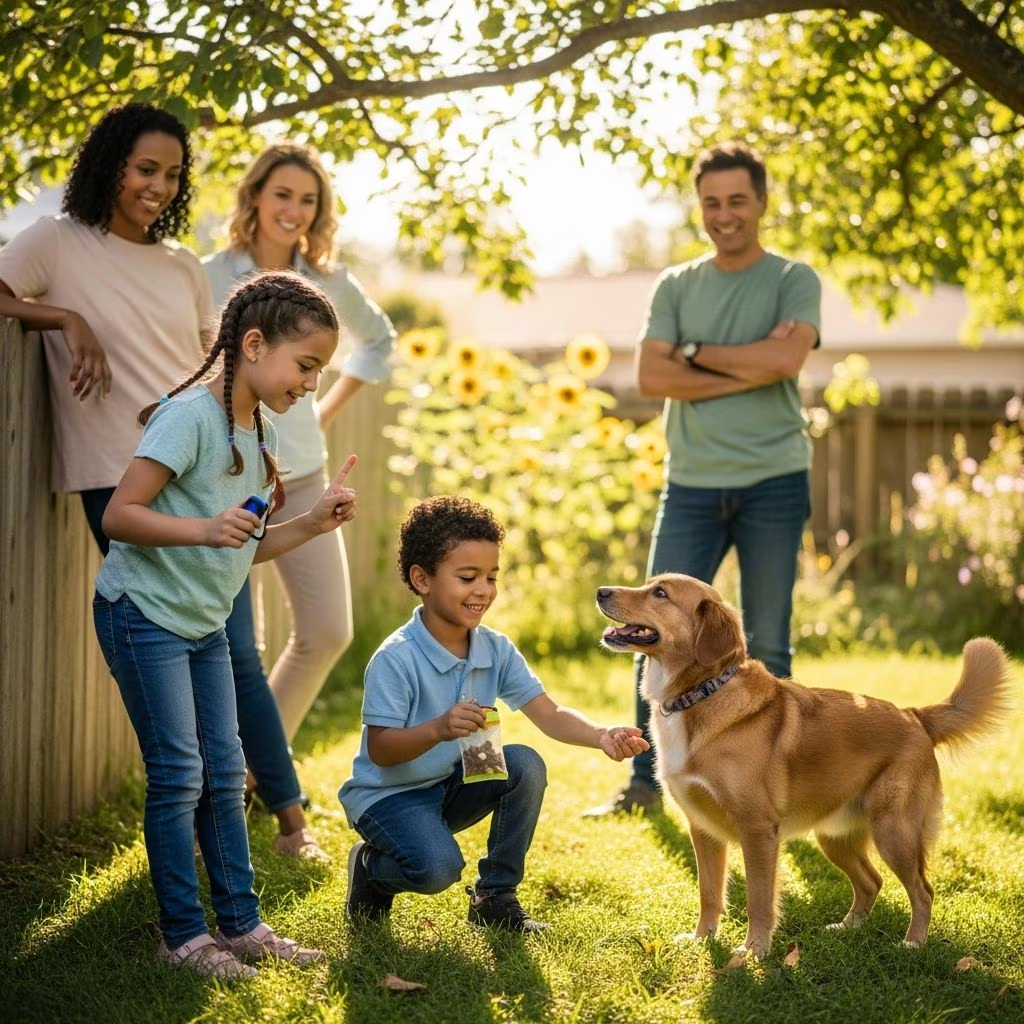
Engaging children in the process of training family dogs transforms everyday pet care into a powerful educational adventure. This approach not only equips dogs with essential behaviors but also cultivates vital life skills in young participants, leading to stronger family dynamics and healthier lifestyles.
Why Children’s Involvement Matters in Dog Training
Training a dog becomes a shared family endeavor when kids join in, yielding benefits that extend far beyond obedience commands. Research highlights how such participation nurtures emotional growth and practical abilities in children while ensuring dogs adapt well to household life.
- Creates mutual respect between kids and pets, reducing mishaps.
- Instills daily routines that promote consistency for both child and dog.
- Turns potential chaos into structured, joyful interactions.
Building Responsibility Through Hands-On Pet Care
One of the foremost gains from kids helping train dogs is the development of responsibility. Daily tasks like feeding, leash walking, and practicing sits teach children that commitment shapes outcomes for living beings.
Children quickly grasp how their consistency influences the dog’s responses. For instance, regular reinforcement of commands during playtime reinforces accountability, mirroring real-world duties. Studies confirm that pet care routines enhance a child’s sense of duty, positively affecting school performance and home contributions.
| Task | Child’s Role | Dog Benefit | Skill Gained |
|---|---|---|---|
| Daily Walks | Hold leash, give heel command | Exercise and boundary respect | Time management |
| Feeding Time | Measure portions, say ‘sit’ first | Manners before meals | Precision and patience |
| Grooming Sessions | Brush fur, reward calm behavior | Comfort with handling | Caregiving empathy |
Fostering Empathy and Emotional Intelligence
Dogs serve as ideal teachers for empathy, as children learn to read subtle cues like tail wags or ear positions. Participating in training sessions helps kids anticipate needs, such as rewarding a calm wait during greetings.
This practice extends to human relationships, with evidence showing pet-interacting children exhibit greater compassion. A study in Anthrozoös found that kids caring for dogs score higher in empathy metrics, aiding peer interactions and conflict resolution.
Enhancing Physical Health and Activity Levels
Involving kids in dog training naturally boosts movement. Fetch games, agility drills, and neighborhood strolls add thousands of steps daily, combating sedentary trends.
Research from Pediatric Obesity indicates dog-owning children engage in more activity, lowering obesity risks and improving heart health. Training sessions double as fun workouts, keeping both energetic.
Boosting Confidence and Self-Esteem
Mastering commands like ‘stay’ or ‘come’ gives children tangible successes, elevating self-worth. Dogs’ unconditional positive responses build assurance without judgment.
Findings in the Journal of Personality and Social Psychology link pet care to heightened confidence, as kids feel accomplished from guiding their furry companions effectively.
Improving Social and Communication Abilities
Clear instructions during training sharpen kids’ articulation skills. Explaining cues to dogs hones clarity, transferable to school debates or family talks.
Dog park visits during practice sessions spark conversations with others, per International Journal of Environmental Research and Public Health, fostering friendships through shared pet enthusiasm.
Stimulating Cognitive Growth and Problem-Solving
Training puzzles, like troubleshooting jumping behaviors, engage young minds. Kids experiment with rewards, analyzing what works best.
The Journal of Veterinary Behavior notes increased curiosity in animal science among pet caretakers, sparking interests in STEM fields alongside practical discipline from schedules.
Ensuring Safety: Key Guidelines for Kid-Dog Training
Prioritize safety by supervising all sessions. Teach children never to approach sleeping or eating dogs, using positive reinforcement for calm interactions.
- Start with simple cues like ‘sit’ using treats.
- Use leashes for control in open spaces.
- Model gentle handling to prevent rough play.
Programs like youth dog training initiatives report safer homes, with 85% of participants noting better school attendance from gained focus.
Practical Training Techniques for Families
Begin with basics: Name recognition followed by ‘sit’ and ‘down’. Kids can hold treats high, luring the dog into position while saying the word.
- Practice 5-minute sessions twice daily.
- End on successes to maintain enthusiasm.
- Graduate to off-leash in secure yards.
Incorporate games: Hide-and-seek for recalls builds fun reliability. Track progress in a family chart to celebrate milestones.
Addressing Common Challenges
Frustration arises if dogs don’t respond instantly; coach kids on patience, breaking tasks into micro-steps. Inconsistent family rules confuse dogs—align on methods.
For energetic breeds, channel via structured play. If allergies or fears exist, consult vets early for inclusive plans.
Long-Term Family Benefits
Families report deeper bonds and fewer conflicts. Trained dogs integrate seamlessly, allowing worry-free outings. Children grow into empathetic leaders, often pursuing animal welfare paths.
Quantitative impacts include 70% faster adoptions for trained shelter dogs and sustained youth mental health gains.
Frequently Asked Questions
What age is best for kids to start training dogs?
Children 5 and older, with full supervision. Younger ones can observe and toss treats.
Do all dog breeds suit family training?
Most do, especially friendly ones like Labs. Assess temperament via professional evaluations.
How to handle a dog that ignores kid commands?
Revert to basics, ensure parental modeling, and use high-value rewards.
Can training reduce dog aggression toward kids?
Yes, through desensitization and positive associations, always under expert guidance.
What tools are kid-friendly for training?
Clickers, soft treats, short leashes, and harnesses for comfort.
Getting Started: Your Family Action Plan
Draft a weekly schedule blending training with play. Enroll in group classes for socialization. Track joys and adjustments to refine approaches.
This investment yields a lifetime of companionship, responsibility, and delight.
References
- Pediatric Obesity: Children with dogs and physical activity — Wiley. 2018. https://onlinelibrary.wiley.com/journal/20475810
- Anthrozoös: Empathy development in children with pets — Taylor & Francis. 2014. https://www.tandfonline.com/loi/rzoo20
- Journal of Personality and Social Psychology: Self-esteem and pets — APA. 1999. https://psycnet.apa.org/journals/psp
- International Journal of Environmental Research and Public Health: Dogs and social skills — MDPI. 2020. https://www.mdpi.com/journal/ijerph
- Journal of Veterinary Behavior: Curiosity and pet care — Elsevier. 2017. https://www.journalofveterinarybehavior.com/



