

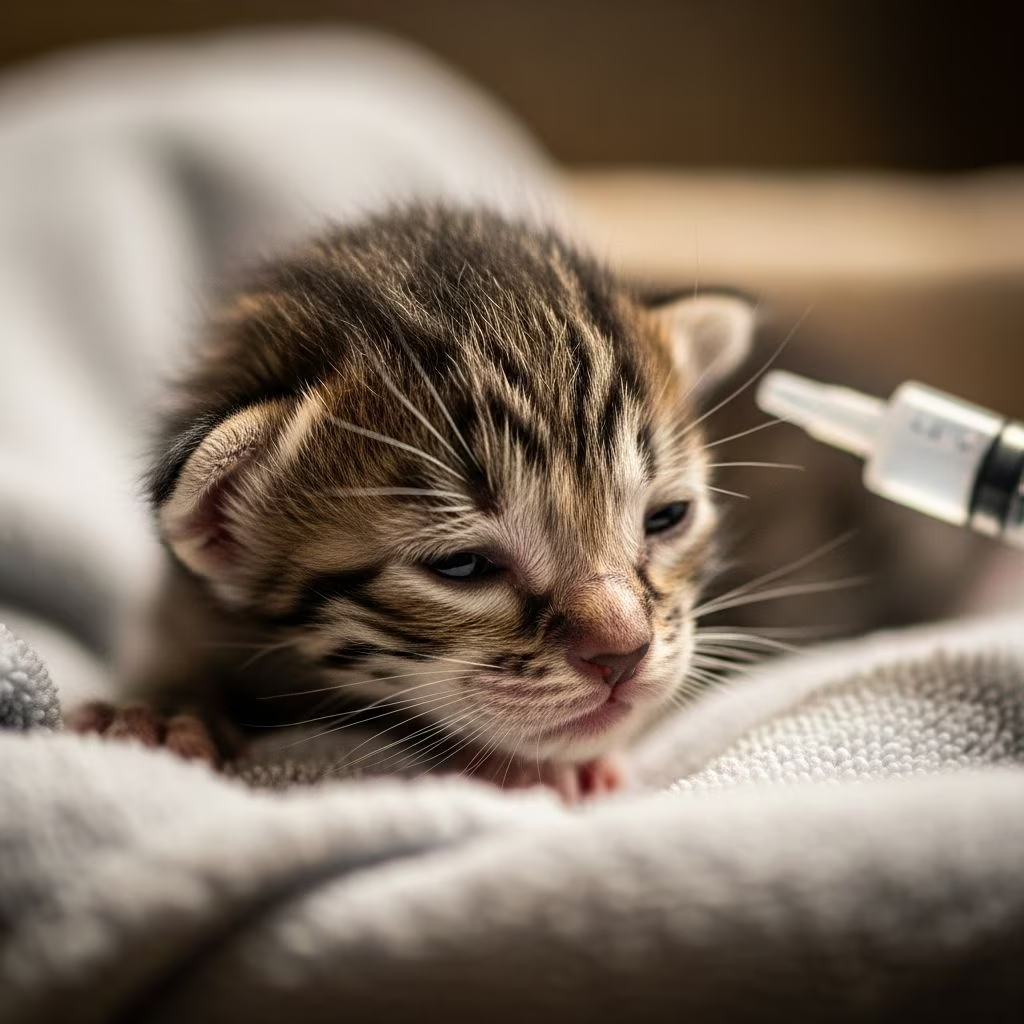
Fading kitten syndrome refers to a critical condition where apparently healthy newborn kittens suddenly weaken and may die within the first few weeks of life, often due to a combination of infectious, environmental, and congenital factors.
Understanding the Nature of Fading Kitten Syndrome
This syndrome is not a single disease but a descriptive term for kittens that fail to thrive, showing a progressive decline despite initial normal appearance. It typically strikes during the neonatal period, from birth to about two weeks, when kittens are most vulnerable due to immature immune systems and dependence on maternal care. Veterinary experts note that up to 30% of kittens may succumb in the first year, with fading syndrome accounting for many early losses.
The condition manifests as a downward spiral: kittens stop nursing effectively, lose body heat, become dehydrated, and develop secondary infections. Early recognition is vital because prompt intervention can reverse the process in many cases.
Common Warning Signs in Newborn Kittens
Owners and breeders must monitor kittens closely for subtle changes. Key indicators include:
- Lethargy and weakness: Kittens that are unusually still, fail to respond to touch, or cannot right themselves after rolling over.
- Poor nursing: Weak suckle reflex, constant crying after feeding, or failure to gain weight.
- Low body temperature: Cold to the touch, often below 99°F (37°C), leading to slowed metabolism.
- Respiratory issues: Labored breathing, nasal discharge, or cyanosis (bluish gums).
- Dehydration and failure to thrive: Sunken eyes, dry gums, and no weight gain despite access to milk.
Developmental delays, such as inability to stand by day 14 or thermoregulate by day 3-5, signal trouble. A table of normal milestones helps compare:
| Milestone | Expected Age | Fading Sign |
|---|---|---|
| Righting reflex | Day 1-3 | Cannot flip from back |
| Temperature control | Day 3-5 | Hypothermia persists |
| Standing/walking | Week 2 | Remains wobbly or prone |
| Weight gain | Daily 10-15g | Stagnant or loss |
Primary Causes Behind the Decline
Fading kitten syndrome arises from multiple interconnected triggers. Infectious agents top the list, with bacteria like Escherichia coli, streptococci, and staphylococci entering via the umbilicus or mouth, causing sepsis. Viral threats and parasites exacerbate vulnerability.
Non-infectious factors include:
- Congenital defects: Heart, lung, brain, or palate malformations that impair function.
- Neonatal isoerythrolysis: Blood type mismatch between queen and kittens destroys red blood cells, leading to hemolytic anemia.
- Environmental stressors: Hypothermia from cold nests, maternal neglect, or poor hygiene.
- Metabolic issues: Hypoglycemia from inadequate colostrum or high energy demands in low-birth-weight kittens.
- Trauma or toxins: Birth complications, falls, or exposure to chemicals in bedding.
Often, a vicious cycle forms: hypothermia slows digestion, causing malnutrition, which weakens immunity and invites infection.
Diagnosis: Pinpointing the Problem
Veterinarians start with a thorough history and physical exam, checking temperature, hydration, and reflexes. Diagnostics may include:
- Bloodwork for glucose, anemia, and infection markers.
- Fecal analysis for parasites.
- Imaging for congenital anomalies.
- Umbilical swabs for bacterial culture.
Since signs overlap, treatment begins empirically while tests run. Necropsy on deceased kittens aids litter mate prevention.
Critical Treatment Strategies
Time is critical—act within hours. First, warm the kitten gradually to 100°F using incubators or warm water bottles wrapped in towels. Never use direct heat.
Supportive care protocols:
- Rehydration and nutrition: Subcutaneous fluids and tube-feeding kitten milk replacer (KMR) every 2-3 hours.
- Antibiotics: Broad-spectrum like amoxicillin for suspected sepsis.
- Glucose support: Dextrose injections for hypoglycemia.
- Parasite control: Safe dewormers if indicated.
- Oxygen therapy: For respiratory distress.
Hand-rearing may be necessary if the queen rejects the kitten. Success rates improve with 24/7 monitoring in a veterinary setting.
Prevention: Safeguarding the Litter
Proactive steps reduce risks dramatically:
- Queen health: Vaccinate, deworm, and test blood type pre-breeding.
- Nesting environment: Warm (85-90°F first week), clean, draft-free box with non-toxic bedding.
- Monitoring: Weigh daily, ensure colostrum intake within hours of birth.
- Breeding hygiene: Quarantine new cats, sanitize whelping areas.
Breeders should separate fading kittens promptly to protect siblings.
Myths and Facts About Kitten Survival
| Myth | Fact |
|---|---|
| All fading kittens die | Many recover with fast intervention |
| It’s always infection | Often multifactorial |
| Home remedies suffice | Vet care essential for diagnostics |
Frequently Asked Questions
What is the survival rate for fading kittens?
With immediate veterinary intervention, survival can exceed 50%, but delays drop it sharply.
Can fading syndrome affect older kittens?
Primarily neonatal, but similar failure-to-thrive can occur up to 4 weeks.
How do I know if my queen has incompatible blood type?
Blood typing tests before breeding prevent neonatal isoerythrolysis.
Is hypothermia reversible?
Yes, gradual rewarming plus fluids often stabilizes kittens.
Should I intervene in feral litters?
Monitor but involve rescues; human scent rarely causes full abandonment.
Long-Term Outlook and Recovery
Survivors may need weeks of supportive care but often thrive. Monitor for developmental delays and vaccinate early. Educating breeders on these protocols has lowered mortality in managed catteries.
References
- Fading Kitten Syndrome: What It Is, Why It Happens & What To Do — Pawlicy Advisor. 2023. https://www.pawlicy.com/blog/fading-kitten-syndrome/
- Fading Kitten Syndrome: Signs and When to Get Help — PetMD. 2024-01-15. https://www.petmd.com/cat/conditions/fading-kitten-syndrome
- Fading kitten syndrome: Factors predisposing to ‘faders’ and survival strategies — PMC (NCBI). 2024. https://pmc.ncbi.nlm.nih.gov/articles/PMC10845402/
- What Is Fading Kitten Syndrome? — Chewy. 2023. https://www.chewy.com/education/cat/health-and-wellness/what-is-fading-kitten-syndrome
- Fading Kitten Syndrome: Recognize the Emergency and Act Fast — GSVS. 2024. https://gsvs.org/blog/fading-kitten-syndrome-emergency/



