

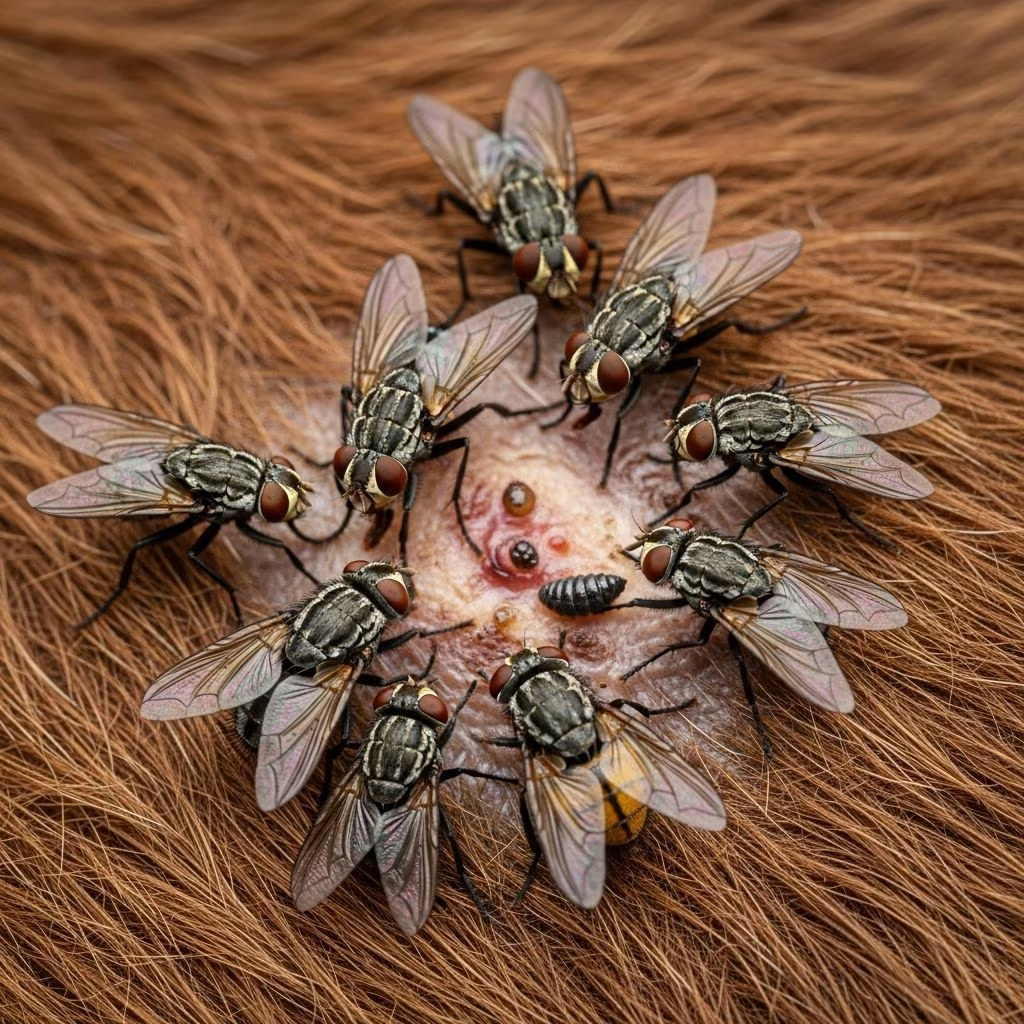
Facultative myiasis occurs when fly larvae opportunistically infest living animal tissues, typically targeting wounds, skin lesions, or areas soiled with urine and feces. Unlike obligatory parasites, these flies normally develop in decaying matter but shift to live hosts under favorable conditions.
Understanding the Nature of Facultative Myiasis
Facultative myiasis represents an opportunistic infestation where adult flies, drawn to moisture and organic debris on animals, deposit eggs that hatch into larvae feeding on viable tissue. This differs from obligatory myiasis, where larvae require living hosts for development, and accidental cases where larvae are incidentally ingested without tissue invasion.
These infestations thrive in warm, humid environments, peaking during summer months when fly populations surge. Common attractants include open sores, diarrheic tails, or matted wool/fur contaminated with excretions. Early detection is crucial as strikes can escalate quickly, leading to severe health declines.
Key Fly Species Involved in Animal Infestations
Several dipteran families contribute to facultative myiasis, with adults often synanthropic—frequenting human habitats and spreading pathogens from filth to food sources.
- House flies (Musca domestica): Ubiquitous pests laying eggs near moist wounds; larvae develop rapidly in soiled areas.
- Blow flies (Calliphora, Phaenicia, Lucilia, Phormia spp.): Metallic blue/green bottle flies attracted to carrion but readily infesting fresh lesions; primary invaders tunneling into skin.
- Flesh flies (Sarcophaga spp.): Viviparous, depositing larvae directly; common in deeper wounds or necrotic tissue.
These species possess distinct larval morphology, including unique caudal spiracles and cephalopharyngeal skeletons, aiding precise identification under microscopy.
Life Cycle and infestation Mechanisms
Adult flies prefer decomposing organic matter for oviposition but facultatively target animal hosts. Females are lured by odors from bacterial-laden wounds or fecal matter, especially around the hindquarters (breech area in sheep). Eggs hatch within hours into first-instar maggots that burrow into epidermis, secreting enzymes to liquefy tissues for ingestion.
Progressing to third instar, larvae create subcutaneous cavities up to several centimeters wide, exuding a foul, pungent odor that draws secondary flies, amplifying the strike. Thousands of maggots may populate advanced lesions, consuming live tissue and predisposing to bacterial invasions.
| Stage | Duration | Behavior |
|---|---|---|
| Egg | Hours | Laid in clusters on moist surfaces |
| 1st-2nd Instar Larva | 1-2 days | Surface feeding, epidermal penetration |
| 3rd Instar Larva | 3-5 days | Deep tunneling, tissue destruction |
| Pupa | 5-10 days | Off-host in soil/dry debris |
Clinical Signs and Behavioral Changes in Affected Animals
Infested animals exhibit telltale behavioral shifts: restlessness, tail twitching, biting at affected sites, depression, anorexia, and isolation from the herd/flock. Sheep often hold heads low, stamping feet, with wool clumping from exudate. In cattle, strikes favor navel areas in calves or udders post-calving.
Physical hallmarks include moist, fouled patches emitting a sickly sweet stench, visible wriggling maggots, skin cavitation, and rapid weight loss. Systemic signs—fever, toxemia, prostration—emerge in severe cases, potentially fatal via shock, histolysis, or sepsis.
Pathological Effects on Host Tissues
Maggots enzymatically digest live dermis and subcutis, forming irregular cysts filled with liquefied debris. This histolysis weakens barriers, inviting secondary pyogenic bacteria (e.g., Staphylococcus, Pseudomonas) and fungi, exacerbating necrosis. Mild strikes cause discomfort and condition loss; extensive ones lead to anemia, organ failure, or death if untreated.
In sheep, breech strikes correlate with urinary dermatitis from woolly tails; in dogs/cats, perianal or traumatic wounds are hotspots. Paradoxically, maggots may debride necrotic zones, producing antimicrobial peptides, but net harm predominates in facultative scenarios.
Diagnostic Approaches for Fly Strikes
Veterinary diagnosis hinges on clinical observation and larval sampling. Collect third-stage larvae from lesion peripheries, slice caudal ends transversely, and microscopically assess spiracular plates per dichotomous keys for species confirmation—distinguishing blow flies from flesh flies.
Rule out obligatory myiasis (e.g., screwworm) via wound location and larval traits. Culture wound swabs for concurrent infections; behavioral cues like self-trauma aid early flagging, especially in flocks where sentinel cases signal outbreaks.
Prevention Tactics for Livestock and Pets
Proactive measures curb fly access: tail docking/dagging in sheep reduces breech soiling; crutching shears perineal wool pre-lambing. Maintain hygiene via clean bedding, prompt wound care, and manure removal. Insecticide-impregnated ear tags or pour-ons deter adults.
Chemoprophylaxis employs larvicides like cyromazine in sprays/jets, saturating at-risk zones (breech, back). High-pressure jetting penetrates fleece effectively. For dogs/cats, topical repellents (pyrethroids) and Elizabethan collars post-surgery prevent oviposition.
Treatment Protocols for Active Infestations
Immediate intervention is paramount: clip soiled hair to expose/excise maggots, irrigate with ivermectin or organophosphate solutions to kill deep burrowers. Sedation/anesthesia facilitates thorough debridement for pets with embedded larvae.
Address dehydration/sepsis via fluids, analgesics, and broad-spectrum antibiotics guided by cultures. Monitor daily, as asynchronous egg-laying necessitates repeat checks. In flocks, treat groups and quarantine to stem spread.
Species-Specific Considerations
Sheep and Goats
Breech strikes dominate, exacerbated by flystrike-susceptible genetics. Annual jetting with cyromazine halves incidence; cull chronic cases.
Cattle
Calves suffer heel/umbilical strikes; wound sprays post-castration/dehorning essential.
Dogs and Cats
Neglected wounds in free-roaming animals; clip, flush, apply antiseptics. Prognosis good with prompt care.
Environmental and Management Factors Influencing Outbreaks
High humidity, overcrowding, and poor sanitation amplify risks. Integrated pest management—traps, biological controls (e.g., parasitic wasps)—complements chemicals. Climate change may extend fly seasons, urging vigilant monitoring.
Frequently Asked Questions (FAQs)
What attracts flies to cause myiasis in animals?
Moist wounds, urine/feces-soiled fur, or bacterial odors draw egg-laying adults.
Can facultative myiasis be fatal?
Yes, severe strikes cause toxemia, infection, and death without treatment.
How do you identify the fly species involved?
Microscopic exam of larval caudal spiracles using identification keys.
What is the best prevention for sheep flystrike?
Tail docking, crutching, and cyromazine jetting.
Is myiasis treatable in pets?
Highly treatable with clipping, larvicides, and wound care under vet supervision.
Emerging Challenges and Research Directions
Insecticide resistance in blow flies necessitates novel larvicides and vaccines targeting fly attractants. Genomic studies of Lucilia spp. promise targeted interventions. Global warming extends vectors, demanding adaptive strategies.
References
- Facultative Myiasis-producing Flies of Animals — Merck Veterinary Manual. 2023. https://www.merckvetmanual.com/integumentary-system/flies/facultative-myiasis-producing-flies-of-animals
- Larvae in dogs: How to manage myiasis — Vets and Clinics. 2022. https://vetsandclinics.com/en/library/larvae-in-dogs-how-to-manage-myiasis
- Myiasis — PMC – NIH (Peer-reviewed). 2011-12-01. https://pmc.ncbi.nlm.nih.gov/articles/PMC3255963/
- Myiasis – Learn About Parasites — Western College of Veterinary Medicine, University of Saskatchewan (.ac). 2024. https://wcvm.usask.ca/learnaboutparasites/parasites/myiasis.php
- Facultative Myiasis-producing Flies of Animals (MSD Vet Manual) — MSD Veterinary Manual. 2023. https://www.msdvetmanual.com/integumentary-system/flies/facultative-myiasis-producing-flies-of-animals



