

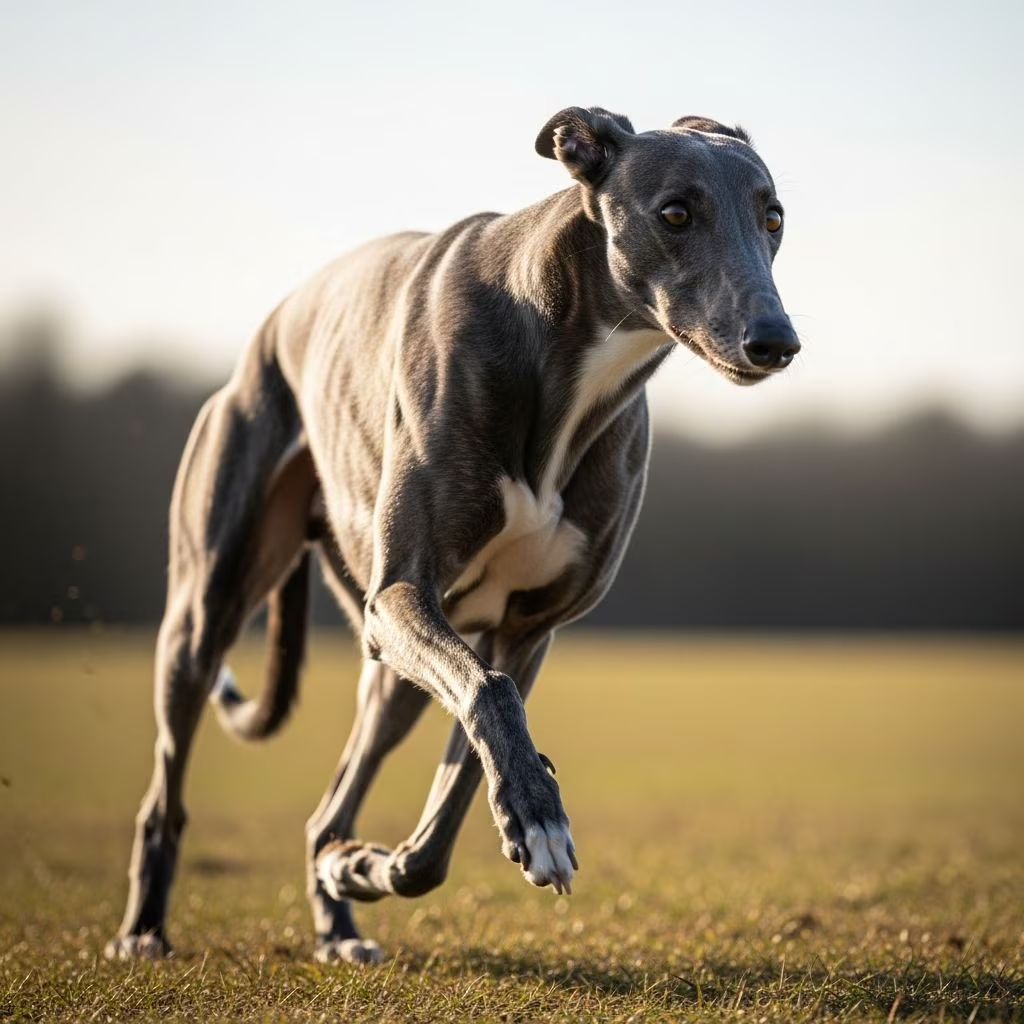
Greyhounds captivate dog lovers with their blend of athletic prowess and calm demeanor. Originating as ancient hunters, these sighthounds now thrive as devoted household pets, offering loyalty without demanding constant activity. This article delves into their origins, physical build, behavioral quirks, care essentials, and more, revealing why Greyhounds suit diverse lifestyles.
Ancient Roots and Modern Appeal
The Greyhound’s lineage traces back thousands of years, with evidence of similar dogs in ancient Egyptian art and Roman records. Bred primarily for coursing—chasing game by sight rather than scent—these dogs were prized by nobility for their elegance and efficiency in the field. Over centuries, selective breeding refined their speed and streamlined form, leading to their dominance in 20th-century dog racing.
Today, retired racers flood adoption programs, transitioning seamlessly from tracks to homes. Their noble history endows them with a regal bearing, yet they remain accessible to everyday owners. Organizations like the Greyhound Trust highlight their adaptability, noting how these dogs excel in apartments, suburban yards, or farms, provided the environment remains peaceful.
Signature Physical Features
Greyhounds possess a distinctive physique optimized for explosive velocity. Standing 27-30 inches at the shoulder and weighing 60-70 pounds, males tend larger than females. Their deep chest accommodates expansive lungs, while a tucked abdomen and long, muscular legs enable bursts up to 45 mph. A narrow skull, rose-shaped ears, and flexible skin over a lean frame complete the aerodynamic profile.
| Physical Trait | Description | Benefit |
|---|---|---|
| Deep Chest | Expansive ribcage for oxygen intake | Supports short sprints |
| Long Legs | Muscular yet slender | Maximizes stride length |
| Short Coat | Smooth, in various colors | Low shedding and grooming |
| Lean Build | Minimal body fat | Reduces drag, increases speed |
This build, however, renders them injury-prone. Their thin skin offers scant protection against abrasions, so soft bedding and supervised play prevent cuts or sores.
Calm Personality and Family Fit
Far from the fierce racers imagined, Greyhounds embody gentleness. Often dubbed \”40 mph couch potatoes,\” they spend 18-20 hours daily napping, conserving energy for brief exertions. Their even-tempered nature fosters deep bonds with owners, marked by affectionate lean-ins rather than exuberant jumps.
With children, Greyhounds show remarkable patience, retreating from roughhousing instead of reacting aggressively. Early training ensures mutual respect, as their size warrants gentle handling by kids. Around other dogs, their pack heritage promotes sociability, though aloofness with strangers underscores their independent streak.
- Gentle and Quiet: Rarely bark, ideal for apartments.
- Affectionate: Form strong family attachments.
- Independent: Comfortable alone for moderate periods.
- Sensitive: Prefer calm homes over chaotic ones.
Exercise: Quality Over Quantity
Contrary to their sprinter reputation, Greyhounds demand modest activity. Two 20-30 minute walks daily suffice, supplemented by occasional sprints in fenced areas. They lack endurance for long hikes, tiring after short bursts, which aligns perfectly with busy owners.
Mental stimulation via puzzle toys or training sessions keeps them engaged without physical strain. Avoid off-leash runs in unfenced spaces due to chase instincts triggered by small animals.
Everyday Care and Grooming Simplicity
Greyhounds prove low-maintenance marvels. Their short coat requires weekly brushing to manage medium shedding, with baths infrequent. Nail trims every 4-6 weeks prevent overgrowth, as their inactive lifestyle slows natural wear.
Diet should emphasize lean proteins for muscle maintenance, portion-controlled to avoid bloat risk from their deep chests. Dental care combats plaque buildup common in large breeds.
Health Insights and Longevity
Average lifespan spans 10-14 years, bolstered by genetic testing in modern breeding. Common concerns include osteosarcoma, hypothyroidism, and gastric torsion. Retired racers may carry track injuries, so pre-adoption vet checks are crucial.
Preventive measures: annual exams, flea/tick control, and soft surfaces to shield bony hips. Their sensitivity to cold stems from low body fat, necessitating coats in winter.
Prey Drive and Household Compatibility
Inherent hunting instincts spark pursuits of cats, squirrels, or rabbits. Not all Greyhounds chase cats—many coexist peacefully post-socialization—but introductions must be gradual and supervised. Fostering from rescues tests compatibility.
For multi-pet homes, prioritize sight hounds without small prey; their vision excels at detecting motion afar.
Training Tips for Success
Intelligent yet independent, Greyhounds respond to positive reinforcement over punishment. Short sessions teach basics quickly, though recall challenges their free-spirited nature. Consistency curbs selective listening.
- Use high-value treats for commands.
- Practice in low-distraction zones first.
- Socialize early for confidence.
- Employ harnesses for walks, avoiding neck strain.
Adopting a Greyhound: What to Expect
Rescue groups specialize in ex-racers, providing vaccinated, neutered dogs with behavior assessments. Adoption fees cover initial care, yielding grateful pets. Home preparation includes a spacious crate, elevated bowls, and fenced exercise space.
Expect initial shyness; most bloom within weeks, revealing playful sides through zoomies or toy chases.
Fun Trivia and Records
Greyhounds hold speed records, with the fastest clocked at 41.4 mph over 100 yards. Their flexibility allows spine-deep bends during runs. Contrary to myths, they aren’t hyper; surveys show them among calmest breeds.
Frequently Asked Questions
Are Greyhounds suitable for first-time owners?
Yes, their mellow vibe and simple needs make them forgiving for novices, provided prey drive is managed.
How much exercise do they really need?
Less than average: 30-60 minutes daily, favoring short bursts over marathons.
Do Greyhounds get along with cats?
Many do after testing, but their prey drive requires careful matching.
What’s their barking level?
Minimal; they’re quiet watchdogs who alert sparingly.
Are they cold-sensitive?
Highly, due to thin coats—dress them warmly in cooler climates.
References
- Greyhound Personality Traits — Towcester Racecourse & Leisure. 2023. https://towcester-racecourse.co.uk/greyhound-personality-traits/
- Greyhound Dog Breed and Characteristics — Showsight Magazine. 2024-01-15. https://showsightmagazine.com/dog-breeds/greyhound/
- All About Greyhounds — Greyhound Trust. 2025. https://www.greyhoundtrust.org.uk/home-a-greyhound/all-about-greyhounds
- Fast Facts About Greyhounds as Pets — ASPCA Pet Health Insurance. 2024-06-10. https://www.aspcapetinsurance.com/resources/greyhounds/
- Greyhound Dog Breed — Hill’s Pet Nutrition. 2025-03-22. https://www.hillspet.com/dog-care/dog-breeds/greyhound



