

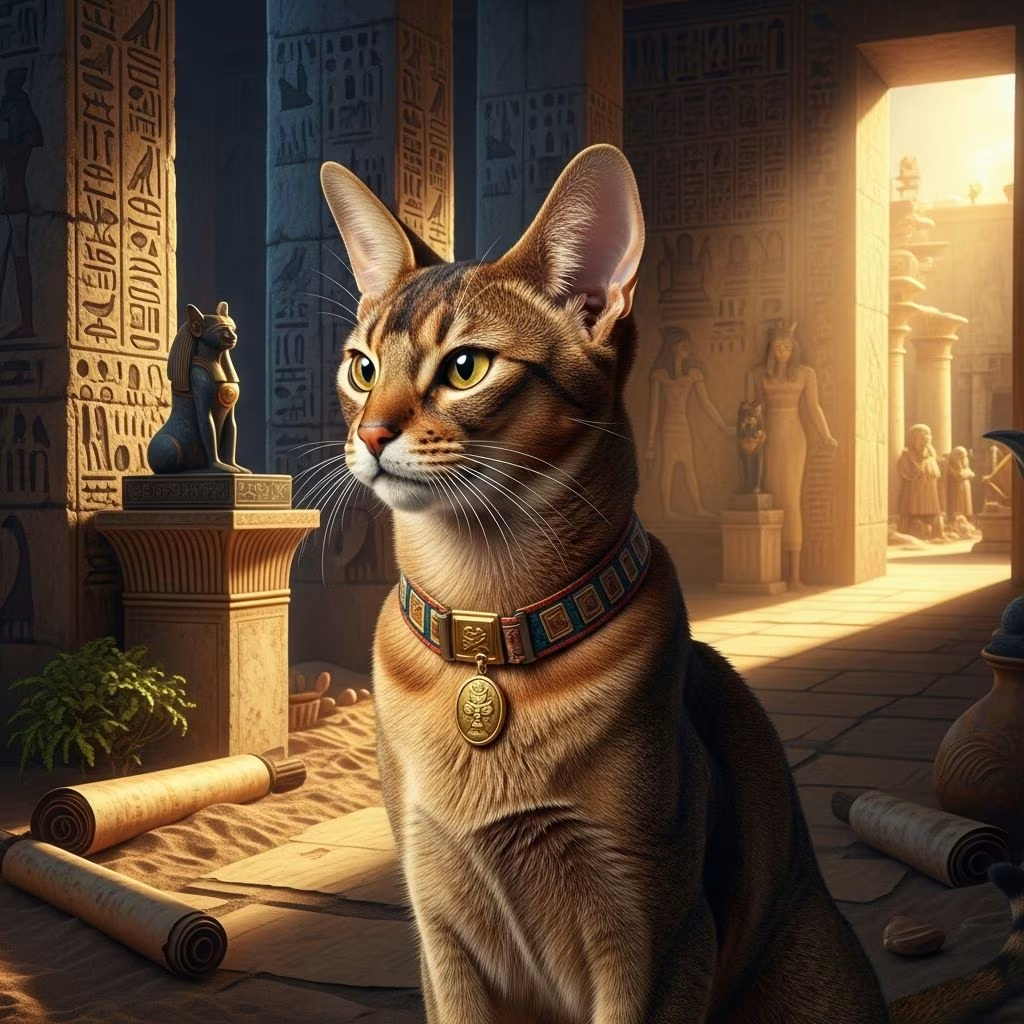
Cats held a sacred and multifaceted role in ancient Egyptian society, revered as protectors, deities, and beloved companions. From their early domestication to widespread mummification and divine associations, cats influenced religion, daily life, and even military strategy.
The Sacred Status of Cats in Ancient Egypt
In ancient Egypt, cats transcended their role as mere animals to become symbols of divinity and protection. Egyptians viewed them as embodiments of gods, particularly **Bastet**, the goddess of home, fertility, joy, and protection, often depicted with a cat or lioness head. This reverence stemmed from cats’ practical utility in controlling pests like rodents, snakes, and birds that threatened grain stores, earning them praise as early as the **First Dynasty**.
Cats were not distinguished between wild and domestic; all were called miu or miut, meaning ‘he or she who mews.’ Their dual nature—docile yet fierce—mirrored qualities associated with pharaohs and deities, making them potent symbols of power and nurturing. Skeletal remains found in burials from the 12th Dynasty confirm their inclusion among funerary goods, highlighting their protective function even in the afterlife, as noted in the Book of the Dead where a cat represents Ra and solar benefits.
Early History and Domestication of Cats
Evidence suggests cats were present in Egypt long before full domestication. A burial mound near Asyut, dated around 6,000 years ago, contained a man interred with a cat, indicating early significance, though possibly not fully domesticated. By the Fifth Dynasty (26th century BC), a wall painting at Saqqara depicts a collared cat, implying tamed African wildcats were kept in pharaonic quarters.
Domestication likely occurred around 2000 BCE, as Egyptians encouraged wild cats with food offerings like fish heads to patrol granaries. Genetic evidence traces most modern cats’ ancestry to Egyptian lineages, underscoring Egypt’s role in their global spread. Murals from the 11th Dynasty show cats hunting rodents or sitting under chairs during banquets, integrating them into elite daily life.
Cat Goddesses: Bastet, Mafdet, Sekhmet, and More
Several deities embodied feline traits. **Mafdet**, the earliest cat-headed goddess from the First Dynasty, protected pharaohs from snakes, scorpions, and evil, sometimes depicted with leopard or cheetah features. **Bastet** rose to prominence, especially during the 22nd Dynasty when Bubastis (Per-Bast) became a royal residence; her temple hosted massive festivals drawing hundreds of thousands, as described by Herodotus in the 5th century BC.
- Bastet: Protector of households, fertility, and joy; domestic cat incarnation warding off granivores.
- Sekhmet: Lion-headed warrior goddess, symbolizing pharaonic power and ferocity.
- Mut: Occasionally shown as a cat or with one.
- Isis: Later associated with Bastet during the Hellenistic period.
Cat-shaped amulets from the 11th Dynasty and New Kingdom decorations popularized feline imagery in everyday life.
Cats in Daily Life and Art
Cats appeared frequently in tomb murals, symbolizing order and divine protection. In Nebamun’s tomb, a cat with gold-inlaid eyes hunts birds, its glimmer evoking solar divinity. Scenes depict cats under chairs eating meat or fish, alongside geese or monkeys, or in hunting motifs confronting rodents.
Names like Miit were popular for girls, reflecting cultural affection. Pharaohs like Thutmose owned beloved pets; a limestone sarcophagus from circa 1350 BC housed one such cat. Cats’ independence and loyalty endeared them to families, serving as pest controllers in agrarian society.
Mummification and Votive Offerings
Cat mummification peaked from the Late Period onward. Beloved pets received elaborate burials, but mass votive offerings involved breeding and sacrificing kittens, often strangled before age two, as revealed by 1980 radiographs of British Museum mummies from Gizeh (600–200 BC).
Tens of thousands were interred at sites like Bubastis, Beni Hasan (80,000 in one tomb), Giza, Abydos, and Denderah. These served as gratitude offerings to Bastet, with finely wrapped, painted mummies in feline-shaped coffins exemplifying ritual devotion. During Hellenistic times (323–30 BC), systematic breeding met temple demands.
Laws and Penalties for Harming Cats
Cats enjoyed unparalleled legal protection. Killing one, even accidentally, warranted death, as reported by Diodorus Siculus. All cats fell under pharaonic guardianship, harming one equated to treason. This sanctity peaked with Bastet’s worship.
The Battle of Pelusium: Cats in Warfare
In 525 BC, Persian king Cambyses II exploited Egyptian reverence during the Battle of Pelusium. By releasing cats (and other sacred animals) before his troops, he demoralized Egyptians, who refused to fight lest they harm the felines, securing victory. Polyaenus documented this stratagem in the 2nd century AD.
The Festival of Bastet at Bubastis
Bubastis hosted Egypt’s grandest festival, per Herodotus. Pharaoh Osorkon II (9th century BC) expanded Bastet’s temple with a festival hall. Pilgrims numbering hundreds of thousands traveled by boat amid music and revelry, underscoring cats’ cultural centrality via Bastet.
Decline of Cat Worship
With the Ptolemaic dynasty and Roman conquest (after 30 BC), traditional worship waned. Greco-Roman syncretism merged Bastet with Artemis/Artemis-Diana, but cat veneration faded as Christianity spread, viewing it as pagan. Despite this, Egypt’s legacy shaped global cat domestication.
Frequently Asked Questions (FAQs)
Did ancient Egyptians worship cats as gods?
Yes, cats embodied deities like Bastet and Mafdet, seen as semi-divine protectors; every cat was revered, though not all Egyptologists agree they were fully divine.
Why were cats mummified in ancient Egypt?
Beloved pets received burials, while mass-mummified cats served as votive offerings to Bastet, bred and sacrificed for temple rituals.
Was killing a cat punishable by death?
Absolutely; even accidental killing merited execution, reflecting cats’ sacred status under pharaonic protection.
How did cats influence ancient Egyptian warfare?
Persians won Pelusium (525 BC) by deploying cats, preventing Egyptians from fighting to avoid harming them.
When were cats first domesticated in Egypt?
Around 2000 BCE, though evidence of valued cats dates to 4000 BCE; Egypt is the origin of most modern cat lineages.
References
- Cats in ancient Egypt — Wikipedia. 2023-10-15. https://en.wikipedia.org/wiki/Cats_in_ancient_Egypt
- “Divine Felines” Highlights the Importance of Cats in Ancient Egypt — Smithsonian Institution. 2014-04-18. https://www.si.edu/newsdesk/releases/divine-felines-highlights-importance-cats-ancient-egypt
- Cats in Ancient Egypt — Ancient Egypt Online. N/A. https://ancientegyptonline.co.uk/cat/
- 12 Amazing facts about cats in ancient Egypt — Historical Eve. 2020-08-12. https://historicaleve.com/facts-about-cats-in-ancient-egypt/



