Factors Shaping Toxicity in Animals
Explore how chemical properties, exposure methods, environmental conditions, and animal biology determine the impact of toxins on different species.
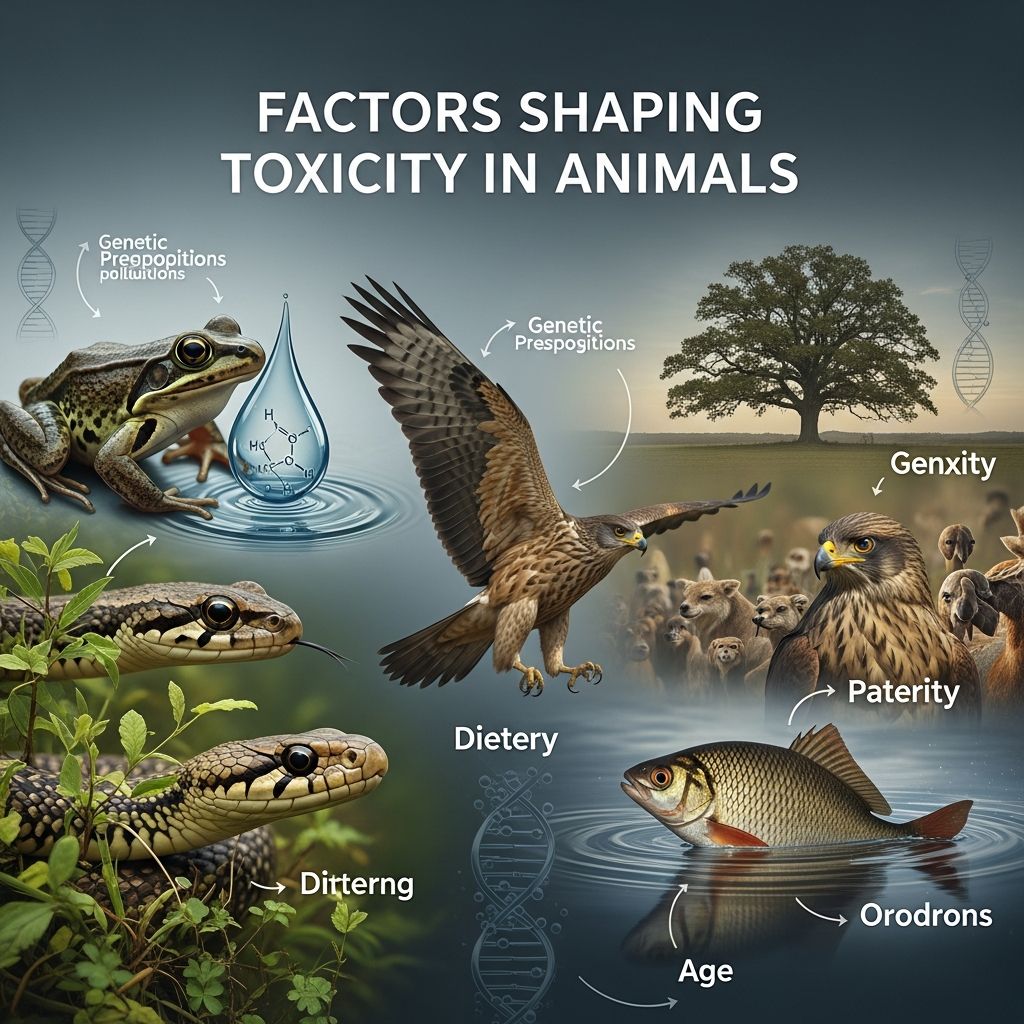
Toxicity in animals arises from complex interactions between harmful substances and living organisms. Understanding these dynamics is crucial for veterinarians, farmers, and wildlife managers to predict outcomes, implement preventive measures, and develop treatments. This article delves into the primary influencers of toxic agent activity, drawing from established toxicological principles.
Chemical Properties of Toxic Agents
The inherent characteristics of a toxic compound play a foundational role in its potency. Physico-chemical attributes like solubility, vapor pressure, and ionization dictate how a substance behaves in biological systems and environments.
- Solubility profiles: Water-soluble toxins readily dissolve in bodily fluids, facilitating absorption via ingestion or gills in aquatic species, whereas fat-soluble ones accumulate in tissues, prolonging exposure.
- Functional groups and ionization: These determine reactivity; for instance, ionized forms may cross membranes less efficiently, reducing uptake.
- Dose and concentration: Higher doses amplify effects, but toxicity often follows non-linear patterns due to saturation of metabolic pathways.
Biotransformation further modifies activity. Some xenobiotics activate upon metabolism; organophosphates with P=S bonds convert to potent P=O inhibitors of acetylcholinesterase in organisms, heightening neurotoxicity. Interactions between chemicals can synergize, antagonize, or additively alter outcomes—two substances might produce effects exceeding their individual impacts.
Exposure Dynamics and Pathways
How, when, and how long an animal encounters a toxin profoundly affects its severity. Exposure parameters vary widely across scenarios, from farm accidents to environmental contamination.
| Exposure Route | Absorption Efficiency | Examples in Animals |
|---|---|---|
| Intravenous | 100% immediate | Laboratory dosing; rapid systemic spread |
| Oral | Variable (20-90%) | Ingestion of contaminated feed; slower onset |
| Dermal | Low to moderate | Pesticide contact in livestock |
| Inhalation | High in respiratory exposure | Aerial toxins in birds or confined spaces |
Duration matters: acute short bursts differ from chronic low-level exposures, where cumulative damage builds. Systems like static (unchanging concentration) versus flow-through (renewed medium) in aquatic tests influence bioavailability—flow systems dilute toxins, potentially underestimating risks.
Environmental Influences on Toxic Responses
Surrounding conditions modulate toxin availability and organism resilience. In natural settings, these abiotic elements create variable toxicity profiles.
- Temperature: Warmer conditions accelerate metabolic rates and chemical reactions, often intensifying uptake; fish in heated waters show heightened sensitivity to pollutants.
- pH and oxygen levels: Acidic waters enhance metal ionization, boosting toxicity, while low oxygen stresses aquatic life, impairing detoxification.
- Salinity and hardness: These affect ionoregulation in fish, altering heavy metal binding and absorption.
Humidity impacts dermal absorption in terrestrial animals, and seasonal shifts influence fat storage, trapping lipophilic toxins. Circadian rhythms also play a role; nocturnal peaks in certain enzyme activities can amplify nighttime exposures.
Biological Variations Across Species and Individuals
Animals exhibit diverse responses due to genetic, physiological, and life-stage differences. Interspecies gaps are stark—cats falter against acetaminophen due to deficient glucuronyl transferase, unlike dogs.
Intraspecies factors include:
- Age and size: Neonates possess immature livers, slowing xenobiotic clearance; smaller bodies concentrate doses higher per unit weight.
- Sex and hormones: Males may metabolize certain pesticides faster, as seen with aldrin to dieldrin conversion in rats.
- Health and nutrition: Malnutrition impairs enzyme systems like cytochrome P450, elevating toxicity; stress exacerbates vulnerability.
Genetic variability affects receptors and detox pathways. Ruminants like cattle process gut bacteria-mediated detox differently, balancing prolonged exposure against microbial breakdown.
Metabolic Processes and Detoxification Mechanisms
Once absorbed, toxins undergo distribution, metabolism, and excretion (ADME). Species-specific enzymes dictate outcomes—guinea pigs resist bromethalin better due to sluggish conversion to its toxic metabolite.
Key processes:
- Phase I metabolism: Oxidation introduces reactive groups, sometimes activating pro-toxins.
- Phase II conjugation: Links toxins to excretable forms; deficiencies, as in felines, prolong half-lives.
- Excretion routes: Kidneys, bile, or lungs eliminate residues, influenced by hydration and organ function.
Acclimation builds tolerance; trout exposed sublethally to arsenic raise LC50 thresholds via induced enzymes. Nutritional status ties in—vitamin shortages hobble P450 activity.
Practical Implications for Veterinary Practice
Recognizing these factors guides diagnostics and interventions. For instance, empty stomachs hasten oral toxin absorption, prompting rapid emetics where possible—though ineffective in horses or rabbits.
Common intoxicants like rodenticides, insecticides, and pharmaceuticals vary by species; companion animals face household hazards, while livestock encounter agrochemicals. Risk assessments must extrapolate cautiously across species, prioritizing comparative data.
Strategies for Mitigation and Prevention
Proactive measures reduce incidents:
- Secure storage of chemicals.
- Species-tailored formulations for pesticides.
- Environmental monitoring in aquaculture and farms.
- Nutritional optimization to bolster detox capacity.
Research into biomarkers enhances early detection, tracking exposure via blood or tissue analysis.
FAQs
Why do cats suffer more from certain toxins than dogs?
Cats lack key glucuronyl transferase enzymes, impairing conjugation of drugs like acetaminophen.
How does temperature alter toxin potency in fish?
Higher temperatures boost metabolism and uptake, stressing respiratory systems and amplifying effects.
Can nutrition influence poisoning outcomes?
Yes, deficiencies weaken metabolic enzymes, increasing susceptibility.
What role does exposure duration play?
Chronic low doses accumulate damage differently from acute high ones, often targeting specific organs over time.
Are there universal antidotes for toxins?
No; treatments target specific mechanisms, like chelators for metals or supportive care for organophosphates.
References
- Omkar Zool Factors Affecting Toxicity — Lucknow University. 2020-04-06. https://www.lkouniv.ac.in/site/writereaddata/siteContent/202004061923052084omkar_zool_factors_affecting_toxicity.pdf
- Factors Affecting the Activity of Poisons — Paws Universe. N/A. https://pawsuniverse.com/self-care/factors-affecting-the-activity-of-poisons/
- Editorial: Animal Poisoning and Biomarkers of Toxicity — PMC (NIH). 2022. https://pmc.ncbi.nlm.nih.gov/articles/PMC9116719/
- ARCOPOL Factors that Affect Toxicity — CIIMAR University of Porto. 2016. https://www.ciimar.up.pt/Arcopol2_2016/page_12.htm
- Absorption of Toxic Agents in Animals — MSD Veterinary Manual. N/A. https://www.msdvetmanual.com/toxicology/toxicology-introduction/absorption-distribution-metabolism-and-excretion-of-toxic-agents-in-animals
- Factors Influencing Toxicity — Fiveable Toxicology Notes. N/A. https://fiveable.me/toxicology/unit-1/factors-influencing-toxicity/study-guide/VHOkoIEMcsAT5Q2J
Similar Articles







Read full bio of medha deb