
Factors Shaping Bile Production and Movement in Animals
Explore the intricate mechanisms controlling bile synthesis, secretion, and circulation in animal livers for optimal digestion and health.
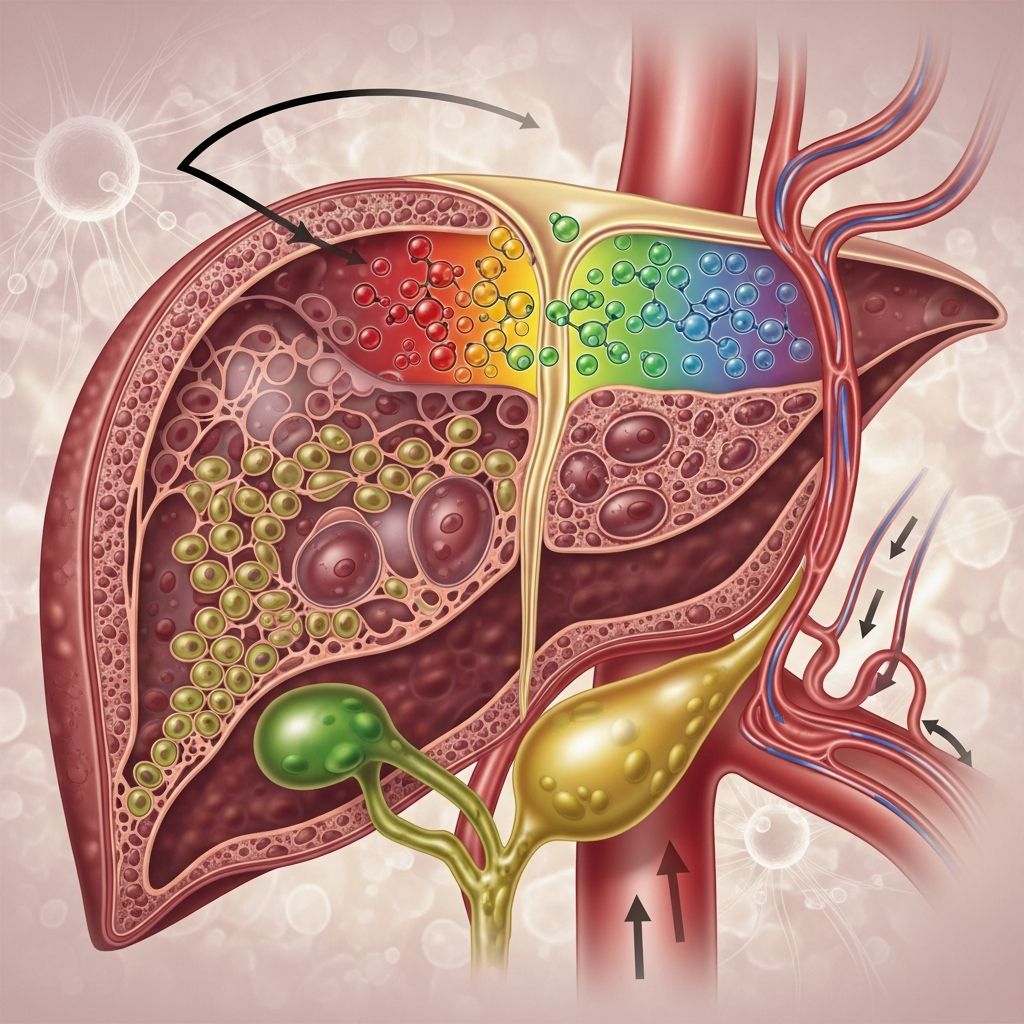
Bile production and its subsequent flow through the biliary system represent critical liver functions in animals, enabling fat digestion, nutrient absorption, and waste elimination. These processes are modulated by a range of physiological variables, from hormonal signals to structural adaptations in the liver and gallbladder.
The Liver’s Central Role in Bile Synthesis
Hepatocytes, the primary functional cells of the liver, initiate bile formation by synthesizing bile acids from cholesterol through enzymatic pathways. This
bile acid synthesis
primarily involves cytochrome P450 enzymes like CYP7A1, which converts cholesterol into primary bile acids such as cholic acid and chenodeoxycholic acid. These acids are then conjugated with glycine or taurine—predominantly taurine in carnivores like cats—to enhance solubility and reduce toxicity before secretion into bile canaliculi.The liver’s lobular architecture facilitates this process, with blood from the portal vein delivering substrates while bile flows countercurrently through canaliculi. This separation ensures efficient extraction and modification of nutrients and toxins. In animals with gallbladders, such as dogs and horses, bile is stored and concentrated, whereas species like rats and horses lack this organ and rely on continuous secretion.
Mechanisms Driving Bile Secretion
Bile secretion occurs in two main phases: canalicular and ductular. At the canalicular level, active transport of organic solutes like glutathione (GSH) and bile acids via pumps such as the bile salt export pump (BSEP) creates an osmotic gradient, drawing water and electrolytes into the bile. This
bile acid-dependent flow
is the dominant component, where non-micelle-forming bile salts like dehydrocholate exert the strongest osmotic pull, achieving bile acid concentrations 100- to 1,000-fold higher than in plasma.Ductular secretion adds bicarbonate-rich fluid, modulated by secretin, which further modifies bile composition. Lipid extrusion forms mixed micelles containing phospholipids, cholesterol, and bile acids, protecting canalicular membranes from detergent-like damage by bile salts. These micelles are essential for later intestinal functions.
Regulation of Bile Acid Pool and Enterohepatic Circulation
The bile acid pool size is tightly regulated through enterohepatic circulation, where 90-95% of secreted bile acids are reabsorbed in the ileum and returned to the liver via the portal vein. This recycling occurs 10-12 times daily, minimizing de novo synthesis needs. Feedback inhibition via FXR receptors suppresses CYP7A1 when hepatic bile acid levels rise, preventing overproduction.
- Primary bile acids: Synthesized directly from cholesterol (cholic acid, chenodeoxycholic acid).
- Secondary bile acids: Formed by gut bacteria via deconjugation and dehydroxylation (deoxycholic acid, lithocholic acid).
- Conjugation: Enhances amphipathicity for micelle formation and intestinal action.
In disease states like chronic liver conditions, impaired flow leads to compensatory overproduction, elevating fecal primary bile acids.
Influence of Hormones and Neural Factors
Hormonal signals synchronize bile release with digestion. Cholecystokinin (CCK), released post-meal, contracts the gallbladder and relaxes the sphincter of Oddi, propelling bile into the duodenum. Secretin stimulates bicarbonate secretion for pH neutralization, while gastrin and insulin modulate synthesis rates.
Neural inputs via the vagus nerve enhance CCK effects, ensuring meal-timed delivery. In fasting states, gallbladder tone maintains bile storage, with hydration status affecting mucin viscosity—dehydration increases tenacity, potentially impeding flow.
Species-Specific Adaptations in Bile Handling
| Species | Gallbladder Presence | Main Conjugation | Bile Flow Characteristics |
|---|---|---|---|
| Dogs, Cats | Present | Taurine (cats), Glycine/Taurine (dogs) | Stored, meal-induced release |
| Horses | Absent | Glycine | Continuous secretion |
| Rats | Absent | Taurine | High-volume, low-concentration |
These variations reflect dietary habits: carnivores emphasize fat emulsification, herbivores prioritize continuous flow for fibrous diets. Cats’ taurine conjugation underscores dietary needs, linking to clinical deficiencies.
Bile’s Multifaceted Contributions to Digestion
Bile acids emulsify dietary fats into micelles, amplifying lipase access and enabling absorption of lipids and fat-soluble vitamins (A, D, E, K). Without adequate bile, vitamin K malabsorption impairs clotting factor synthesis. Additionally, bile excretes lipophilic wastes like bilirubin and heavy metals, bypassing renal limits for compounds over 300-500 daltons.
Antimicrobial properties from bile salts and IgA shape the gut microbiome, while cholesterol homeostasis is maintained via biliary excretion.
Disruptions in Bile Dynamics and Clinical Implications
Cholestasis, or impaired bile flow, elevates serum bile acids, detectable via stimulation tests where post-prandial spikes indicate dysfunction. In copper-associated hepatopathy in dogs, excess storage overwhelms detoxification. Fecal bile acid profiling reveals synthesis dysregulation in chronic disease.
Therapeutics like ursodeoxycholic acid (UDCA) improve flow by displacing toxic acids and enhancing secretion.
Diagnostic Approaches to Assess Bile Function
- Bile acid test: Measures fasting and post-meal levels; elevations suggest portosystemic shunts or hepatocyte loss.
- Imaging: Ultrasound evaluates gallbladder distension and duct patency.
- Liver enzymes: ALP and GGT indicate biliary origin if elevated with normal ALT.
FAQs
What triggers bile release in animals with gallbladders?
Cholecystokinin (CCK) from the duodenum post-meal contracts the gallbladder, coordinated with sphincter of Oddi relaxation.
How does enterohepatic circulation conserve bile acids?
Ileal active transport reabsorbs 95% of bile acids, returning them to the liver for reuse, limiting daily losses to 0.5g.
Why do cats prefer taurine conjugation?
Taurine conjugation increases bile acid solubility and is essential due to limited glycine availability in carnivorous diets.
What happens in cholestasis?
Bile accumulation causes hepatocyte damage, pruritus, and fat malabsorption; serum bile acids rise due to spillover.
Can diet influence bile production?
High-fat meals stimulate synthesis via FXR signaling, while fiber modulates secondary bile acid formation.
References
- Overview of Liver Structure and Function in Animals — Merck Veterinary Manual. 2023. https://www.merckvetmanual.com/digestive-system/liver-structure-and-function/overview-of-liver-structure-and-function-in-animals
- Biliary Tree (Biliary Tract): Intrahepatic and Extrahepatic Components in Animals — Merck Veterinary Manual. 2023. https://www.merckvetmanual.com/digestive-system/liver-structure-and-function/biliary-tree-biliary-tract-intrahepatic-and-extrahepatic-components-in-animals
- A Brief Guide to Liver Function in Pets — My Pet Nutritionist. 2023. https://mypetnutritionist.com/post/a-brief-guide-to-liver-function-in-pets/
- Gallbladder, Cystic Duct, and Common Bile Duct in Animals — MSD Veterinary Manual. 2023. https://www.msdvetmanual.com/digestive-system/liver-structure-and-function/gallbladder-cystic-duct-and-common-bile-duct-in-animals
- Bile Acids — eClinpath. 2023. https://eclinpath.com/chemistry/liver/liver-function-tests/bile-acids/
- Fecal Bile Acids in Canine Chronic Liver Disease — PMC (NIH). 2024-10-15. https://pmc.ncbi.nlm.nih.gov/articles/PMC11545594/
Similar Articles








Read full bio of medha deb


