

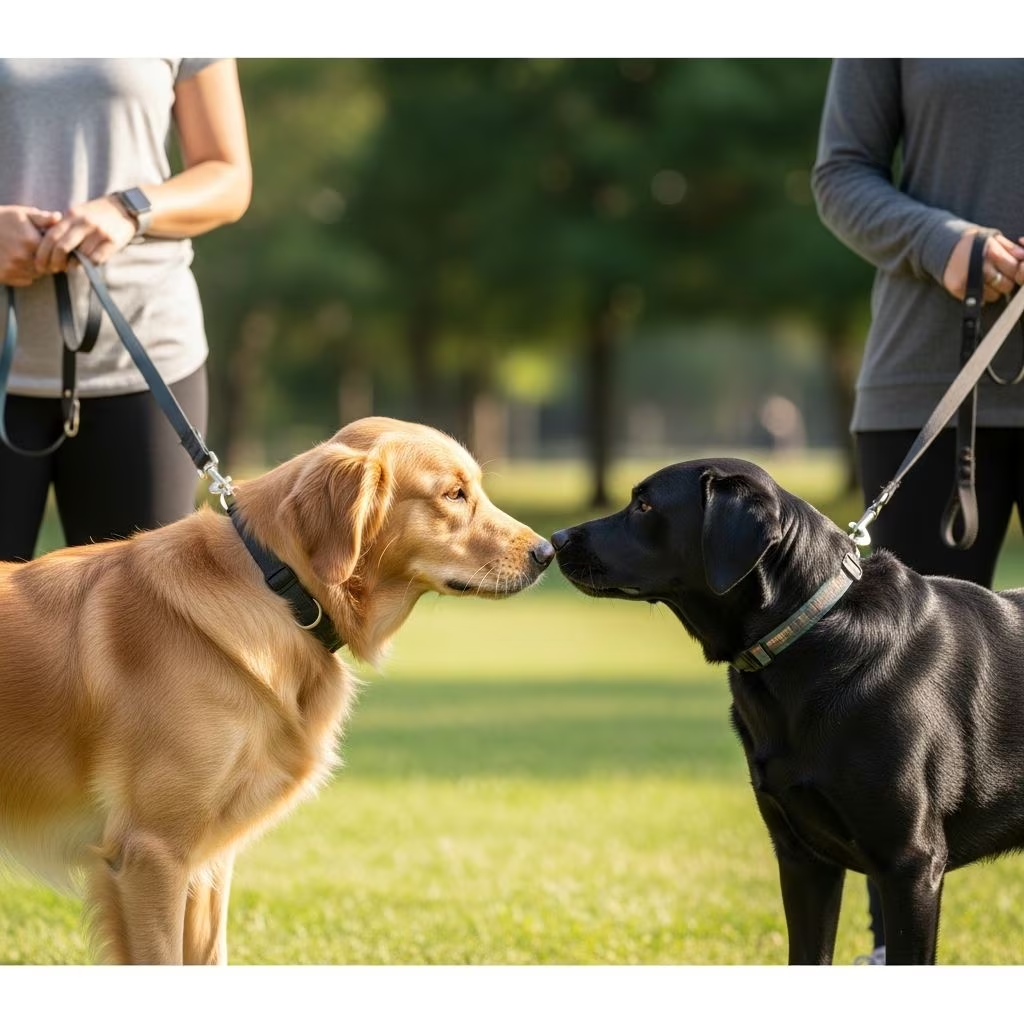
Face-to-Face Leash Meetings: A Complete Guide to Safe Dog Introductions
When two dogs meet while on leash, the experience can be either positive or problematic depending on how the interaction is managed. Face-to-face leash meetings are common occurrences during daily walks, yet many dog owners lack the knowledge to facilitate these encounters safely and effectively. Understanding the dynamics of on-leash greetings, recognizing potential warning signs, and implementing proven techniques can significantly improve outcomes and help prevent negative experiences that may lead to long-term behavioral issues.
Why On-Leash Meetings Present Unique Challenges
On-leash dog greetings differ fundamentally from off-leash interactions due to several inherent constraints. When dogs are restrained by a leash, they experience heightened emotional arousal and anticipation as they struggle against their restraint, eager to gather information about the approaching dog. This heightened state of arousal can cause dogs to perceive normal greeting behaviors as threatening or aggressive, even in typically friendly dogs.
The physical structure of on-leash meetings also creates problems. Dogs on leash typically approach each other head-on with direct eye contact, which is more confrontational than the natural curved, indirect approach dogs use when meeting off-leash. Additionally, the leash restricts a dog’s ability to move freely, preventing them from retreating if they feel nervous or uncomfortable, which may cause frustration or anxiety.
Tension in the leash directly translates to tension in the dog’s body, creating a chain reaction that manifests in the greeting itself. This tension can trigger frustration that dogs often express through aggression or cause them to approach too aggressively, which can be offensive to the other dog. Conversely, a tight leash can make a dog feel defensive, trapped, or cornered, further increasing the likelihood of conflict.
The Critical Importance of Maintaining a Slack Leash
Perhaps the single most important factor in successful on-leash dog meetings is keeping the leash completely slack throughout the entire process. This cannot be overstated: a loose leash is far more important than most dog owners realize.
A slack leash must be maintained not only during the greeting itself but also before the dogs are allowed to meet. The moment tension appears in the leash, it creates tension in the dog’s body, which immediately impacts the quality of the greeting.
Before attempting on-leash greetings, your dog must be familiar with leash pressure as a means of communication. Dogs need to be trained to understand leash signals and conditioned to accept leash corrections in an emotionally positive way. Without this foundation, attempting to redirect or pull your dog away during an interaction—when the dog is not ready to leave and not trained to yield to leash pressure—could trigger an aggressive reaction.
Managing a slack leash requires conscious effort and body awareness from the handler. You must consciously relax your own body, breathe normally, and avoid standing rigidly, as your tension unconsciously communicates stress and uncertainty to your dog.
Preparation: Essential Pre-Meeting Strategies
Successful face-to-face leash meetings begin long before the dogs encounter each other. Proper preparation includes:
- Leash Training Basics: Ensure your dog has solid leash training, understands how to walk on a loose leash, and responds appropriately to gentle leash corrections without tension or conflict.
- Distance Management: Approach the other dog gradually, maintaining a safe distance that allows both dogs to remain calm. Starting 6-8 feet apart gives both parties space to acclimate without overwhelming arousal.
- Body Language Awareness: Observe both dogs from a distance before allowing them to greet. Watch for signs of stress, anxiety, or excessive excitement that might indicate a greeting should not proceed.
- Environmental Considerations: Choose locations that provide space and escape routes. Open areas are preferable to confined spaces, as dogs need room to move and maneuver.
- Handler Emotional State: Dogs pick up on human anxiety and tension. Approach the interaction with calm confidence, as your emotional state directly influences your dog’s response.
The Three-Second Rule: Duration and Timing
Dogs naturally engage in brief greetings, typically lasting only a few seconds. Following this natural instinct, initial on-leash greetings should be limited to approximately 3-5 seconds. This brief duration allows dogs to gather necessary information while minimizing opportunities for tension to build.
After the initial three-second greeting, create a break. Step back, praise your dog, and allow both parties to take a breather before attempting a second greeting, which can be slightly longer if the first interaction proceeded smoothly. This structure respects dogs’ natural greeting patterns and prevents greetings from becoming prolonged interactions that increase conflict potential.
Keeping meetings short and sweet is one of the best ways to ensure proper dog greetings. Dogs are designed for quick, efficient exchanges of information, not extended face-to-face interactions.
Red Flags: Recognizing Warning Signs During Meetings
Careful observation of both dogs during a meeting is essential. Several warning signs indicate that an interaction is becoming problematic and should be interrupted immediately:
- Body Tension: Any tension anywhere in a dog’s body indicates discomfort or stress.
- Facial Expressions: Lips pulling back, eyes showing whites, or other expressions indicating anxiety, fear, or negative emotions warrant caution.
- Tail Position: A slowly twitching tail tip, stiff tail, or tucked tail all signal stress or anxiety.
- Paw or Head Over: When one dog lays their head or paw over another dog’s shoulders, this is considered pushy and inappropriate.
- Intense Staring: Direct, unbroken eye contact is considered threatening and goes beyond rude into aggressive territory.
- Vocalizations: Yelping or other high-pitched sounds usually indicate a dog is upset and not enjoying the interaction.
- Physical Escalation: Leaping, muzzle punching, growling, or biting are serious warning signs that require immediate intervention.
- Unequal Sniffing: If one dog sniffs but refuses to let the other dog sniff back, tension may escalate into trouble.
How to Properly Interrupt and End an Interaction
If warning signs appear, you need to interrupt the interaction quickly and correctly. If your dog doesn’t respond immediately to a verbal cue, add a light leash pop—a gentle tug and immediate release—to interrupt the interaction. This should be done with minimal tension and followed immediately by praise.
Do not allow your dog to lean into the leash at any point. The moment pressure appears on the leash, relax it immediately. This teaches your dog that leaning or pulling produces no reward while relaxation does.
One critical mistake many handlers make is allowing the greeting to extend too long and then abruptly pulling the dog away. Tugging on the leash and dragging your dog away can trigger a defensive or aggressive response, especially if the greeting contained any underlying tension. The sudden pulling may cause one or both dogs to snap or snarl at each other.
Always end interactions calmly by creating distance gradually rather than through forceful pulling.
Special Circumstances: When On-Leash Greetings Work Best
While many trainers recommend avoiding on-leash greetings altogether, certain circumstances make them more likely to succeed:
- Familiar Dogs: When dogs already know each other and enjoy spending time together, higher arousal levels and tighter leashes are usually less concerning because they are not coupled with uncertainty about an unfamiliar dog.
- Acclimated Dogs: When dogs have spent time in close proximity for a period—such as during a parallel walk, group class, or at nearby outdoor tables—and have already acclimated to each other from a distance, an on-leash greeting is usually relaxed and pleasant.
- Low-Stress Environments: Meetings that occur after dogs have investigated each other from a distance typically have low arousal levels, making structured greetings more successful.
A Balanced Approach to On-Leash Meetings
Rather than avoiding on-leash meetings entirely, a balanced approach teaches dogs both how to greet properly while on leash and how to walk by without greeting. This flexibility allows dogs to engage in appropriate social interactions while maintaining composure in situations where greetings are not desired.
Dogs that are never allowed to meet on-leash often become the most reactive or distracted by other dogs, showing heightened frustration and poor engagement during walks. Conversely, dogs trained to navigate on-leash greetings successfully develop better social skills and emotional regulation.
The key is consistency and proper technique rather than complete avoidance or unrestricted meetings.
Frequently Asked Questions
Q: Can a tight leash cause conflict between dogs?
A: Yes, a tight leash can definitely cause conflict. However, a loose leash should not create conflict. The solution is returning to leash training basics, learning proper leash techniques, and conditioning your dog to accept leash pressure without conflict in an emotionally positive way.
Q: How long should an on-leash dog greeting last?
A: Initial on-leash greetings should last approximately 3-5 seconds. After this brief period, create a break where you step back and praise your dog before allowing a second, potentially longer greeting.
Q: What’s the best distance to approach another dog?
A: Stop 6-8 feet apart initially, then cheerfully say “Go say hi!” while releasing slack on your leash and pointing toward the other dog. This distance allows both dogs to remain calmer and provides space for natural approach behaviors.
Q: Should I ask my dog to sit before greeting?
A: It is not recommended that you ask your dog to sit before approaching another dog. While this may seem helpful for calming your dog, it actually burns through their limited reserves of self-control and often causes them to launch excitedly out of the sit once released. For anxious dogs, sitting can make them feel trapped and vulnerable.
Q: What should I do if I see warning signs during a greeting?
A: If your dog doesn’t respond immediately to a verbal cue, add a light leash pop—a gentle tug and immediate release—to interrupt. Never allow the dog to lean into the leash; any pressure must be relaxed immediately, followed by praise. End the interaction calmly rather than pulling the dog away forcefully.
Q: Are off-leash meetings better than on-leash meetings?
A: Ideally, dog meetings should take place off-leash in open spaces that allow dogs room to move and escape if needed. When dogs feel they have freedom and are not trapped, greetings are more likely to go well. If off-leash is impossible, keeping leashes loose is the next best option.
Q: Can single traumatic meetings cause long-term reactivity?
A: While a single traumatic on-leash greeting event can lead to negative responses, more often what causes reactivity is a gradual build-up of dozens of mildly-to-moderately stressful, frustrating, or scary interactions over time. This is why proper technique from the start is so important.
References
- On-Leash Greetings with Other Dogs: Yes or No? — Instinct Dog Training. https://www.instinctdogtraining.com/on-leash-greetings-yes-or-no/
- Letting Dogs Meet: The Three Second Rule – Part 2 — Thriving Canine. https://www.thrivingcanine.com/blog/letting-dogs-meet-three-second-rule-part-2/
- How to Properly Introduce Two Dogs — Kinship. https://www.kinship.com/dog-behavior/guide-dog-dog-greetings
- Dog On Leash Greetings — Whole Dog Journal. https://www.whole-dog-journal.com/training/dog-on-leash-greetings/



