

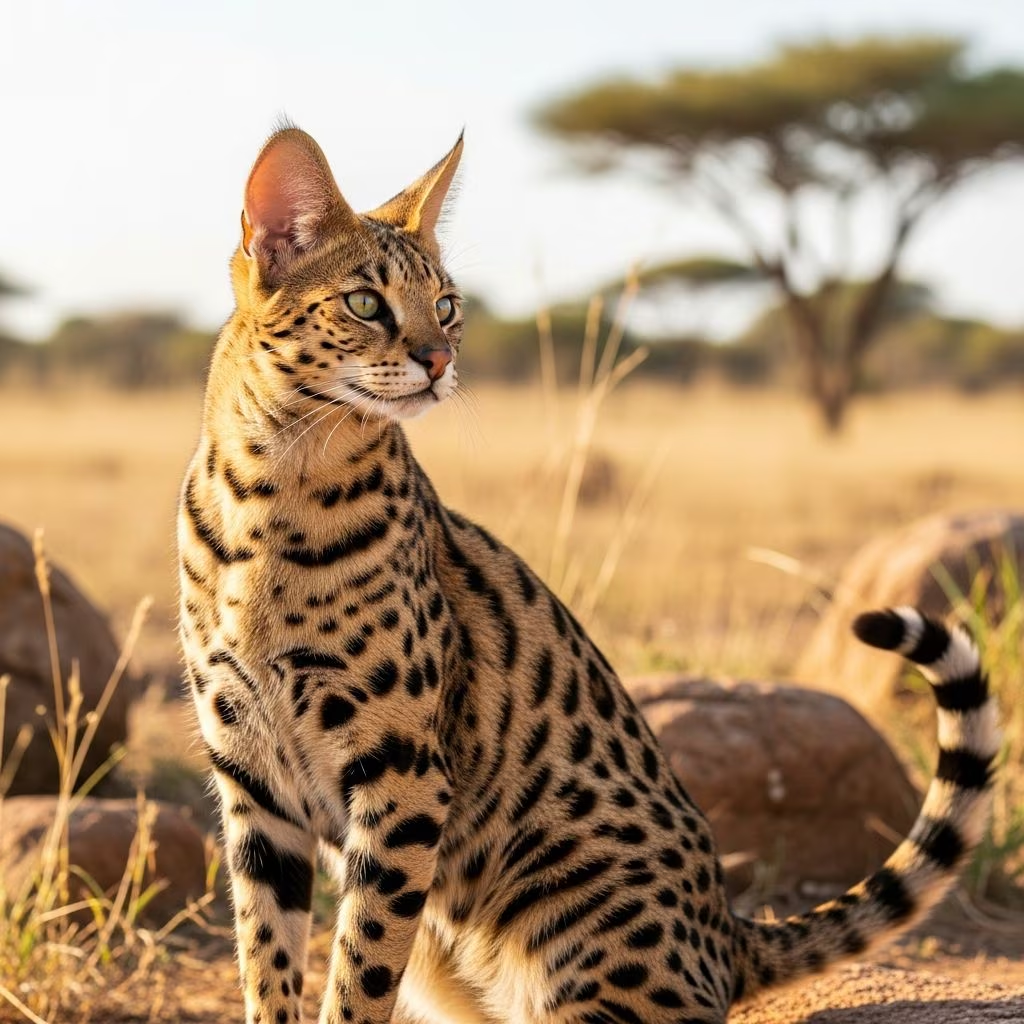
The F6 Savannah cat represents a refined stage in the development of this remarkable hybrid breed, blending the wild elegance of the African Serval with the adaptability of domestic cats. At the sixth filial generation (F6), these cats retain striking Serval-like features while exhibiting more predictable domestic behaviors, making them suitable for experienced pet owners seeking an extraordinary companion.
Origins and Evolution of the Savannah Breed
The Savannah cat’s journey began in 1986 with the birth of ‘Miracle,’ the first known hybrid kitten from a domestic Siamese crossed with a 35-pound African Serval named Ernie. This serendipitous pairing, facilitated by breeder Judee Frank, produced a kitten with bold black spots, long legs, tall ears featuring ocelli, and a hooded tail—hallmarks of the Serval that persist in later generations like the F6.
Pioneers such as Suzi Wood Mustacio, Joyce Sroufe, and Patrick Kelley advanced the breed. Sroufe, leveraging her Bengal breeding expertise, produced early fertile males and navigated fertility challenges by outcrossing with breeds like Egyptian Maus and Oriental Shorthairs. By 1996, Kelley and Sroufe submitted the first breed standard to The International Cat Association (TICA), marking official recognition progress. European breeder Margitta Graeves of Kiwanga Savannahs further elevated type through selective breeding.
Filial generations are denoted by ‘F’ followed by a number, where F1 is the direct Serval x domestic cross (up to 75% Serval). Each subsequent generation dilutes wild genetics: F2 (25-50%), down to F6 (approximately 6-8% Serval ancestry). F6 cats result from repeated domestic backcrossing, stabilizing traits while minimizing unpredictability.
Physical Characteristics of the F6 Savannah
F6 Savannahs embody a sleek, athletic build reminiscent of their wild roots. They stand tall on disproportionately long legs, often reaching 15-17 inches at the shoulder, with males weighing 12-20 pounds and females 9-14 pounds—larger than most domestics but smaller than F1s. Their bodies are long and lean, with a graceful neck and rounded abdomen.
| Feature | F6 Savannah Traits | Comparison to Serval |
|---|---|---|
| Height | 15-17 inches | Similar proportions, less extreme |
| Weight | 9-20 lbs | Lighter than Serval’s 20-40 lbs |
| Legs | Long, muscular | Retains Serval’s elevation |
| Ears | Tall, wide-based with ocelli | Moderately sized vs. Serval’s larger |
Coat patterns feature bold, marble or rosette spots on a tawny, silver, or brown background, with a short, plush double coat that’s easy to maintain. Tails are medium-short and thicker at the base. Eyes are large, almond-shaped, and vivid green, gold, or copper.
Temperament and Behavioral Traits
F6 Savannahs are intelligent, high-energy dynamos with dog-like loyalty. They form deep bonds, often following owners room-to-room, and thrive on interaction. Their curiosity drives them to explore high perches and hidden spots, while strong hunting instincts make them adept at fetch and puzzle toys.
- Playful Energy: Require 30-60 minutes daily of vigorous play; love water, leashes, and agility training.
- Social Nature: Affectionate with family but wary of strangers; good with supervised children and select dogs.
- Vocal Quirks: Chirp, trill, and meow conversationally, echoing Serval sounds.
- Trainability: Respond to clicker training, litter box use, and basic commands exceptionally well.
Unlike earlier generations, F6s display balanced temperaments, though early socialization is crucial to curb skittishness or reserve.
Care Essentials for F6 Savannah Cats
Environment and Enrichment
These cats demand spacious homes with vertical space: cat trees, shelves, and window perches mimic savanna terrains. Outdoor enclosures or harness walks prevent boredom-induced mischief like door scratching.
Nutrition and Feeding
High-protein diets (35-50% protein) support their lean muscle mass. Feed raw, freeze-dried, or premium kibble mimicking wild prey; portion control counters large appetites. Fresh water fountains appeal to their water-loving nature.
Grooming Routine
Weekly brushing distributes oils and reduces shedding; bathe rarely as they self-groom. Trim nails biweekly, clean ears monthly, and brush teeth 2-3 times weekly to prevent issues.
Health Considerations and Lifespan
F6 Savannahs enjoy robust health from hybrid vigor, with lifespans of 12-20 years. Common concerns include:
- Idiopathic epilepsy (seizures in young cats).
- Sensitivity to anesthesia due to low body fat.
- Occasional digestive sensitivities from wild ancestry.
Annual vet checkups, vaccinations, and parasite prevention are vital. Spay/neuter by 6 months unless breeding ethically.
Legal Status and Ownership Challenges
Laws vary: some U.S. states ban F1-F3 but allow F4+, while others require permits regardless of generation. Always verify local exotic pet regulations. F6s are TICA-registerable as domestic cats.
Challenges include high activity levels unsuitable for apartments without enrichment, potential allergies from shedding, and costs ($1,500-$5,000 purchase, plus premium supplies).
Training Tips and Daily Routines
Establish routines: morning play, puzzle feeders for meals, evening cuddles. Use positive reinforcement for leash training and recall. Interactive toys like laser pointers and treat balls keep minds sharp.
Pros and Cons of F6 Savannah Ownership
| Pros | Cons |
|---|---|
| Exotic, stunning appearance | High energy demands space/time |
| Intelligent, trainable | Potential legal hurdles |
| Loyal, affectionate bonds | Expensive initial/ongoing costs |
| Long lifespan, healthy | Not always kid/stranger-friendly |
Frequently Asked Questions (FAQs)
Are F6 Savannah cats good for first-time owners?
No, their energy and needs suit experienced owners committed to enrichment.
How big do F6 Savannahs get?
Up to 17 inches tall, 20 pounds, with long legs giving a larger presence.
Do F6 Savannahs like water?
Yes, many enjoy splashing in baths or pools, inherited from Servals.
Can F6 Savannahs be left alone all day?
Not ideally; they need companionship or extensive toys to avoid destructive behavior.
What’s the difference between F5 and F6 Savannahs?
F6 has slightly less Serval (6-8%) for milder temperament and smaller size vs. F5.
Choosing Your F6 Savannah Kitten
Select reputable TICA-registered breeders emphasizing health testing and socialization. Visit parents, review pedigrees, and prioritize kittens with balanced temperaments. Ethical breeding preserves the breed’s vitality.
References
- A Timeline of the Savannah Cat Breed’s Development from 1986 to Present Day — Savannahgans.com. 2023. https://www.savannahgans.com/blog-1/savannahcathistory
- Savannah Cat F1: Unique Feline Characteristics — Baileys CBD. 2024. https://baileyscbd.com/blogs/cat-breeds/savannah-cat-f1-unique-feline-characteristics
- Savannah Cat History — Savannah Cat Association. 2023. https://savannahcatassociation.org/savannah-cat-history/
- Savannah Facts — Wisdom Panel. 2025. https://www.wisdompanel.com/en-us/cat-breeds/savannah
- Savannah Cat History — Savannah Breed Section. 2024. https://www.savannahbreedsection.com/savannah-cat-history/
- Savannah Cat Breed Overview — PetSafe. 2025. https://www.petsafe.com/blog/savannah-cat-breed/
- Savannah cat — Wikipedia (citing primary sources). 2026. https://en.wikipedia.org/wiki/Savannah_cat



