

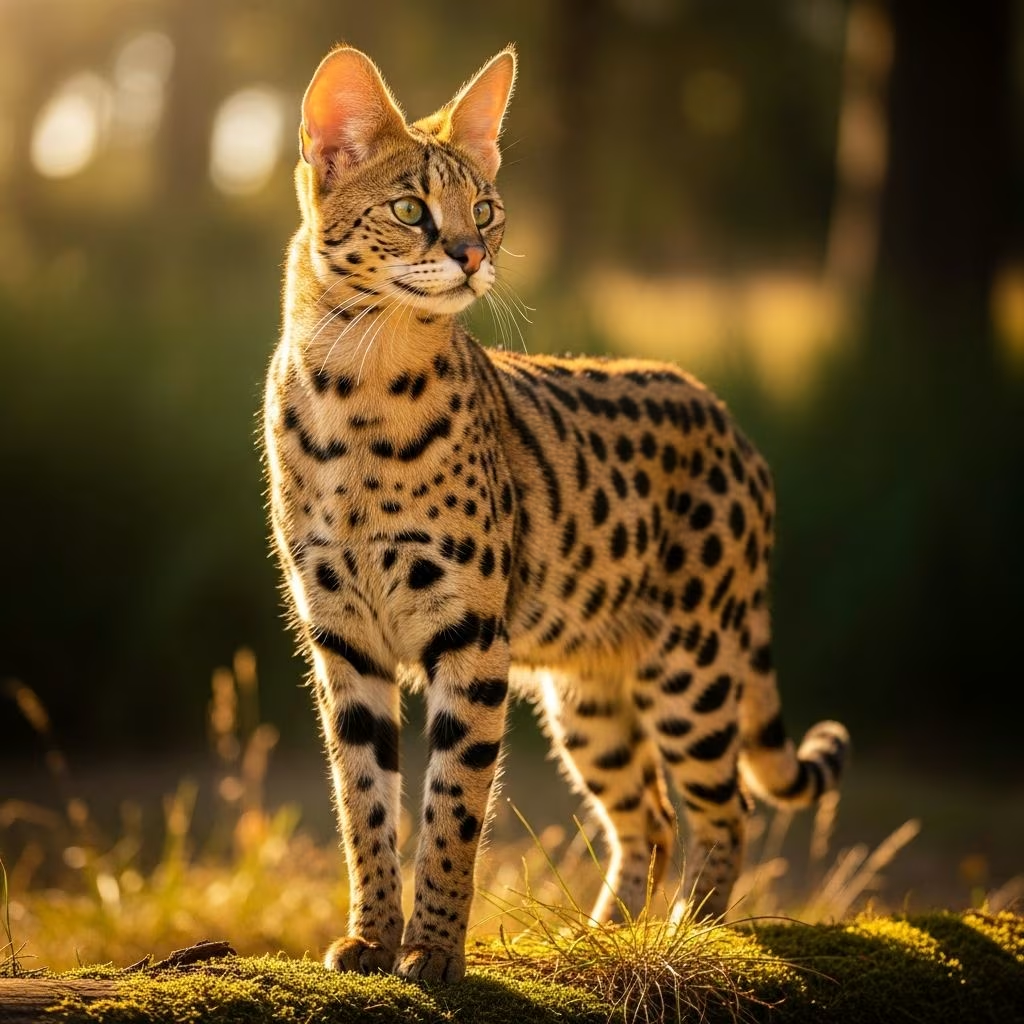
The F4 Savannah cat represents the fourth generation in a fascinating hybrid breed created by crossing the African serval with domestic cats. These felines strike a compelling balance between exotic appearance and manageable companionship, making them a popular choice for enthusiasts of distinctive pets.
Understanding Savannah Cat Generations
Savannah cats are classified by filial generations, denoted as F1 through F5 and beyond, where F1 is the closest to the wild serval parent. Each subsequent number indicates one more generation removed from the serval, diluting the wild genetics while retaining signature traits. An F4 cat, therefore, has approximately 6.25% to 14% serval ancestry, positioning it as a ‘true’ breed standard eligible for championship recognition by organizations like TICA when registered as SBT (Stud Book Traditional).
This generational system ensures predictability in size, temperament, and fertility. Early generations like F1 and F2 often exhibit more pronounced wild behaviors and larger statures, whereas F4 offers greater uniformity suitable for home environments. Breeders must produce F4 litters to advance to later generations, as male fertility typically stabilizes around F5.
Physical Appearance and Size Variations
F4 Savannahs boast a sleek, athletic build reminiscent of their serval roots, with long legs, a slender torso, and disproportionately large ears that enhance their alert, wildcat profile. Males generally weigh 14-18 pounds and appear 1.5 times larger than average domestic cats due to their lanky proportions, while females range from 10-12 pounds, standing taller and longer than typical shorthairs.
Coat patterns feature bold spots or marbled designs in shades of brown, gold, silver, or beige, often with lighter underbellies and ocelli (light markings) on ear backs. Tear-line markings add to the exotic allure. Unlike earlier generations, F4s show variability within litters—some retain robust serval-like substance, others appear more refined and domestic-leaning, with shorter legs or rounder faces. Full maturity takes about three years, during which their patterns intensify.
| Generation | Average Male Weight | Average Female Weight | Key Traits |
|---|---|---|---|
| F1-F2 | Up to 30 lbs | Up to 25 lbs | Largest, most wild-like |
| F3 | 15-20 lbs | 10-14 lbs | Still large, energetic |
| F4 | 14-18 lbs | 10-12 lbs | Balanced size, refined look |
| F5+ | 12-16 lbs | 8-11 lbs | More domestic, uniform |
This table highlights how F4s occupy a sweet spot in size reduction from earlier hybrids, offering presence without overwhelming scale.
Temperament and Behavioral Traits
F4 Savannahs are renowned for their dog-like devotion, intelligence, and playfulness. Outgoing and interactive, they thrive on human companionship, often following owners room-to-room and eagerly participating in games like fetch. Their adaptability extends to households with dogs or children, provided early socialization occurs.
- High Energy Levels: These cats demand daily exercise, such as puzzle toys, climbing structures, or leash walks, to channel their curiosity and prevent mischief like cabinet raiding.
- Water Affinity: Unlike many felines, F4s frequently enjoy baths, showers, or swimming, splashing playfully without fear.
- Trainability: Sharp minds allow them to master tricks, door-opening, and leash etiquette, rivaling canine smarts.
- Affectionate Yet Reserved: Loyal to family but initially wary of strangers, they bond deeply once trust is earned.
While less feral than F1-F2 counterparts, F4s retain a high prey drive, making them exceptional hunters of toys or pests. Vocalizations include chirps and trills rather than standard meows.
Care and Grooming Essentials
Maintaining an F4 Savannah’s health requires attention to their active lifestyle. Weekly brushing removes loose fur from their short, low-shedding coat, while monthly nail trims and dental checks prevent issues common in larger breeds.
Provide a diet rich in high-protein, grain-free kibble or wet food mimicking a carnivorous wild diet, portioned to avoid obesity despite their lean frames. Interactive feeders combat boredom eating. Environmentally, enrich their space with tall cat trees, window perches, and scratching posts to satisfy climbing instincts.
Veterinary care mirrors domestics but includes monitoring for hybrid-specific concerns like sensitive digestion or joint strain from their leggy build. Annual check-ups, vaccinations, and parasite prevention are crucial.
Health Considerations for F4 Hybrids
As stabilized later-generation hybrids, F4 Savannahs enjoy robust health akin to purebreds, with fewer issues than early gens prone to serval incompatibilities. Potential concerns include hypertrophic cardiomyopathy (HCM), a genetic heart condition screened via DNA tests by responsible breeders, and occasional litter box hesitancy if not socialized young.
Expect a lifespan of 12-20 years with proper care. Spaying/neutering enhances temperament and fertility predictability, though F4 males may rarely sire litters.
Legal Status and Ownership Regulations
F4 Savannahs fall under wildlife regulations in many regions due to serval lineage. Up to F4, they often require registration under species protection acts, with some areas mandating holding permits. Post-F4 SBT cats face fewer restrictions as ‘purebred’ Savannahs.
Prospective owners should verify local laws—bans exist in places like Hawaii or certain U.S. states. Reputable breeders provide documentation proving generation and health clearances.
Bringing an F4 Savannah Home: Preparation Tips
Selecting an F4 demands research into ethical breeders prioritizing temperament over extreme wild looks. Kittens should be handled from birth for sociability. Budget for initial costs of $4,000-$10,000, plus ongoing expenses for premium supplies.
Proof your home: secure cords, block escapes, and invest in durable toys. Early training fosters harmony, turning this vibrant hybrid into a lifelong ally.
Common Myths About F4 Savannah Cats
- Myth: They’re aggressive wild animals. Fact: Proper breeding and socialization yield gentle, people-loving pets.
- Myth: They can’t adapt to apartments. Fact: With stimulation, they thrive in varied spaces.
- Myth: All Savannahs are massive. Fact: F4s are large but manageable.
Frequently Asked Questions
Are F4 Savannah cats good with kids?
Yes, when raised together, their playful nature makes them excellent family pets, though supervise due to size and energy.
How big do F4 Savannah females get?
Typically 10-12 pounds, with elegant height surpassing domestic averages.
Do F4 Savannahs need special food?
High-protein diets support their active metabolism, but no exotic requirements.
Can F4 males breed?
Rarely; fertility improves in F5 and later.
What’s the difference between F4 and F5 Savannahs?
F5s have less serval influence (around 3-6%), appearing more domestic while retaining traits.
References
- F4 Savannah Cat | Select Exotics — savannahcatbreed.com. 2023. https://savannahcatbreed.com/f4-savannah-cat/
- Character & temperament of Savannah cats — savannahcat.eu. 2024. https://www.savannahcat.eu/en/wesen-von-savannahkatzen-2
- Savannah Cat 101 – Personality, Traits, Price & Size — outdoorbengal.com. 2023. https://www.outdoorbengal.com/blogs/cat-breeds/savannah-cat-101
- What’s an F4 Savannah Cat? What Are They Like? — Catster. 2024-01-15. https://www.catster.com/cat-breeds/whats-an-f4-savannah-cat/
- Savannah cat — Wikipedia (citing TICA standards). 2025. https://en.wikipedia.org/wiki/Savannah_cat



