

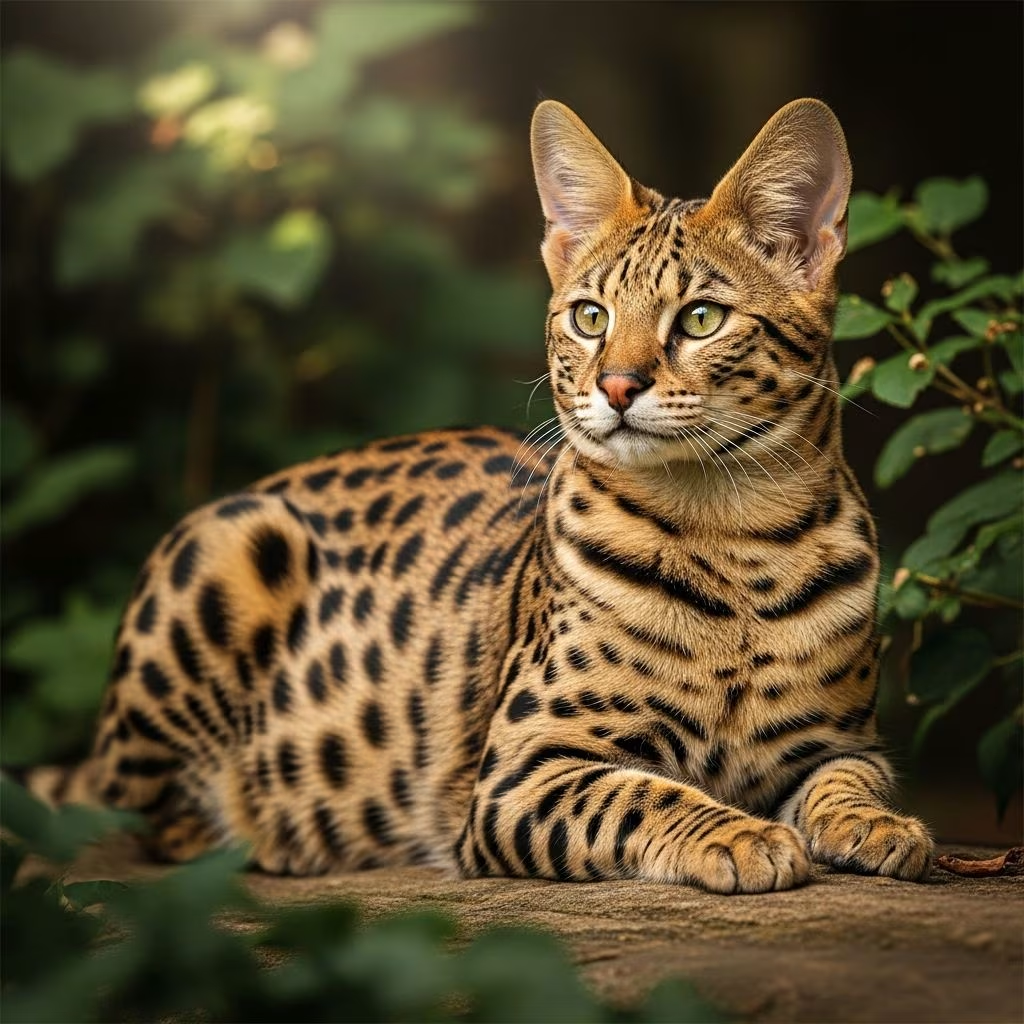
The F2 Savannah cat represents a fascinating blend of wild elegance and domestic companionship, stemming from crosses between the African serval and household felines. These cats, just one generation removed from a direct serval parent, showcase bold markings, athletic builds, and spirited behaviors that set them apart from typical breeds.
Origins and Development of the F2 Generation
Savannah cats emerged in the 1980s when breeders first mated a domestic cat with an African serval, creating the F1 generation. The F2 follows as the offspring of an F1 Savannah and another domestic cat, diluting the serval influence to roughly 25-28% while preserving striking physical features. This generation balances exotic allure with increased manageability compared to purer serval hybrids.
Breeding these cats requires careful selection to enhance desirable traits like spotted coats and long limbs. Early generations like F1 and F2 faced registration challenges due to varying serval content, but organizations now standardize classifications. F2s often display the most vivid wild-type appearances, making them popular among enthusiasts seeking a visually dramatic pet.
Distinctive Physical Characteristics
F2 Savannahs boast a tall, slender frame that exaggerates their presence. Males typically reach weights of 20-25 pounds (9-11 kg), while females average 15-20 pounds (7-9 kg), with heights up to 14-16 inches at the shoulder. Their long legs, short necks, and hooded eyes contribute to a serval-like silhouette.
- Ears: Large, tall, and widely set, often with visible ear furnishings for a feral look.
- Coat: Short, golden or tawny base with bold black spots or marbled patterns that darken with age.
- Tail: Long and thick, ending in a dark tip.
- Build: Muscular yet graceful, enabling exceptional leaps up to 8 feet high.
Compared to later generations, F2s retain more serval proportions, sometimes rivaling dog-sized dimensions. A notable F2 male once held a Guinness record for tallest domestic cat at 19.1 inches.
Size Comparison Across Savannah Generations
| Generation | Average Height (inches) | Average Length (inches) | Average Weight (lbs) |
|---|---|---|---|
| F1 | 16 | 20 | 23 |
| F2 | 14.5 | 17 | 15-25 |
| F3 | 10.5 | 15 | 13.5 |
This table highlights how F2s bridge the gap between massive F1s and more compact later generations, offering substantial size without extreme proportions.
Temperament and Behavioral Traits
F2 Savannahs exhibit dog-like loyalty, high intelligence, and boundless energy. They form deep bonds with one or two people, shadowing them throughout the day and craving involvement in household activities. Unlike lap cats, they prefer playful interaction over prolonged cuddling, often fetching toys or responding to voice commands.
These cats possess a chirping meow, love water play, and excel at leash walking. However, their strong prey drive prompts chasing small animals or birds, and boredom leads to mischief like counter-surfing or knocking items over—a phenomenon dubbed “Savandalism.” Territorial instincts may cause spraying, especially in unneutered males.
Early socialization is crucial; well-raised F2s adapt to calm environments but thrive with active owners providing mental stimulation through puzzle toys, agility courses, and outdoor enclosures.
Suitability for Different Households
F2 Savannahs suit experienced owners with ample space, such as spacious homes or secure yards. They fare best in small families or couples, bonding closely but potentially overwhelming young children due to size and exuberance.
- Ideal for: Active singles, couples, or empty-nesters seeking an interactive pet.
- Challenges with: Multi-pet homes (may chase dogs or cats), apartments, or novice owners.
- Children: Supervised play only; their energy can unintentionally roughhouse.
Compared to F1s, F2s are more affectionate and trainable, but less predictable than F3+ cats.
Essential Care and Nutrition Requirements
Feed F2 Savannahs a high-protein diet mimicking their wild ancestors’ needs—raw or grain-free kibble with 40-50% protein from quality meats. Portion control prevents obesity in their muscular frames; adults need 300-500 calories daily, split into 3-4 meals.
Grooming is minimal due to short coats, but weekly brushing reduces shedding. Dental care and claw trims are vital. Provide vertical spaces like cat trees, shelves, and window perches to satisfy climbing urges.
Health Considerations and Lifespan
F2s generally live 12-20 years with proper care, though hybrid vigor offers resilience. Watch for serval-inherited issues like hypertrophic cardiomyopathy (HCM), gastrointestinal sensitivities, and allergies. Annual vet checkups, including heart ultrasounds, are recommended.
Breeders should screen parents for genetic diseases. Neutering/spaying curbs marking and aggression while promoting health.
Training Tips for Success
Harness their smarts with positive reinforcement: clicker training for tricks, leash etiquette, and recall. Interactive sessions daily prevent destructive behaviors. Many learn to high-five, sit, or retrieve.
- Start young with short, fun sessions.
- Use treats and praise lavishly.
- Incorporate agility obstacles for physical outlet.
- Socialize broadly to reduce territoriality.
Legal Restrictions and Ownership Rules
Savannah ownership varies by location; F2s may require permits in states like New York or Hawaii due to serval ancestry. Check local exotic pet laws, as some ban F1-F3 generations. Reputable breeders provide documentation proving generation and health clearances.
Cost and Acquisition Advice
F2 kittens range from $4,000-$10,000+, reflecting rarity and demand. Avoid bargains signaling poor breeding. Seek TICA-registered catteries emphasizing health and temperament testing.
Frequently Asked Questions
Are F2 Savannah cats good with dogs?
Possibly, if introduced properly and the dog respects boundaries, but their prey drive poses risks to smaller breeds.
Do F2 Savannahs use litter boxes reliably?
Most do with training, though early generations may need larger boxes and scented litters.
Can F2 Savannah cats live indoors only?
Yes, with ample enrichment like catios or harness walks to mimic outdoor exploration.
How do F2s compare to Bengals?
Both energetic hybrids, but F2 Savannahs are taller, more vocal, and retain stronger wild traits.
Pros and Cons of Owning an F2 Savannah
| Pros | Cons |
|---|---|
| Stunning, unique appearance | High energy demands extensive playtime |
| Intelligent and trainable | Potential territorial marking |
| Loyal, dog-like bond | Large size requires space |
| Water-loving and adventurous | Expensive purchase and upkeep |
In summary, the F2 Savannah cat offers an exhilarating ownership experience for dedicated individuals ready to match its vigor with commitment and resources.
References
- Savannah Cat 101 – Personality, Traits, Price & Size — OutdoorBengal. 2023. https://www.outdoorbengal.com/blogs/cat-breeds/savannah-cat-101
- F2 Savannah Cat: Facts, Origin & History (With Pictures) — Catster. 2024. https://www.catster.com/cat-breeds/f2-savannah-cat/
- Savannah Cat – Breed Profile & Information — Spots.com. 2023. https://spots.com/savannah-cat/
- The Savannah Cat: A Guide for Potential Owners — Oxford Animal Vet. 2024. https://www.oxfordanimalvet.com/the-savannah-cat/
- PERSONALITY – Savannah Cats are dangerous? — F1 Hybrids Savannah Cats. 2023. https://www.f1hybridssavannahcats.com/breed/personality
- Savannah cat — Wikipedia. 2025-01-15. https://en.wikipedia.org/wiki/Savannah_cat
- F1 F2 F3 Explained for Savannah Cats — Savannah Cat Association. 2023. https://savannahcatassociation.org/f1-f2-f3-explained/



