
Eyeworms In Large Animals: Diagnosis, Treatment, Prevention
Comprehensive guide to eyeworm infections in livestock: causes, symptoms, diagnosis, treatment, and prevention strategies for healthy herds.
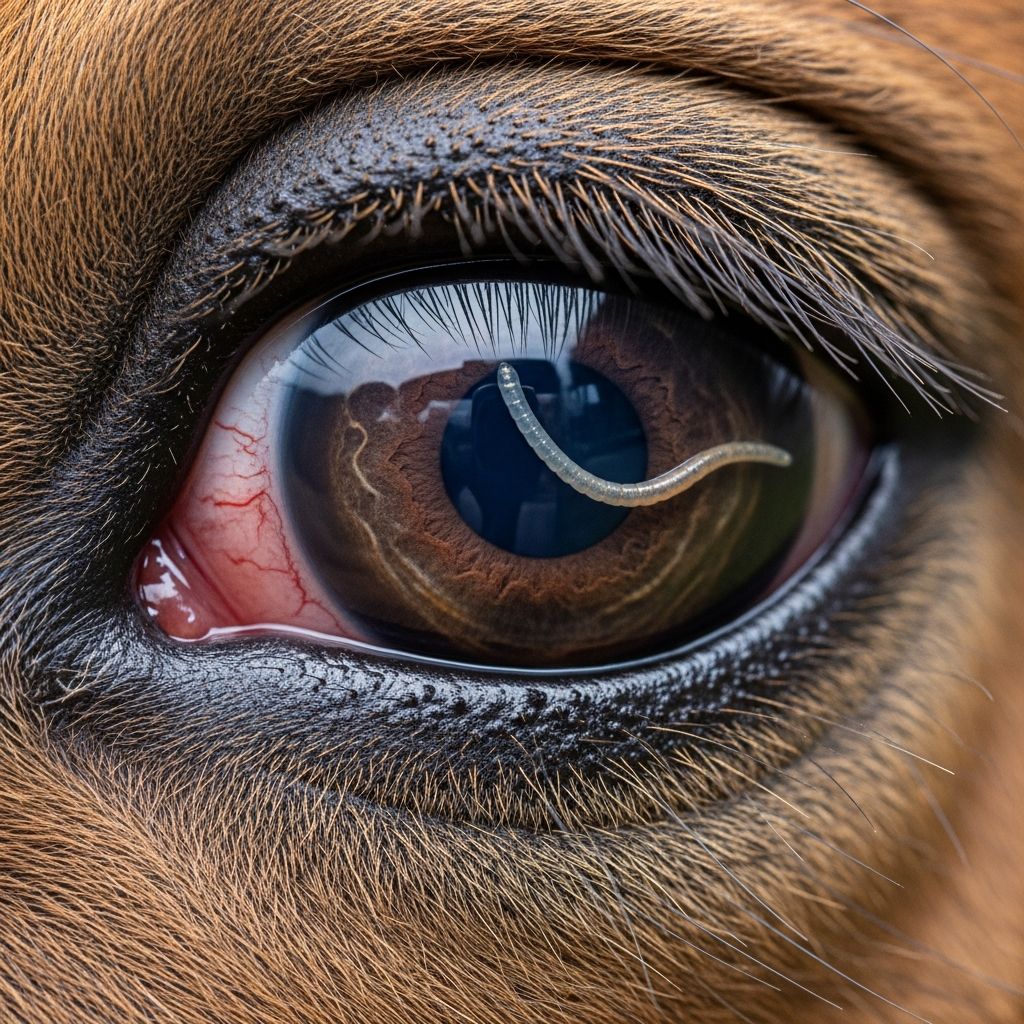
Parasitic eyeworms pose a significant challenge to the ocular health of large animals such as cattle, sheep, goats, horses, and camels. These nematodes, primarily from the genus Thelazia, inhabit the eye’s conjunctival spaces, leading to irritation, inflammation, and potential vision impairment if not addressed promptly. Understanding their biology, transmission, and management is crucial for veterinarians and farmers aiming to maintain productive herds.
Biology and Species of Eyeworms
Eyeworms are slender, white nematodes measuring 7-19 mm in length, exhibiting a snake-like movement across the eye surface. Key species affecting large animals include Thelazia rhodesii, prevalent in regions like East Africa, and Thelazia gulosa or Thelazia skrjabini in other areas. These parasites reside in the conjunctival sac, tear ducts, nictitating membrane, and lacrimal glands, where females release larvae into ocular secretions.
The lifecycle involves flies as intermediate hosts. Muscoid flies, such as face flies or house flies, ingest first-stage larvae (L1) while feeding on eye secretions. Within the fly, larvae develop over 2-4 weeks into infective third-stage larvae (L3), which are deposited back onto animal eyes during feeding, penetrating the ocular tissues to mature into adults in 1-4 weeks.
Transmission Dynamics in Herds
Transmission thrives in warm, humid environments with high fly populations. In pastoral systems, animals congregating at water points or shaded areas facilitate fly-mediated spread. Imported cases, as seen in dogs traveling from endemic Europe, highlight risks for livestock moved across borders.
- Primary vectors: Face flies (Musca autumnalis) and horn flies.
- Risk factors: Overcrowding, poor sanitation, and wet seasons boosting fly breeding.
- Zoonotic potential: Rare human infections reported, emphasizing vector control.
Clinical Manifestations and Impact
Infections range from asymptomatic carriage to severe pathology. Mild cases show epiphora (excessive tearing), conjunctivitis, and chemosis (conjunctival swelling). Advanced infections cause corneal edema, ulceration, vascularization, and secondary bacterial infections, potentially leading to blindness.
In cattle and sheep, affected animals exhibit blepharospasm (squinting), photophobia, and reduced feed intake, impacting weight gain and milk production. Horses may show head shaking or rubbing eyes against objects, risking self-trauma.
| Species | Common Signs | Severity |
|---|---|---|
| Cattle | Epiphora, conjunctivitis, corneal opacity | Mild to moderate |
| Sheep/Goats | Chemosis, ulcers, vision loss | Moderate to severe |
| Horses | Blepharospasm, head aversion to light | Mild |
| Camels | Ocular discharge, nictitans prolapse | Variable |
Herd-level effects include decreased productivity; studies note up to 10-20% vision-compromised animals in untreated flocks.
Accurate Diagnosis Methods
Diagnosis relies on direct visualization of motile worms in the conjunctival fornix or under the third eyelid. Topical anesthesia facilitates thorough examination and worm extraction with fine forceps.
Confirmatory tests include:
- Microscopic identification: Buccal capsule, filariform esophagus, and gravid uteri in females.
- PCR sequencing for species differentiation, vital in non-endemic areas.
- Fluorescein staining to detect corneal defects.
Early detection prevents complications; routine eye checks during deworming or vaccinations aid surveillance.
Effective Treatment Protocols
Treatment combines mechanical removal and systemic anthelmintics. Under sedation, flush eyes with saline and extract visible worms.
Pharmacological options:
- Ivermectin: 0.2 mg/kg subcutaneous or intramuscular; pour-on at 0.5 mg/kg.
- Doramectin: Similar dosing, highly effective against larvae.
- Levamisole: 5 mg/kg subcutaneous for accessible treatment.
- Topical: Antibiotic ointments post-removal to combat secondary infections.
Case studies in dogs show full recovery with imidacloprid/moxidectin spot-on, suggesting potential off-label use in large animals under veterinary guidance. Re-examinations 3-4 weeks post-treatment confirm clearance.
Prevention and Control Strategies
Integrated management targets the fly vector and parasite lifecycle:
- Fly population control: Insecticide ear tags, face fly traps, and environmental sanitation (manure removal).
- Strategic deworming: Quarterly ivermectin in endemic zones.
- Herd hygiene: Avoid overcrowding at feeding/water sites.
- Quarantine: Inspect imported animals’ eyes.
In non-endemic regions like the UK, travel history prompts vigilance, as fruit flies (Phortica spp.) vector T. callipaeda.
Economic and Welfare Implications
Untreated eyeworm disease reduces livestock productivity by 15-30% through weight loss and culling. Welfare suffers from chronic pain, emphasizing timely intervention. Cost-effective prevention via pour-ons yields high ROI in intensive systems.
Emerging Concerns and Research
Climate change expands fly habitats, increasing eyeworm range. Zoonotic risks, though low, warrant monitoring. Ongoing trials explore long-acting formulations for sustained protection.
Frequently Asked Questions (FAQs)
What animals are most affected by eyeworms?
Cattle, sheep, goats, horses, and camels in tropical/subtropical regions.
Can eyeworms cause blindness in livestock?
Yes, severe cases lead to corneal ulcers and permanent vision loss if untreated.
How do I know if my herd has eyeworms?
Look for tearing, redness, and visible worms; consult a vet for confirmation.
Is ivermectin safe for all large animals?
Generally yes at recommended doses, but collies and sensitive breeds require caution.
Are eyeworms contagious to humans?
Rarely; primarily veterinary parasites, but hygiene prevents zoonotic transmission.
References
- Three cases of imported eyeworm infection in dogs — PMC – NIH. 2017-07-01. https://pmc.ncbi.nlm.nih.gov/articles/PMC5738592/
- Eye Worms — Infonet Biovision. N/A. https://infonet-biovision.org/animal-health-and-disease/eye-problems-new/eye-worms
- Eyeworm Disease (Thelaziasis) in Dogs — MSD Veterinary Manual. N/A. https://www.msdvetmanual.com/dog-owners/eye-disorders-of-dogs/eyeworm-disease-thelaziasis-in-dogs
- Eyeworm (Thelazia californiensis) in Dogs — WagWalking. N/A. https://wagwalking.com/condition/eyeworm-thelazia-californiensis
- Thelaziasis: The Dog & Cat Eye Worm Infection — ManyPets. N/A. https://manypets.com/uk/articles/what-pet-owners-need-know-thelaziasis-eyeworms/
- Eye Worm in Dogs — Blue Cross. N/A. https://www.bluecross.org.uk/advice/dog/health-and-injuries/eye-worm-danger-to-dogs
- DPDx – Thelaziasis — CDC. N/A. https://www.cdc.gov/dpdx/thelaziasis/index.html
Similar Articles








Read full bio of Sneha Tete


