

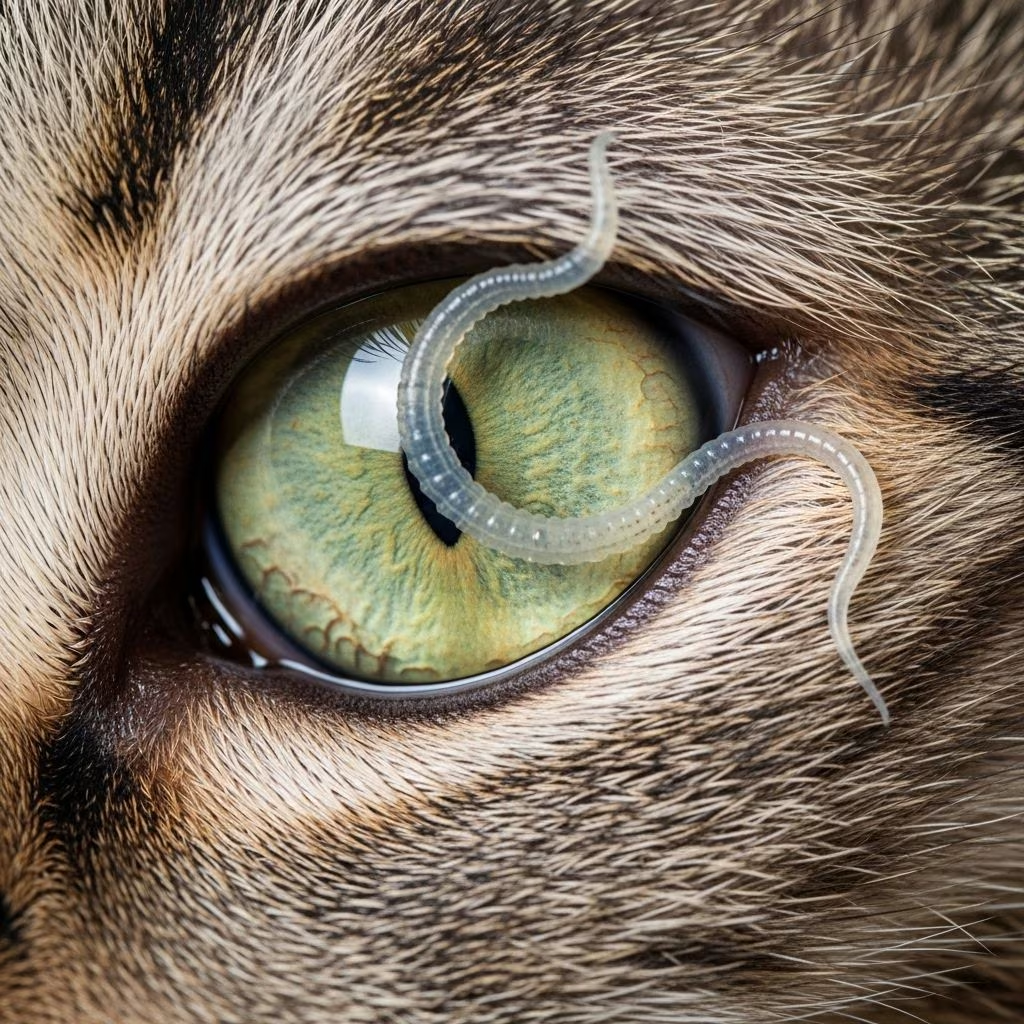
Feline eyeworm disease, scientifically termed thelaziasis, represents a parasitic condition where slender nematodes invade the ocular region, leading to discomfort and potential visual impairment. Caused primarily by species such as Thelazia callipaeda and Thelazia californiensis, these worms reside in the conjunctival sac, tear ducts, or eyelids, prompting vigilant monitoring by cat guardians.
Understanding the Nature of Eyeworms
These parasites belong to the Thelaziidae family, measuring 7-19 mm in length for females and slightly shorter for males. Unlike heartworms, eyeworms do not require mosquitoes but rely on flies—particularly fruit flies (Drosophila spp.) and face flies (Musca autumnalis)—as intermediate hosts. Adult flies ingest first-stage larvae (L1) from infected animal secretions, allowing larvae to develop within the fly to the infective third stage (L3). When the fly lands on a cat’s eye, L3 larvae emerge and migrate into the eye’s moist environment.
Once established, female eyeworms produce larvae that exit via tears, perpetuating the cycle. Cats, dogs, and occasionally wildlife serve as definitive hosts, with zoonotic risks noted in regions like Europe and Asia. Geographic hotspots include the western U.S., Pacific Northwest, and parts of Europe where fly populations thrive.
Recognizing Clinical Manifestations
Early detection hinges on observing subtle behavioral and ocular changes. Common indicators include:
- Epiphora: Profuse tearing due to irritation from worm movement.
- Conjunctival hyperemia: Redness and swelling of the eye’s mucous membrane.
- Ocular discharge: Mucoid or purulent material accumulating around the eyes.
- Pruritus and blepharospasm: Squinting, pawing, or rubbing at the affected eye(s).
- Visible nematodes: Translucent white worms, up to 1 cm long, crawling on the conjunctiva, nictitating membrane, or caruncle.
In advanced cases, corneal cloudiness, ulceration, or keratitis may develop, occasionally progressing to secondary bacterial infections or, rarely, blindness. Bilateral involvement occurs in about 50% of cases, and some cats remain asymptomatic carriers. Kittens and outdoor roamers face heightened vulnerability due to increased fly exposure.
Diagnostic Approaches in Veterinary Practice
Veterinarians employ a multi-step protocol for confirmation. Initial assessment involves a detailed history—focusing on outdoor access and regional prevalence—followed by:
- Schirmer tear test and fluorescein staining: To rule out concurrent dry eye or ulcers.
- Direct visualization: Under magnification, worms appear as mobile threads post-local anesthetic application.
- Cytological evaluation: Swabs of discharge reveal larvae or eggs under microscopy.
- Molecular testing: PCR on worm samples identifies species, crucial in novel areas.
Differential diagnoses encompass conjunctivitis, allergies, herpesvirus keratitis, or foreign bodies. Blood serology for antibodies is investigational and less routine. Prompt diagnosis averts complications, with most cases resolving fully if addressed early.
Treatment Modalities: From Extraction to Pharmacotherapy
Management combines mechanical and medicinal interventions tailored to worm burden and inflammation severity. Primary options include:
| Method | Description | Efficacy | Notes |
|---|---|---|---|
| Manual Removal | Topical proparacaine anesthetic, followed by forceps or irrigation to extract worms | Immediate, 100% for visible parasites | Preferred first-line; performed under slit-lamp for precision |
| Oral Milbemycin Oxime | 2 mg/kg, repeated after 7 days | 100% resolution in felines | Also in heartworm preventives |
| Spot-on Moxidectin/Imidacloprid | Single application (1-2.5% moxidectin) | 100% at 28 days | Non-invasive, monthly use prevents reinfection |
| Supportive Therapy | Topical NSAIDs or antibiotics for inflammation/ulcers | Symptomatic relief | Neomycin-polymyxin-dexamethasone ointments common |
Post-treatment, rechecks at 1-4 weeks confirm clearance. Systemic anthelmintics like ivermectin are contraindicated in some breeds due to MDR1 mutation risks. Success rates exceed 95% with combined approaches.
Preventive Measures for Long-Term Protection
Proactive strategies mitigate transmission effectively:
- Parasite Preventatives: Year-round heartworm products containing milbemycin or moxidectin kill L3 larvae.
- Fly Deterrence: Pet-safe repellents (permethrin-based, cat-cautious), screens, and fly traps during summer peaks.
- Environmental Hygiene: Remove standing water, manure; clean ocular areas daily with saline.
- Indoor Lifestyle: Limit unsupervised outdoor time, especially dusk/dawn fly activity.
- Routine Vet Exams: Annual ophthalmic checks in endemic zones.
Adherence to monthly preventives slashes infection risk by over 90%.
Potential Complications and Prognosis
Untreated infestations foster chronic inflammation, corneal scarring, or uveitis, impairing vision. Secondary infections amplify damage, though blindness is exceptional with intervention. Prognosis is excellent: 98-100% full recovery sans sequelae when treated promptly. Recurrences demand preventatives review.
Owners report rapid symptom abatement post-extraction, with cats resuming normalcy within days. Monitor for hypersensitivity to dying worms, manifesting as worsened pruritus.
Frequently Asked Questions (FAQs)
Can indoor cats get eyeworms?
Yes, via flies entering homes. Screens and preventatives are essential.
Is eyeworm contagious between cats?
Indirectly, through shared fly vectors; not direct transmission.
How long do eyeworms live in cats?
Up to several months, producing larvae continuously.
Are there home remedies for eyeworm removal?
No; veterinary extraction prevents eye trauma.
Does eyeworm affect cat vision permanently?
Rarely, if treated early; delays risk corneal opacity.
Regional Prevalence and Emerging Concerns
While historically U.S.-centric, T. callipaeda spreads in Europe, with first feline cases in Portugal and Italy. Climate change boosts fly ranges, urging global vigilance. Zoonotic reports in humans underscore One Health approaches.
Cat owners in fly-heavy areas should integrate eyeworm screening into wellness plans. Collaborative vet-client efforts yield optimal outcomes.
References
- Eyeworm Disease (Thelaziasis) in Cats — MSD Veterinary Manual. 2023. https://www.msdvetmanual.com/cat-owners/eye-disorders-of-cats/eyeworm-disease-thelaziasis-in-cats
- Ocular Worms in Dogs and Cats: What You Need to Know — Middle Hope Veterinary. 2023. https://middlehopevet.com/news/ocular-worms-in-dogs-and-cats-what-you-need-to-know/
- Eyeworm Disease in Cats: Diagnosis, Treatment, and Prevention — PetCareRx. 2023. https://www.petcarerx.com/article/eyeworm-disease-in-cats-diagnosis-treatment-and-prevention/6606
- How to Prevent Your Pet from Getting Eyeworms — AEC of NJ. 2023. https://www.aecofnj.com/blog/how-to-prevent-your-pet-from-getting-eyeworms
- Ophthalmic Thelazia callipaeda infections: first feline and new host records in animals from Portugal — PMC (Peer-reviewed). 2020-08-20. https://pmc.ncbi.nlm.nih.gov/articles/PMC7431390/



