

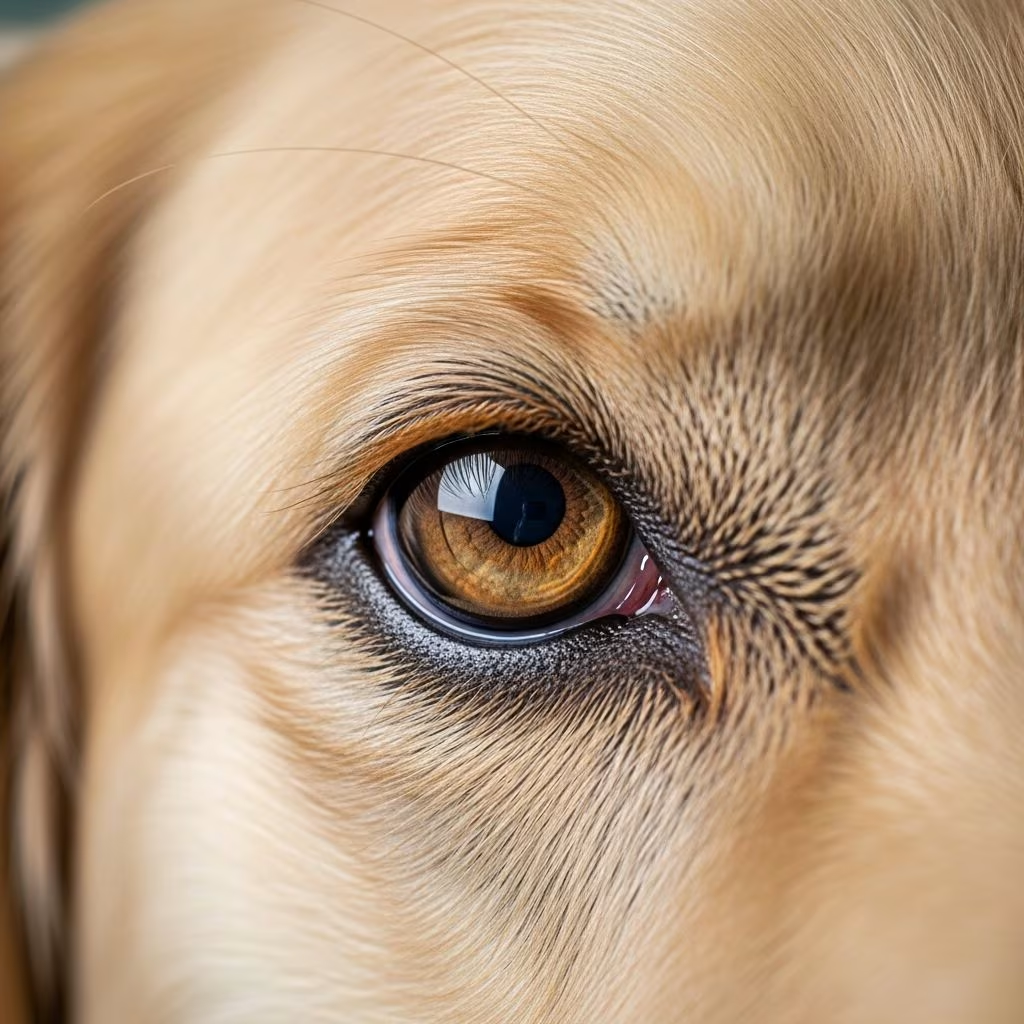
Eyelid disorders represent a significant category of ophthalmic issues in veterinary medicine, affecting animals’ comfort, vision, and overall well-being. These conditions range from conformational abnormalities to infectious and immune-mediated diseases, often requiring prompt intervention to prevent secondary complications like corneal ulcers or vision loss. Understanding the diverse etiologies and management strategies is crucial for veterinarians and pet owners alike.
Anatomy and Function of Animal Eyelids
The eyelids serve as protective barriers for the eyes, facilitating blinking to spread tears, remove debris, and shield the cornea from trauma. In dogs and cats, eyelids are highly vascularized, making them prone to noticeable inflammation. The upper and lower lids contain meibomian glands that produce oils essential for the tear film. Disruptions in lid conformation or health can lead to exposure keratitis, chronic irritation, or infections.
Species variations exist: dogs have more pronounced lid mobility, while cats exhibit tighter apposition. Brachycephalic breeds often face unique challenges due to shallow orbits and prominent eyes.
Common Conformational Eyelid Abnormalities
Conformational defects are frequently hereditary, particularly in predisposed breeds, and can manifest early in life.
Entropion: Inward Rolling of the Lid
Entropion occurs when the eyelid margin rolls inward, causing lashes and hair to abrade the cornea. This leads to pain, excessive tearing, squinting, and potential ulceration. Common in Shar Peis, Chows, Rottweilers, and young dogs of many breeds, it affects lower lids primarily but can involve uppers in spaniels.
- Symptoms: Blepharospasm, epiphora, corneal erosions, scarring.
- Diagnosis: Clinical observation; temporary eversion with sutures for testing.
- Treatment: Surgical correction like Hotz-Celsus or Stades technique; medical lubrication pre-surgery.
Untreated cases risk perforation or blindness. Prognosis excels post-surgery with proper aftercare.
Ectropion: Outward Lid Eversion
Opposite to entropion, ectropion exposes the conjunctiva and cornea by lid laxity. Prevalent in Bloodhounds, Great Danes, St. Bernards, and spaniels, it causes discharge accumulation, conjunctivitis, and keratitis due to poor tear distribution.
| Condition | Breeds Affected | Key Risks |
|---|---|---|
| Entropion | Shar Pei, Chow Chow | Corneal ulcers |
| Ectropion | Bloodhound, Mastiff | Exposure keratitis |
Treatment involves surgical tightening; mild cases may use lubricants.
Lagophthalmos and Macropalpebral Fissure
Lagophthalmos, incomplete lid closure, dries the cornea, common in brachycephalic breeds like Shih Tzus and Pugs. It heightens trauma risk and mandates tarsorrhaphy or lateral canthoplasty in severe instances.
Inflammatory and Infectious Conditions
Blepharitis: Eyelid Inflammation
Blepharitis encompasses swelling, redness, alopecia, and discharge from bacterial, parasitic, or allergic causes. Bacterial forms, often staphylococcal or streptococcal, feature pyogranulomas, meibomianitis, and ulcers, noted in Dalmatians and Schnauzers.
- Signs: Edema, mucopurulent discharge, lid margin fibrosis.
- Diagnostics: Cytology, culture, biopsy.
- Therapy: Topical/systemic antibiotics, gland expression, hygiene.
Chronic cases demand addressing underlying demodicosis or allergies.
Immune-Mediated Eyelid Diseases
Pemphigus complex induces autoimmune blistering at mucocutaneous junctions. Pemphigus foliaceus causes crusting and erosions; vulgaris is severe, hitting eyelids, mucosae.
Uveodermatologic syndrome, akin to Vogt-Koyanagi-Harada, targets melanocytes, yielding poliosis, vitiligo, uveitis, and blindness in breeds like Siberian Huskies. Biopsy confirms lichenoid interface dermatitis.
Abnormal Eyelid Appendages
Distichiasis and Ectopic Cilia
Distichiasis involves extra lashes from meibomian glands irritating the cornea; ectopic cilia protrude inwardly, causing acute ulcers. Prevalent in Shih Tzus and others, cryoepilation removes follicles effectively.
Trichiasis
Normal lashes rub abnormally due to lid position, managed by lid correction.
Tumors and Neoplastic Changes
Eyelid neoplasms like melanomas, adenocarcinomas, or histiocytomas grow slowly but erode tissue. Wide excision with reconstruction is standard; histopathology guides adjunct therapy.
Diagnostic Approaches
Thorough exams use focal illumination, fluorescein staining, and Schirmer tear tests. Biopsies differentiate inflammatory from neoplastic; imaging assesses orbital involvement.
- History: Onset, breed, bilaterality.
- Inspection: Margin evaluation, symmetry.
- Ancillary: Cultures, cytology, histopath.
Treatment Modalities
Conservative: Lubricants, antibiotics for mild cases. Surgical: For conformations, tumors. Immunosuppressives like corticosteroids, azathioprine for autoimmune.
Breed Predispositions and Prevention
Selective breeding mitigates hereditary defects. Early screening in puppies aids timely surgery. Routine exams catch issues pre-complications.
Prognosis and Complications
Most conformers correct well surgically; inflammatories vary by cause. Delays risk scarring, vision loss. Post-op care prevents relapse.
FAQs
What causes entropion in puppies?
Oversized lids relative to globe in growing skulls, hereditary in many breeds.
Can ectropion resolve without surgery?
Mild cases may with lubrication; severe needs correction.
How is blepharitis diagnosed?
Via clinical signs, cytology, ruling out parasites.
Is uveodermatologic syndrome curable?
Manageable with immunosuppressants, but vision loss may persist.
When to seek vet care for lid issues?
At signs of squinting, discharge, redness.
References
- Clinical Approach to Canine Eyelid Disease: Blepharitis — Today’s Veterinary Practice. 2023. https://todaysveterinarypractice.com/ophthalmology/observations-in-ophthalmology-clinical-approach-to-canine-eyelid-disease-blepharitis/
- Eyelash and Eyelid Disorders in Dogs — Vetster. 2024. https://vetster.com/en/conditions/dog/eyelash-and-eyelid-disorders
- Lid and Lash Conditions — Perthy Eye Vet. 2023. https://pertheyevet.com/advice-sheet/lid-and-lash-conditions/
- Canine Eyelid Diseases — Dog Cat Bird Vet. 2024. https://dogcatbirdvet.org/news/canine-eyelid-diseases
- Eyelids in Animals — Merck Veterinary Manual. 2025. https://www.merckvetmanual.com/eye-diseases-and-disorders/ophthalmology/eyelids-in-animals



