

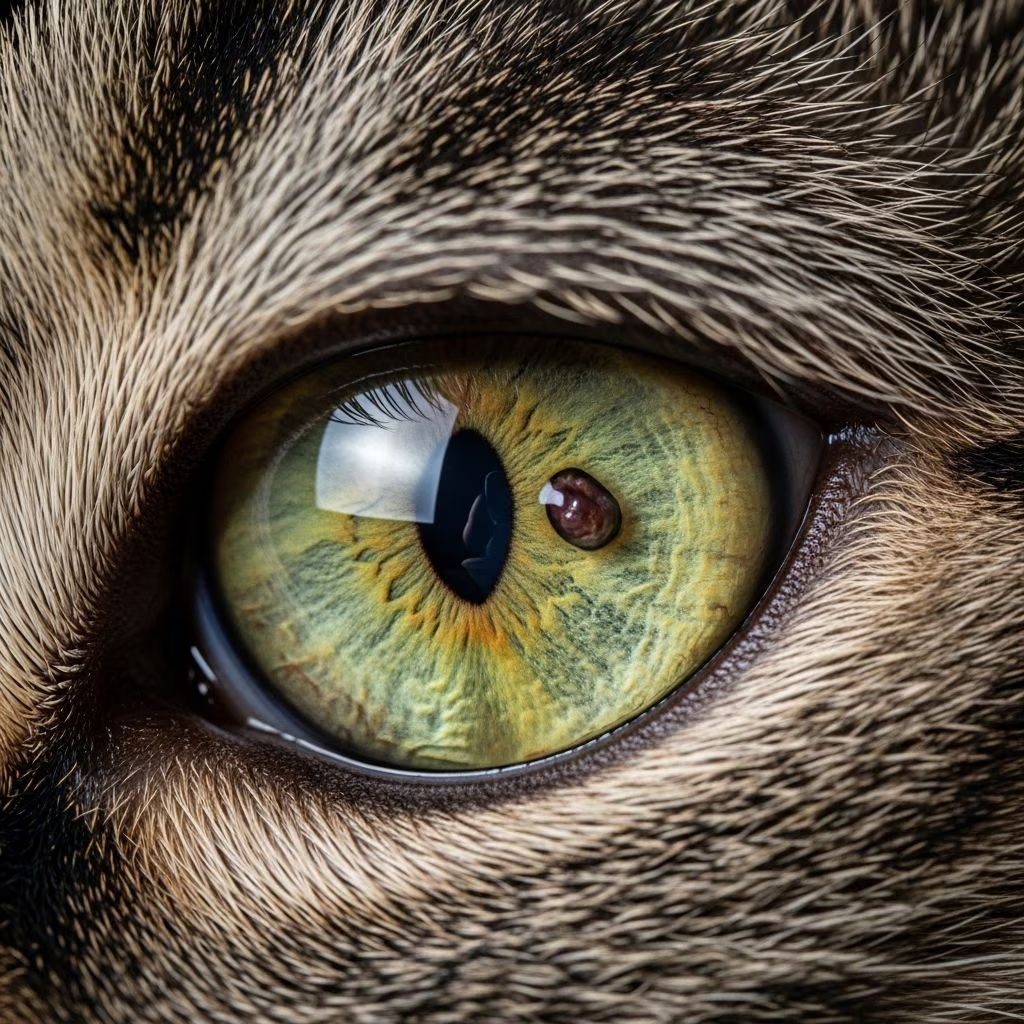
Understanding Eye Tumors and Melanoma in Cats
Eye tumors in cats represent a serious health concern that requires prompt attention from veterinary professionals. Among the various types of eye tumors, melanoma stands as one of the most significant conditions affecting feline ocular health. Melanoma is a malignant tumor that develops from melanocytes, the pigment-producing cells found in different parts of the eye. While eye tumors in cats are relatively rare compared to other feline health conditions, ocular melanomas are the most common primary eye tumors diagnosed in cats, making them an important area of concern for pet owners.
Types of Eye Melanoma in Cats
Feline eye melanoma manifests in several distinct forms, each with unique characteristics and progression patterns. Understanding these variations helps cat owners recognize potential warning signs and seek appropriate veterinary care.
Iris Melanoma and Iris Melanosis
The iris, which is the colored part of the eye, can develop melanomas that present differently from other eye tumors. Iris melanosis refers to increased pigmentation of the iris and is generally a benign condition commonly observed in older cats, characterized by the development of dark spots or patches on the iris surface. This condition is typically harmless and does not require treatment unless it progresses to iris melanoma, a rare malignant tumor.
Iris melanoma is a serious malignant condition that can arise from melanocytes in the iris. It can present as pigmented nodules or masses on the iris surface and may cause changes in eye appearance. Unlike benign iris melanosis, iris melanoma can impair vision or spread to other body parts through metastasis. Diffuse iris melanoma (DIM) represents an advanced form where melanoma affects a broader area of the iris, often resulting in more aggressive disease progression.
Other Ocular Melanoma Types
Ocular melanomas can develop in various locations within the eye structure. These tumors may impair vision or cause complete blindness, making the eye appear swollen or bloody. The specific location and extent of the melanoma significantly influence treatment options and prognosis.
Recognizing Symptoms of Eye Melanoma
Early detection of eye melanoma dramatically improves treatment outcomes. Cat owners should monitor their pets for various symptoms that may indicate developing ocular tumors.
Visual Changes and Eye Appearance
Several visible changes in the eye may signal melanoma development. These include discoloration of the iris, cloudy or dark portions of the eye, changes in iris shape, and general eye discoloration caused by melanoma. Pet owners may notice that the affected eye appears different from the other eye or that the appearance changes gradually over time. Early-stage melanomas may appear as small, pigmented or darkly colored nodules, lesions, or spots on the skin or mucous membranes surrounding the eye.
Systemic and Behavioral Symptoms
Beyond visible eye changes, cats with melanoma may exhibit broader health symptoms. These include facial or ocular swelling, often associated with feline diffuse iris melanoma or uveal melanoma. High pressure in the eye, also called glaucoma, represents another concerning sign. Affected cats may show decreased activity or lethargy, unexplained weight reduction, and difficulty breathing if the melanoma has impacted the respiratory system.
Diagnosis of Feline Eye Melanoma
Accurate diagnosis requires comprehensive veterinary examination and specialized diagnostic testing. Veterinarians employ multiple diagnostic approaches to confirm melanoma and assess disease extent.
Physical and Ophthalmic Examination
The diagnostic process begins with a thorough physical examination followed by a complete ophthalmic evaluation. During the ophthalmic examination, the veterinarian performs visual inspection and evaluation of the iris. Tonometry measures the pressure within the eye to detect glaucoma, a common complication of iris melanoma. Gonioscopy determines whether melanoma has spread to the drainage angle where aqueous humor drains from the eye. Slit-lamp biomicroscopy helps gauge the size and location of the mass with precision.
Advanced Diagnostic Imaging
Beyond basic eye examination, advanced imaging techniques provide crucial information about tumor characteristics and potential spread. Ultrasound imaging can assess the tumor’s internal structure and extent. Ophthalmoscopy examines the eye’s interior structures in detail. A veterinary pathologist analyzes tissue samples obtained through fine-needle aspiration or biopsy to confirm diagnosis and provide information about the melanoma’s characteristics and potential aggressiveness. X-rays help determine whether metastasis has occurred to other body areas, particularly the lungs and liver.
Treatment Options for Cat Eye Melanoma
Treatment approach depends on individual case characteristics, including tumor location, size, and disease stage. Veterinarians tailor treatment plans based on the cat’s overall health and specific clinical presentation.
Surgical Treatment
Surgical removal represents the primary treatment for many eye melanomas. For diffuse iris melanoma and extensive ocular involvement, enucleation—surgical removal of the affected eye—is often recommended. This procedure prevents metastasis and eliminates the source of discomfort. The struggle in treatment planning involves deciding when eye removal becomes necessary, since some cats with iris melanosis never progress to melanoma during their lifetime.
Enucleation may be elected when pigmented lesions progress or when glaucoma develops secondary to the tumor. Early enucleation has been reported as paramount to preventing premature death from metastasis. For smaller, isolated melanomas presenting as freckle-like lesions, laser photoablation (diode laser surgery) has shown some success in controlled cases, though long-term follow-up studies remain limited.
Radiation Therapy
Radiation therapy is often used when melanoma is situated in a challenging location, such as inside the eye, or if cancer persists after surgical removal. It can help control tumor growth and alleviate symptoms, though it usually doesn’t achieve complete cure. Stereotactic radiation presents particular benefits because it requires fewer anesthetic events than conventional radiation, reducing associated anesthetic risks. Radiation may be recommended as sole treatment or in conjunction with surgery.
Cryotherapy
Cryotherapy involves freezing the tumor using specialized equipment. This approach may be employed alone or combined with other treatment modalities depending on tumor characteristics and location.
Chemotherapy and Immunotherapy
If melanoma has metastasized or spread to other body parts, chemotherapy or radiation therapy may be considered. Chemotherapy may also be used alongside surgery and radiation therapy, though feline melanoma response to chemotherapy is variable. Immunotherapy, which involves stimulating the cat’s immune system to fight cancer, represents an emerging field in veterinary oncology. While not yet widely available, initial studies show promise for treating malignant melanoma forms. A vaccine labeled for treatment of melanoma in dogs with oral melanoma is sometimes used off-label in cats by veterinary oncologists, though more research is needed regarding efficacy in felines.
Palliative Care
For cats with advanced-stage melanoma or those not candidates for other treatments, palliative care helps manage symptoms and improve quality of life. This might include pain management, nutritional support, and other supportive measures to ensure comfort during advanced disease stages.
Monitoring and Follow-Up Care
After initial diagnosis, ongoing monitoring becomes essential for tracking disease progression and detecting potential complications.
Conservative Management Approach
For older cats with slow disease progression or mild to moderate diffuse iris involvement, many ophthalmologists prefer a conservative approach consisting of periodic examinations and serial photography to monitor lesion growth. This watchful waiting strategy allows monitoring without immediate surgical intervention when disease appears stable.
Regular Examination Schedule
Veterinarians typically schedule follow-up appointments every three months to monitor intraocular pressure if surgery is declined. X-rays to check for metastasis should be taken every six months after initial diagnosis. Early iris melanoma has not increased risk of life-threatening cancer spread compared to controls, but patients with advanced lesions have dramatically shortened survival times.
Prognosis and Long-Term Outlook
Eye melanoma prognosis in cats varies significantly depending on multiple factors. Benign melanomas are often curable with complete surgical removal, particularly cutaneous melanomas which are more likely to be benign than other forms. However, aggressive melanomas spread rapidly to the liver and lungs and often carry a poor prognosis.
Ocular melanomas are usually malignant, but early diagnosis and surgery improve survival times significantly. The extent of iris involvement greatly influences prognosis. Cases with mild to moderate involvement and no extra-iris extension generally have better outcomes than those with extensive iris involvement, pupil shape changes, or drainage angle invasion. Secondary glaucoma development indicates more advanced disease requiring more aggressive intervention.
Frequently Asked Questions
Q: Is iris melanosis in cats painful?
A: Iris melanosis, which refers to increased pigmentation of the iris, is generally not painful in cats. It is a benign condition commonly seen in older cats characterized by dark spots or patches on the iris. Regular monitoring by a veterinarian is recommended to detect any progression to iris melanoma.
Q: How is diffuse iris melanoma diagnosed in cats?
A: Diagnosis involves a combination of thorough eye examination, visual inspection, tonometry, ultrasound, ophthalmoscopy, and evaluation of tissue samples obtained through fine-needle aspiration or biopsy. A veterinary pathologist analyzes samples to confirm diagnosis and assess disease characteristics.
Q: Can eye melanoma in cats be cured?
A: Melanoma is treatable but not always curable. Benign melanomas may be curable with complete surgical removal. Advanced ocular melanomas often have guarded to poor prognosis. Early detection and treatment significantly improve outcomes and survival times.
Q: What happens after enucleation surgery for cat eye melanoma?
A: After enucleation, the removed eye is sent for evaluation by a pathologist to determine disease progression. Cats typically experience some swelling and tenderness that may worsen during the first 24 hours. A small amount of blood-stained fluid from the wound is normal. Most cats adapt well to single-eye vision.
Q: How often should cats with eye melanoma be monitored?
A: Cats should have follow-up appointments every three months to monitor intraocular pressure if surgery is declined. X-rays to check for metastasis should be taken every six months after initial diagnosis to detect any disease progression.
Q: What is the difference between iris melanosis and iris melanoma?
A: Iris melanosis is benign increased pigmentation of the iris common in older cats, characterized by dark spots or patches. Iris melanoma is a rare malignant tumor that can impair vision or spread to other body parts. Melanosis does not require treatment unless it progresses to melanoma.
References
- Melanoma In Cats: Symptoms, Diagnosis And Treatment — Beyond Pets. 2025. https://beyondpets.com/pet-health-plus/melanoma-in-cats/
- Tumor of the Eye in Cats – PetMD — PetMD. 2025. https://www.petmd.com/cat/conditions/eyes/c_ct_eye_tumor
- Ocular Neoplasia in Cats – Eye Diseases and Disorders — Merck Veterinary Manual. 2025. https://www.merckvetmanual.com/eye-diseases-and-disorders/neoplasia-of-the-eye-and-associated-structures/ocular-neoplasia-in-cats
- Melanoma in Cats – PetCure Oncology — PetCure Oncology. 2025. https://petcureoncology.com/melanoma-in-cats/
- Diffuse Iris Melanoma in Cats – Veterinary Vision Center — Veterinary Vision Center. 2025. https://veterinaryvisioncenter.com/diffuse-iris-melanoma-in-cats/
- Melanoma in Cats – Causes, Treatment and Associated Conditions — Vetster. 2025. https://vetster.com/en/conditions/cat/melanoma
- Tumor of the Eye in Cats – Symptoms, Causes, Diagnosis, Treatment — Wag Walking. 2025. https://wagwalking.com/cat/condition/tumor-eye



