

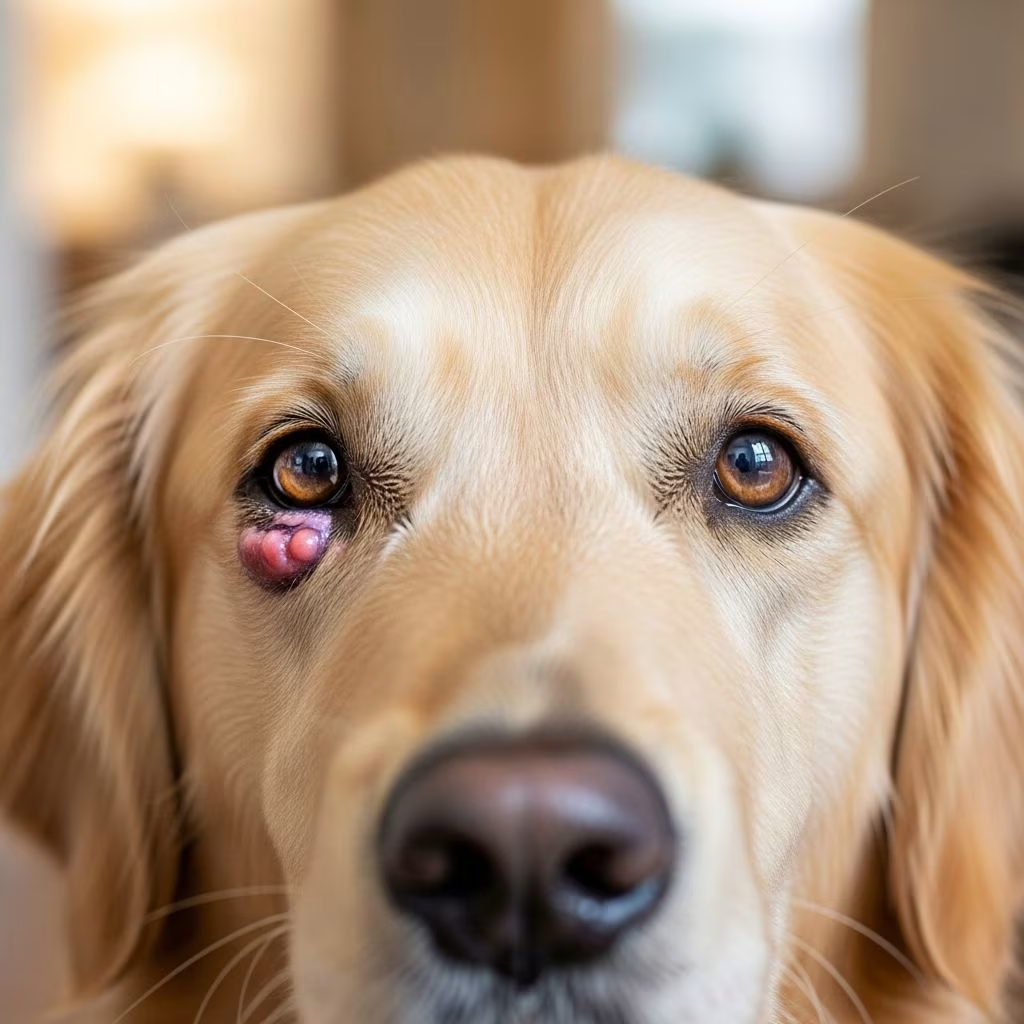
Eye tumors represent a significant concern in canine veterinary medicine, affecting various structures around and within the eye. These neoplasms can range from benign growths to aggressive malignancies, often leading to discomfort, vision impairment, or complete loss of sight if untreated. Understanding the diverse presentations, diagnostic approaches, and therapeutic interventions is crucial for veterinarians and pet owners alike. This article delves into the pathology, clinical manifestations, and management strategies for ocular tumors in dogs, emphasizing early detection for optimal outcomes.
Understanding the Anatomy of the Canine Eye
Before exploring tumors, it’s essential to grasp the eye’s structure. The canine eye comprises the cornea (outer clear layer), sclera (white outer coat), uvea (middle vascular layer including iris, ciliary body, and choroid), retina (inner light-sensitive layer), lens, and associated structures like eyelids, conjunctiva, and orbit. Tumors can originate in any of these areas, with the uvea and eyelids being common sites in dogs. Disruptions in these components often manifest as visible changes or secondary complications like inflammation or glaucoma.
Common Types of Ocular Neoplasms in Canines
Dogs develop several primary and secondary eye tumors, each with distinct behaviors and implications. Primary tumors arise within the eye, while secondary ones spread from elsewhere in the body.
- Melanocytic Tumors: These are the predominant primary uveal neoplasms, often pigmented and originating in the iris or ciliary body. In dogs, most are benign melanocytomas, though malignant melanomas occur and may cause local invasion.
- Adenomas and Adenocarcinomas: Frequently from meibomian glands in eyelids or ciliary body epithelium. Eyelid versions are common in older dogs, comprising about 60% of lid masses, and are typically treatable locally.
- Squamous Cell Carcinomas: Usually slow-growing on eyelids or conjunctiva, with low metastatic potential but requiring intervention due to irritation.
- Lymphomas: Secondary tumors from lymphatic origins, potentially bilateral and indicative of systemic disease.
- Other Rare Types: Include hemangiosarcomas, mast cell tumors, schwannomas (notably in blue-eyed dogs), and orbital malignancies causing exophthalmos.
| Tumor Type | Common Location | Benign/Malignant | Metastatic Risk |
|---|---|---|---|
| Melanoma | Uvea (iris, ciliary body) | Often benign | Low in dogs |
| Adenocarcinoma | Eyelids, ciliary body | Variable | Low locally |
| Squamous Cell Carcinoma | Eyelids, conjunctiva | Malignant | Rare |
| Lymphoma | Intraocular (secondary) | Malignant | High systemic |
Recognizing Clinical Signs of Eye Tumors
Early identification hinges on observing subtle to overt changes. Owners often notice initial alterations before severe complications arise.
- Visible masses or discolorations on the iris, pupil, or surrounding tissues.
- Swelling or bulging of the eye (exophthalmos in orbital cases).
- Excessive tearing, discharge, or squinting due to pain or irritation.
- Pawing or rubbing at the affected eye, signaling discomfort.
- Changes in eye shape, cloudiness, bloodshot appearance, or inflammation.
- Vision deficits, such as bumping into objects or hesitancy in low light.
- Secondary issues like hyphema (blood in anterior chamber), uveitis, or glaucoma causing pain and pressure elevation.
For instance, uveal melanomas may present as raised pigmented spots on the iris or dark protrusions through the pupil, while limbal melanomas appear as smooth, pigmented raised areas at the cornea-sclera junction. Orbital tumors lead to inability to retract the globe, strabismus, and exposure keratitis.
Diagnostic Approaches for Canine Ocular Tumors
Diagnosis combines clinical examination, imaging, and histopathology. A thorough ophthalmic exam using slit-lamp biomicroscopy, indirect ophthalmoscopy, and tonometry assesses intraocular pressure and mass characteristics.
- Fine-Needle Aspiration (FNA) or Biopsy: Cytology differentiates benign from malignant cells.
- Ultrasound: Evaluates mass size, location, and extrascleral extension.
- Advanced Imaging: CT or MRI for orbital involvement or metastasis screening (chest X-rays, abdominal ultrasound).
- Histopathology: Gold standard post-enucleation or excision, confirming melanocytoma vs. melanoma.
Differentials include cysts, melanosis (breed-specific like in Cairn Terriers), or pigmentary uveitis in Golden Retrievers. Young dogs may show biphasic patterns with faster growth.
Treatment Options and Management Strategies
Treatment varies by tumor type, location, size, and metastasis status. Goals include preserving vision when possible, alleviating pain, and preventing spread.
Surgical Interventions
- Excision: For small eyelid or conjunctival masses, full-thickness lid resections with reconstruction.
- Laser Therapy or Cryotherapy: Effective for limbal melanomas or small iris lesions.
- Enucleation: Standard for advanced intraocular tumors causing glaucoma or pain, offering excellent pain relief and histopathologic diagnosis.
- Exenteration: For orbital malignancies involving extensive tissues.
Non-Surgical Approaches
- Chemotherapy or Radiation: Adjunctive for confirmed malignancies, though less common due to low metastatic rates in primary ocular tumors.
- Anti-Inflammatory Management: Controls secondary uveitis or glaucoma temporarily.
Early intervention improves survival; orbital tumors diagnosed late have poorer prognoses, but prompt action enhances outcomes.
Prognosis and Long-Term Outlook
Most primary canine ocular melanocytic tumors behave benignly, with rare metastasis even in malignant cases. Eyelid adenomas respond well to surgery, while ciliary body adenocarcinomas may recur but rarely spread distantly. Factors worsening prognosis include extrascleral extension, glaucoma, or systemic lymphoma. Post-enucleation, quality of life remains high, as dogs adapt well to unilateral vision loss. Regular follow-ups monitor for recurrence, especially in limbal melanomas prone to regrowth.
Breed Predispositions and Risk Factors
- Weimaraners: Conjunctival melanomas.
- Labradors and Golden Retrievers: Ciliary body epithelial tumors; Goldens also pigmentary uveitis.
- Cairn Terriers: Ocular melanosis mimicking neoplasia.
- Older dogs: Higher incidence of meibomian gland tumors.
Age, breed, and chronic irritation contribute to development, underscoring proactive eye exams in seniors.
FAQs on Dog Eye Tumors
What causes eye tumors in dogs?
Exact causes are multifactorial, including genetic predispositions, UV exposure for squamous cell types, and age-related changes. No single trigger predominates.
Can eye tumors in dogs be benign?
Yes, many like uveal melanocytomas and limbal melanomas are benign, focusing treatment on local control rather than systemic therapy.
Is surgery always necessary?
Not always; small, non-invasive lesions may be monitored or treated with laser, but enucleation is common for painful or glaucomatous eyes.
How quickly do eye tumors progress in dogs?
Varies: some grow slowly over months, others rapidly in young dogs. Biphasic patterns noted in melanomas.
Can my dog live normally with one eye removed?
Absolutely; dogs compensate remarkably, maintaining activity and spatial awareness post-enucleation.
Preventive Measures and Owner Education
While not fully preventable, annual veterinary ophthalmology checks for at-risk breeds, protecting eyes from trauma/irritation, and prompt reporting of symptoms aid early detection. Educating owners on signs empowers timely intervention, preserving pet comfort and vision.
References
- Ocular Neoplasia in Dogs — Merck Veterinary Manual. 2023. https://www.merckvetmanual.com/eye-diseases-and-disorders/neoplasia-of-the-eye-and-associated-structures/ocular-neoplasia-in-dogs
- Eye Tumors – Melanoma in Dogs — VCA Animal Hospitals. 2023. https://vcahospitals.com/know-your-pet/eye-tumors-melanoma-in-dogs
- Clinical Approaches to Common Ocular Tumors — Today’s Veterinary Practice. 2023. https://todaysveterinarypractice.com/ophthalmology/clinical-approaches-to-common-ocular-tumors/
- Eye Cancer in Dogs: Types, Symptoms, and Diagnosis — PetMD. 2023. https://www.petmd.com/dog/conditions/cancer/eye-cancer-dogs-types-symptoms-and-diagnosis
- Ophthalmic Melanocytic Neoplasms: What is SCARY and What is No Big Deal — VetHive. 2023. https://www.vethive.com/blog/ophthalmic-melanocytic-neoplasms-what-is-scary-and-what-is-no-big-deal



