

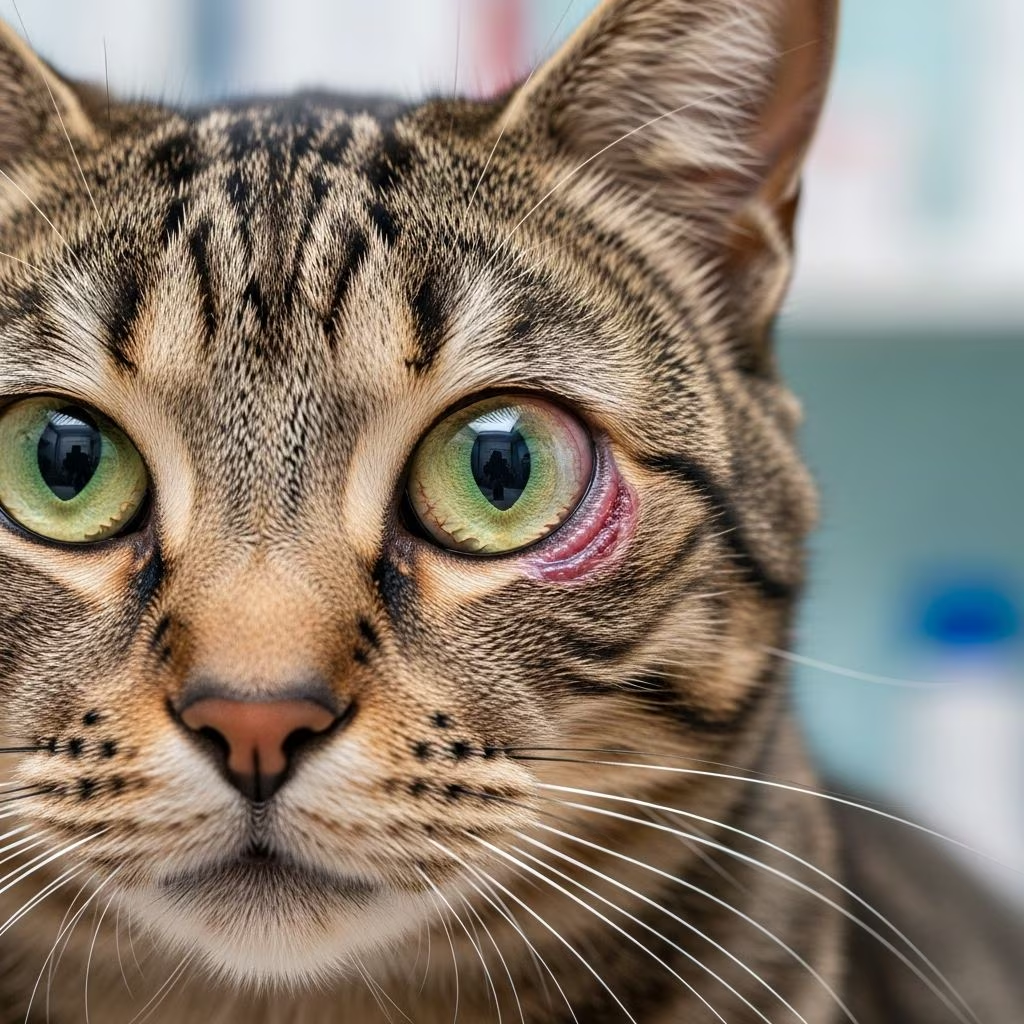
Eye prolapse in cats represents a critical veterinary emergency where parts of the eye, such as the eyeball itself or the iris, displace from their normal positions. This condition, often triggered by severe trauma, demands swift intervention to preserve vision and prevent complications like infection or permanent damage. Cat owners must recognize early signs to ensure timely treatment.
Defining Eye Prolapse and Its Forms
Eye prolapse encompasses several manifestations in felines. **Proptosis**, the forward displacement of the entire eyeball from the socket, is rare but devastating, typically resulting from high-impact head injuries. In contrast, **iris prolapse** involves the iris pushing through a corneal tear or ulcer, appearing as a protruding pink or dark tissue often coated in mucus. These conditions differ from less severe issues like third eyelid prolapse, where the nictitating membrane elevates due to pain, infection, or neurological factors.
Understanding these distinctions is vital. Proptosis pushes the globe outward, while iris prolapse affects the anterior chamber. Both compromise the eye’s integrity, risking exposure to bacteria and dehydration of ocular tissues.
Primary Causes Behind Feline Eye Displacement
Trauma dominates as the leading cause. Cats prone to fights, falls, or vehicular accidents face heightened risks. Facial fractures often accompany proptosis, deepening the socket injury. Penetrating corneal wounds from claws or foreign objects precipitate iris prolapse, especially in outdoor or fighting cats.
Other contributors include:
- Infections and Abscesses: Retrobulbar infections or abscesses swell tissues behind the eye, forcing protrusion.
- Systemic Conditions: Hypertension or tumors can indirectly cause bulging via pressure buildup.
- Congenital Factors: Shallow orbits in brachycephalic breeds like Persians increase susceptibility, though uncommon.
- Third Eyelid Issues: Prolapsed nictitans glands (cherry eye) may mimic or exacerbate symptoms by pushing the globe.
Early identification hinges on context—recent fights signal trauma, while gradual onset suggests infection or neoplasm.
Recognizing Critical Symptoms
Symptoms escalate rapidly, signaling an emergency. Key indicators include:
- Visible **bulging or displaced eye** with inability to retract.
- **Severe pain signs:** Squinting, pawing, tearing, or head tilting.
- **Corneal changes:** Cloudiness, ulceration, or mucus/fibrin covering.
- **Pupil irregularities:** Distortion, dilation, or hyphema (blood in anterior chamber).
- **Associated trauma:** Facial swelling, fractures, epistaxis, or lethargy.
For iris prolapse, watch for a ‘blob’ of iris extruding through the cornea, often yellow-white from exudate. Third eyelid elevation accompanies many cases, indicating pain or enophthalmos. If untreated, symptoms progress to blindness, sepsis, or globe rupture.
Diagnostic Approaches for Accurate Assessment
Veterinarians employ a multi-step process. Initial history pinpoints trauma or exposures. Physical exams cautiously assess under sedation or local anesthesia to avoid rupture.
Diagnostic tools encompass:
| Method | Purpose | Details |
|---|---|---|
| Fluorescein Staining | Detect Ulcers | Highlights corneal defects allowing iris escape. |
| Schirmer Tear Test | Assess Lubrication | Rules out dry eye contributions. |
| Culture/Sensitivity | Identify Pathogens | Guides antibiotic choice. |
| Imaging (X-ray, CT) | Evaluate Orbit | Checks fractures or retrobulbar masses. |
| Tonometry | Measure Pressure | Detects glaucoma secondary to trauma. |
Bloodwork ensures surgical candidacy, revealing anemia or infection. Referral to veterinary ophthalmologists is standard for complex cases.
Emergency Treatment Protocols
Time is critical—delay beyond hours worsens prognosis. Stabilize first: apply Elizabethan collar to prevent self-trauma, administer pain relief, and initiate broad-spectrum antibiotics topically and systemically.
Medical Management:
- Antibiotics (e.g., topical every 2-4 hours, oral/injectable).
- Atropine drops to dilate pupil and retract iris.
- Anti-inflammatories for swelling reduction.
Surgery is cornerstone. For proptosis, replace the globe under general anesthesia, followed by temporary tarsorrhaphy (eyelid suturing). Iris prolapse repair repositions viable tissue and sutures cornea; enucleation follows if irreparable.
Post-op, monitor for recurrence. Vision salvage is rare in proptosis but possible in early iris cases.
Prognosis Factors and Long-Term Outlook
Outcomes vary widely. Favorable in recent, minimally damaged cases with deep sockets and small pupils. Poor if prolonged exposure, infection, or optic nerve damage occurs. Cosmetic salvage preserves the globe sans vision; enucleation averts pain.
Complications include:
- Chronic dry eye from lacrimal damage.
- Glaucoma or phthisis bulbi (shriveling).
- Neurological sequelae from head trauma.
Follow-up exams track healing, adjusting meds as needed.
Home Care and Recovery Tips
Post-discharge, confine indoors, administer meds meticulously, and clean gently. Watch for discharge, swelling, or behavior changes—contact vet immediately if noted.
Nutrition supports healing: high-protein diets aid tissue repair. Stress reduction via quiet environments accelerates recovery.
Prevention Strategies for Cat Owners
Mitigate risks:
- Keep cats indoors or supervised outdoors.
- Neuter to curb fighting.
- Regular vet checkups detect predispositions early.
- Brachycephalic breeds need orbit evaluations.
Awareness saves eyes—prompt action post-trauma is key.
Frequently Asked Questions (FAQs)
Can a cat survive eye prolapse without treatment?
No, untreated cases lead to infection, pain, and blindness. Seek emergency care.
Is surgery always necessary for iris prolapse?
Yes for viable eyes; enucleation if not. Early intervention improves odds.
How long does recovery take after proptosis repair?
Weeks to months; sutures removed in 2-4 weeks, with lifelong monitoring.
Does third eyelid prolapse indicate eye prolapse?
It signals pain or issues but isn’t prolapse itself—investigate underlying causes.
Are certain cat breeds more prone?
Brachycephalics like Persians due to shallow sockets.
Key Takeaways for Feline Eye Health
Eye prolapse demands vigilance. Trauma prevention, symptom awareness, and rapid vet response optimize outcomes. Consult professionals for tailored advice.
References
- Prolapse of the Eye in Cats – Cat Owners — Merck Veterinary Manual. 2023. https://www.merckvetmanual.com/cat-owners/eye-disorders-of-cats/prolapse-of-the-eye-in-cats
- Iris Prolapse in Cats — PetPlace. 2023. https://www.petplace.com/article/cats/pet-health/iris-prolapse-in-cats
- Why is my cat’s third eyelid showing? — Vetster. 2024. https://vetster.com/en/wellness/why-is-my-cat-s-third-eyelid-showing
- Bulging Eyes in Cats — PetMD. 2024. https://www.petmd.com/cat/conditions/eyes/bulging-eyes-cats
- Retrobulbar thrombus in a cat with systemic hypertension — PMC (NCBI). 2024-02-15. https://pmc.ncbi.nlm.nih.gov/articles/PMC10822321/



