
Eye Gnats In Animals: 6 Practical Prevention And Control Tips
Discover the biology, health risks, and proven strategies to combat eye gnats affecting livestock, pets, and wildlife effectively.
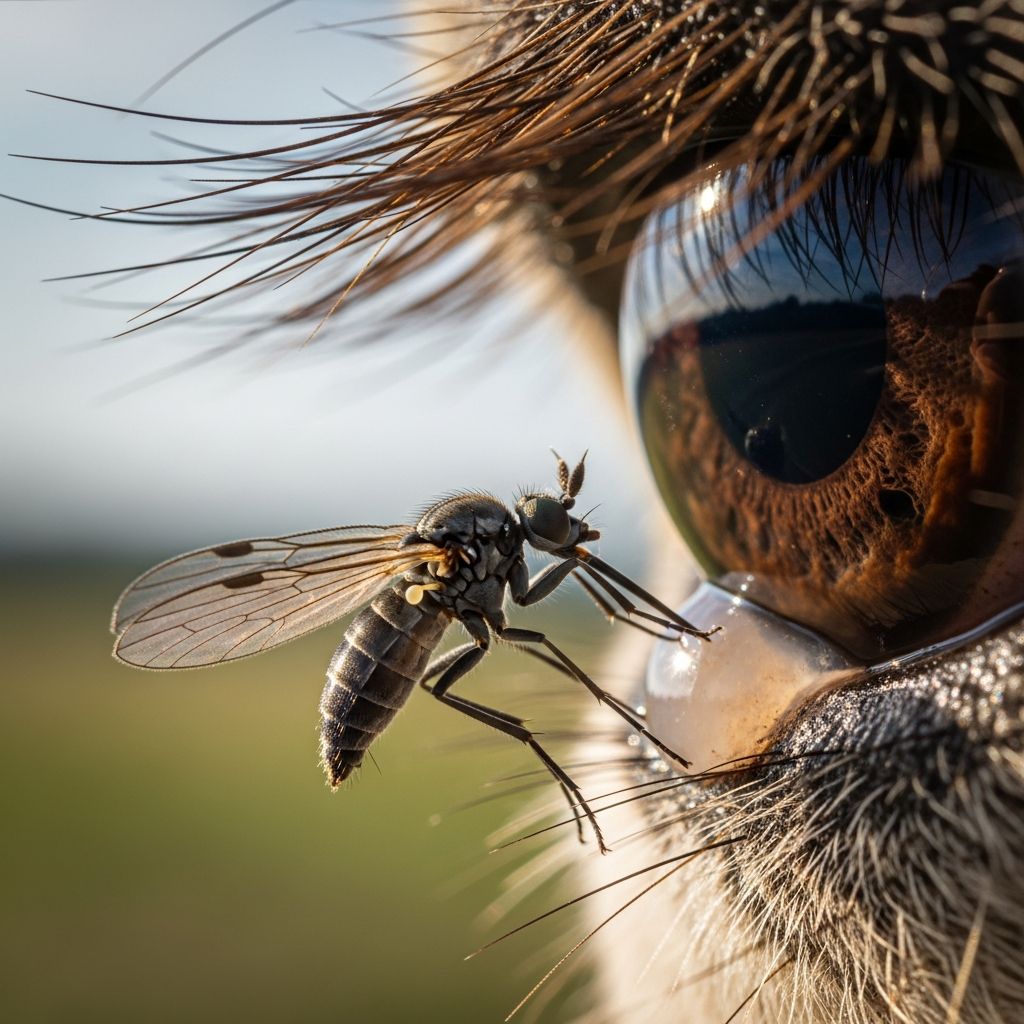
Tiny yet persistent, eye gnats represent a common challenge for animal owners, particularly in warm, humid environments. These small flies target sensitive areas like eyes, noses, and wounds, leading to irritation and potential disease transmission in livestock, pets, and even wildlife. Understanding their behavior and implementing targeted controls can significantly reduce their impact on animal welfare.
Understanding the Nature of Eye Gnats
Eye gnats, belonging to genera such as Hippelates and Liohippelates, measure just 1.5 to 2.5 millimeters in length, resembling miniature house flies with dark gray to black bodies. Unlike biting insects, they do not pierce skin but sponge up bodily secretions including mucus, tears, sweat, pus, and blood using their specialized mouthparts. This feeding habit draws them irresistibly to the moist areas around animals’ eyes, mouths, noses, and genital regions.
These pests thrive in diverse settings, from agricultural fields to suburban yards, especially near irrigated lands or decaying organic matter. Their small size allows them to evade swats, as they land at a distance and crawl toward feeding sites, returning persistently if disturbed.
Lifecycle and Breeding Habits
The eye gnat lifecycle unfolds rapidly under favorable conditions, contributing to explosive population growth. Females lay eggs in moist, organic-rich substrates like soil amended with grass clippings, manure, leaf litter, or decaying vegetation. Eggs hatch into larvae within days, feeding on microorganisms in these environments before pupating and emerging as adults in 7-14 days.
- Eggs: Laid in clusters in damp soil or compost.
- Larvae: Develop in wet, fertile ground, tolerant of disturbance.
- Pupae: Form in soil, non-feeding stage lasting 3-5 days.
- Adults: Live 1-2 weeks, with females needing protein-rich meals for egg production.
Wet springs or heavy irrigation exacerbate breeding, as seen in regions like the southwestern U.S.
Why Eye Gnats Target Animals
Eye gnats are drawn to animals by chemical cues from secretions. They cluster around eyes for lacrimal fluid, wounds for blood and pus, and genitals or teats for moisture and nutrients. In dogs, species like H. pallipes favor penile areas; in cattle, they exploit teat tips. This attraction persists across species—horses, sheep, cattle, dogs, and even humans—making them a broad nuisance.
Swarming behavior amplifies annoyance: clouds of gnats dart at faces, entering orifices and causing animals to shake heads vigorously or rub against objects, risking injury.
Health Risks and Disease Transmission
Beyond irritation, eye gnats serve as mechanical vectors for pathogens. Their spined labium introduces bacteria into eyes or wounds during feeding. Key diseases include:
| Disease | Affected Animals | Pathogen |
|---|---|---|
| Pinkeye (Conjunctivitis) | Cattle, humans, pets | Moraxella bovis, bacteria |
| Summer Mastitis | Dairy cattle | Arcanobacterium pyogenes |
| Anaplasmosis | Cattle | Anaplasma phagocytophilum |
| Yaws | Humans (rarely animals) | Bacterial |
In livestock, infestations lead to reduced productivity, weight loss, and secondary infections. Pets suffer discomfort, potentially worsening existing conditions like allergies or injuries.
Recognizing Infestations in Animals
Diagnosis relies on observing clinical signs and fly presence. Affected animals exhibit:
- Excessive blinking, tearing, or eye rubbing.
- Head shaking or face-stamping.
- Swarming tiny dark flies around head, wounds, or genitals.
- Reddened eyes, discharge, or corneal ulcers in severe cases.
- Restlessness, reduced feed intake in livestock.
Veterinarians confirm by identifying the flies, which mimic small house flies, and ruling out other pests.
Effective Prevention Strategies
Preventing eye gnat problems starts with environmental management to disrupt breeding:
- Eliminate Breeding Sites: Clear weeds, grass clippings, leaf litter, and manure piles promptly. Till soil sparingly to avoid creating moist havens.
- Improve Drainage: Ensure fields and pastures drain well to dry out potential larval habitats.
- Cultural Practices: Rotate crops, reduce irrigation runoff, and maintain tidy farmyards.
For livestock facilities, screens or netting enclosures exclude over 90% of gnats, as they fly low to the ground (under 8 feet).
Direct Control Methods for Animals
When prevention falls short, targeted interventions provide relief:
Repellents
Veterinarian-approved repellents like those with DEET, picaridin, or pyrethrins offer temporary protection for pets and livestock. Apply to safe areas, avoiding eyes and wounds; reapply as needed.
Insecticides
Community-wide spraying, akin to mosquito programs, reduces adults temporarily but requires repetition as reinvasion occurs. For premises, spot-treat turf or flowerbeds with spinosad or pyrethrins where adults rest.
Trapping Techniques
Mass trapping using protein baits in bottles or commercial traps captures females, curbing populations. Vector control districts deploy thousands annually in problem areas.
| Method | Pros | Cons | Best For |
|---|---|---|---|
| DIY Trap (Egg Bait in Bottle) | Low-cost, effective locally | Requires maintenance | Homes, small farms |
| Commercial Bait Traps | High capture rates | Expensive for large areas | Agricultural fields |
| Screen Barriers | 90%+ exclusion | Installation cost | Stables, enclosures |
Management in Specific Animal Groups
Livestock
Cattle and horses benefit from ear tags with insecticides, dust bags, or pour-ons. Cover wounds promptly and monitor during peak seasons (spring-summer).
Pets
For dogs and cats, use vet-recommended collars, sprays, or spot-ons. Keep yards mowed and free of debris; limit outdoor time during swarms.
Integrated Pest Management Approach
The most sustainable strategy combines methods: sanitation (60% effort), physical barriers (20%), biological monitoring (10%), and chemical tools (10%). Track populations with sticky traps to time interventions.
Frequently Asked Questions (FAQs)
Do eye gnats bite animals?
No, they sponge secretions rather than bite, but their persistence causes distress and disease spread.
Can eye gnats affect indoor animals?
Rarely, as they prefer outdoor moist sites, but flies can enter homes via open doors.
How long do eye gnat outbreaks last?
Typically weeks to months, tied to weather; drier conditions reduce them naturally.
Are there natural repellents for eye gnats on animals?
Essential oils like citronella may help mildly, but consult vets for safety; DEET-based are more reliable.
What if my animal’s eye becomes infected?
Seek veterinary care immediately for antibiotics and fly removal to prevent complications.
Long-Term Community Solutions
In endemic areas, collaborate with vector control for baiting programs and surveillance. Historical efforts, like California’s districts since 1928, demonstrate success through sustained trapping. Educating neighbors amplifies impact, as gnats migrate readily.
By prioritizing habitat reduction and vigilant monitoring, animal owners can minimize eye gnat nuisances, safeguarding health and comfort year-round.
References
- Flies and Mosquitoes of Dogs – Dog Owners — MSD Veterinary Manual. 2023. https://www.msdvetmanual.com/dog-owners/skin-disorders-of-dogs/flies-and-mosquitoes-of-dogs
- Eye Gnats of Animals – Integumentary System — Merck Veterinary Manual. 2023. https://www.merckvetmanual.com/integumentary-system/flies/eye-gnats-of-animals
- Eye Gnats — Coachella Valley Mosquito and Vector Control District. 2023. https://www.cvmosquito.org/eye-gnats
- Monitor Livestock, Pets and Yourself for Eye Gnat Activity — South Dakota State University Extension. 2023. https://extension.sdstate.edu/monitor-livestock-pets-and-yourself-eye-gnat-activity
- EYE GNATS – County of San Diego — San Diego County Grand Jury Report. 2010-05-01. https://www.sandiegocounty.gov/grandjury/reports/2009-2010/EyeGnatsReport.pdf
- Eye Gnats — UC IPM Online. 2023. https://ipm.ucanr.edu/home-and-landscape/eye-gnats/
Similar Articles








Read full bio of medha deb


