

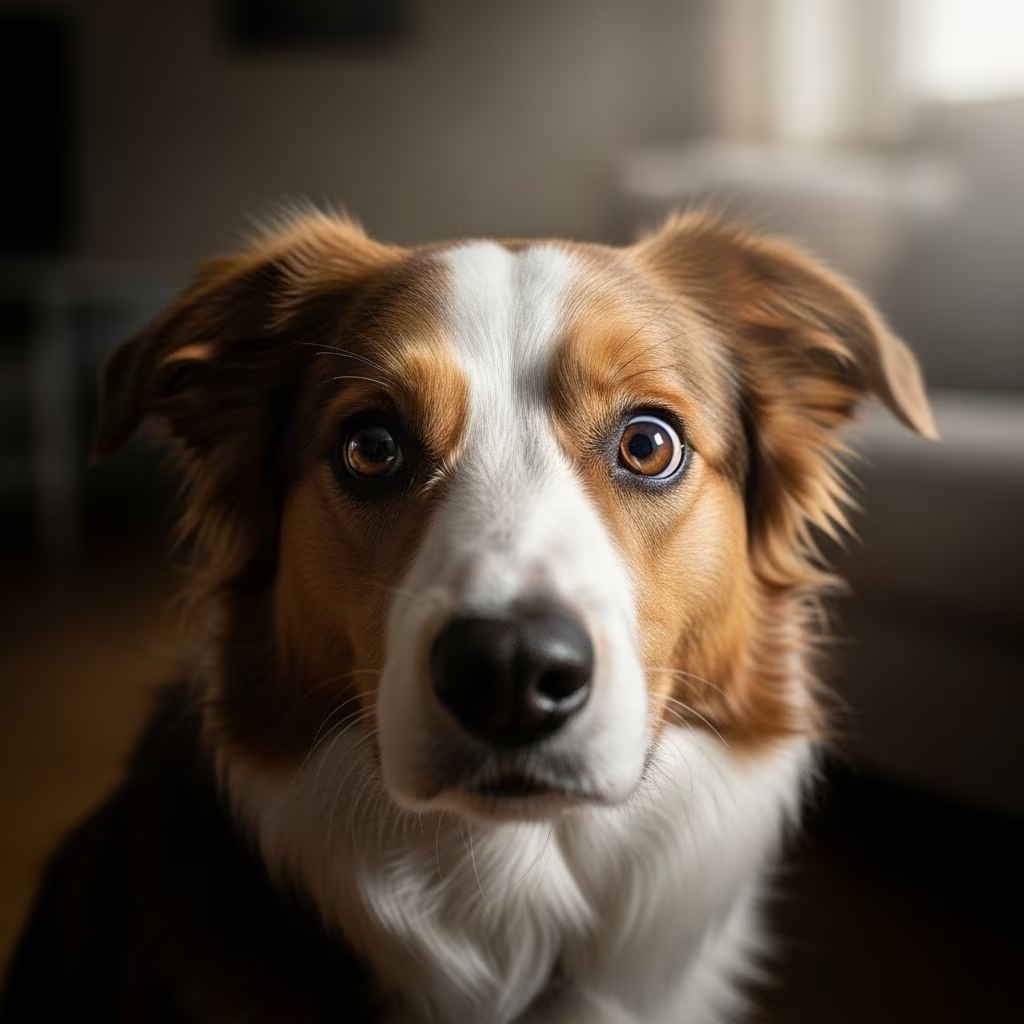
In the intricate world of canine communication, eye contact plays a pivotal role, often misunderstood by humans. While we view direct gazes as signs of affection or attentiveness, dogs may interpret or use them differently, frequently as indicators of stress, discomfort, or appeasement. This article delves into why eye contact—and its avoidance—serves as a key stress signal in dogs, drawing from expert observations on body language.
Why do dogs avoid eye contact?
Dogs frequently avoid eye contact as an appeasement behavior, a subtle strategy to de-escalate potential conflict and signal they pose no threat. This action stems from their evolutionary instincts, where direct stares among canines can be perceived as challenges or threats. According to canine behavior experts, when a dog turns its head away or refuses to meet your gaze, it is communicating a desire for distance from a stressful stimulus, whether that’s an unfamiliar person, a loud noise, or even an overly enthusiastic approach from their owner.
This avoidance is not defiance or stubbornness, as humans might assume, but a calming signal aimed at reducing tension. For instance, during interactions like petting on the head or handling a leash, dogs may avert their eyes to politely say, “I’m not looking for trouble”. Situational factors amplify this: a dog might avoid eye contact confidently during play but show it prominently when anxious about veterinary visits or crowded environments.
Understanding this helps owners respond appropriately—backing off to give space rather than forcing engagement, which could escalate stress. Repeated avoidance in specific contexts, like leashing, may indicate learned anticipation of discomfort, reinforcing the need for positive associations through gradual desensitization.
Is direct eye contact stressful for dogs?
Direct eye contact can indeed be stressful for dogs, particularly if prolonged or intense, as it mimics a confrontational stare in canine social dynamics. In dog-to-dog interactions, a hard, unwavering gaze often precedes aggression or dominance displays, making humans’ natural staring habit unintentionally threatening. Veterinary behavior resources note that wide-open eyes with direct staring signal high alertness or threat assessment, effective for inter-dog communication but anxiety-inducing when directed from humans.
Context matters immensely: a soft, brief gaze from a trusted owner during calm moments might foster bonding, but a piercing stare during training or restraint heightens unease. Dogs conditioned to associate human eye contact with positive rewards, like treats, may tolerate or seek it, yet many wild or poorly socialized dogs instinctively look away to self-calm. Owners mirroring calm energy—through soft blinks rather than stares—can mitigate this stress, promoting mutual relaxation.
Whale eye: what does it mean?
Whale eye, or half-moon eye, occurs when a dog’s head turns away but its eyes remain fixed on a stimulus, exposing the whites of the eyes in a crescent shape. This is a classic stress signal indicating anxiety, fear, uncertainty, or discomfort, often overlooked by owners. Commonly seen during resource guarding (e.g., over toys or food), nail trimming, unwanted petting, or encounters with strangers, it warns, “Back off—I’m uncomfortable”.
Experts from the American Kennel Club describe whale eye as a clear marker of unease, especially when paired with other cues like lip licking or yawning. In high-stress scenarios, such as dog parks, a cluster of whale eye, lowered tail, and leaning away screams distress, urging immediate intervention to prevent escalation. Unlike relaxed soft eyes, whale eye’s visibility of sclera (whites) is evolutionarily linked to primate fear expressions, adapted in dogs for similar communication.
Response tip: Cease the triggering activity instantly, create distance, and observe for calming. Persistent whale eye warrants professional assessment for underlying pain or anxiety.
Other eye signals in dogs
- Soft eyes: Relaxed eyelids, slow blinking, and a gentle gaze denote calm, security, and affection. Observed during cuddles or rest, these invite interaction and strengthen bonds.
- Hard stare: Cold, intense eyes with rigid posture signal threat, aggression, or resource protection. Accompanied by stiff tail and forward lean, it demands caution—do not approach.
- Squinting or half-closed eyes: Context-dependent; relaxed squints indicate contentment or sleepiness, while tense versions with pinned ears suggest pain, requiring veterinary attention.
- Avoidance or looking away: A deliberate calming signal to diffuse tension, often paired with yawning or lip licking.
These signals rarely stand alone; holistic reading with tail, ears, and posture provides full context.
Calming signals dogs use
Beyond eyes, dogs employ a repertoire of calming or appeasement signals to manage stress and promote peace. These include yawning (not from tiredness, but self-soothing in tense moments), lip licking (absent food cues), head turning, play bows, and shaking off as if wet. Authored by experts like Turid Rugaas, these signals communicate, “I’m not a threat—let’s relax”.
In multi-dog settings or with humans, clusters amplify meaning: yawning + whale eye + avoidance indicates high stress. Owners missing these may inadvertently pressure their dog, worsening anxiety. Recognizing and reciprocating—by turning sideways, blinking slowly, or pausing—builds trust.
Why is my dog stressed?
Dog stress arises from fear, pain, overstimulation, or unmet needs. Common triggers: loud noises, separation, vet visits, new environments, rough handling, or resource competition. Physiological responses include elevated heart rate, panting, and cortisol release, manifesting in behavioral signals like whale eye or avoidance.
Chronic stress leads to health issues like weakened immunity or aggression; early detection via eye and body cues prevents this. Puppies and rescues are especially prone due to limited socialization.
Stress in dogs: signs and symptoms
| Signal | Description | Context |
|---|---|---|
| Whale eye | Whites visible, head turned | Guarding, handling |
| Avoidance | Looking away, turning body | Unwanted interaction |
| Yawning | Exaggerated jaw stretch | Tension, not fatigue |
| Lip licking | Tongue flick over nose/mouth | Anxiety, no food present |
| Shaking off | Full body shake when dry | Post-stress relief |
Intensity correlates with signal count: one mild, multiple severe.
Frequently Asked Questions (FAQs)
What does whale eye mean in dogs?
Whale eye signals stress, anxiety, or fear; the dog wants space from the stressor.
Why does my dog avoid eye contact with me?
Avoidance is an appeasement gesture to de-escalate tension and avoid conflict.
Is staring at my dog bad?
Prolonged direct stares can feel threatening; use soft blinks for bonding.
How can I tell if my dog’s eyes show pain?
Tense squinting with ears back, avoidance, or whining suggests discomfort—see a vet.
Can I train my dog to make eye contact?
Yes, via gentle gaze exercises with rewards, building positive associations.
Reading full body language charts
| Eye Expression | Tail Signal | Body Language | Meaning |
|---|---|---|---|
| Soft blink | Relaxed wag | Loose posture | Calm, affectionate |
| Whale eye | Low/tucked | Leaning away | Fear, discomfort |
| Hard stare | Stiff high | Rigid stance | Aggression warning |
| Gentle gaze | Playful wag | Play bow | Friendly invitation |
Combine signals for accuracy.
How to respond to dog eye signals
| Observation | Response |
|---|---|
| Soft eyes | Reward with treats/pets |
| Avoidance | Give space, reduce pressure |
| Whale eye | Stop activity, retreat |
| Hard stare | Stay calm, redirect |
Your calm demeanor influences theirs.
Mastering these cues fosters deeper connections, prevents misunderstandings, and ensures your dog’s well-being. Always consult professionals for persistent issues.
References
- Understanding Dog Eye Contact — Bowlers Pets. 2023. https://www.bowlerspets.com/understanding-dog-eye-contact/
- Stress Signals You Might Be Missing — The Pet Spot Co. 2023. https://thepetspotco.com/stress-signals-you-might-be-missing-understanding-the-subtle-language-of-canine-stress/
- How to Read Dog Body Language — American Kennel Club (AKC). 2024-01-15. https://www.akc.org/expert-advice/training/how-to-read-dog-body-language/
- Dog Communication: Calm vs. Stress Signals — SPCANebraska. 2023. https://spcanevada.org/services/pet-education/animal-ally/dog-communication/
- Why Dogs Avoid Eye Contact — Kinship. 2023. https://www.kinship.com/dog-behavior/why-dogs-avoid-eye-contact



